Feeding Your Flock Through Winter Without Breaking the Budget
Feeding chickens in winter on a budget starts with a good layer feed as their main meal. Keep treats and scraps small, stop feed waste with a better feeder and a sealed bin, and make sure water never freezes. Hens eat a little more in the cold, so plan ahead.
The first time I bought chicken feed in December, I was shocked. My hens were eating more and laying less.
It felt like I was paying for breakfast and getting nothing back.
Over a few winters, I've learned some simple ways to keep my flock fed and my budget in one piece. Here's what works for us.
What should chickens eat in winter?
In winter, chickens should eat a complete layer feed as most of their diet. Add free-choice oyster shell, grit if they eat scraps, and a few small treats.
Layer feed is made to give hens what they need in every bite. It's the backbone of their diet, all year long.
On cold chore mornings, I carry the feed bucket in one hand and a thermos of Dried Peppermint Leaf tea in the other. It's my little treat while I do theirs.
"Behold the fowls of the air: for they sow not, neither do they reap, nor gather into barns; yet your heavenly Father feedeth them." — Matthew 6:26 (KJV)
I love remembering that as I fill the feeder. We do our part, and God provides.
How much do chickens eat in winter?
A full-size laying hen eats about 1/4 pound of feed a day. Many hens eat a little more when it's cold.
Smaller breeds, like bantams, eat less. Big breeds eat a little more.
To plan your budget, multiply by your flock size. Six hens eating about 1/4 pound each use about 1.5 pounds a day. That's roughly one 50-pound bag a month.
What are the best ways to save money on chicken feed?
The biggest savings come from stopping waste. Chickens spill, scratch, and fling feed, and rodents help themselves.
Buy in 50-pound bags. Larger bags usually cost less per pound than small ones. Compare prices at your feed store.
Store feed in a metal can with a tight lid. It keeps out mice, rats, and moisture.
Use a no-waste feeder. Feeders with covered ports or small openings keep hens from scratching feed onto the ground.
Raise the feeder. Hang or set it at about the height of your hens' backs. They spill less.
Feed only what they need. If the feeder is full of scattered feed on the floor, they're wasting it.
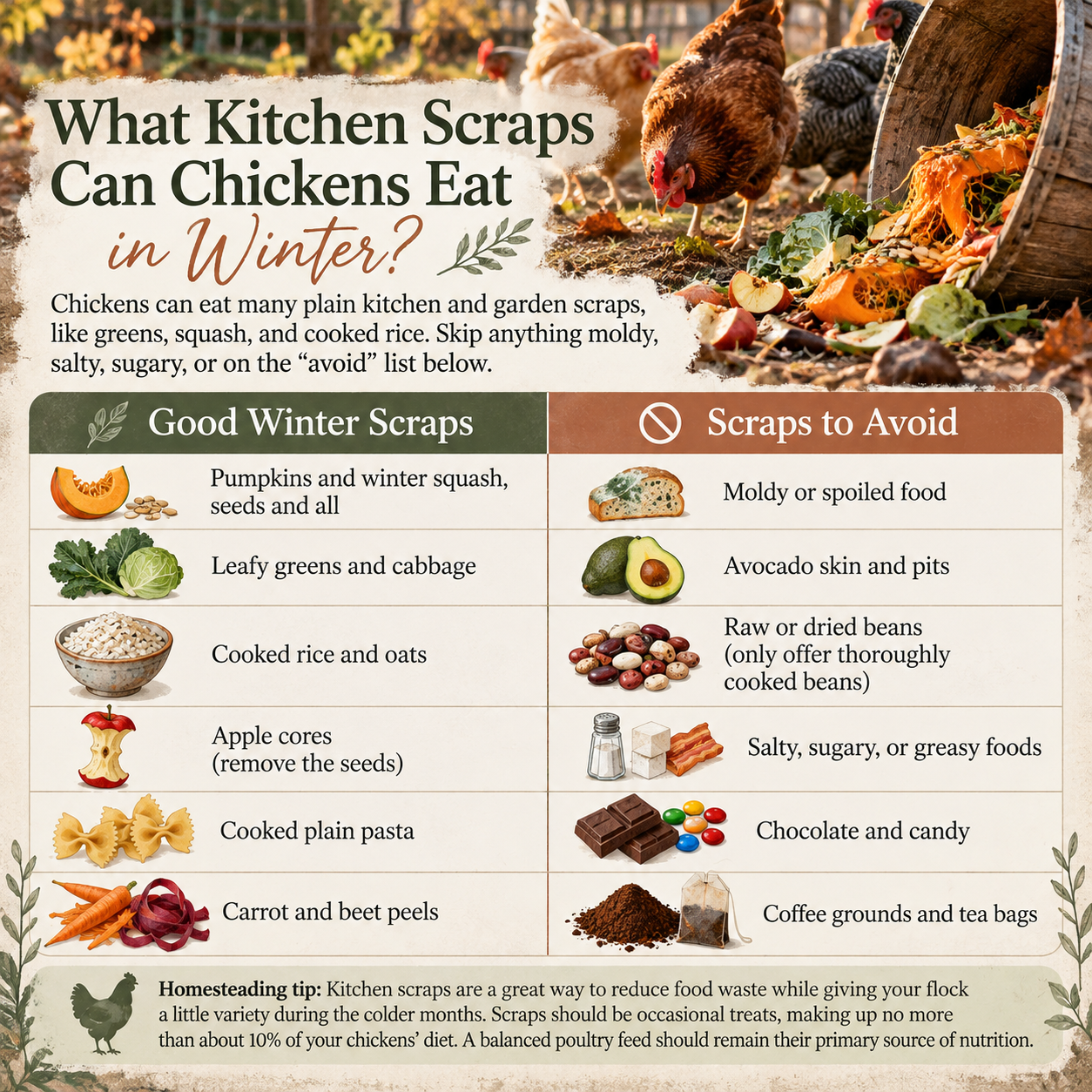
Keep treats small. A common rule is treats under 10% of what they eat. Treats fill them up without giving balanced food.
Use what you have. Garden leftovers and safe kitchen scraps can stand in for store-bought treats.
Keep water from freezing. Hens eat less when they can't drink, so they don't use their feed well.
For more help with water, see my post on Winterizing the Chicken Coop.
What kitchen scraps can chickens eat in winter?
Should I feed chickens scratch grains in winter?
Scratch grains are fine as a small treat, but they shouldn't replace layer feed. Scratch is lower in protein than complete feed.
Many keepers toss a small handful in the late afternoon. Hens love to dig for it, and it gives them something to do on snowy days.
Just keep it small. Too much scratch fills them up without the nutrition they need.
Do chickens need extra protein during molting?
Many keepers switch to a higher-protein feed while hens molt. Feathers are made mostly of protein, so growing new ones takes a lot.
An "all-flock" or higher-protein feed is a common choice in fall. If you use one, offer oyster shell on the side so laying hens still get calcium.
Want to know if your hens are in good shape for winter? I'll share a simple body condition checklist soon.
If you are pregnant, nursing, or taking medicine, check with your doctor before drinking herbal tea.
FAQ
Do chickens eat more in winter? Many do. They eat a little more when it's cold, so watch the feeder and adjust.
Is it okay to feed chickens only kitchen scraps? No. Scraps don't give hens balanced nutrition. Keep layer feed as their main food.
What is oyster shell for? Oyster shell gives laying hens extra calcium. Offer it in a separate dish so they can take what they need.
How should I store chicken feed? Keep it in a metal can with a tight lid, in a dry place. Use it before it gets old or damp.
How do you brew peppermint tea for a thermos? Steep 1 tablespoon of dried peppermint in 2 cups of boiling water for 5 to 7 minutes. Strain into a warm thermos.
A warm closing
Feeding a flock through winter takes a little planning. But it doesn't have to drain your wallet.
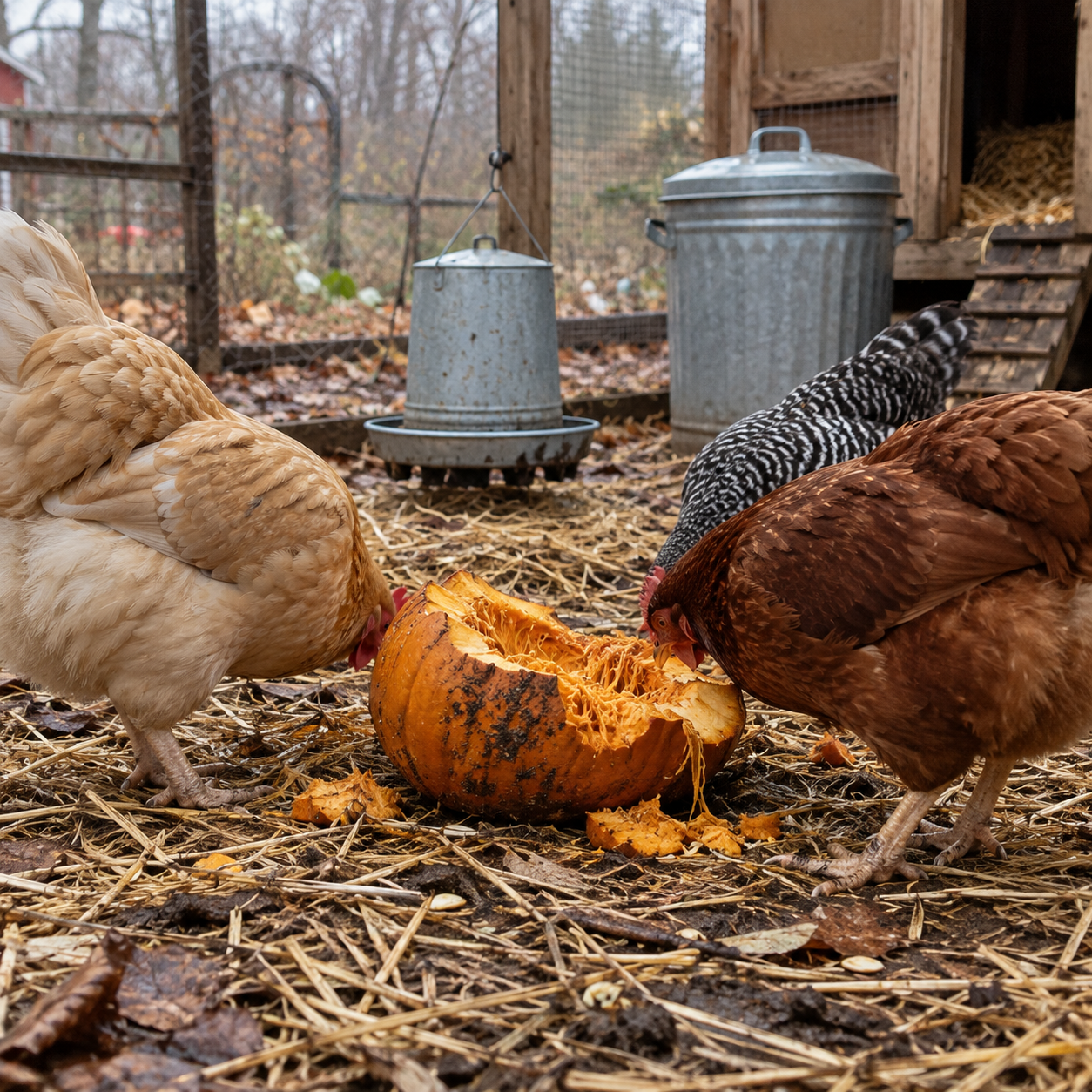
Stop the waste, keep the water flowing, and share your pumpkins. Your hens will thank you.
And on those frosty mornings, bring a thermos of one of our cozy teas along. Chores are sweeter with something warm. For more winter prep, see my October Homestead Checklist and Frugal October Pantry.
https://extension.umn.edu/small-scale-poultry/feeding-chickens
https://extension.umn.edu/small-scale-poultry/raising-chickens-your-backyard
https://www.fda.gov/animal-veterinary/animal-health-literacy/backyard-poultry
https://www.merckvetmanual.com/poultry/nutrition-and-management-poultry
https://www.almanac.com/raising-chickens-101-how-raise-baby-chickens
https://www.biblegateway.com/passage/?search=Matthew+6%3A26&version=KJV
