How to Winterize a Chicken Coop (Small Flock)
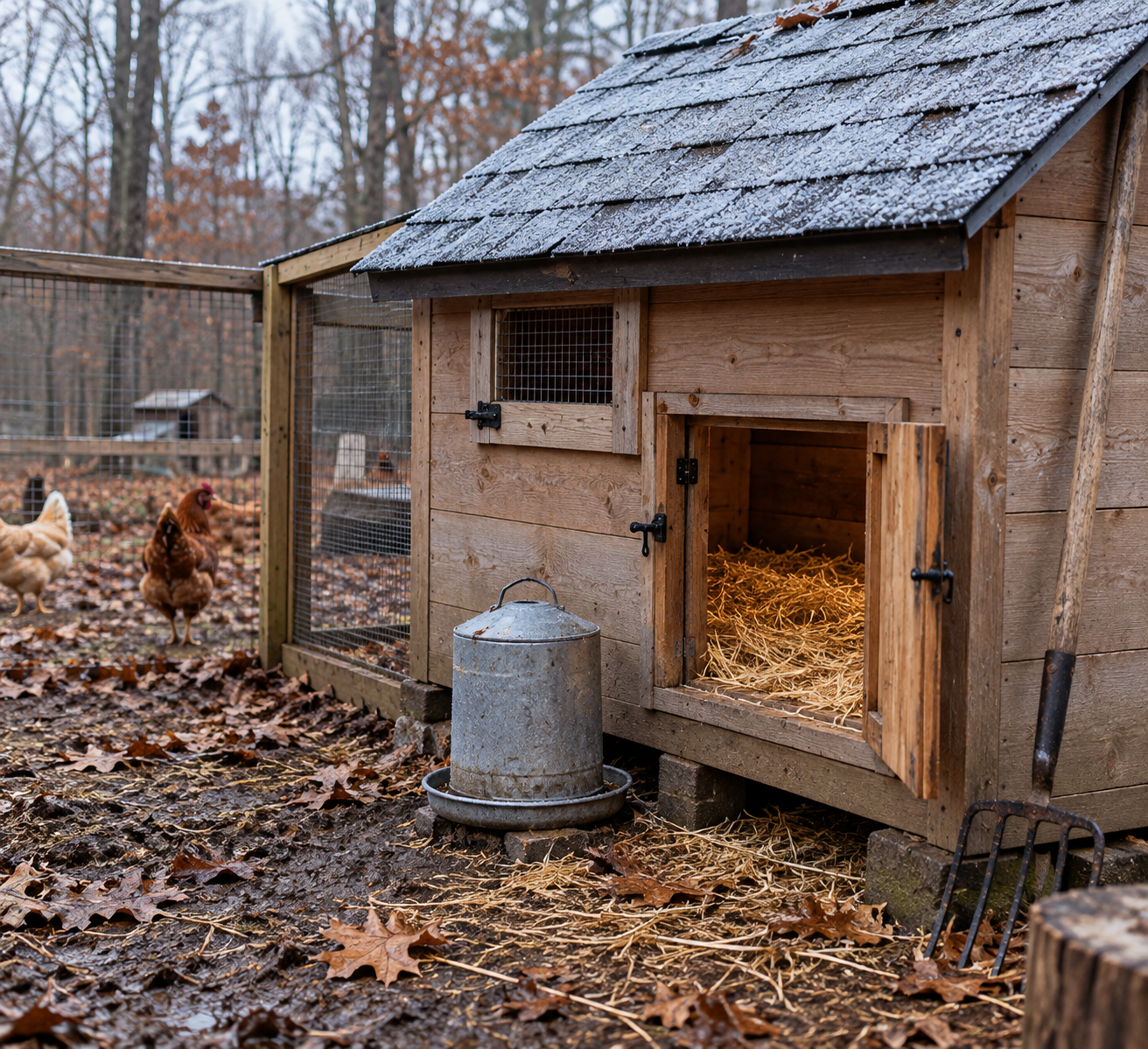
Winterizing the Chicken Coop
To winterize a chicken coop, keep it dry, draft-free, and well vented. Seal gaps near the roost, but leave vents open up high. Add deep, dry bedding, keep water from freezing, and check for predators. Most cold-hardy hens stay comfortable without extra heat.
The first cold morning always surprises me. I walk out with my coffee, and there's frost on the coop roof.
That's my reminder: winter is coming, and the girls need their house ready.
The good news is that winterizing a small coop is simple. You don't need fancy gear. You need a free afternoon and a plan.
What does it mean to winterize a chicken coop?
Winterizing a chicken coop means getting it ready for cold, wet, and windy weather. The goal is a dry, draft-free home with fresh air and water that doesn't freeze.
Chickens wear their own down coats. What bothers them most isn't the cold itself. It's dampness and wind.
"He shall cover thee with his feathers, and under his wings shalt thou trust." — Psalm 91:4 (KJV)
I think of that verse every time I see my hens fluffed up on the roost. God made them for this, and He made us to trust Him too.
While I'm out there, I also refresh the nesting boxes with clean bedding and a pinch of Dried Lavender. It makes the coop smell sweet and clean.
Do chickens need heat in winter?
Most healthy, cold-hardy chickens don't need extra heat if their coop is dry and draft-free. Their feathers trap body heat and keep them warm.
Many chicken keepers skip heat lamps because they can start coop fires. Dust, dry bedding, and a hot bulb are a dangerous mix.
If you live somewhere very cold or keep small or young birds, talk with your local extension office or feed store. They know your climate best.
How do you winterize a chicken coop step by step?
Check the coop from top to bottom, fix what's broken, and set up for dry bedding and steady water.
Clean it out. Remove old, damp bedding and scrape the roosts and floor.
Fix leaks. Check the roof and walls for drips or wet spots. Patch them before the rain and snow come.
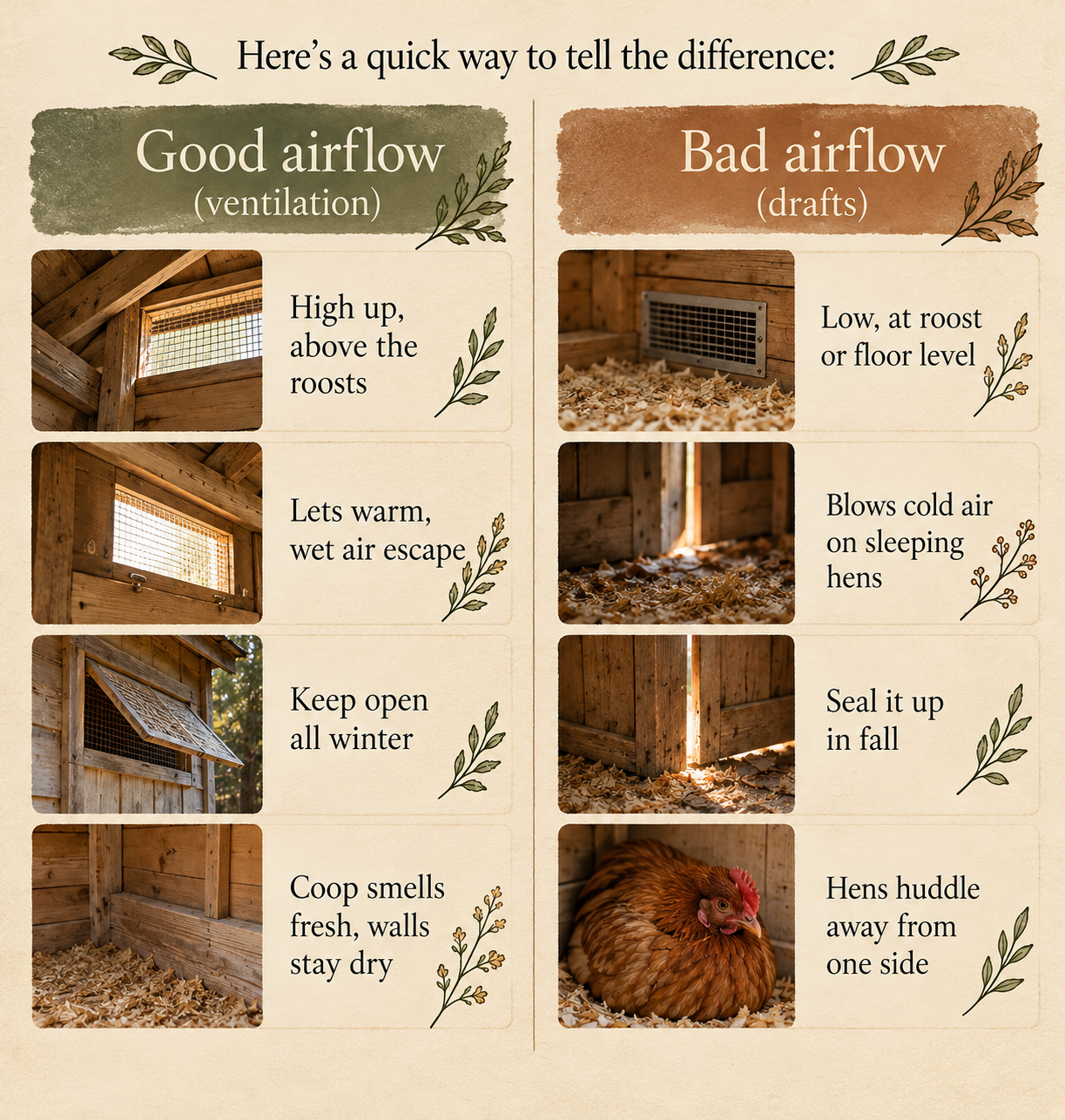
Block drafts low. Seal cracks near the floor and the roosts with scrap wood or caulk. Cold wind blowing on sleeping hens is what you want to stop.
Keep vents open high. Leave vents near the top of the coop open. Warm, wet air from the hens' breath needs a way out.
Add deep bedding. Start with 4 to 6 inches of pine shavings or straw. Add fresh layers on top through the winter.
Check the roosts. A wide, flat roost, like a 2x4 with the wide side up, lets hens cover their toes with their feathers.
Plan for water. Set up a heated waterer or base, or plan to swap water twice a day.
Predator-proof. Check latches, wire, and gaps. Hungry predators get bolder in winter.
Shelter the run. Wrap one or two sides of the run with a tarp or clear plastic to block wind and snow. Leave the rest open for air.
If you tackled the coop during week 2 of my October Homestead Checklist, you're already ahead!
Why does coop ventilation matter in winter?
What is the deep litter method?
The deep litter method means adding fresh bedding on top of old bedding all winter instead of cleaning it all out. You turn it now and then, and clean it out fully in spring.
It saves time and bedding. Many keepers like it because the layers stay soft and dry when managed well.
Turn the litter with a pitchfork every week or two. Add a fresh layer whenever it looks wet or smells strong. If it stays damp, scoop out the wet spots.
How do you keep chicken water from freezing?
The easiest way is a heated waterer or a heated base under a metal waterer. Without one, swap in fresh water in the morning and again in the afternoon.
Black rubber pans also help, since they're easy to pop the ice out of. Set them in a sunny spot.
If you use a heated waterer, check the cord for chew marks or wear. Use an outdoor-rated cord and keep it out of the bedding.
FAQ
How cold is too cold for chickens? Healthy, cold-hardy adult hens handle freezing weather well when kept dry and out of the wind. Watch for pale or dark spots on combs, which can be frostbite.
Should I close the coop vents in winter? No. Keep high vents open all winter so moisture can escape. Block only the low drafts that hit the birds.
Why are my hens laying fewer eggs? Shorter days and molting both slow egg laying in fall and winter. It's a normal part of their yearly cycle.
Can I put dried herbs in nesting boxes? Many keepers sprinkle a small pinch of plain dried herbs, like lavender, into nesting boxes for scent. Use dried herbs only, not essential oils.
How often should I add bedding in winter? Add a fresh layer whenever the bedding looks wet or smells strong. With the deep litter method, that's often every week or two.
A cozy closing
There's something sweet about tucking the hens in for winter. It's another small way to care for what God has given us.
Grab your gloves, a thermos of tea, and an afternoon. Your flock will thank you with a few winter eggs.
When you're done, freshen the nesting boxes with a pinch of Dried Lavender. Then come inside and get warm, friend.
https://extension.umn.edu/small-scale-poultry/raising-chickens-your-backyard
https://extension.unh.edu/resource/housing-and-space-guidelines-livestock
https://extension.umn.edu/small-scale-poultry/managing-backyard-chickens
https://www.fda.gov/animal-veterinary/animal-health-literacy/backyard-poultry
https://www.nfpa.org/education-and-research/home-fire-safety
https://www.almanac.com/raising-chickens-101-how-build-chicken-coop
https://www.biblegateway.com/passage/?search=Psalm+91%3A4&version=KJV
