How to Grow Herbs Indoors for Cooking and Healing
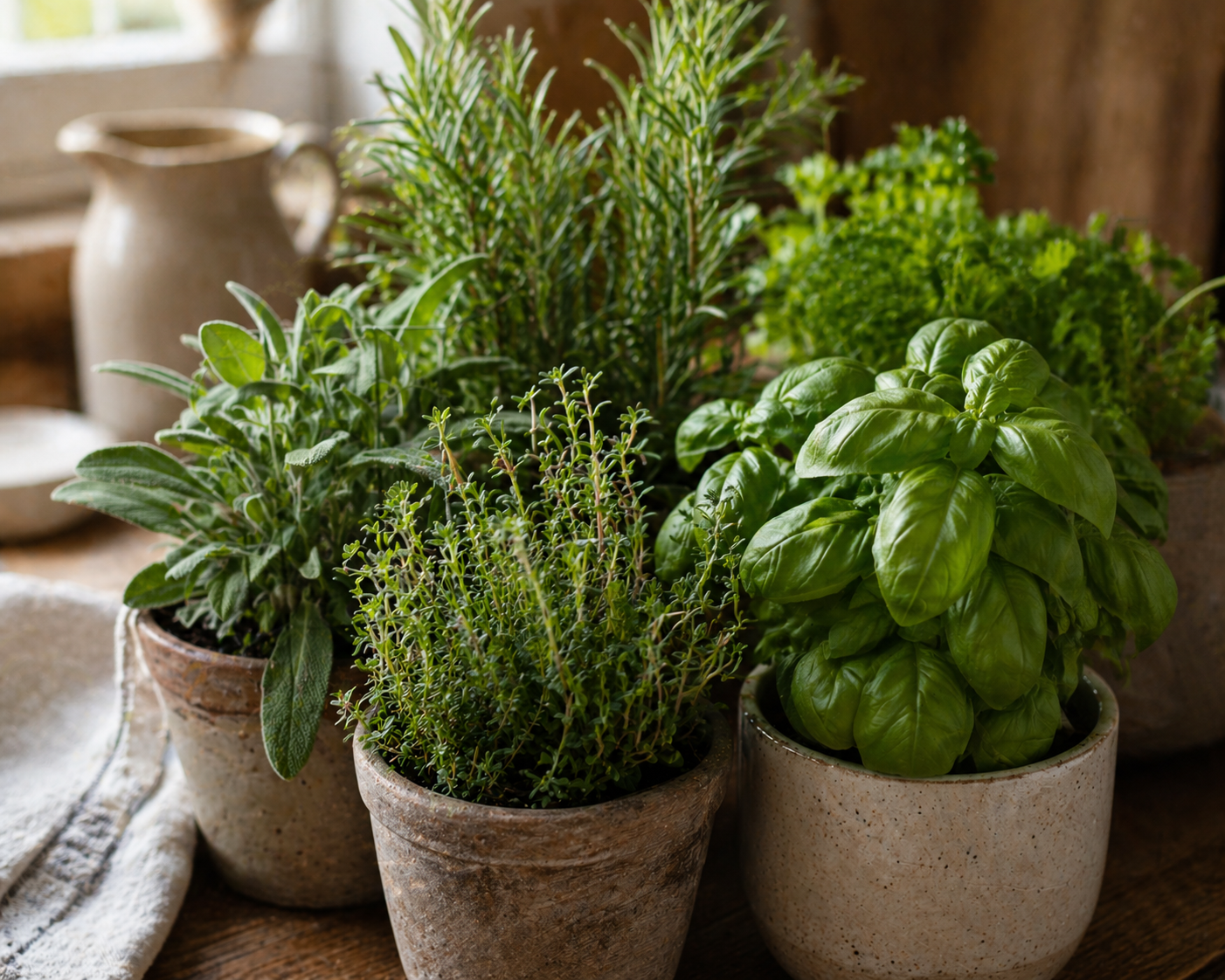
There is something quietly wonderful about reaching over to a living plant on your windowsill and snipping a sprig of rosemary for the roast, or rubbing a basil leaf between your fingers just to smell it, or steeping fresh mint into tea on a slow afternoon. It is a small thing. But it connects your kitchen to something alive, something growing, something tended, and that connection matters more than most people realize.
If you have ever wanted to grow herbs indoors but felt like you didn't know where to start, or like you didn't have enough space, or enough light, or enough of a green thumb, this post is for you. Because growing herbs indoors for cooking and healing is genuinely one of the most accessible, rewarding, and practical things you can do for your home and your family. You don't need a greenhouse. You don't need a lot of room. You need a sunny window, a few pots, and a willingness to learn.
And once you start, you will wonder how you ever cooked without them.
Before we get into the how, let's talk about the why. Understanding what herbs actually offer changes the way you think about them.
Fresh herbs do something to cooking that dried herbs simply cannot replicate. They bring brightness, depth, and life to a dish. A handful of fresh basil on a bowl of pasta, fresh thyme stirred into a pot of soup, rosemary tucked under the skin of a roasting chicken. These are not garnishes. They are the difference between food that is merely eaten and food that is remembered.
But herbs offer something beyond flavor. For most of human history, the herb garden was also the medicine cabinet. Long before pharmacies, women grew chamomile for anxiety and sleeplessness, calendula for skin and wound healing, peppermint for digestion, lemon balm for stress, thyme for respiratory health. This knowledge was passed from mother to daughter for generations. It was considered as essential as knowing how to cook.
We have largely lost that knowledge. But it is not gone. Recovering even a small portion of it, growing even a few medicinal herbs on your windowsill, reconnects you to something ancient and wise and deeply practical.
"He makes grass grow for the cattle, and plants for people to cultivate, bringing forth food from the earth." — Psalm 104:14
God designed plants to feed us and to heal us. The herb garden, humble as it is, is a participation in that design. It is one of the simplest and most beautiful ways to steward what He has given us.
Read Now: You Don't Need Acres: How to Start Homesteading From a Small Backyard
Understanding the basic needs of herbs takes most of the mystery out of growing them. Herbs are not fragile or fussy. They are, by nature, hardy plants that grow wild in fields and along roadsides. What they need indoors is simply a version of what they would find outside.
Light is the single most important factor in growing herbs indoors successfully. Most culinary herbs, including basil, rosemary, thyme, oregano, and sage, are Mediterranean plants. They want sun. Six to eight hours of direct or bright indirect light per day is ideal.
A south-facing or west-facing windowsill is your best friend. If your windows don't offer enough light, especially in winter months, a simple grow light placed a few inches above your plants for twelve to fourteen hours a day will compensate beautifully. Grow lights are inexpensive, effective, and genuinely game-changing for indoor herb gardens in low-light homes.
Signs your herbs are not getting enough light: they grow tall and leggy, reaching toward the window. Leaves become pale. Growth slows significantly. Move them closer to the light source, or add supplemental light.
More indoor herbs die from overwatering than from any other cause. And overwatering is almost always a drainage problem, not a watering problem. Water sitting in soil with nowhere to go creates root rot, and root rot kills quickly and quietly.
Always use pots with drainage holes. Always. When you water, water thoroughly until it runs out the bottom, and then let the soil dry slightly before watering again. Stick your finger an inch into the soil. If it feels damp, wait. If it feels dry, water.
This one practice, learning to water based on soil moisture rather than schedule, will save more herbs than any other single thing.
Herbs need well-draining soil, not heavy garden soil that compacts and holds moisture. A quality potting mix works well for most herbs. For Mediterranean herbs like rosemary, thyme, and oregano, add a small amount of perlite or coarse sand to improve drainage further. These plants come from rocky, dry hillsides. They want lean, fast-draining soil and they will reward you for giving it to them.
Most herbs prefer the same temperatures humans do, somewhere between 60 and 75 degrees Fahrenheit. Keep them away from cold drafts near windows in winter and away from heating vents that dry the air. A light, gentle airflow, even just from an occasionally opened window, helps prevent fungal issues and strengthens stems. If your indoor air is very dry in winter, misting occasionally or placing a small tray of water near your herbs can help.
Start with what your kitchen actually uses. There is no point in growing a beautiful pot of tarragon if you never cook with it. Here are the most useful, most forgiving, and most rewarding herbs for a beginner indoor kitchen garden.
Basil is generous, fragrant, and fast-growing. It loves warmth and full sun and will reward consistent harvesting with abundant new growth. The key to keeping basil productive is to pinch off the flower heads the moment they appear. Once basil flowers and goes to seed, the leaves become bitter and growth slows. Pinch it back regularly and it will keep producing all season.
Use it fresh in pasta, on pizza, in salads, blended into pesto, floated on top of soup. Basil does not survive drying well. Its flavor is most alive fresh, which makes a windowsill plant especially valuable.
Rosemary is a slow grower but a loyal one. Given enough light and well-drained soil, it will thrive for years indoors. It is drought-tolerant, so err on the side of underwatering rather than over. Its woody, piney fragrance makes it one of the most distinctive herbs in the kitchen, and it pairs beautifully with roasted meats, potatoes, bread, and olive oil.
Medicinally, rosemary has long been used to support circulation and memory, and as an antimicrobial. A simple rosemary-infused oil, sprigs of fresh rosemary steeped in olive oil, is a lovely pantry staple and a beautiful gift.
Thyme is one of the most useful herbs in a from-scratch kitchen. It goes into soups, stews, roasted vegetables, marinades, compound butters, and homemade stock. It is hardy, low-maintenance, and incredibly productive for its small size.
Thyme has been used medicinally for centuries as a respiratory herb. Thyme tea with honey is a traditional remedy for coughs and sore throats that genuinely works and is safe for the whole family. Grow it and use it freely. It is one of the most practical herbs you can have on your windowsill.
Mint is the easiest herb to grow and the hardest to contain. It spreads aggressively outdoors, but indoors in a pot it is perfectly well-behaved and enormously productive. Give it moderate light and consistent moisture and it will give you an almost unlimited supply of leaves.
Peppermint tea is one of the oldest and most effective digestive remedies. A cup after a heavy meal settles the stomach gently and naturally. Spearmint is milder and lovely in cold drinks, desserts, and lamb dishes. Mint also dries beautifully. Hang small bunches upside down in a warm dry place and store the dried leaves for tea through the winter.
Chives are among the most forgiving herbs for beginners. They tolerate lower light than most, grow back quickly after cutting, and produce a mild onion flavor that works in eggs, soups, salads, baked potatoes, and cream sauces. Snip them regularly right down to the base and they will regrow within days.
Parsley is slower to establish than most herbs but once it is growing well, it is incredibly productive. It tolerates lower light, has a long harvest window, and is rich in vitamins C and K. Use it generously, not as a garnish but as an ingredient. Stirred into soups at the last minute, blended into chimichurri, tossed with roasted vegetables, it adds brightness and nutrition to nearly everything.
These herbs move beyond the kitchen into the ancient tradition of the home apothecary. You do not need a medical degree to grow and use these plants wisely. You need a little knowledge, a lot of respect for their potency, and the wisdom to know when professional care is needed.
Chamomile is one of the gentlest and most beloved medicinal herbs in the world. It has been used for centuries to calm anxiety, ease sleeplessness, soothe upset stomachs, and reduce inflammation. A cup of strong chamomile tea before bed is one of the simplest and most effective sleep supports available, and it is safe for children in appropriate amounts.
German chamomile grows well in pots with good light. Harvest the flower heads when they are fully open and dry them for tea. A jar of home-dried chamomile on your pantry shelf is one of the most useful things you can have.
Lemon balm is a member of the mint family, easy to grow, eager to spread, and wonderfully fragrant. It has a gentle lemon scent and flavor and has been used traditionally to reduce stress and anxiety, support sleep, and calm nervous digestion. Combined with chamomile it makes a deeply soothing evening tea.
It grows readily indoors with moderate light and consistent moisture. Harvest leaves regularly to keep the plant full and bushy.
Calendula is grown primarily for its brilliant orange and yellow flowers, which have remarkable skin-healing properties. Calendula-infused oil is used in homemade salves, lip balms, and skin creams for its anti-inflammatory and wound-healing properties. It is gentle enough for sensitive skin and babies.
Grow calendula in a pot with good light, harvest the flowers regularly to encourage continued blooming, and dry them for infusing into oil. It is one of the most beautiful and useful plants you can grow.
Lavender is one of the most versatile plants in the home apothecary. Dried lavender in a sachet under your pillow supports sleep. Lavender essential oil diluted in a carrier oil soothes burns, headaches, and skin irritation. Lavender tea is calming and lovely. And a pot of blooming lavender on a sunny windowsill is simply beautiful, which is its own kind of healing.
Lavender needs excellent drainage and full sun. It is one of the more demanding indoor herbs but well worth the effort.
Check out this Herb and Flower Seed Vault
This is where many beginners go wrong. They either harvest too little, afraid to damage the plant, or too much, stripping it bare.
The right approach for most herbs is to harvest no more than one third of the plant at a time, cutting just above a leaf node, the point where leaves emerge from the stem. Cutting above a node encourages the plant to branch and fill out rather than grow tall and leggy. Regular harvesting, done correctly, actually keeps herbs healthier and more productive than leaving them untouched.
For basil, pinch the top set of leaves regularly. For thyme and rosemary, snip the soft new growth from stem tips. For chives and parsley, cut entire stems down near the base. For mint, cut stems back by half regularly to keep it from becoming straggly.
The more you harvest, wisely and consistently, the more the plant gives back. It is one of the more poetic lessons the herb garden teaches.
When your herbs produce more than you can use fresh, and they will, preserve the abundance.
Air drying is the simplest method. Gather small bunches, secure them with a rubber band, and hang them upside down in a warm, dry, well-ventilated spot out of direct sunlight. Most herbs dry fully within one to two weeks. Strip the dried leaves from the stems and store them in glass jars away from heat and light.
Freezing preserves flavor beautifully for soft herbs like basil and parsley that lose much of their character when dried. Blend fresh herbs with a small amount of olive oil and freeze in ice cube trays. Drop a cube directly into soups, sauces, or sautéed vegetables straight from the freezer.
Infusing into oil or vinegar creates pantry staples that carry the flavor and medicine of the herb in a preserved, shelf-stable form. Rosemary olive oil. Thyme vinegar. Calendula-infused oil for skin care. These are simple to make, beautiful to use, and deeply satisfying to produce from your own windowsill garden.
If all of this feels like a lot, come back to the beginning. You do not need to start with a full windowsill of twelve herbs and a drying rack and a shelf of infused oils. You need one pot. One herb. The one your kitchen uses most.
Buy a small pot of basil from the grocery store and move it to your sunniest window. Water it when the soil is dry. Pinch off the flowers. Harvest it regularly. Let that one pot teach you what herbs need and what they give back.
Then add another. And another. Let your herb garden grow the same way everything in a slow, intentional life grows, gradually, faithfully, one small tended thing at a time.
"Consider how the wild flowers grow. They do not labor or spin. Yet I tell you, not even Solomon in all his splendor was dressed like one of these." — Luke 12:27
God tends growing things. He notices them. He clothes them in beauty without their striving for it. Your little pots of herbs on the windowsill, tended with care, used with gratitude, given freely to the people you feed and heal, are a small participation in that same beautiful, unhurried work.
Start today. One pot. One window. One herb at a time.
If this inspired you to get something growing in your kitchen, save this post and come back to it when you are ready for the next herb. And if you want more of this kind of practical, faith-rooted encouragement for your home, from the garden to the kitchen to the apothecary shelf, join our community below. We would love to grow alongside you.
Why Grow Herbs Indoors?
What Do Herbs Actually Need to Grow Indoors?
Light: The Non-Negotiable
Drainage: More Important Than Watering
Soil: Not Garden Dirt
Temperature and Airflow
The Best Herbs to Grow Indoors for Cooking
Basil: The Heart of the Summer Kitchen
Rosemary: Steady, Fragrant, and Healing
Thyme: A Workhorse Herb With Deep Roots
Mint: Abundant and Medicinal
Chives: Simple, Cheerful, and Prolific
Parsley: Underestimated and Deeply Useful
The Best Herbs to Grow Indoors for Healing
Chamomile: For Rest and Calm
Lemon Balm: For Stress and Sleep
Calendula: The Skin Herb
Lavender: For Calm and Healing
How to Harvest Herbs Without Killing the Plant
Drying and Preserving Your Herb Harvest
Start With One Pot

Comments