How to Start Homesteading in a Small Backyard for Beginners
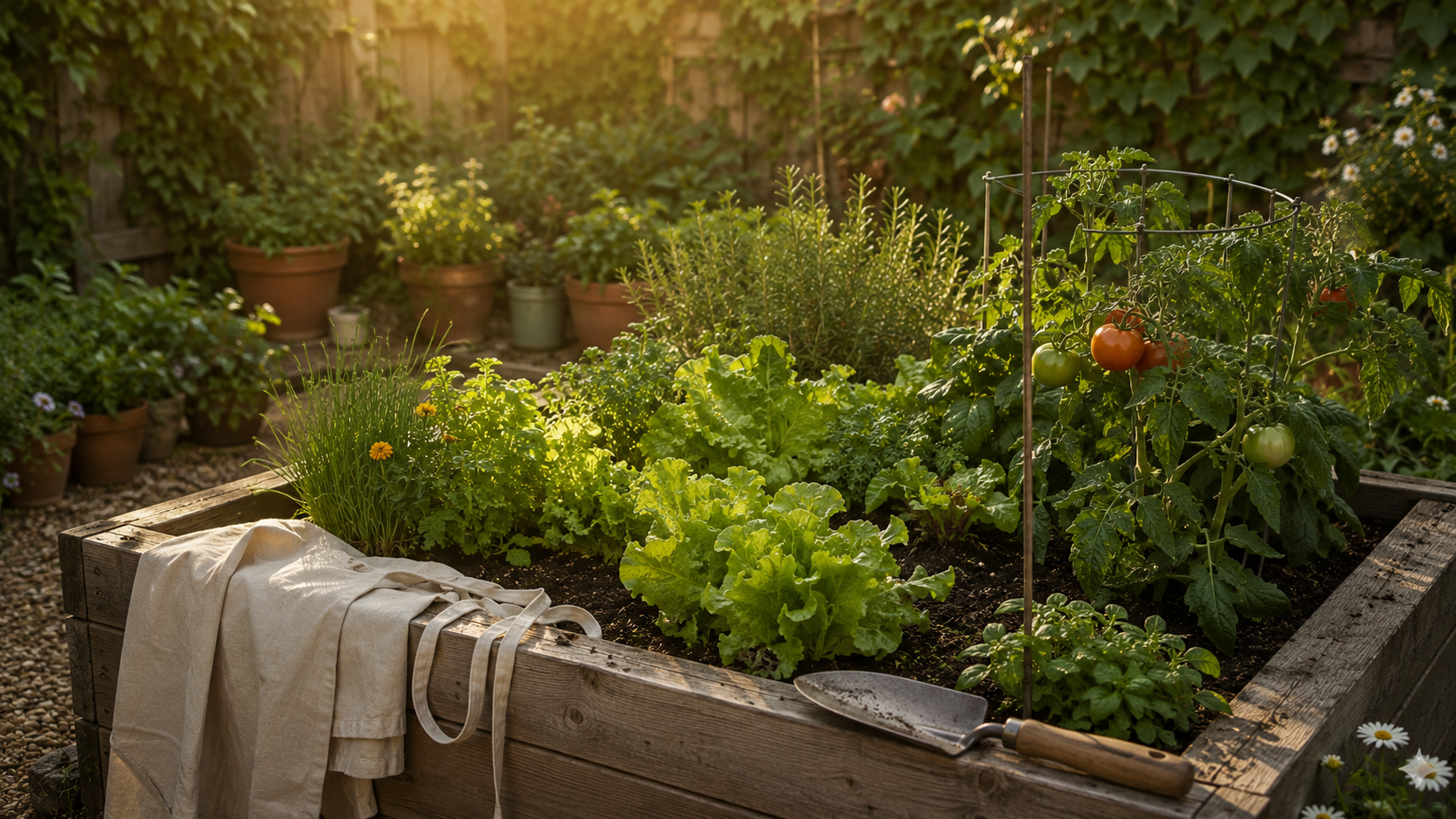
Something is pulling you toward the garden. Toward the kitchen. Toward a slower, more rooted way of living that feels like it belongs to another era, and somehow, also, exactly like the life you were made for.
You don't have a farm. You might have a small backyard, a patio, or a narrow strip of earth alongside a fence. You have never grown a tomato plant or kept a chicken or baked bread from scratch. And yet something in you keeps returning to this longing, this sense that you were built for something more grounded than what the modern world is offering you.
That pull is real. And it is not wasted on a small backyard.
Homesteading, at its heart, is not about acreage. It is about intention, the intentional practice of growing, making, and tending what you can, right where you are, with what you have been given. A woman with a quarter-acre lot in the suburbs can homestead just as faithfully as a woman with ten acres in the country. The scale is different. The heart is the same.
The modern homesteading movement has sometimes made this feel like a destination you reach only after you have the right land, the right setup, the right tools. But the older vision of homesteading, the one that has sustained families for centuries, was simply the ordinary practice of tending your patch of ground, keeping your household fed, and wasting nothing. That vision fits a small backyard just fine.
Backyard homesteading might look like a raised garden bed producing lettuce, tomatoes, and herbs through the growing season. It might look like a small flock of three or four laying hens in a corner of the yard. It might look like a compost bin turning kitchen scraps into garden gold, a few pots of herbs on the back step, a freezer filling up with preserved summer produce.
It does not have to look impressive. It has to be real, rooted in your actual ground, tended by your actual hands.
The very first assignment God gave human beings was a garden. Genesis 2:15 tells us that the Lord God placed Adam in the garden "to work it and keep it." To tend it. To care for it. Before the fall, before the curse, before anything else — there was a garden and a person charged with its keeping.
That mandate did not disappear. It echoes through all of Scripture. Proverbs 12:11 says "whoever works his land will have plenty of bread." The Proverbs 31 woman considers a field and plants a vineyard with her own hands. Throughout the wisdom literature and the prophets, the fruitful land tended by faithful hands is one of the most consistent pictures of blessing and provision.
It is not a stretch at all. Tending a garden is one of the most ancient and embodied ways of participating in God's provision. You plant. You water. You wait. You harvest. At every step, you are reminded that life comes from outside yourself, that the rain, the sun, and the seed are not yours to command but yours to receive.
There is a kind of theology available in a garden that you cannot find anywhere else. The smallness of a seed. The slowness of growth. The abundance that comes from faithfulness over time. Grow something, even small, and it will teach you things about God that no sermon fully can.
Because this longing is not random. It is woven into the fabric of what it means to be human, and especially into the calling of women who were made to be life-givers, nourishers, and keepers of home.
The world has spent several generations telling women that the domestic life is small, that the kitchen and the garden are beneath them, that significance is found in the marketplace and nowhere else. And many women have believed it, and found themselves tired and rootless and quietly grieving something they cannot name.
The pull you feel toward the land, toward homegrown food, toward a slower and more tended life, that is not nostalgia. It is not a personality quirk. It is your God-given nature reasserting itself. It is worth listening to.
Then you will be in good company. Every woman who has ever grown anything has killed something in the process. The fear of failure is real, but it is not a reason to stay out of the garden. It is a reason to start small.
Start with one raised bed. Or a pot of herbs. Or three seed packets. Give yourself permission to learn slowly, to make mistakes, to lose a few plants and replant them. The garden is one of the most forgiving teachers you will ever have, it always offers another season.
The first and most important thing is to resist the urge to do everything at once. The homesteading world is full of beautiful inspiration that can quickly become overwhelming, chicken coops and bee hives and root cellars and canning setups all clamouring for your attention at the same time.
You do not start there. You start with soil and seeds.
A simple beginner sequence for small backyard homesteading:
Far less than most people fear. A small raised bed garden, well-planted, well-mulched, and cared for consistently, takes approximately 30 minutes of tending per week during the growing season. A small herb garden takes even less. A flock of three to four hens takes about 15 minutes a day.
The work is not heavy. It is rhythmic. And rhythm is different from burden, it becomes the kind of daily tending that grounds you rather than draining you.
Learn the skills that directly feed your family. Everything else can wait.
That means your first homesteading education should be in the garden and in the kitchen — learning to grow vegetables, to cook from scratch, to preserve simple things. These foundational skills connect directly to the table, which is the center of every home worth tending.
The first five homesteading skills worth learning, in order:
Every bit of it. Suburban homesteading is one of the fastest-growing movements in the country right now, and for good reason. A small suburban lot can produce a surprising amount of food, host a small flock of hens, grow a meaningful herb garden, and sustain a family's rhythms of growing, cooking, and preserving.
You do not need to move to the country to tend a home faithfully. You need to tend the ground you have been given.
The backyard garden is not the end of the story. It is the beginning of a way of life.
When you grow your first tomato, something shifts. When you serve your family a meal built almost entirely from what your hands grew and cooked, something settles. When you learn to preserve the harvest and see your pantry fill with the labor of the season, you begin to understand, in your body, not just your mind, what it means to be a keeper of a home.
This is what the longing is pointing toward. Not a perfect homestead. Not Instagram-worthy rows of raised beds. Just a life that is rooted in real things, in the earth, in your kitchen, in the rhythms of the seasons and the faithfulness of God.
Your small backyard is enough to begin.
Come join the email list if you want a gentle, faith-rooted companion for this journey, quiet encouragement, practical wisdom, and the reminder that ordinary tending is holy work.
https://www.biblegateway.com/passage/?search=Genesis+2%3A15&version=ESVhttps://www.biblegateway.com/passage/?search=Proverbs+12%3A11&version=ESVhttps://homesteadersofamerica.com/suburban-homesteading/https://extension.uga.edu/publications/detail.html?number=C993https://extension.usu.edu/yardandgarden/research/raised-bed-gardeninghttps://www.almanac.com/vegetable-gardening-for-beginnershttps://nchfp.uga.edu/https://www.desiringgod.org/articles/gardening-as-gospel-witnesshttps://www.reddit.com/r/vegetablegardening/comments/beginner_raised_bed_advicehttps://www.reddit.com/r/homesteading/comments/small_backyard_homestead_where_to_starthttps://extension.oregonstate.edu/gardening/techniques/raised-bed-gardeninghttps://www.blueletterbible.org/lexicon/h5647/esv/wlc/0-1/
Can I Really Homestead if I Only Have a Small Backyard?
What does "backyard homesteading" actually look like in practice?
What Does the Bible Say About Tending the Land and Growing Your Own Food?
Is growing your own food a spiritual act, or is that a stretch?
Why Do I Feel Such a Strong Pull Toward Growing Food and Tending a Home?
What if I'm afraid I'll start and fail or not be able to keep it up?
How Do I Start Backyard Homesteading When I Have No Experience?
How much time does a small backyard homestead actually take?
How Do I Know Which Homesteading Skills to Learn First?
What if I live in the suburbs — does any of this still apply to me?
Where Does This All Lead?
Join Our Community

Comments