What to Plant in Fall for a Spring Harvest: A Beginner's Guide
Most of what we've covered this season has been about growing food before winter sets in. But there's a whole other category of fall planting that works differently: crops and plants you tuck into the ground now, let sit quietly through the cold months, and harvest next spring or summer. If you've never tried overwintering anything before, this is your beginner's guide to what to plant now for a harvest that's still months away.
Why Fall Planting Sets Up a Better Spring
Planting in fall gives roots several weeks to settle into the soil before it freezes, which means these plants hit the ground running the moment spring warms things back up, often weeks ahead of anything you'd plant fresh in March or April. It's a bit of a patience game, since you won't see much aboveground growth before winter, but that quiet root development underground is exactly what makes these crops so productive once spring arrives.
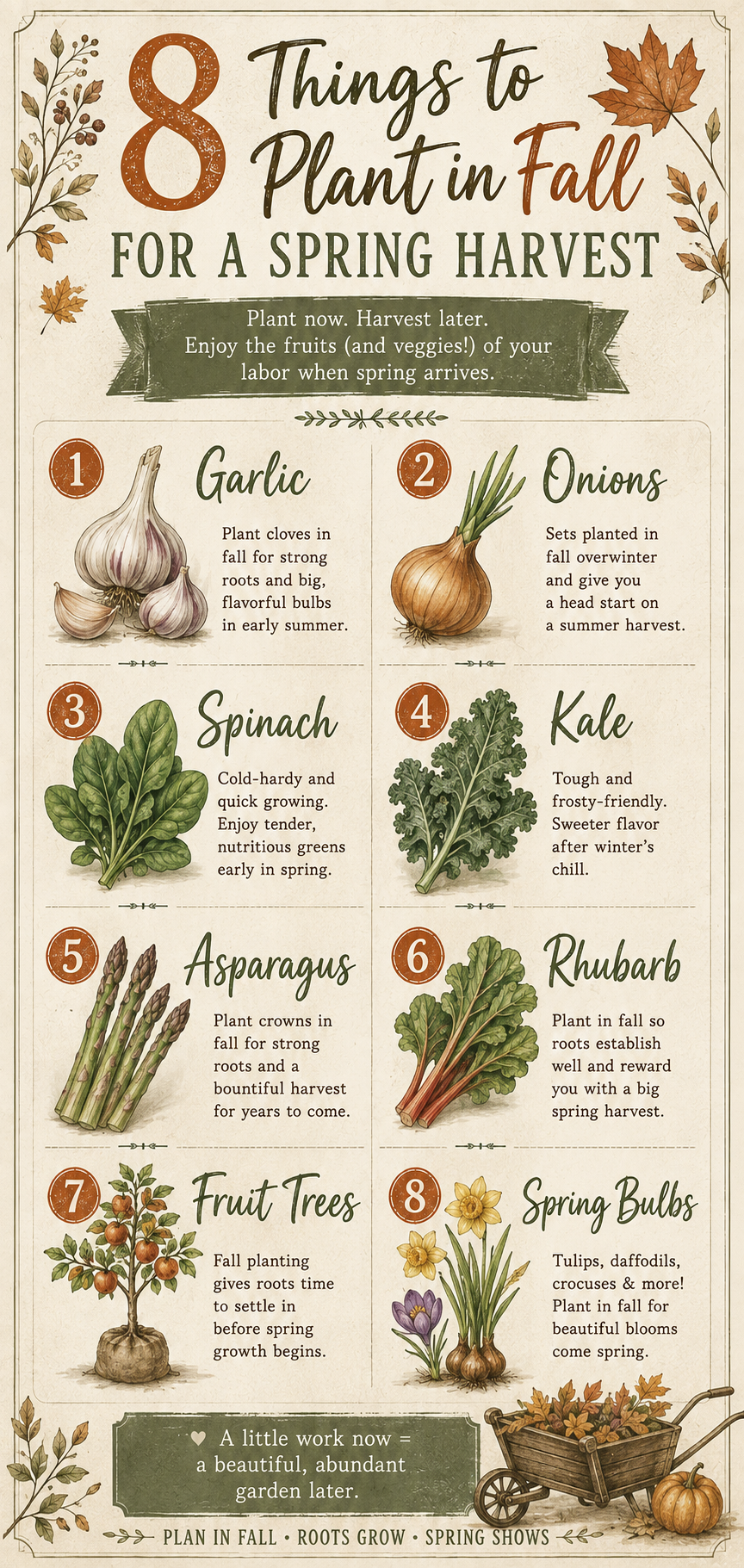
1. Garlic
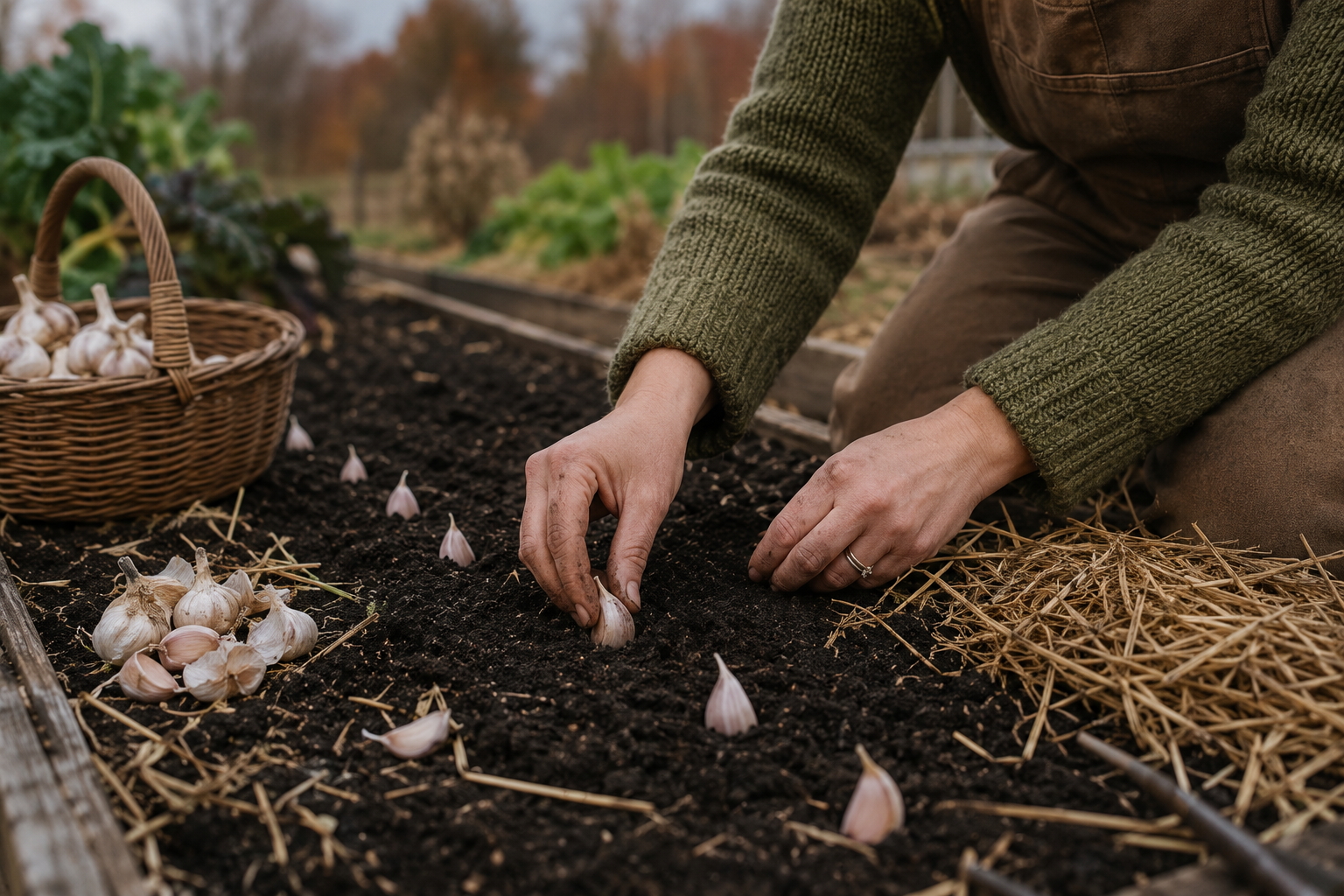
Garlic is the single best crop to start with if you're new to fall-for-spring planting. Garlic cloves actually need a period of cold exposure to trigger proper bulb development, which is why fall planting works so much better than a spring start. Plant individual cloves, pointed end up, about two inches deep and six inches apart, ideally a few weeks before your ground freezes so roots have time to establish. Cover the bed with four to six inches of mulch, like straw or shredded leaves, once temperatures really drop, and you'll see green shoots emerge again in early spring, with a full bulb harvest typically ready by mid-summer.
Break your seed garlic into individual cloves right before planting rather than weeks ahead of time, and leave the papery skin on each clove intact, since that thin layer helps protect it from rot while it's establishing roots underground. Choose the largest, healthiest cloves for planting and save the smaller ones for the kitchen, since bigger cloves tend to produce bigger bulbs the following summer.
Get a variety of heirloom garlic bulbs here →
2. Overwintering Onions and Shallots
Alongside garlic, onion sets and shallots are one of the easiest allium crops to overwinter, since alliums as a category are naturally cold-hardy and forgiving for beginners. Plant sets a few weeks before your first hard freeze, mulch well once the ground begins to cool, and they'll resume growing as soon as the weather warms, giving you a head start of several weeks over anything planted fresh in spring.
Look specifically for onion varieties labeled as overwintering or fall-planting types, since not every onion set is bred to handle a full winter outdoors. Space sets about four to six inches apart, planted just deep enough to cover the bulb, and don't be alarmed if you see a bit of green top growth before winter fully sets in. That's normal, and the plant will simply pause until spring.
Get onion and shallot sets here →
3. Spinach
Spinach is remarkably cold-hardy and, planted at the right time in fall, can survive winter under a layer of mulch or row cover and be one of the very first fresh greens ready to harvest in early spring. The trick is timing it so the plants are established but still small going into winter, since spinach that's too mature going into cold weather tends to bolt as soon as the days start lengthening again.
Aim to get seeds in the ground roughly four to six weeks before your first hard freeze, which gives plants enough time to develop a handful of true leaves without pushing toward full maturity before winter. A simple row cover or cold frame adds an extra layer of protection in harsher climates and can mean the difference between a spinach patch that limps through winter and one that comes back vigorously.
Get heirloom spinach seeds here →
4. Kale
Kale is one of the hardiest greens you can grow, and a fall-planted patch protected with mulch or a simple row cover will often survive winter and start producing again well before most spring-planted vegetables have even germinated. Established kale plants are especially resilient, sometimes shrugging off temperatures that would kill less cold-tolerant crops outright.
For the best odds of a plant surviving into spring, get kale established well before your first freeze so it has a solid root system and several mature leaves going into winter. A thick layer of mulch around the base helps insulate the roots, and in colder zones, a simple cold frame or hoop tunnel can keep plants producing sporadically all winter long rather than just pausing until spring.
Get heirloom kale seeds here →
5. Asparagus Crowns
Asparagus is a genuine investment crop, planted once and then productive for fifteen years or more, which makes fall a great time to get crowns into the ground. Dig a shallow trench, spread the roots of each crown out, cover with a few inches of soil, and mulch well for winter protection. Be patient here: asparagus needs a couple of seasons to establish a strong root system before you harvest a full crop, so resist cutting spears the first spring and let the plant build strength instead.
Choose a permanent spot for your asparagus bed, since it isn't a crop you'll want to relocate once it's established. Dig your trench about six to eight inches deep, mound a small ridge of soil at the bottom for the crown to sit on with roots draping down the sides, and backfill gradually as the emerging shoots grow taller over the following season, rather than filling the trench in all at once.
Get heirloom asparagus crowns here →
6. Rhubarb Crowns
Rhubarb crowns planted in fall settle in over the dormant months and are often ready for a light harvest the very first growing season after planting, with a fuller harvest by the second year. Choose a spot rhubarb can live in for years, since it's a true perennial, plant the crown with its bud just at or slightly below the soil surface, and mulch generously heading into winter.
Give each crown plenty of room, roughly three feet in every direction, since a mature rhubarb plant spreads out considerably more than most beginners expect. Rich, well-drained soil makes a real difference for rhubarb, so working some compost into the planting hole before you set the crown in place is well worth the extra effort.
7. Bare-Root Fruit Trees and Bushes
Fall is one of the best times to plant bare-root fruit trees, berry bushes, and other woody perennials, since cooler temperatures reduce transplant stress and the plant can spend the dormant season focused entirely on root establishment rather than also trying to support leaves and fruit. By the time spring arrives, a fall-planted tree or bush is often noticeably ahead of one planted fresh that same spring. Dig a hole as deep as the root system and twice as wide, spread the roots naturally rather than forcing them into a cramped hole, and water well at planting even though the plant itself won't need much once it's dormant.
Soak bare-root plants in water for a few hours before planting to rehydrate the roots, and avoid letting them dry out during the time between purchase and planting, since bare roots are more vulnerable to drying damage than a plant that's already potted in soil. Blueberries, raspberries, and grapevines are all commonly sold bare-root in fall alongside fruit trees and follow this same basic planting approach.
8. Spring-Flowering Bulbs
Not every fall-planted crop is edible, and spring bulbs like tulips, daffodils, and crocuses deserve a mention here too, since they follow the exact same logic: planted in fall, they use the cold winter months to develop the root systems they need to bloom as soon as the ground warms. If cut flowers are part of your homestead's rhythm, or you simply want color waiting for you after a long winter, this is the season to get bulbs in the ground.
Plant bulbs pointed end up, generally at a depth of about three times their own height, and choose a spot with good drainage, since bulbs that sit in soggy soil all winter are prone to rotting before spring ever arrives. Daffodils are an especially forgiving choice for beginners, since they're rarely bothered by deer or rodents the way tulip bulbs sometimes are.
How to Choose What's Right for Your First Try
If this is your first time overwintering anything, garlic is genuinely the easiest and most forgiving place to start, since it asks very little of you between planting and spring beyond a good layer of mulch. From there, spinach and kale are a natural second step, since you likely already have experience growing both as fall crops and are simply extending that same planting into a longer, colder stretch. Save the bigger investments, like asparagus, rhubarb, and fruit trees, for once you've got a season or two of overwintering experience under your belt, since they take longer to reward your effort and are a bigger disappointment to lose to a planting mistake.
Preparing Your Beds for Winter Dormancy
Whatever you plant, a few basics apply across the board. Work compost into the soil before planting to give roots a nutrient boost as they establish. Water thoroughly at planting time, even though watering needs will drop sharply once the ground cools and eventually freezes. And mulch generously, since a good layer of straw, shredded leaves, or wood chips insulates roots from temperature swings and helps prevent the freeze-thaw cycles that can heave shallow-rooted plants right out of the ground over winter.
A Simple Fall-for-Spring Planting Checklist
Check your first frost date and plan to get crops in the ground several weeks ahead of it. Start with garlic if this is your first attempt at overwintering. Mulch every bed generously once temperatures drop, using four to six inches for most crops. Water well at planting time, then taper off as the ground cools. Resist the urge to harvest perennial crops like asparagus too early; give the roots time to establish first. Mark your beds clearly so you remember what's growing there come spring, since dormant plantings are easy to forget about or accidentally disturb.
Frequently Asked Questions
What's the easiest thing to plant in fall for a spring harvest? Garlic. It needs very little from you beyond planting, mulching, and patience.
Do I need to water fall-planted crops all winter? No. Water well at planting time, but most need very little supplemental water once the ground cools and freezes.
Will these plants survive a hard freeze? Most, especially garlic, onions, and established kale, are quite cold-hardy, particularly once mulched.
How long until asparagus and rhubarb actually produce a full harvest? Rhubarb often gives a light harvest the first year, fuller by year two. Asparagus takes two to three years before a full harvest.
Can I still plant these if I missed the ideal fall window? Garlic and bulbs have some flexibility as long as the ground isn't frozen. Bare-root trees and perennial crowns are best planted while dormant — early spring is your next window if you miss fall.
Your Next Step
Pick one crop from this list, whether that's a simple row of garlic or your first asparagus bed, and get it into the ground before your soil freezes. Fall-for-spring planting takes a bit of trust, since you're working now for a reward you won't see for months, but there's something deeply satisfying about walking out to a garden bed next spring and finding it already ahead of you.
Further Reading
What to Plant in September 2026 (The Complete Zone-by-Zone Guide): https://littlehouseinthepines.com/what-to-plant-in-september-zone-by-zone/
When to Plant a Fall Garden: How to Calculate Your Planting Date From First Frost: https://littlehouseinthepines.com/when-to-plant-fall-garden-first-frost-calculator/
10 Easy Fall Vegetables to Grow for Beginner Gardeners: https://littlehouseinthepines.com/10-easy-fall-vegetables-beginner-gardeners/
10 Things to Do Now for a Better Garden Next Spring: https://littlehouseinthepines.com/10-things-to-do-now-for-a-better-garden-next-spring/
Sources
14 Vegetables to Plant in Fall for Spring Harvest – The Grounds Guys: https://www.groundsguys.com/blog/fall-planting-for-a-spring-vegetable-garden/
Planting Garlic in the Fall – The Old Farmer's Almanac: https://www.almanac.com/planting-garlic-fall
8 Plants to Overwinter for Winter and Spring Harvests – Growfully: https://growfully.com/plants-to-overwinter/
Plant Asparagus This Fall & Harvest Next Spring – Rural Sprout: https://www.ruralsprout.com/plant-asparagus-this-fall/
Rhubarb and Asparagus – NDSU Agriculture Extension: https://www.ndsu.edu/agriculture/extension/publications/rhubarb-and-asparagus
