There are seasons when life asks more of us than usual.
Long days. Full calendars. Too little rest. Too many things pulling at once.
Traditional herbal systems developed their own ways of working with plants during these demanding seasons, and several of those botanicals eventually became known in modern herbalism as adaptogens.
Our tea brings these traditional botanicals together with licorice root and rosehip in a rich, earthy loose-leaf blend inspired by traditional adaptogenic herbalism and the body's natural stress-response rhythms.
ASHWAGANDHA ROOT
Ashwagandha (Withania somnifera) forms the foundation.
Its root contributes a distinctly earthy, somewhat bitter character that gives the blend the unmistakable taste of a traditional herbal preparation.
Ashwagandha has an extensive history within Ayurveda.
Here, its deep root character creates the foundation for the brighter tulsi, schisandra, and rosehip.
HOLY BASIL / TULSI
Holy basil (Ocimum tenuiflorum), commonly called tulsi, provides the aromatic herbal heart of the blend.
Tulsi has been cultivated in India for centuries and holds an especially important place in Ayurvedic tradition and Indian culture.
Its aromatic leaves create a much brighter character than ashwagandha root, bringing complexity to the finished cup without requiring artificial flavoring.
Tulsi has also become widely recognized within modern adaptogenic herbalism, making it a natural companion to ashwagandha and schisandra.
LICORICE ROOT
Licorice root (Glycyrrhiza glabra) provides much of the blend's natural sweetness.
Because licorice is naturally intensely sweet, only a smaller amount is needed to soften the earthier character of ashwagandha.
Licorice has an extraordinarily long history within European, Middle Eastern, Chinese, and other herbal traditions.
SCHISANDRA BERRY
Schisandra (Schisandra chinensis) gives the formula one of its most interesting flavors.
The berries are traditionally described as possessing an unusual combination of flavor characteristics, giving them a tart, complex botanical character.
Schisandra has a long history within traditional Chinese herbalism and later became another recognizable botanical within modern adaptogenic herbalism.
Its brighter berry character creates a natural counterpoint to the deeper ashwagandha and licorice roots.
ROSEHIP
Rosehips are the fruit that develops after certain roses finish flowering.
They contribute a pleasantly tart, subtly fruity character that helps brighten this otherwise earthy formula.
Rosehips have a long history as both a food and traditional household botanical and have appeared in teas, syrups, preserves, and other preparations across generations.
There are seasons when life asks more of us than usual.
Long days. Full calendars. Too little rest. Too many things pulling at once.
Traditional herbal systems developed their own ways of working with plants during these demanding seasons, and several of those botanicals eventually became known in modern herbalism as adaptogens.
Our tea brings these traditional botanicals together with licorice root and rosehip in a rich, earthy loose-leaf blend inspired by traditional adaptogenic herbalism and the body's natural stress-response rhythms.
ASHWAGANDHA ROOT
Ashwagandha (Withania somnifera) forms the foundation.
Its root contributes a distinctly earthy, somewhat bitter character that gives the blend the unmistakable taste of a traditional herbal preparation.
Ashwagandha has an extensive history within Ayurveda.
Here, its deep root character creates the foundation for the brighter tulsi, schisandra, and rosehip.
HOLY BASIL / TULSI
Holy basil (Ocimum tenuiflorum), commonly called tulsi, provides the aromatic herbal heart of the blend.
Tulsi has been cultivated in India for centuries and holds an especially important place in Ayurvedic tradition and Indian culture.
Its aromatic leaves create a much brighter character than ashwagandha root, bringing complexity to the finished cup without requiring artificial flavoring.
Tulsi has also become widely recognized within modern adaptogenic herbalism, making it a natural companion to ashwagandha and schisandra.
LICORICE ROOT
Licorice root (Glycyrrhiza glabra) provides much of the blend's natural sweetness.
Because licorice is naturally intensely sweet, only a smaller amount is needed to soften the earthier character of ashwagandha.
Licorice has an extraordinarily long history within European, Middle Eastern, Chinese, and other herbal traditions.
SCHISANDRA BERRY
Schisandra (Schisandra chinensis) gives the formula one of its most interesting flavors.
The berries are traditionally described as possessing an unusual combination of flavor characteristics, giving them a tart, complex botanical character.
Schisandra has a long history within traditional Chinese herbalism and later became another recognizable botanical within modern adaptogenic herbalism.
Its brighter berry character creates a natural counterpoint to the deeper ashwagandha and licorice roots.
ROSEHIP
Rosehips are the fruit that develops after certain roses finish flowering.
They contribute a pleasantly tart, subtly fruity character that helps brighten this otherwise earthy formula.
Rosehips have a long history as both a food and traditional household botanical and have appeared in teas, syrups, preserves, and other preparations across generations.
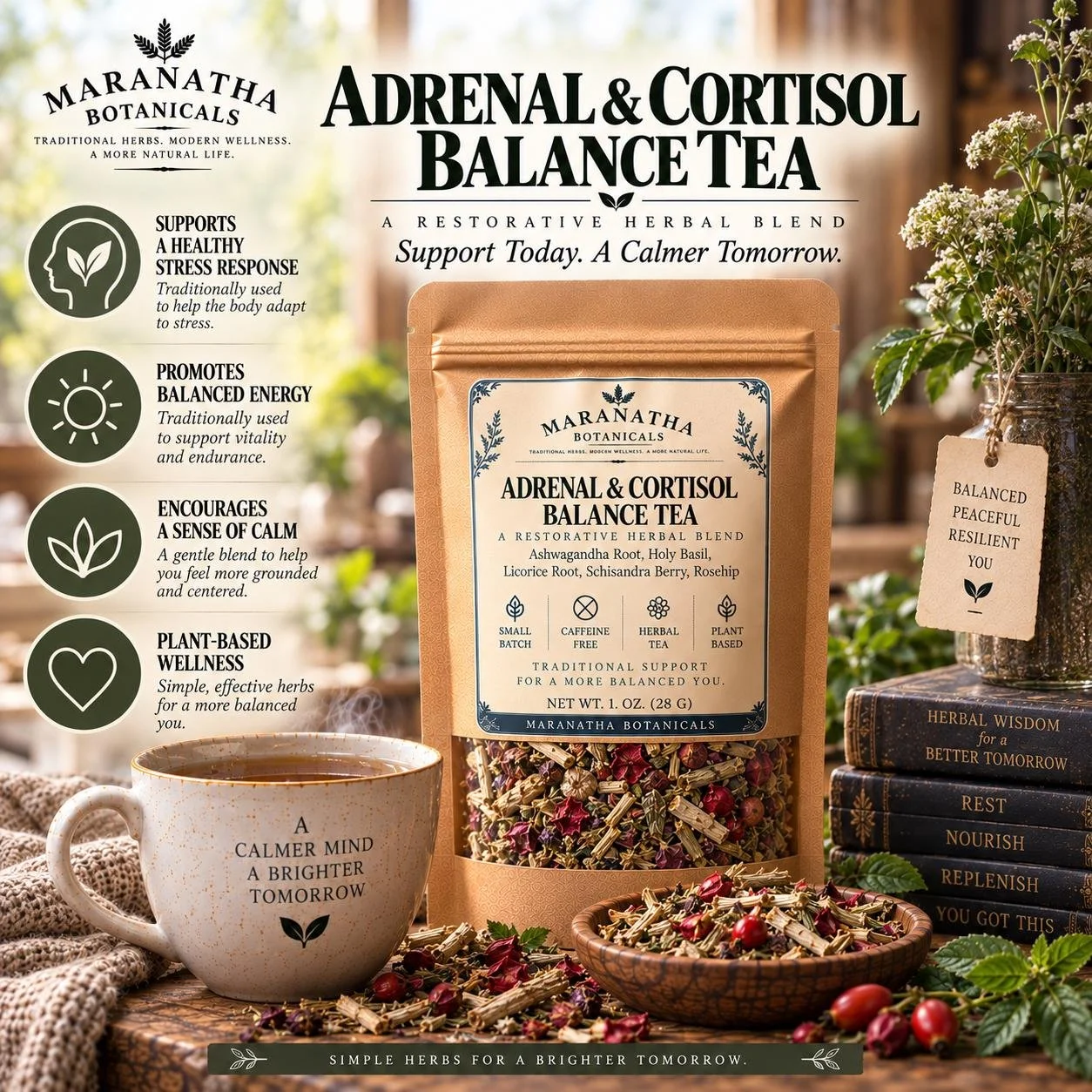 Image 1 of 3
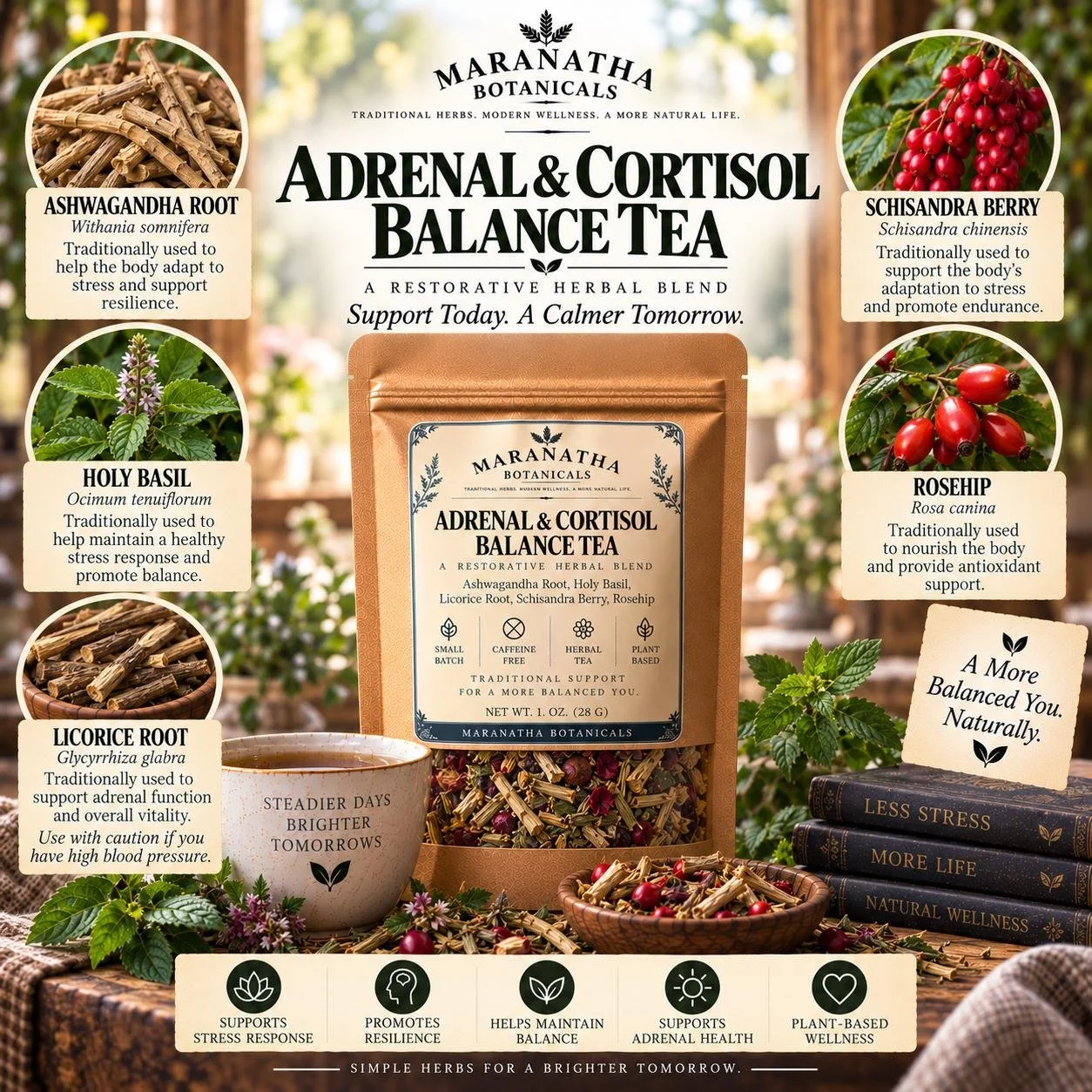 Image 2 of 3
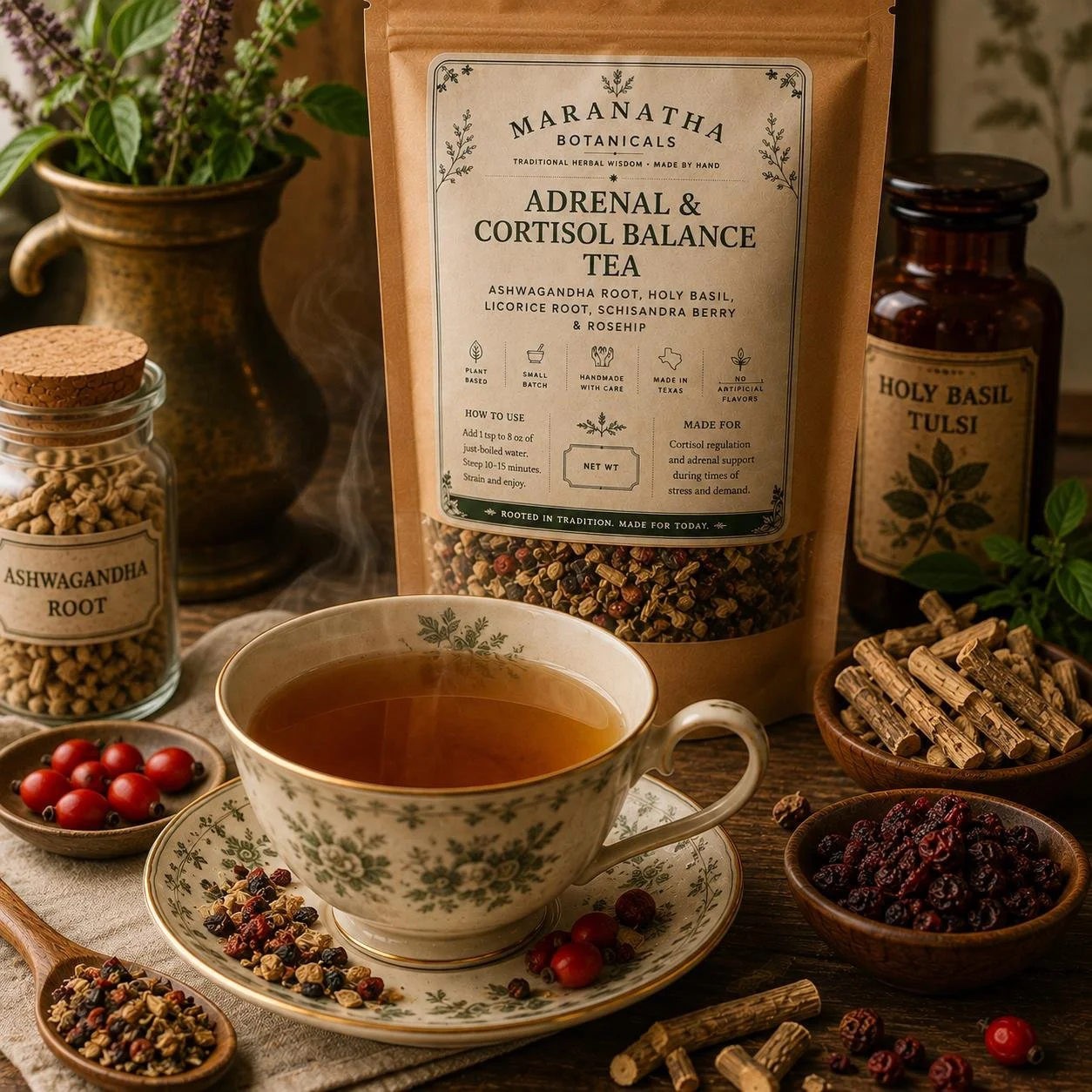 Image 3 of 3