Nervous System Reset Herbal Tea | Tulsi Lemon Balm Linden Skullcap Rose | Caffeine Free Loose Leaf Tea
from $7.00
There are moments when simply telling yourself to relax doesn't feel like enough.
When you've been carrying too much for too long, quiet can feel unfamiliar. Your mind may still be scanning the room, your shoulders still braced, your whole body seemingly waiting for the next thing that needs your attention.
Across generations, herbalists turned to certain plants during life's unsettled seasons.
Our tea brings these traditional botanicals together in a soft, aromatic loose-leaf blend inspired by traditional nervine herbalism and the ritual of creating a moment of safety, grounding, and stillness.
TULSI / HOLY BASIL
Tulsi (Ocimum tenuiflorum), also known as holy basil, forms the foundation of the blend.
Tulsi has been cultivated for centuries in India, where it holds an especially important place in Ayurvedic tradition and culture.
Its leaves produce an aromatic cup with a complex herbal character that sits somewhere between green, spicy, and subtly sweet.
Tulsi has also become one of the better-known herbs within modern adaptogenic herbalism.
Here, it creates an aromatic foundation for the softer lemon balm, linden, and rose.
LEMON BALM
Lemon balm (Melissa officinalis) contributes a fresh, green character with naturally subtle lemon-like notes.
For centuries, lemon balm appeared in European monastery gardens, physic gardens, cottage gardens, and household herbal preparations.
It eventually became particularly recognizable within traditional Western preparations associated with quiet moments and the nerves.
Its brighter character keeps this blend from becoming overly earthy or bitter.
LINDEN FLOWER
Linden flowers (Tilia spp.) provide one of the softest elements of the formula.
The delicate flowers of the linden tree have a long history within European household herbal traditions, where they have commonly been prepared as herbal infusions.
Linden has a gentle floral character with a subtle natural sweetness that pairs beautifully with lemon balm and rose.
Its connection to European household tea traditions makes it particularly fitting in a formula inspired by the old herbal cupboard.
SKULLCAP
Native to North America, skullcap became an important botanical within North American and Western herbal traditions.
It became particularly recognizable within the traditional herbal category of nervines—plants historically associated with preparations made for quiet, rest, and periods of frayed nerves.
Skullcap is more earthy and distinctly botanical than the other herbs in this blend, so the softer flowers help balance its character.
ROSE PETAL
Rose provides the finishing touch.
Its delicate floral aroma softens the greener herbs without turning the finished infusion into a predominantly rose-flavored tea.
Rose has been cultivated for thousands of years and carries an extraordinary history spanning food, perfumery, household preparations, traditional herbalism, folklore, and symbolism.
Its longstanding associations with love, tenderness, courage, and the heart also give it a fitting place within a blend centered around intentional grounding and self-tending.
There are moments when simply telling yourself to relax doesn't feel like enough.
When you've been carrying too much for too long, quiet can feel unfamiliar. Your mind may still be scanning the room, your shoulders still braced, your whole body seemingly waiting for the next thing that needs your attention.
Across generations, herbalists turned to certain plants during life's unsettled seasons.
Our tea brings these traditional botanicals together in a soft, aromatic loose-leaf blend inspired by traditional nervine herbalism and the ritual of creating a moment of safety, grounding, and stillness.
TULSI / HOLY BASIL
Tulsi (Ocimum tenuiflorum), also known as holy basil, forms the foundation of the blend.
Tulsi has been cultivated for centuries in India, where it holds an especially important place in Ayurvedic tradition and culture.
Its leaves produce an aromatic cup with a complex herbal character that sits somewhere between green, spicy, and subtly sweet.
Tulsi has also become one of the better-known herbs within modern adaptogenic herbalism.
Here, it creates an aromatic foundation for the softer lemon balm, linden, and rose.
LEMON BALM
Lemon balm (Melissa officinalis) contributes a fresh, green character with naturally subtle lemon-like notes.
For centuries, lemon balm appeared in European monastery gardens, physic gardens, cottage gardens, and household herbal preparations.
It eventually became particularly recognizable within traditional Western preparations associated with quiet moments and the nerves.
Its brighter character keeps this blend from becoming overly earthy or bitter.
LINDEN FLOWER
Linden flowers (Tilia spp.) provide one of the softest elements of the formula.
The delicate flowers of the linden tree have a long history within European household herbal traditions, where they have commonly been prepared as herbal infusions.
Linden has a gentle floral character with a subtle natural sweetness that pairs beautifully with lemon balm and rose.
Its connection to European household tea traditions makes it particularly fitting in a formula inspired by the old herbal cupboard.
SKULLCAP
Native to North America, skullcap became an important botanical within North American and Western herbal traditions.
It became particularly recognizable within the traditional herbal category of nervines—plants historically associated with preparations made for quiet, rest, and periods of frayed nerves.
Skullcap is more earthy and distinctly botanical than the other herbs in this blend, so the softer flowers help balance its character.
ROSE PETAL
Rose provides the finishing touch.
Its delicate floral aroma softens the greener herbs without turning the finished infusion into a predominantly rose-flavored tea.
Rose has been cultivated for thousands of years and carries an extraordinary history spanning food, perfumery, household preparations, traditional herbalism, folklore, and symbolism.
Its longstanding associations with love, tenderness, courage, and the heart also give it a fitting place within a blend centered around intentional grounding and self-tending.
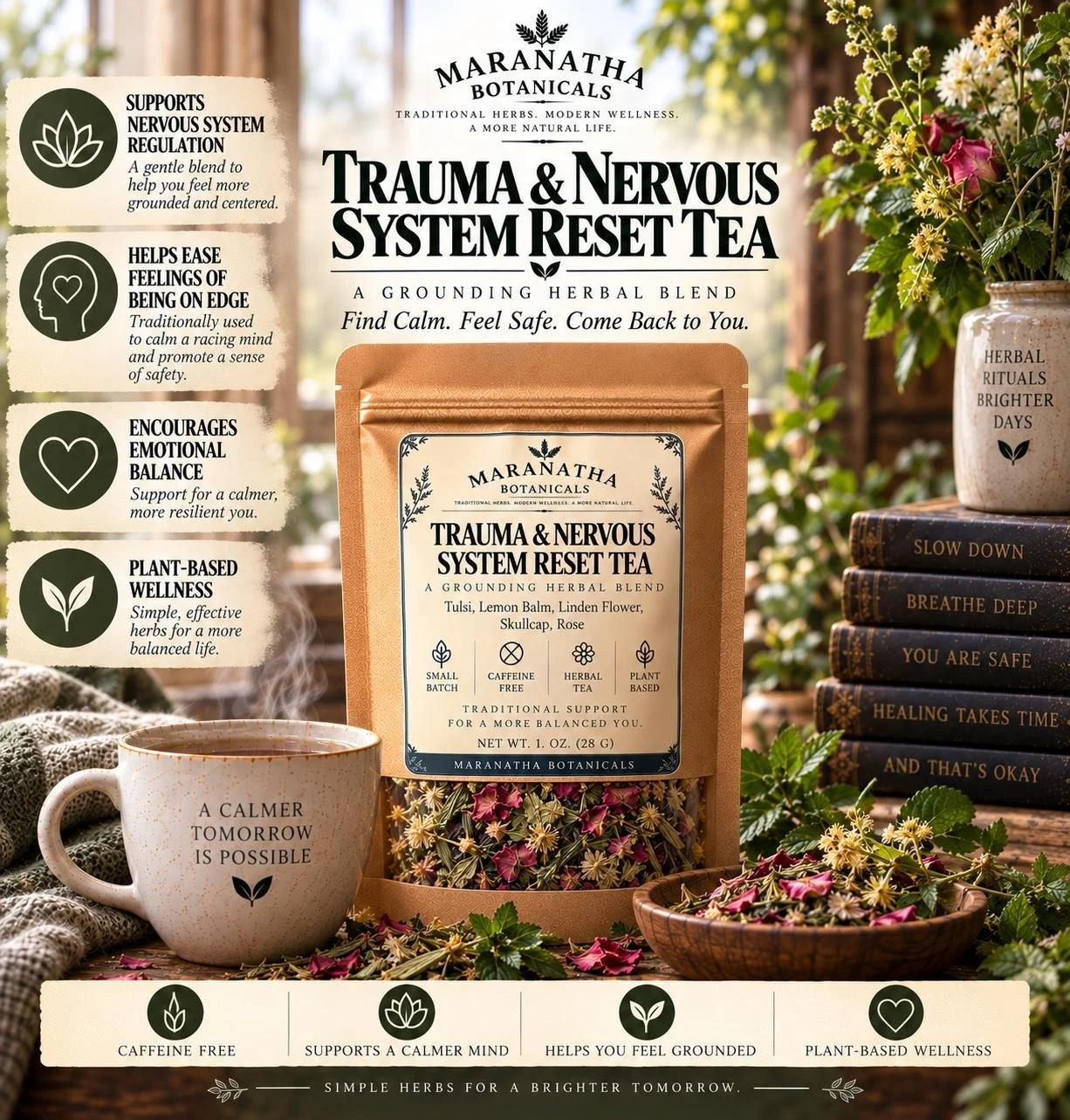 Image 1 of 3
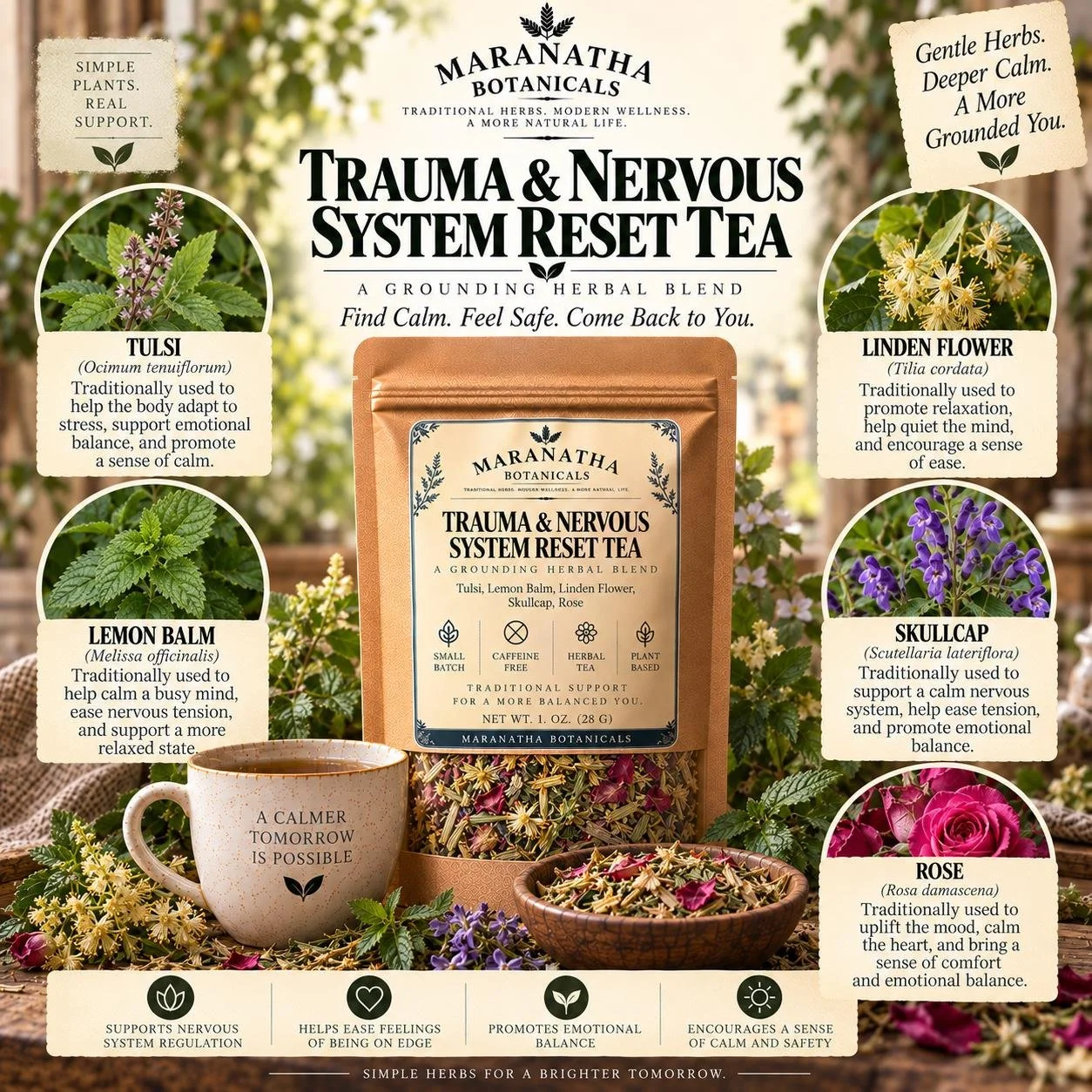 Image 2 of 3
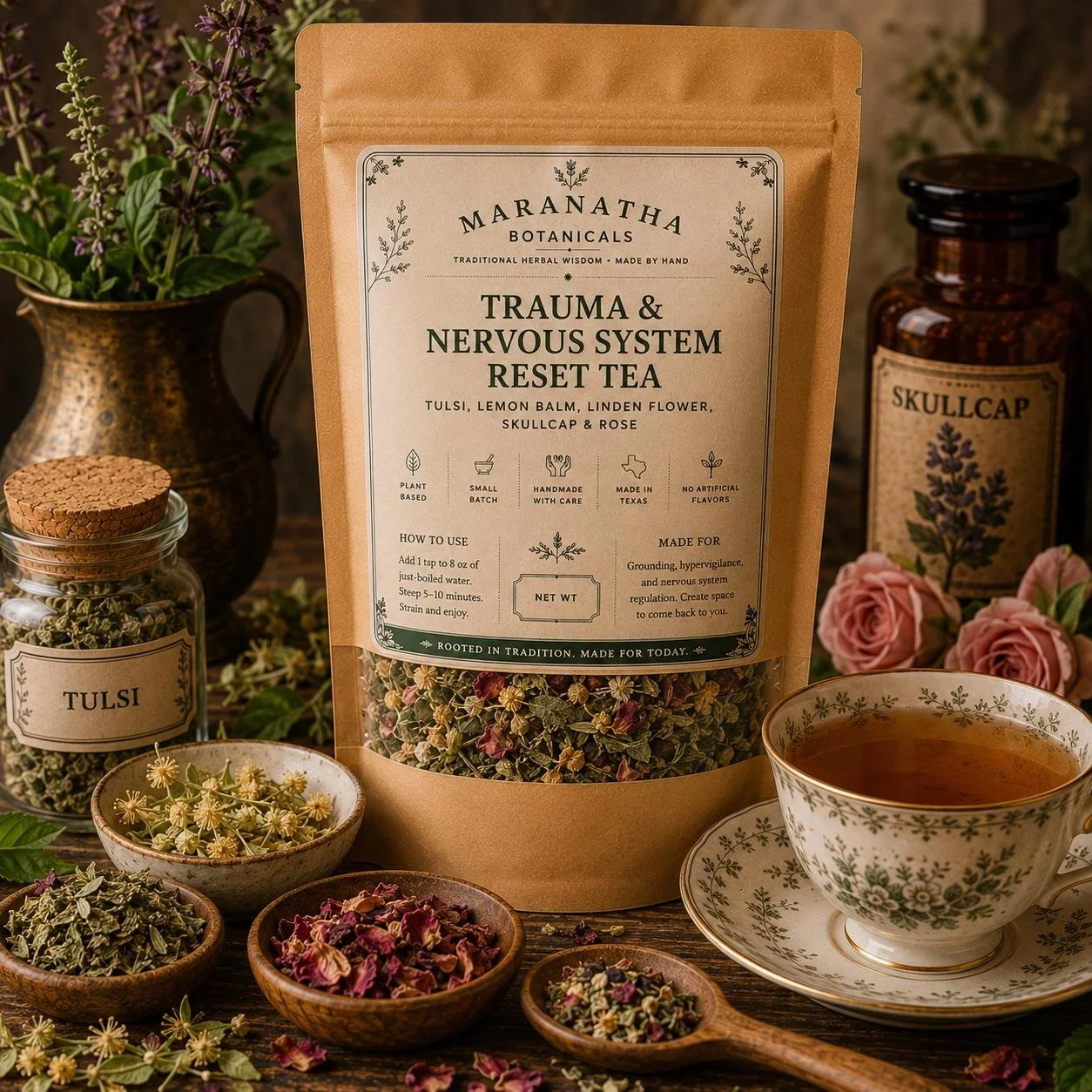 Image 3 of 3