10 Easy Fall Vegetables to Grow for Beginner Gardeners
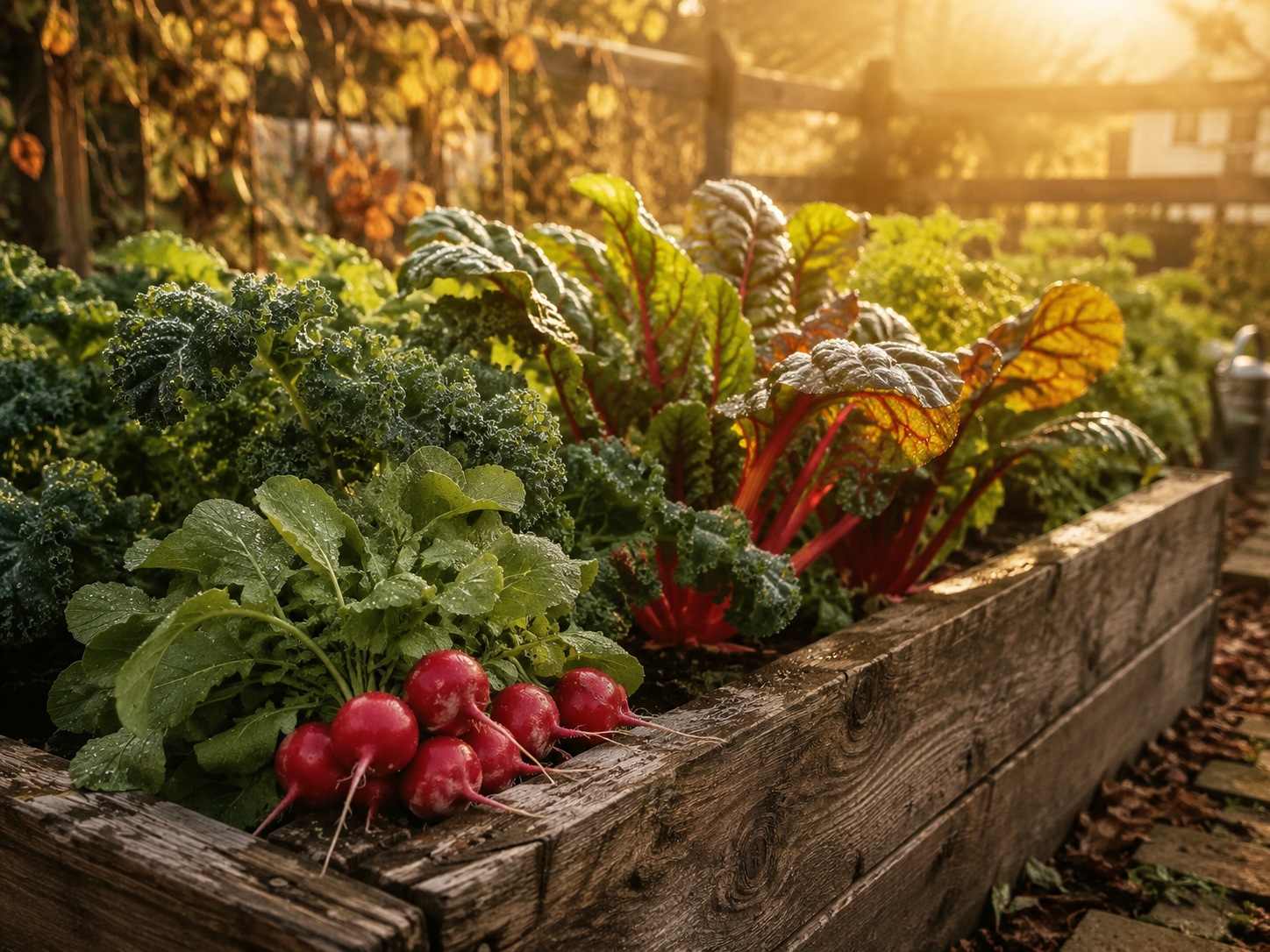
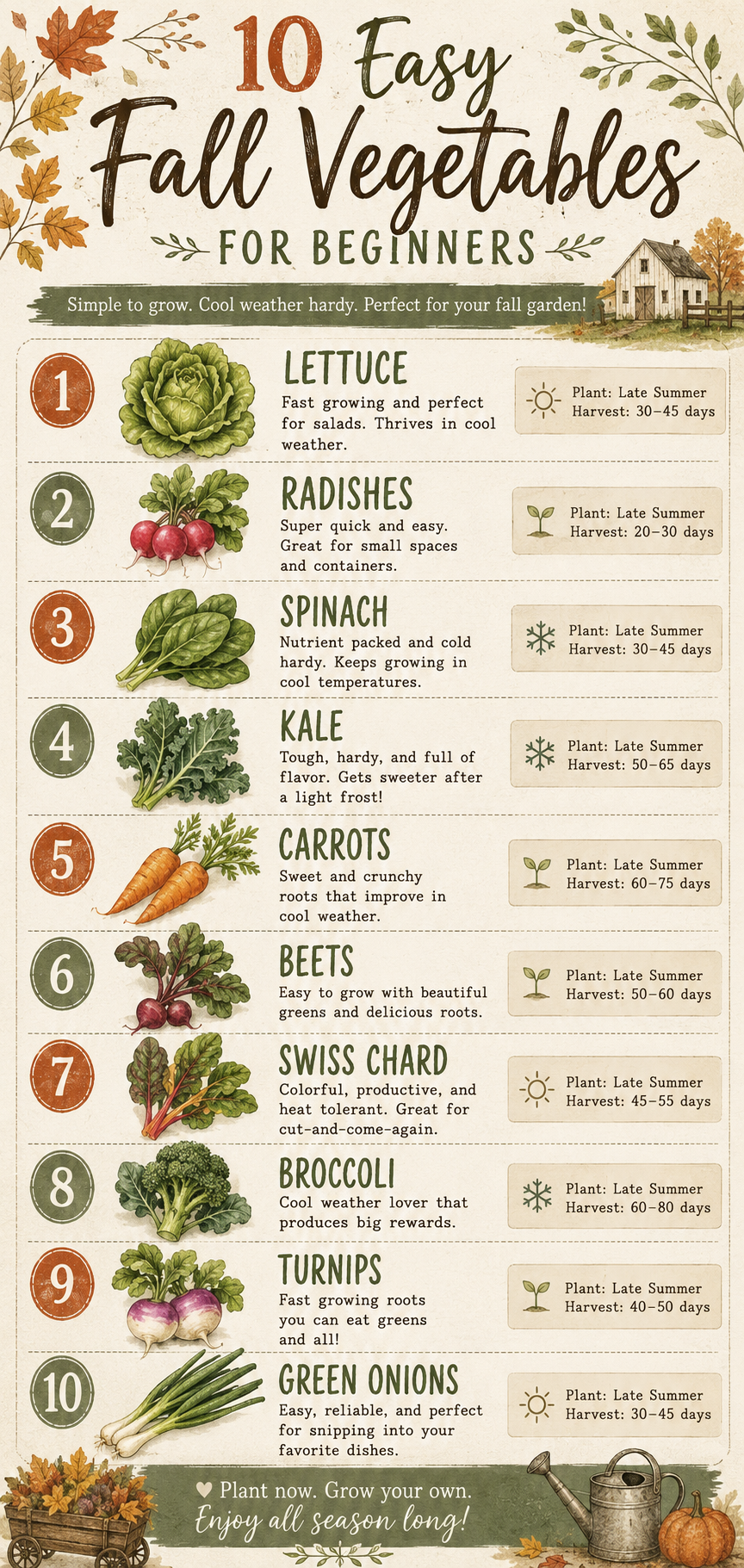
If summer's tomatoes and peppers felt like a lot to manage, fall gardening might just become your favorite season to grow in. Cooler weather means fewer pests, less bolting, and a whole category of vegetables that are genuinely forgiving of a first-timer's mistakes. Here are ten of the easiest fall vegetables to start with, chosen specifically because they're low-maintenance, quick to reward your effort, and hard to mess up.
1. Radishes
Radishes are about as close to foolproof as vegetable gardening gets. They germinate in just three to five days and are ready to harvest in as little as 25 to 30 days, which makes them a wonderful confidence-builder for a brand new gardener. Simply direct sow the seeds a half inch deep, thin the seedlings once they sprout, and keep the soil consistently moist.
Space seeds about an inch apart, or thin them to that spacing after they come up, since crowded radishes tend to put their energy into leafy tops instead of plump roots. Because they mature so quickly, radishes are also a great option for tucking into gaps between slower-growing crops, letting you get an extra harvest out of space you'd otherwise leave empty. Check them at the earliest hint of maturity too, since radishes left in the ground too long can turn woody or split.
Get organic heirloom seeds here →
2. Loose-Leaf Lettuce
Lettuce asks for very little: a bit of sun, consistent moisture, and cool weather, all things fall provides naturally. Choose a loose-leaf variety rather than a head lettuce, since you can harvest outer leaves as you go while the plant keeps producing more from the center. It grows just as happily in a container or raised bed as it does in the ground.
Sow seeds shallowly, about a quarter inch deep, since lettuce seed actually needs some light exposure to germinate well. Space plants roughly six to eight inches apart, and keep an eye on watering during any unseasonably warm fall stretch, since lettuce can turn bitter if it dries out or gets stressed by heat. A layer of mulch around the base helps hold moisture and keeps the leaves cleaner at harvest time.
Get a mixed bundle of organic heirloom seed varieties here →
3. Spinach
Spinach is one of the most cold-hardy greens you can grow, actually improving in flavor once touched by a light frost. It germinates readily in cool fall soil and needs little more than regular watering and a spot with decent sun. A single planting can be harvested multiple times if you pick outer leaves rather than the whole plant at once.
Plant seeds about a half inch deep and thin seedlings to roughly four to six inches apart once they're a couple inches tall. Spinach actually germinates poorly in warm soil, so if you're planting in early fall while it's still quite warm, a light watering to cool the soil beforehand can help seeds sprout more evenly. With some row cover or a cold frame, many gardeners find spinach will keep producing well past the first hard frost.
Get heirloom spinach seeds here →
4. Kale
Kale might be the single most forgiving vegetable on this list. It tolerates poor soil, inconsistent watering, and genuinely cold temperatures better than almost anything else you could plant, and it keeps producing new leaves for harvest for weeks, sometimes months, after it matures. A light frost actually sweetens its flavor rather than damaging it.
Give each plant about a foot of space to spread out, since a mature kale plant gets bigger than most beginners expect. Harvest by picking the outer, lower leaves first and leaving the center growing point intact, and the plant will keep pushing out new leaves for you to gather again and again. In many zones, a well-established kale plant will keep producing right through the coldest part of fall and into early winter.
Get heirloom kale seeds here →
5. Swiss Chard
Swiss chard combines easy care with a long harvest window, giving you roughly 50 to 60 days to maturity and then weeks of cut-and-come-again picking after that. It handles full sun or partial shade, prefers loose, well-drained soil, and rewards you with colorful stems that make it as pretty in the garden as it is useful in the kitchen.
Space plants around nine to twelve inches apart to give the leaves room to fully develop. When it's time to harvest, cut individual outer leaves an inch or two above the soil, or cut the whole plant back to about three inches and let it regrow, rather than pulling it entirely. Chard is also one of the more cold-tolerant crops on this list, often surviving a light freeze with minimal damage.
Get heirloom and organic swiss chard seeds here →
6. Carrots
Carrots do best in loose, rock-free soil, so the main thing to get right is your bed prep rather than any ongoing fussy care. Once seeded, they need consistent moisture to germinate evenly, but after that, carrots are largely a matter of patience while they develop underground. Fall-grown carrots often taste noticeably sweeter than their summer counterparts, since cool weather encourages the roots to convert starches into sugar.
Sow seeds directly, about a quarter inch deep, since carrots don't transplant well once their taproot starts forming. Keep the soil surface consistently damp until germination, which can take one to two weeks and is often the trickiest part of growing carrots successfully. Once seedlings are a couple inches tall, thin them to about two inches apart so the roots have room to size up without crowding each other out.
Get organic, heirloom carrot seeds here →
7. Beets
Beets are a genuine two-for-one crop, giving you both a root harvest and tender, edible greens along the way. They thrive in the cooler temperatures fall brings and aren't particular about much beyond decent soil and regular watering. If your soil is heavy or compacted, loosening it before planting will make a noticeable difference in how well the roots develop.
Each beet seed is actually a small cluster of seeds, so you'll want to thin seedlings to about three to four inches apart once they emerge, or you'll end up with a tangle of undersized roots competing for space. Beets are ready to harvest anywhere from 50 to 70 days depending on the variety, and you can start snipping a few outer greens for salads well before the roots themselves are ready.
Get 10 heirloom varieties of beet seeds here →
8. Turnips
Turnips grow quickly, tolerate a wide range of soil conditions, and, like beets, offer both a root harvest and usable greens from the same planting. They're rarely bothered by the pest pressure that plagues summer crops, since most of their growing happens as temperatures cool down and insect activity naturally declines.
Direct sow seeds about a half inch deep, then thin seedlings to roughly four inches apart once they're established. Smaller varieties can be ready in as little as 30 to 40 days, making them a nice quick crop for gardeners who planted their fall garden a bit later than planned. Like most root vegetables on this list, turnips actually improve in sweetness after a light frost.
Get heirloom turnip seeds here →
9. Arugula
Arugula is fast, peppery, and remarkably low-maintenance, typically ready to harvest in 30 to 50 days from seed. It can be spaced quite tightly, as little as four inches apart, which makes it a great option even for a small raised bed or container garden. Direct sow it and keep the soil lightly moist, and you'll have fresh, spicy greens to harvest within a matter of weeks.
Arugula grows best in soil with a pH between 6.0 and 7.0, though most garden soil falls comfortably within that range without any special adjustment. Because it matures so quickly, arugula is a natural candidate for succession planting, meaning you can sow a fresh row every couple of weeks to keep a steady supply of tender young leaves coming rather than one large harvest all at once.
Get heirloom arugula seeds here →
10. Green Onions
Green onions are about as low-effort as vegetables come. Plant sets or seeds in loose soil, keep them watered, and harvest by simply pulling what you need as you go, leaving the rest to keep growing. They tolerate cool weather well and don't demand much attention beyond the occasional watering, making them a nice, easy addition to round out a beginner's fall bed.
Space sets or seedlings about two inches apart in rows, planting them an inch or so deep. One of the best things about green onions for a beginner is that you don't have to harvest them all at once. Simply pull individual onions as you need them in the kitchen, and the rest will keep growing undisturbed, giving you a rolling harvest that stretches your planting much further than a single-harvest crop would.
What Makes Fall Vegetables So Beginner-Friendly
There's a reason this particular list skews so heavily toward greens and quick root vegetables. Cooler fall temperatures naturally suppress a lot of the pest pressure that plagues summer gardens, and shorter, cooler days mean less risk of crops bolting, or rushing to flower and go to seed, before you get a real harvest. Many of these vegetables also tolerate a light frost without any protection at all, giving you a wider margin for error than a summer garden ever offers.
A Simple First Fall Bed Combination
If you want a concrete starting point, try combining radishes, loose-leaf lettuce, and kale in a single small bed. Radishes will be ready first, giving you an early win, lettuce follows shortly after and keeps producing for weeks, and kale rounds things out with a harvest that can stretch well into the colder months. All three are genuinely hard to get wrong, which makes them a confidence-building trio for your first fall garden.
Succession Planting for a Longer Harvest
One trick that separates a beginner's first fall garden from a truly productive one is succession planting, or sowing small batches of fast-growing crops every couple of weeks instead of everything at once. Radishes, lettuce, and arugula are especially well suited to this approach, since they mature quickly enough that a new round can be ready just as the last one finishes. This staggered approach also helps guard against a single planting failing due to a cold snap or an off week of watering, since you'll always have another round coming along behind it.
How Fall Planting Differs From Spring
Many beginners assume fall gardening is basically the same as spring gardening in reverse, but there are a few real differences worth knowing. Soil temperatures in late summer and early fall are often still warm, which can actually help seeds germinate faster than they would in cool spring soil. On the other hand, daylight hours are shrinking rather than growing as the season goes on, which slows growth somewhat compared to the lengthening days of spring, so it helps to plant a bit earlier than you might instinctively think and give crops a little extra time to reach maturity before your first frost.
Common Mistakes to Avoid
The most common mistake with these crops is planting too late and running out of growing time before frost, so it's worth checking your first frost date and each vegetable's days to maturity before you plant. Overcrowding is another frequent issue, since many of these greens and roots need a bit of breathing room to develop properly. And letting the soil dry out completely between waterings, especially while seeds are germinating, is one of the fastest ways to end up with a spotty, disappointing stand of seedlings.
A Simple Easy Fall Vegetable Checklist
Check your first frost date and confirm you have enough growing time left for each crop. Choose a mix of quick crops like radishes and longer-window crops like kale and chard. Loosen and amend your soil before planting root vegetables like carrots and beets. Keep soil consistently moist, especially while seeds germinate. Thin crowded seedlings to give roots room to develop. Harvest greens continuously rather than all at once to extend your season.
Frequently Asked Questions
What's the single easiest vegetable to grow in fall?
Radishes are hard to beat for sheer ease and speed, often ready to harvest in under a month with very little fuss.
Do these vegetables need full sun?
Most do best with at least four to six hours of sun daily, though many of the leafy greens on this list, like lettuce and chard, tolerate partial shade reasonably well.
Can I grow these in containers instead of a garden bed?
Yes. Lettuce, arugula, radishes, and green onions all adapt well to container growing, making this an achievable list even without a large yard.
How do I know if I have enough time left in the season to plant these?
Check your area's first frost date, then compare it against each vegetable's days to maturity, adding a buffer for fall's naturally slower growth, before deciding what still fits your remaining window.
Will a frost kill these vegetables?
A light frost actually improves the flavor of kale, spinach, and Swiss chard rather than harming them. Radishes and carrots also tolerate light frost well, though a hard freeze will eventually end the season for all of them.
Do I need to fertilize these crops?
A light application of compost or balanced fertilizer at planting time is usually enough for this group of easy-growing vegetables, which generally aren't heavy feeders compared to crops like tomatoes or squash.
Further Reading
What to Plant in September 2026 (The Complete Zone-by-Zone Guide): https://littlehouseinthepines.com/what-to-plant-in-september-zone-by-zone/
How to Start a Vegetable Garden for Beginners: 10 Steps to Your First Harvest: https://littlehouseinthepines.com/how-to-start-a-vegetable-garden-for-beginners/
When to Plant a Fall Garden: How to Calculate Your Planting Date From First Frost: https://littlehouseinthepines.com/when-to-plant-fall-garden-first-frost-calculator/
Sources
Fall Vegetable Gardening – University of Maryland Extension: https://extension.umd.edu/resource/fall-vegetable-gardening
Cool-Season Vegetables – Clemson Cooperative Extension: https://hgic.clemson.edu/factsheet/cool-season-vegetables/
Growing Radishes – University of Illinois Extension: https://extension.illinois.edu/blogs/good-growing/2021-04-30-how-grow-radishes
Swiss Chard – Cornell Vegetable Growing Guide: https://gardening.cornell.edu/homegardening/scene0391.html
Growing Arugula – Oregon State University Extension: https://extension.oregonstate.edu/gardening/vegetables/growing-arugula-your-garden
