5 Best Cast Iron Skillets for Building a From-Scratch Pantry
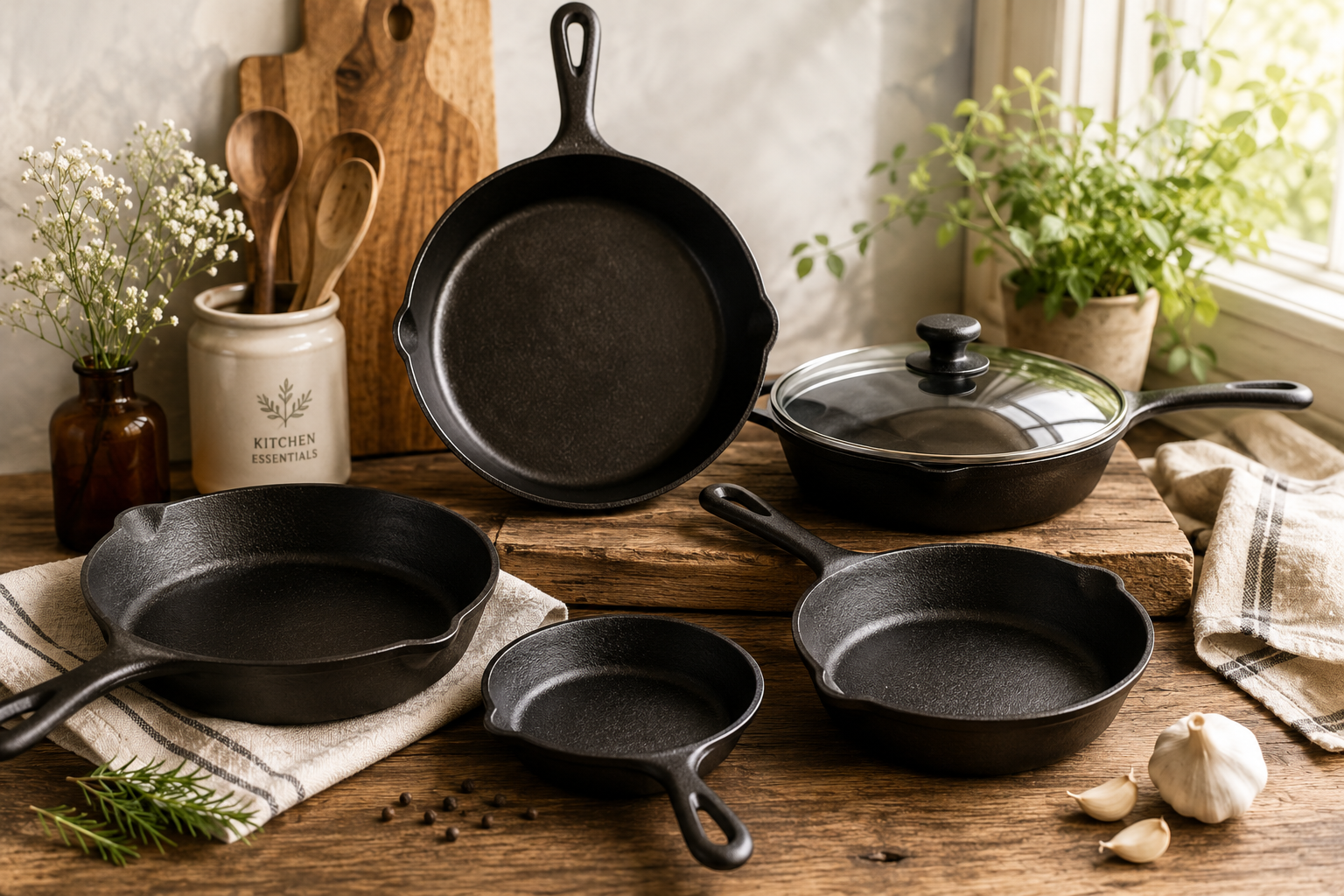
If you are working toward a more from-scratch, whole foods kitchen, a good cast iron skillet is one of the best investments you can make. It sears meat beautifully, bakes cornbread with a crisp edge, fries eggs without sticking once it is seasoned well, and can genuinely last a lifetime with basic care. Below are five real, well-reviewed cast iron skillets, from a true beginner option to a full starter set, so you can pick the one that fits your kitchen and your budget.
Why Cast Iron Belongs in a From-Scratch Kitchen
Cast iron holds heat evenly, which makes it excellent for searing, frying, and baking. It goes from stovetop to oven without a second thought, which is perfect for one-pan meals. It contains no synthetic nonstick coating to wear off over time, and with proper care, a single skillet can be passed down for generations. For a homemaker building a pantry and kitchen around real, whole ingredients, cast iron is about as classic and practical as cookware gets.
1. Lodge Seasoned Cast Iron Skillet, 12 Inch (Best for Beginners)
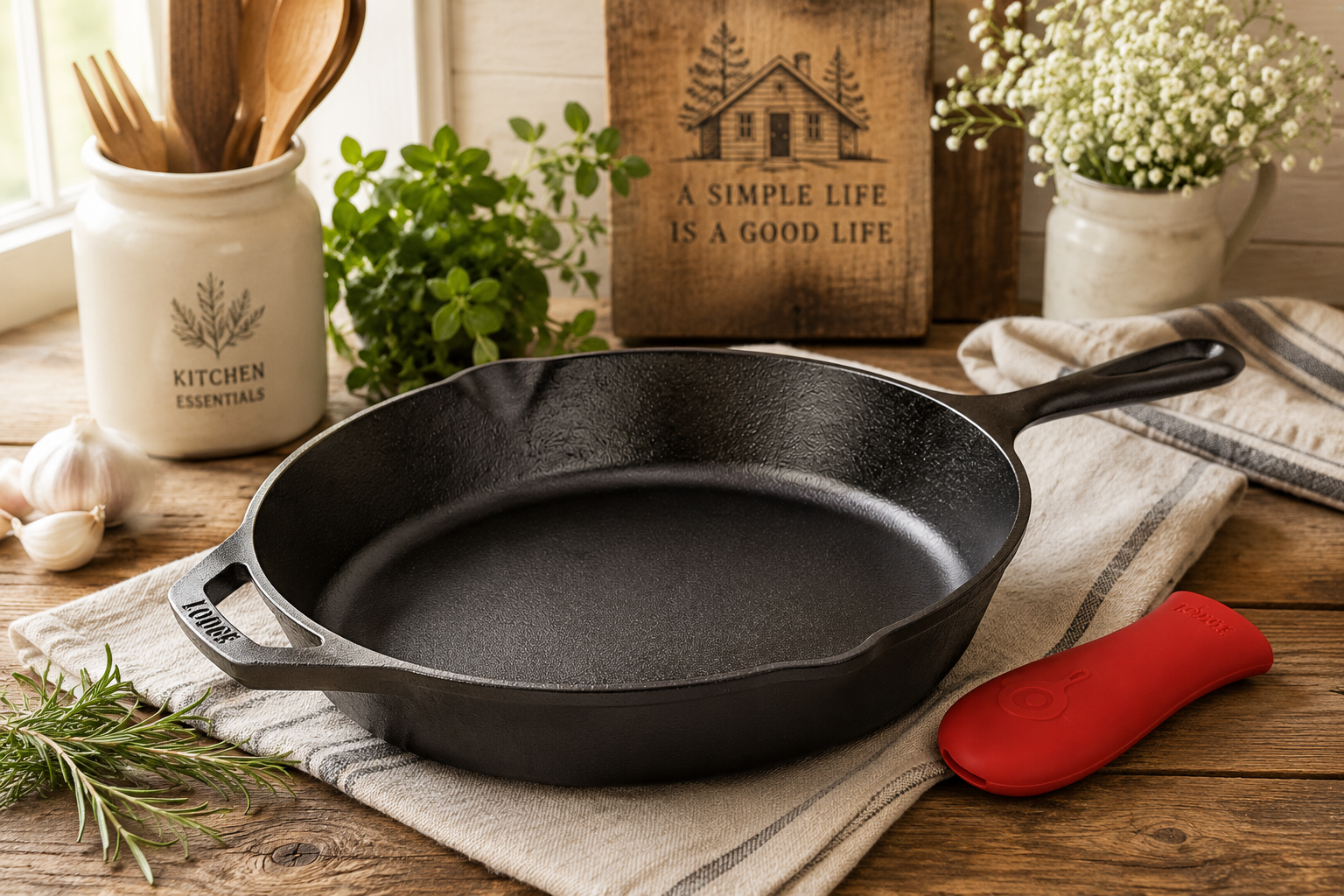
Best for: first-time cast iron owners
This is the skillet most people picture when they think "cast iron," and for good reason. It arrives pre-seasoned and ready to use, is widely available so you can compare it in person at most major stores, and is genuinely hard to damage even if you are still learning proper cast iron care. At a lower price point, it is a low-stakes way to start building confidence with this kind of cookware.
Why we like it: because so many cast iron recipes and tutorials online assume you own this exact skillet, it is the easiest one to follow along with as a beginner.
Keep in mind: it is heavier than some of the newer, lighter-weight cast iron lines, so consider the smaller size if wrist strength is a concern.
2. Victoria 10 Inch Cast Iron Skillet (Best Everyday Size)
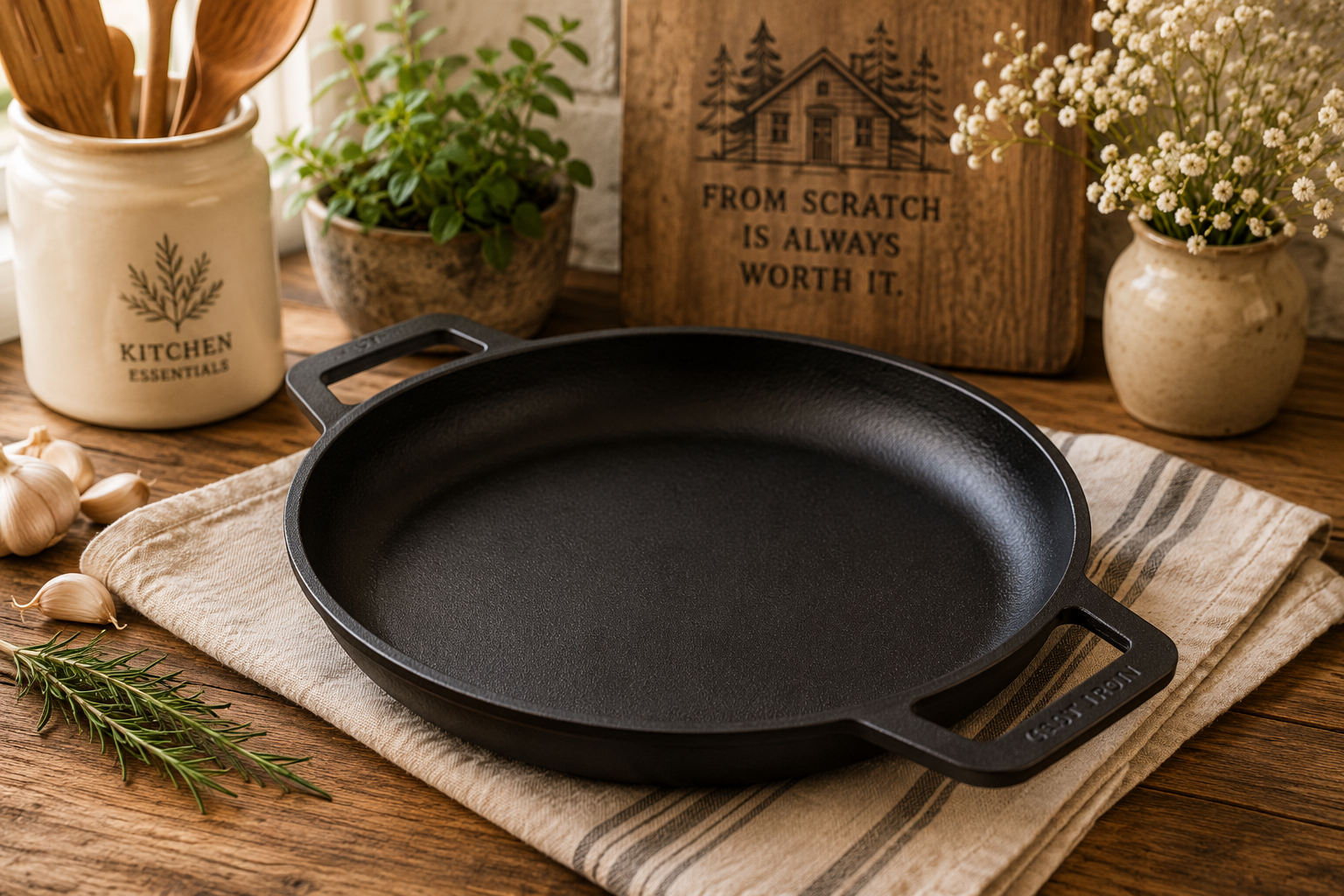
Best for: daily cooking for a family of two to four
Victoria skillets are known for a smoother factory seasoning than some other budget brands, which means less initial stickiness while you build up your own seasoning layer. The 10 inch size is a genuinely practical everyday choice, big enough for a family meal but light enough to handle comfortably one-handed.
Why we like it: the flaxseed oil seasoning process Victoria uses tends to produce a smoother cooking surface right out of the box compared to some competitors.
Keep in mind: the 10 inch size may feel small if you regularly cook for a larger family, so consider sizing up if you are feeding more than four people.
3. Lodge Seasoned Cast Iron Skillet with Tempered Glass Lid, 12 Inch (Best With a Lid)
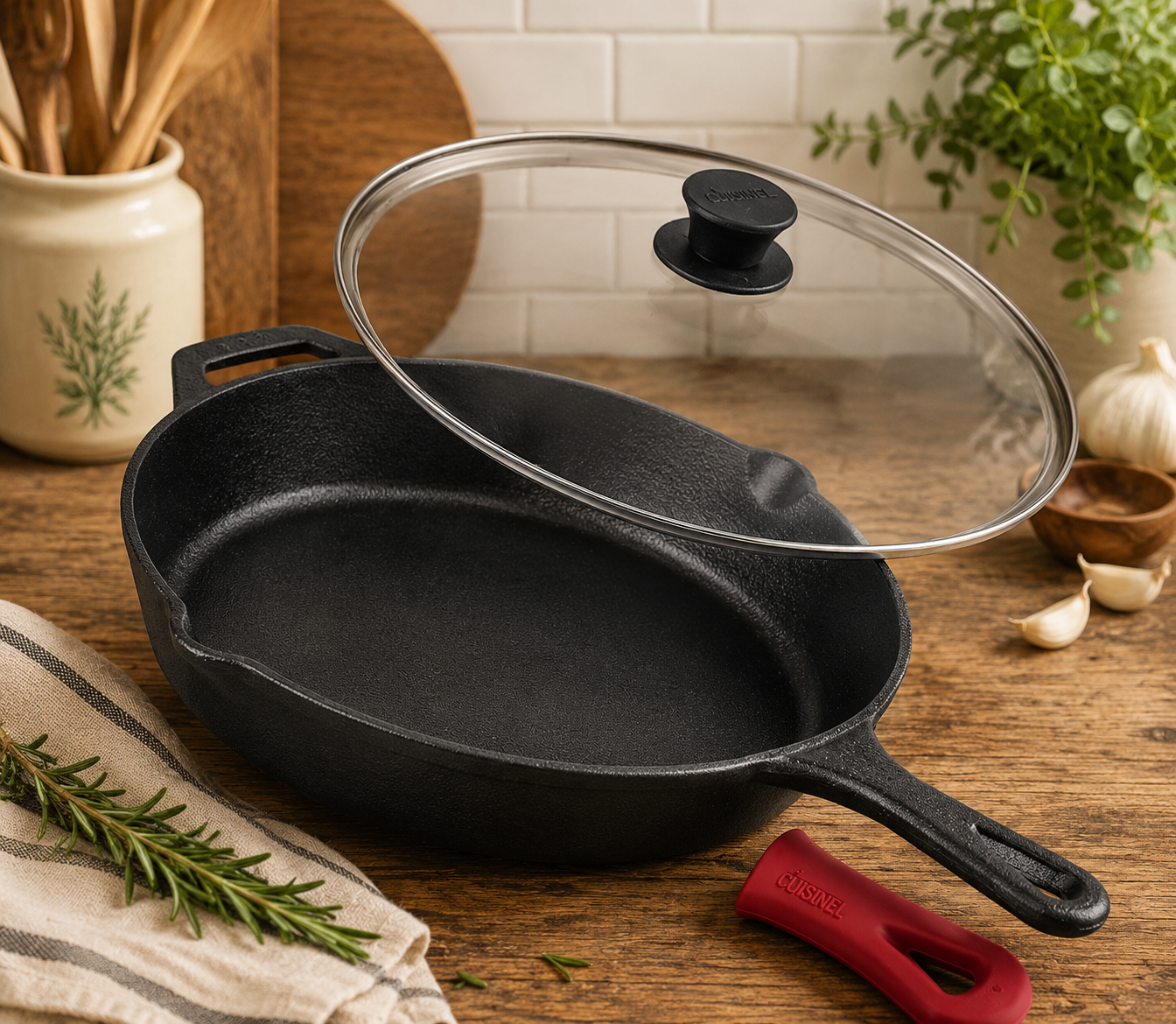
Best for: braising, simmering, and one-pan dinners
A lid turns a skillet into a much more versatile pan, letting you braise meat, simmer a sauce, or steam vegetables right alongside whatever you are searing. The tempered glass lid lets you check on your food without losing heat by lifting it constantly.
Why we like it: being able to see your food without lifting the lid keeps more heat and moisture in the pan, which makes a real difference for braises and simmered sauces.
Keep in mind: the glass lid is not seasoned like the pan itself, so it needs its own regular hand-washing and drying care.
4. Cuisinel 3-Piece Cast Iron Skillet Set, 6/8/10 Inch (Best Starter Set)
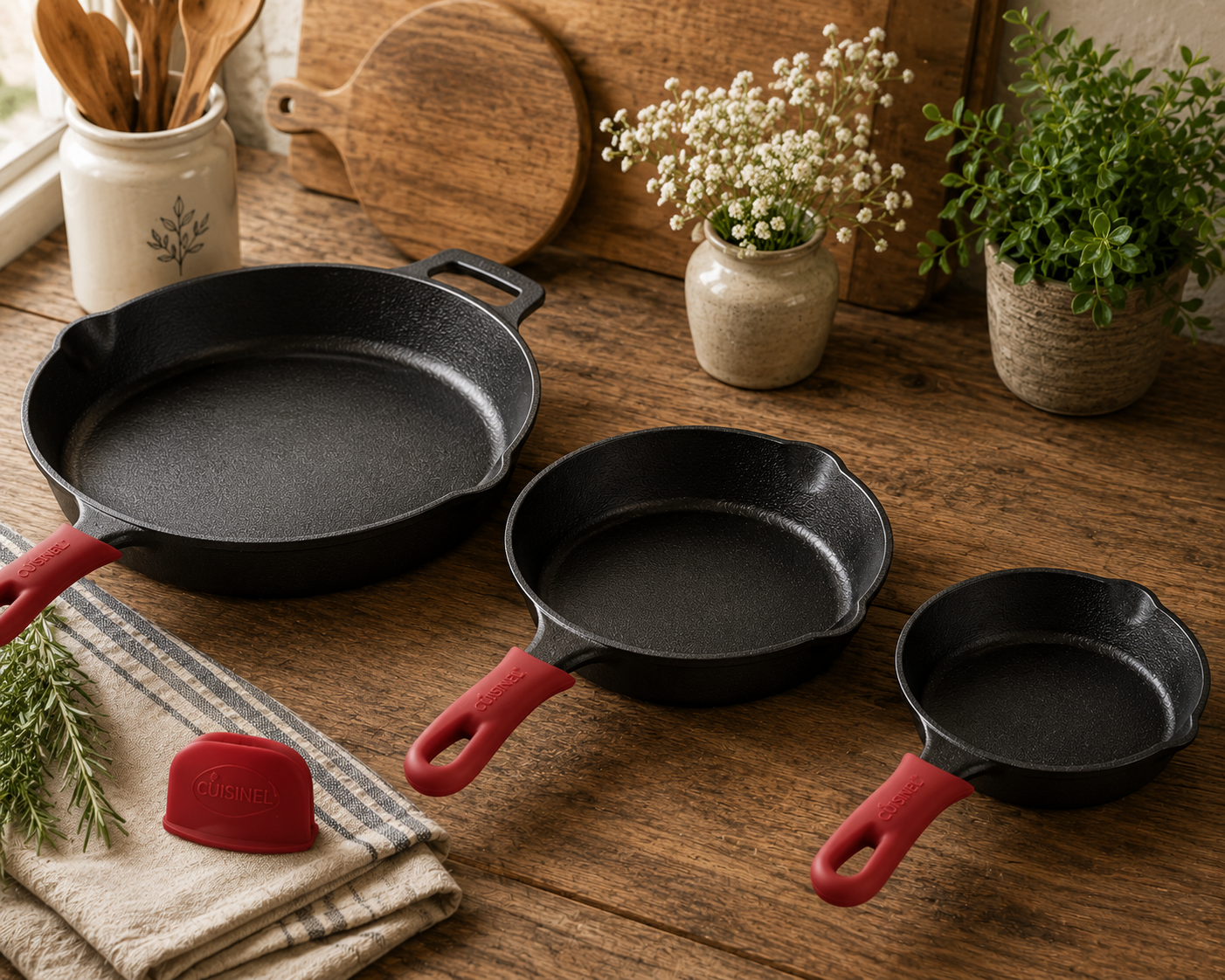
Best for: building a full cast iron collection at once
If you would rather stock your kitchen in one purchase instead of buying skillets one at a time, this set gives you three genuinely useful sizes right away. The small 6 inch pan is perfect for a single fried egg or grilled cheese, while the 8 and 10 inch sizes cover most everyday cooking needs.
Why we like it: buying a set upfront is usually more cost-effective than purchasing three individual skillets separately, and it saves you from guessing which sizes you will actually use.
Keep in mind: three pans at once means more storage space needed, so measure your cabinet or hanging rack space before ordering.
5. Lodge Blacklock Triple Seasoned Skillet, 12 Inch (Best Premium Upgrade)
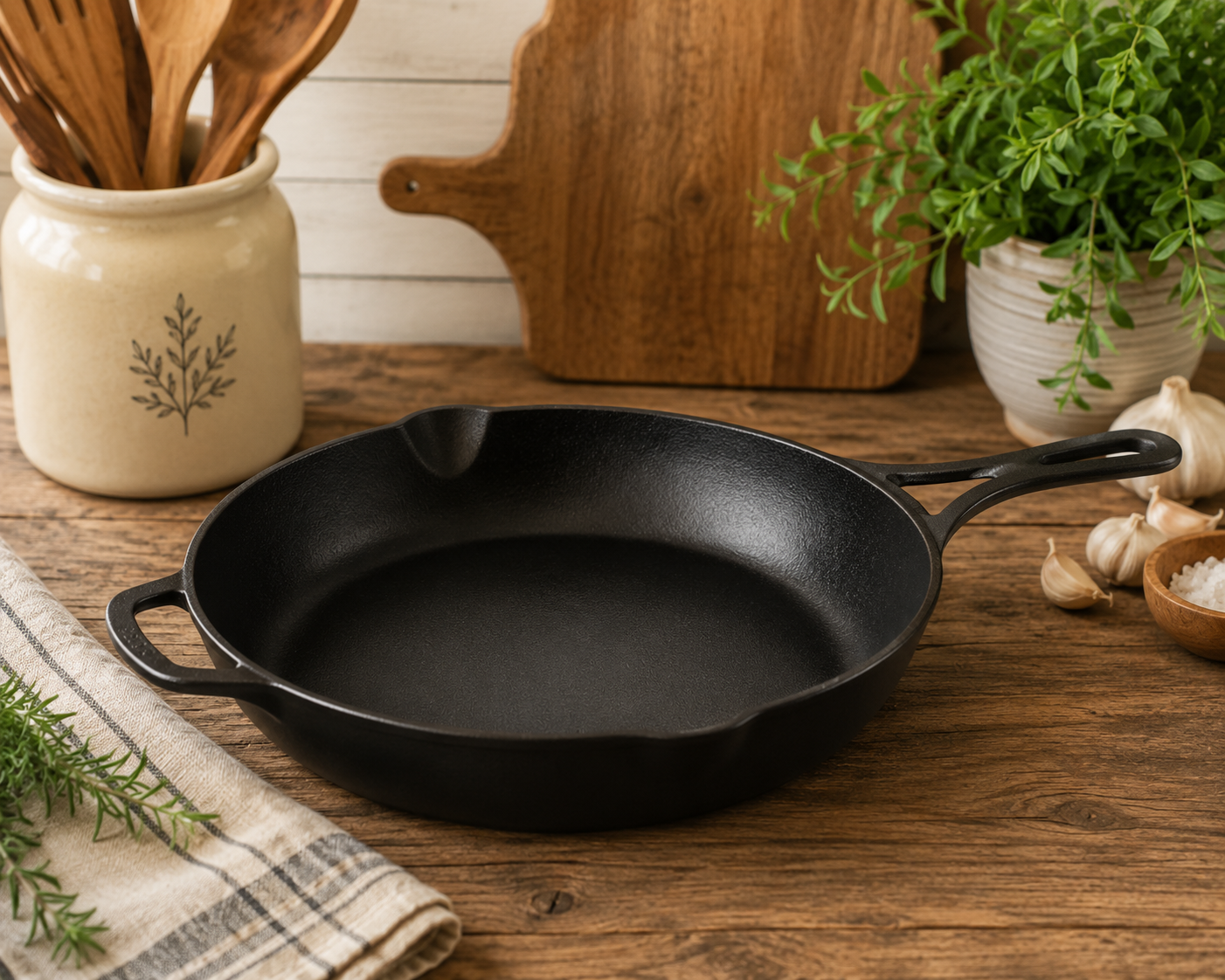
Best for: homemakers ready to invest in a lighter, smoother upgrade
This is Lodge's higher-end line, and it shows. It is noticeably lighter than a standard Lodge skillet, which matters if wrist or arm strength makes handling heavier cookware tough, and it comes with a smoother, triple-seasoned finish that performs closer to a well-loved vintage skillet right out of the box.
Why we like it: the lighter weight makes a real difference for daily use, especially when lifting a full skillet out of the oven or off the stove.
Keep in mind: it costs more than the classic Lodge skillet, so it makes the most sense once you already know you will use cast iron regularly.
How to Choose the Right Skillet for You
If you have never owned cast iron before, start with the classic Lodge 12 inch. It is affordable, forgiving, and exactly what most cast iron recipes and tutorials assume you own.
If you are cooking for a smaller household, the Victoria 10 inch is a comfortable everyday size that is not too heavy or too large for smaller meals.
If you want to simmer sauces or braise meat, choose a skillet with a lid, like the Lodge with tempered glass, so you are not stuck buying a separate pan for those recipes.
If you want your whole cast iron collection in one order, the Cuisinel 3-piece set gives you real range from a small egg pan up to a family-size skillet.
If you already know you love cooking with cast iron and want an upgrade, the Lodge Blacklock is a noticeably lighter, smoother option worth the higher price.
What to Cook First in a New Cast Iron Skillet
Once your skillet arrives, a few easy recipes help you build seasoning and confidence without much risk:
Fried eggs or bacon. The natural fat helps build your seasoning layer while you get a feel for how the pan holds heat.
Cornbread. A cast iron skillet gives cornbread a crisp, golden edge that a regular baking pan simply cannot match.
Seared chicken thighs. Bone-in, skin-on chicken thighs sear beautifully in cast iron and can go straight from stovetop to oven to finish cooking.
Roasted vegetables. Toss vegetables in oil, spread them in the skillet, and roast for a nicely caramelized side dish.
Save tomato-heavy sauces and very delicate, low-fat foods like plain fish fillets for after your skillet has a few months of regular seasoning built up.
Caring for Your Cast Iron Skillet
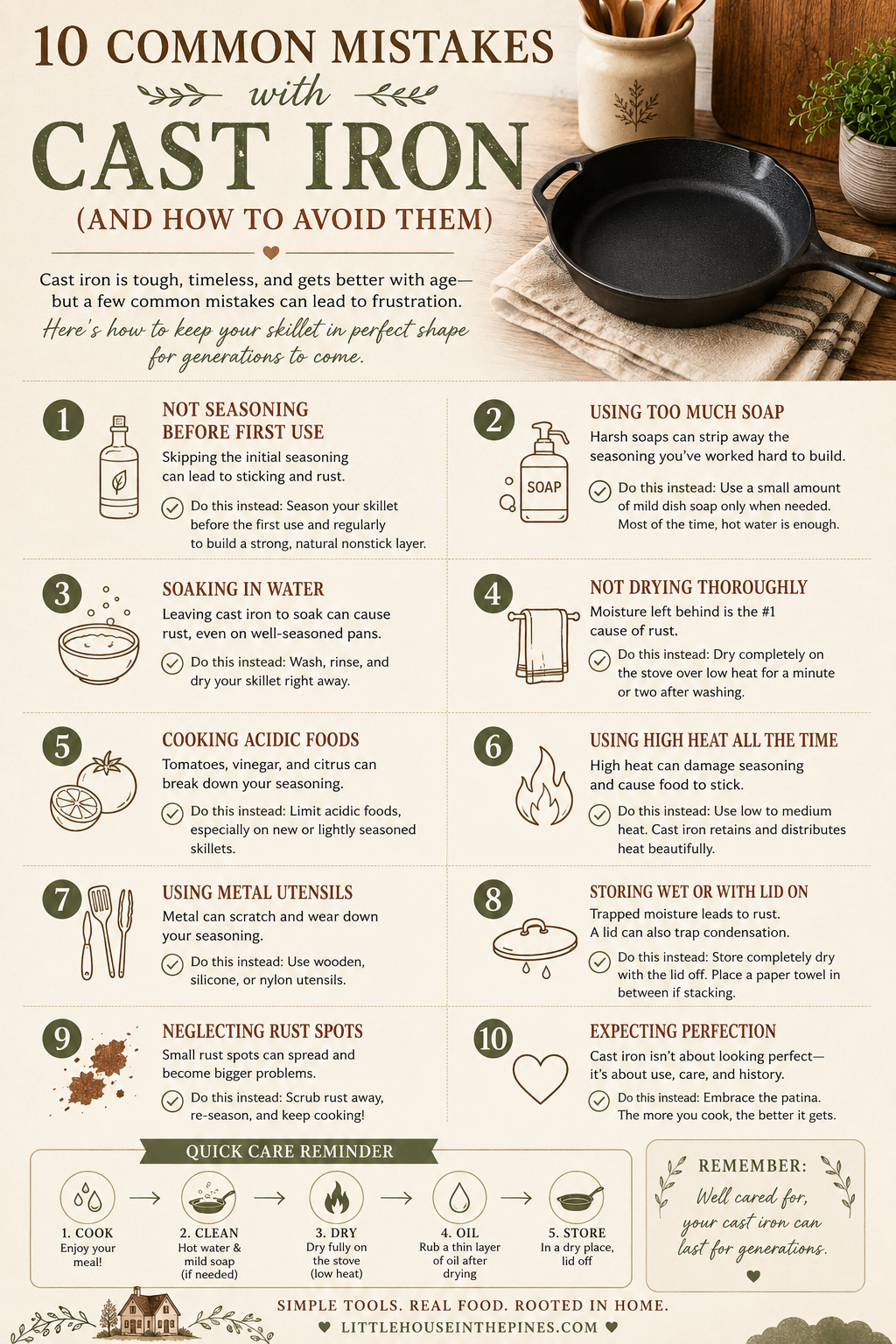
Wash with hot water and a stiff brush, avoiding soap on well-seasoned pans (a small amount of mild soap is fine on new or heavily-used pans, despite the old myth against it)
Dry immediately and thoroughly, since cast iron can rust if left wet
Rub a thin layer of oil onto the surface after drying to maintain the seasoning
Store in a dry place, and place a paper towel between stacked pans to absorb any moisture
If rust does appear, scrub it off with steel wool and re-season the pan in the oven, which is a completely normal part of cast iron ownership, not a sign it is ruined
Where Cast Iron Fits Into a From-Scratch Kitchen
Building a from-scratch pantry is not just about the ingredients on your shelves. It is also about having a few reliable tools that let you cook real food well, and cast iron is one of the most versatile. One good skillet can sear a roast, fry eggs from your own backyard hens, bake a skillet cornbread to go with a pot of homemade soup, and roast vegetables from your garden, all without needing a cabinet full of specialty pans. For a homemaker working toward simpler, more intentional cooking, that kind of versatility is worth far more than its price tag suggests.


Common Cast Iron Mistakes to Avoid
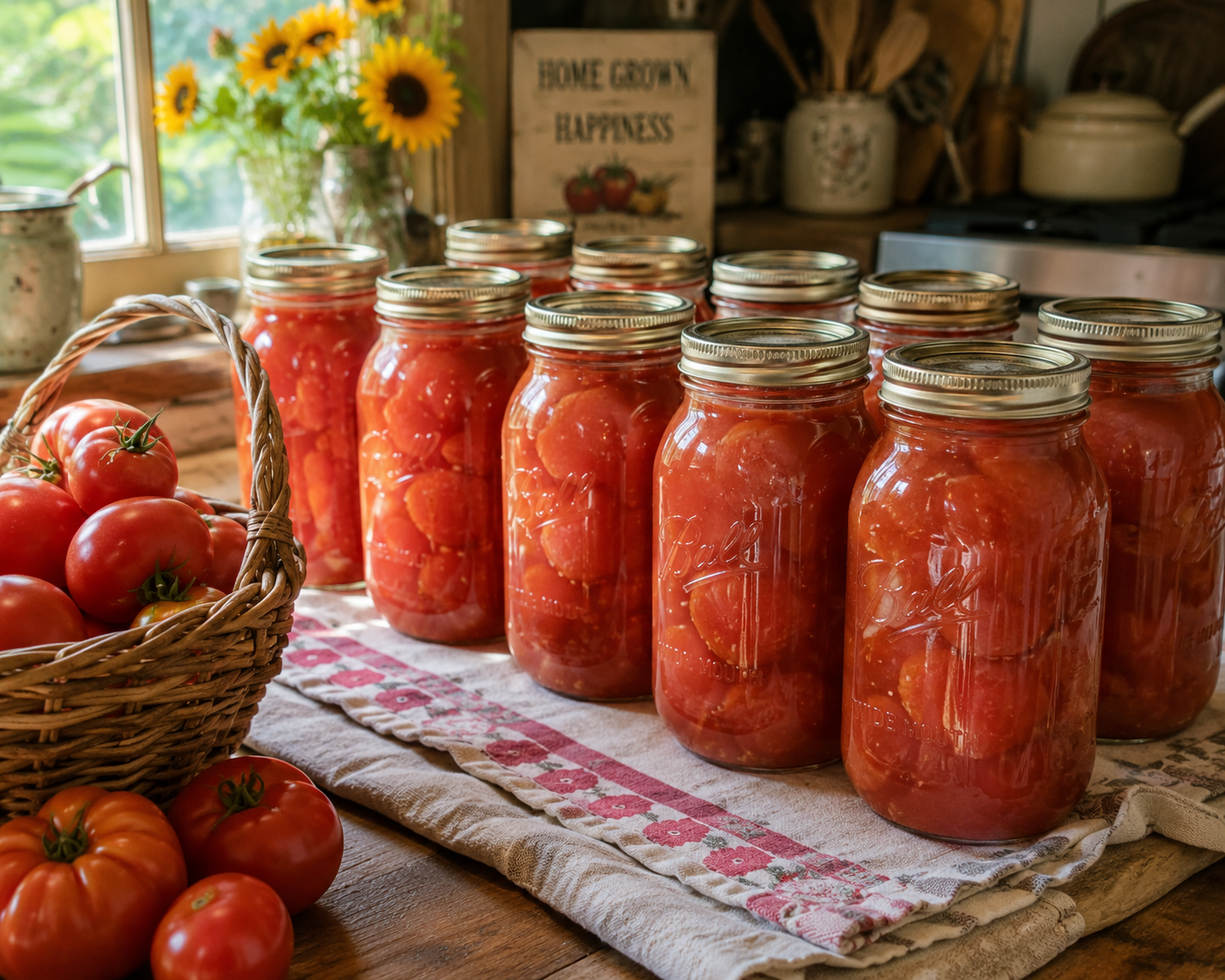
Cooking acidic foods too often in a newly seasoned pan. Tomato sauce and other acidic foods can strip a thin, new seasoning layer. Build up a few months of seasoning first before leaning on your skillet for tomato-heavy dishes.
Letting it soak in water. Cast iron left sitting in a sink of water is one of the fastest ways to invite rust. Wash and dry it right after cooking instead.
Giving up after one sticky meal. Early on, eggs and other delicate foods can stick before your seasoning has fully built up. This does not mean the pan is bad. It just needs more use and care.
Buying too large a size for your first pan. A 12 inch skillet can feel heavy and unwieldy for someone new to cast iron. If you are petite or new to cooking with it, consider starting with a 10 inch size instead.
Frequently Asked Questions
Do I need to season a cast iron skillet myself if it comes pre-seasoned?
Most pre-seasoned skillets are ready to use out of the box, but building up additional layers of seasoning through regular cooking with oil will improve the nonstick surface over time.
Is cast iron safe to use every day?
Yes. With basic care, cast iron is one of the most durable, long-lasting types of cookware available, and many people use it as their primary pan for daily cooking.
Can I use cast iron on a glass or induction stovetop?
Cast iron works on most stovetops, including induction, though it can scratch a glass cooktop if dragged rather than lifted. Always lift and place cast iron gently on a glass surface.
Why does my food stick to my cast iron skillet?
This usually means the seasoning layer is not built up enough yet, the pan was not preheated properly, or too little oil was used. Give it more consistent use and it will improve.
How do I know what size skillet to buy first?
A 10 or 12 inch skillet is the most versatile choice for most households. Smaller 6 or 8 inch pans are wonderful additions later for single servings or smaller portions.
Is enameled cast iron the same as regular cast iron?
No. Enameled cast iron, like many Le Creuset pieces, has a glass coating over the iron and does not need to be seasoned the same way. The skillets on this list are traditional bare cast iron, seasoned with oil.
How much should I expect to spend on a first cast iron skillet?
A single beginner skillet typically costs somewhere in the thirty to fifty dollar range, while a multi-piece starter set or a premium lightweight option will run higher.
Can cast iron go in the dishwasher?
No. Dishwashers strip the seasoning and can cause rust. Always hand wash and dry cast iron promptly.
Will cast iron cooking change the taste of my food?
Slightly, and most people consider it an improvement. Well-seasoned cast iron adds a subtle richness to seared and fried foods that other cookware does not replicate.
https://www.lodgecastiron.com/discover/use-care
https://www.lodgecastiron.com/discover/cleaning-and-care
https://www.fsis.usda.gov/food-safety/safe-food-handling-and-preparation
https://www.foodsafety.gov/food-safety-charts/safe-minimum-internal-temperatures
https://www.foodsafety.gov/keep-food-safe/4-steps-to-food-safety
https://www.seriouseats.com/the-truth-about-cast-iron
https://www.kingarthurbaking.com/recipes
https://www.kingarthurbaking.com/blog
