How to Cook with Whole Foods on a Budget
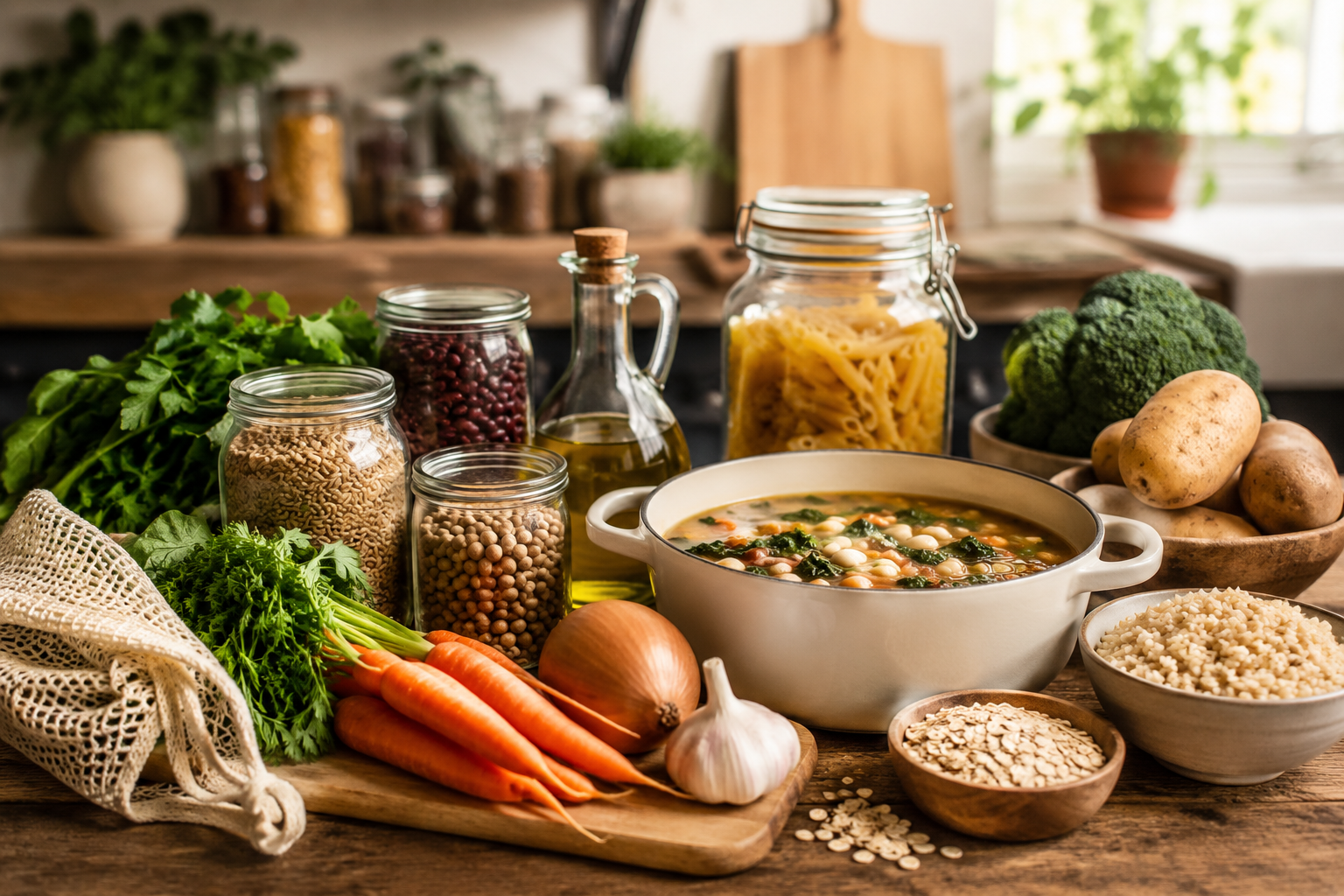
Grocery prices keep climbing, and it is easy to think eating real, whole foods means spending more money. Here is some good news: whole foods cooking is actually one of the most budget-friendly ways to feed your family, once you know a few simple strategies. In this post, you will learn how to shop smarter, stretch your ingredients further, and get real, nourishing meals on the table without a grocery bill that makes you wince.
Why Whole Foods Cooking Costs Less Than You Think
It feels backward, but processed convenience foods are usually the more expensive choice per serving, not the cheaper one. You are paying extra for someone else to chop, season, and package your food for you. A bag of dried beans costs a fraction of canned, pre-seasoned versions. A whole chicken costs less per pound than boneless, skinless chicken breasts. A block of cheese costs less than the same amount pre-shredded.
Whole foods cooking simply means going back to basic, minimally processed ingredients, grains, beans, whole cuts of meat, fresh or frozen produce, and cooking them yourself. It takes a little more time in the kitchen, but the savings add up fast, and so does the nutrition.
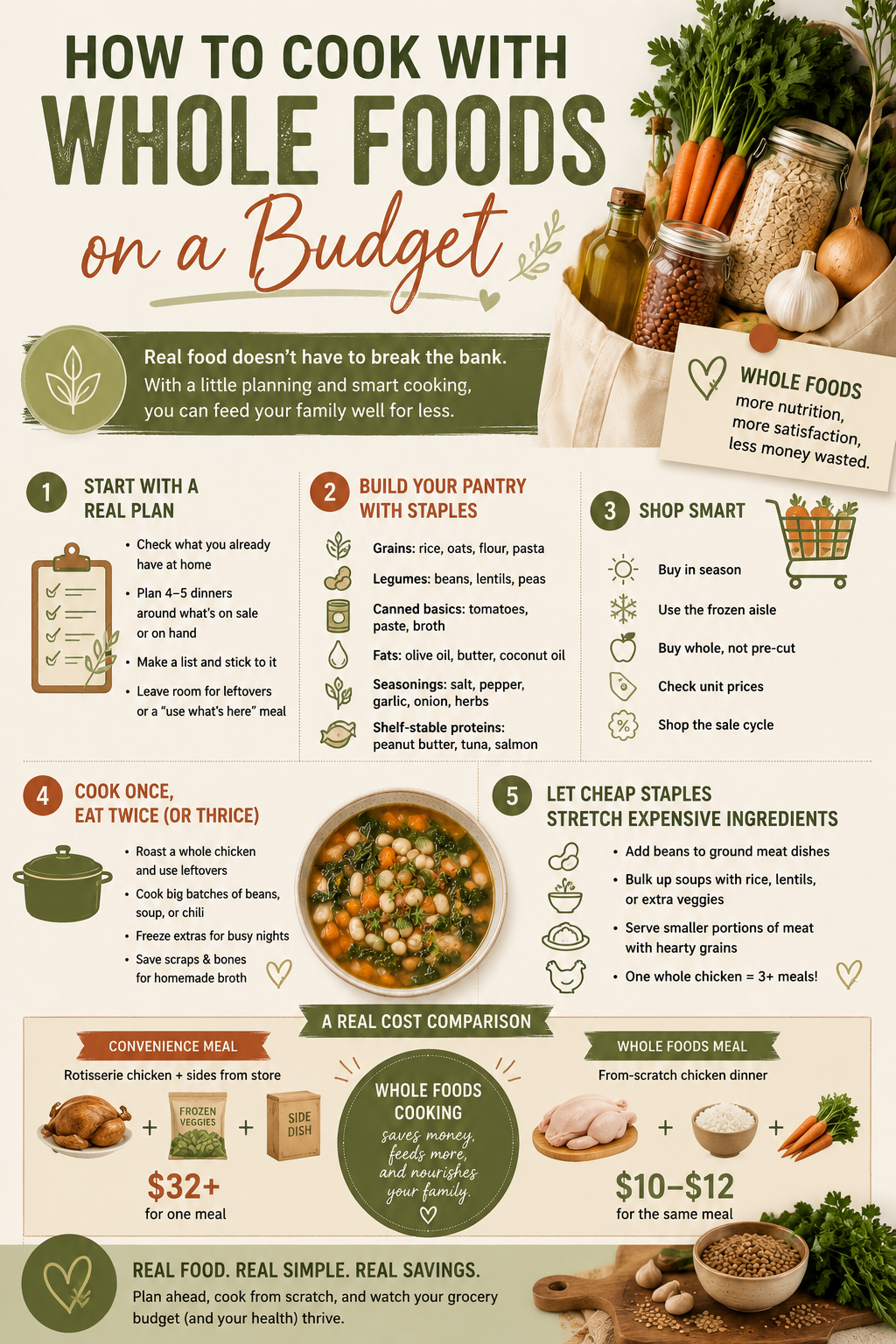
Step 1: Start With a Real Plan
Meal planning is the single biggest money-saver in your whole kitchen. Without a plan, it is easy to grab convenience foods out of desperation on a busy weeknight, and those trips add up fast.
A simple weekly planning routine:
Check what you already have in your fridge, freezer, and pantry before you plan anything new
Choose 4 to 5 dinners for the week, building around what is on sale or already on hand
Write your grocery list based on those meals, not a general wander through the store
Leave one or two nights open for leftovers or a simple "whatever is in the fridge" meal
This one habit alone can cut a grocery bill dramatically, because you stop buying food that ends up wasted at the back of the fridge.
Step 2: Build Your Pantry Around Cheap, Versatile Staples
A well-stocked pantry of whole food staples means you can always throw together a real meal, even on a tight week. Focus your budget here first:
Grains: rice, oats, whole wheat flour, pasta
Legumes: dried beans, lentils, split peas
Canned basics: tomatoes, tomato paste, broth (or make your own)
Fats: olive oil, butter, coconut oil
Seasonings: salt, pepper, garlic powder, onion powder, a few dried herbs
Shelf-stable proteins: peanut butter, canned tuna or salmon
Buying these in bulk, especially grains and dried beans, brings the per-serving cost down significantly compared to buying small packages repeatedly.
Step 3: Shop Smart
Buy what is in season. Produce in season is both cheaper and fresher, since it does not have to travel as far or be grown out of its natural cycle.
Do not skip the frozen aisle. Frozen fruits and vegetables are flash-frozen at peak ripeness, often for less money than fresh, and they work just as well in most recipes, especially soups, smoothies, and stir-fries.
Buy whole, not pre-cut. A whole head of lettuce costs less than a bag of pre-washed salad mix. A block of cheese costs less than shredded cheese. A whole chicken costs less per pound than individual chicken breasts.
Check unit prices, not just the sticker price. A bigger package is not always the better deal. Divide the price by the weight or count to compare fairly.
Shop your grocery store's sale cycle. Many stores rotate sales on a predictable schedule. Building a few meals around whatever protein or produce is on sale that week keeps your grocery bill flexible and low.
Step 4: Cook Once, Eat Twice (or Three Times)
Cooking in batches is one of the best-kept secrets of a budget-friendly kitchen. A few ways to make this work:
Roast a whole chicken on Sunday, then use the leftover meat for sandwiches, soup, or tacos later in the week
Cook a big pot of dried beans and freeze half in portioned bags for future meals
Make a double batch of soup or chili and freeze one half for a night you do not want to cook at all
Save vegetable scraps and bones in a freezer bag, then simmer them into homemade broth once the bag is full
This approach means you are only turning on the stove or oven once for multiple meals, which saves both time and money.
Step 5: Let Cheap Staples Stretch Expensive Ingredients
Meat is usually the priciest item on your grocery list. Instead of cutting it out completely, let cheaper staples stretch it further.
Add a can of beans to a pound of ground beef to make chili go further
Bulk up soups with rice, lentils, or extra vegetables instead of more meat
Use smaller portions of meat alongside a hearty grain, like a stir-fry over rice
Make one whole chicken stretch across three meals: a roast dinner, sandwiches or a casserole, and a pot of soup made from the bones
This is exactly how traditional, from-scratch cooking has stretched grocery budgets for generations, long before "budget meal planning" became a trending search term.


A Real Cost Comparison
Numbers make this easier to picture. Consider a simple dinner for a family of four: rotisserie-style seasoned chicken tenders from the freezer aisle versus a whole roasted chicken cooked at home.
A bag of frozen, pre-seasoned chicken tenders often costs noticeably more per pound than a whole chicken, and it only gives you one meal. A whole chicken, on the other hand, gives you a roast dinner the first night, sandwiches or a casserole from the leftover meat the second night, and a pot of soup from the bones the third night, all from one purchase.
The same pattern holds true across most convenience versus whole food swaps: pre-shredded cheese versus a block, instant rice versus bulk rice, canned beans versus a bag of dried beans you cook yourself. Individually, each swap saves a little. Across a whole month of meals, those small savings add up to a noticeably lighter grocery bill.
Keep a Simple Price Book
A price book sounds fancier than it is. It is simply a small notebook (or a note on your phone) where you jot down what you typically pay for staple items, like a dozen eggs, a pound of ground beef, or a bag of rice, at your usual stores.
After a few weeks of jotting prices down, you will start to recognize a genuinely good sale price versus a so-so one. This makes stocking up on staples during a real sale much easier, instead of guessing whether a "sale" price is actually a good deal.
Seasonal Whole Foods Cooking Through the Year
Spring and summer are the best time to lean heavily on fresh produce, since gardens, farmers markets, and grocery store sales are full of affordable in-season vegetables and fruit. This is also a great season to preserve extra produce for the months ahead.
Fall is a good time to stock up on root vegetables, winter squash, and apples while they are cheap and plentiful, along with stretching your budget with warm, hearty soups and stews.
Winter often leans more heavily on your pantry staples, frozen produce, and preserved food from earlier in the year, which is exactly why building that pantry and doing some preserving earlier pays off later.
Involving Your Family in Budget-Friendly Cooking
Cooking with whole foods on a budget does not have to be a solo effort. Even young children can help snap green beans, stir a pot under supervision, or help portion leftovers into containers. Older kids can help plan a meal around what is on sale, or learn a single traditional skill like kneading bread dough.
Involving your family in this process does double duty. It lightens your own load in the kitchen, and it teaches your children practical skills and an appreciation for where food comes from and what it takes to put a meal on the table.
A Sample Budget-Friendly Whole Foods Weekly Menu
Monday: Roast chicken with roasted seasonal vegetables (save the bones)
Tuesday: Chicken and rice soup made from Monday's leftover chicken and bones
Wednesday: Bean and rice bowls with whatever vegetables need using up
Thursday: Baked oatmeal for dinner (a frugal, filling breakfast-for-dinner option)
Friday: Pasta with a simple tomato sauce and a side salad
Saturday: Homemade pizza using pantry staples and whatever toppings are on hand
Sunday: A big pot of lentil soup, with enough to freeze half for a future busy week
Traditional Cooking Techniques That Save Real Money
Make your own broth. Simmering vegetable scraps, bones, and herbs into broth costs almost nothing and tastes far better than store-bought.
Cook dried beans instead of canned. A bag of dried beans costs a fraction of the same amount in cans, and while they take longer to cook, most of that time is hands-off simmering.
Bake your own bread. A loaf of homemade bread costs far less than most store-bought loaves, and it does not take as much hands-on effort as people expect once you get a simple routine down.
Render your own fat. Saving bacon grease or rendering chicken fat for cooking is a traditional practice that reduces waste and adds flavor without buying extra cooking oil.
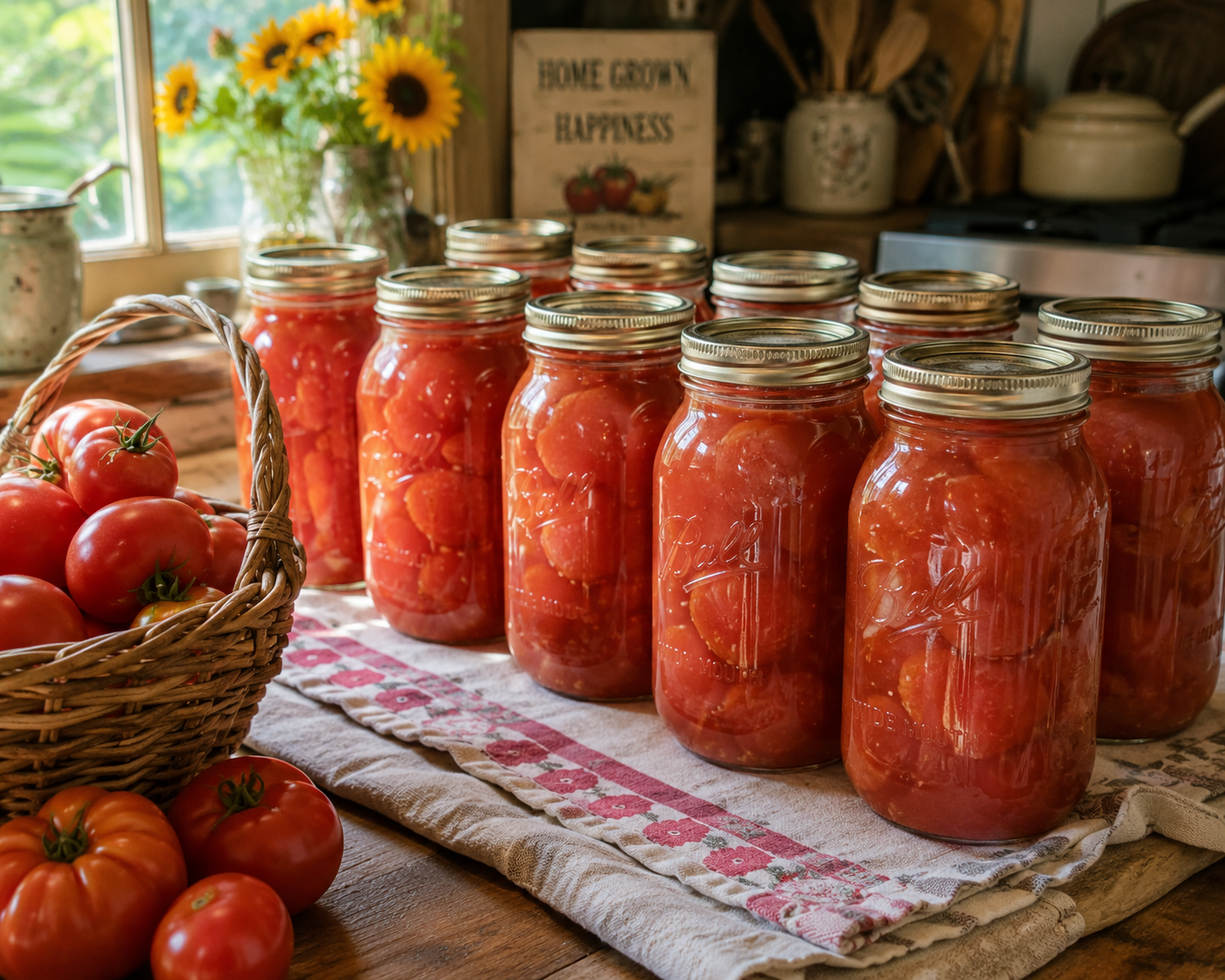
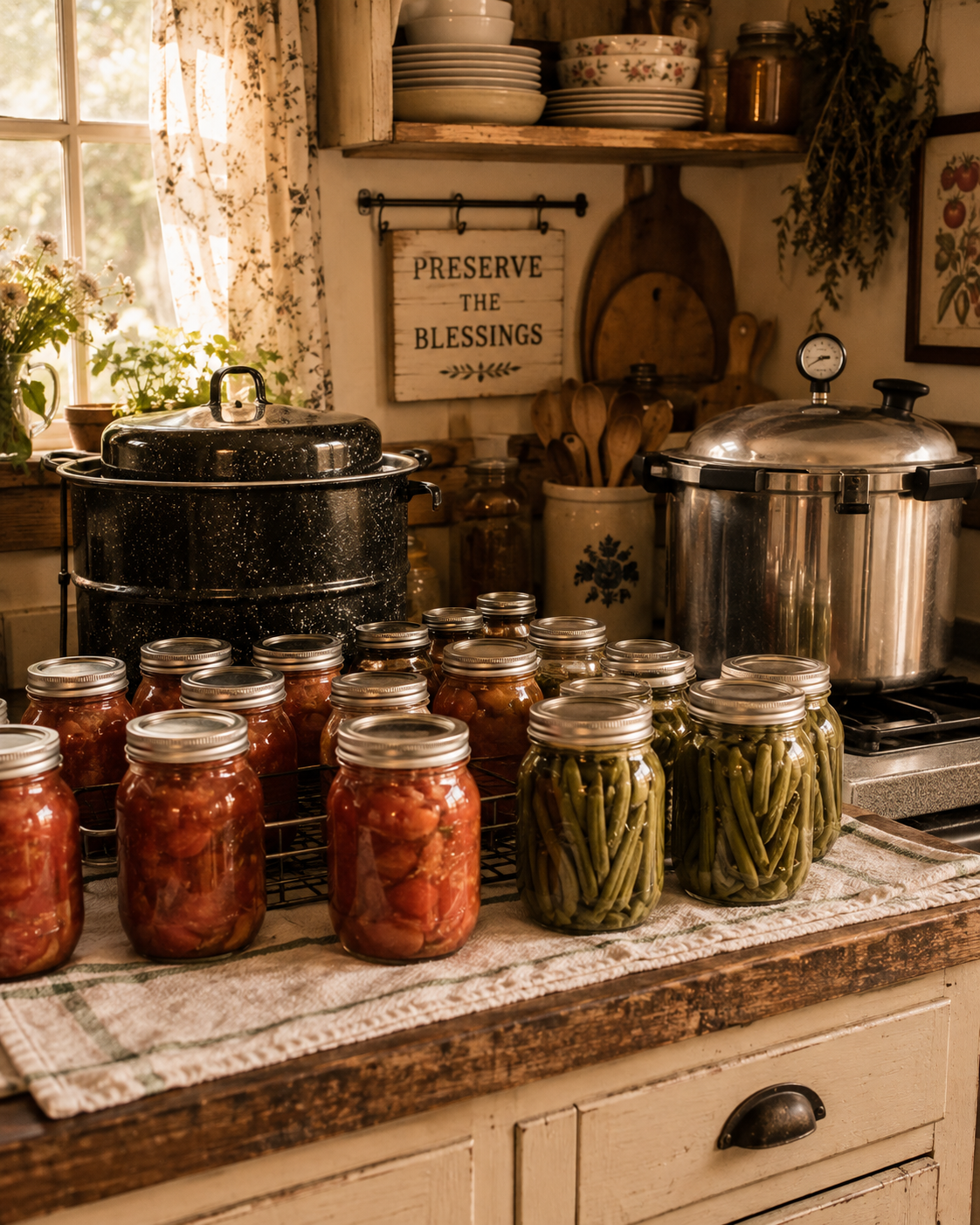
Preserve extra harvest or sale finds. Freezing, dehydrating, or water bath canning extra produce when it is cheap and abundant lets you enjoy the savings for months afterward. Stick with well-tested, safe preserving methods, especially for anything low-acid like meat or most vegetables, which require a pressure canner rather than a water bath.
Where to Shop for the Best Whole Foods Prices
Traditional grocery stores are usually your best bet for weekly sales on meat and produce, especially if you shop the sale cycle and stock up when staples are discounted.
Warehouse clubs often offer strong per-unit pricing on bulk staples like rice, oats, and dried beans, but only if you will actually use the large quantity before it goes bad or loses freshness.
Farmers markets can be surprisingly affordable for in-season produce, especially near closing time when vendors are often willing to offer a deal rather than pack food back up.
Discount or salvage grocery stores can be a great source for pantry staples and shelf-stable goods at a steep discount, though selection varies week to week.
Buying clubs or food co-ops sometimes offer bulk whole food staples like grains, beans, and honey at lower prices than a typical grocery store, especially if you split a large order with a few other families.
You do not need to shop every one of these every week. Even picking one or two that fit your area and routine can meaningfully lower your grocery bill over time.







Tools Worth the Investment
A large stockpot, for soups, broths, and cooking dried beans in bulk
A slow cooker or Dutch oven, for turning cheaper, tougher cuts of meat tender with very little hands-on effort
A sharp chef's knife, since a dull knife makes prepping whole produce slower and more frustrating than it needs to be
Freezer-safe containers or bags, for storing batch-cooked meals and portioned leftovers
These do not need to be purchased all at once, and secondhand options from a thrift store or a hand-me-down from family often work just as well as anything new.
Cooking Whole Foods on a Budget With Picky Eaters or Dietary Needs
Serve components separately (rice, beans, and vegetables on their own) rather than a mixed dish, so picky eaters can build their own plate
Keep a few "safe" staple meals in your rotation that you know everyone will eat, even on a week you need to lean on them
Batch cook a base recipe, like plain rice or a pot of beans, that can be seasoned differently for different family members' needs
Introduce one new whole food at a time instead of overhauling every meal at once, which tends to go over better with cautious eaters
Common Budget Mistakes to Avoid
Shopping without a plan. Wandering the store without a list almost always leads to impulse buys and food that goes to waste.
Buying too much "just in case." Over-buying perishable produce with good intentions often ends in wilted vegetables in the back of the fridge.
Ignoring what is already in your kitchen. It is easy to forget about that half bag of rice or those three carrots already at home. A quick pantry and fridge check before shopping prevents duplicate purchases.
Avoiding cheaper cuts of meat. Tougher, less popular cuts like chicken thighs, chuck roast, or pork shoulder cost less and become tender and flavorful with slow, low cooking methods.
Trying to overhaul everything at once. Switching your whole kitchen to from-scratch whole foods cooking overnight is exhausting. Start with one or two meals a week and build from there.
Forgetting to track what actually saves you money. Not every "budget tip" works the same for every family. Pay attention to which swaps genuinely lower your bill and which ones do not, and keep leaning on the ones that work for your household.
A Grateful, Stewardship-Minded Approach to Your Kitchen
Cooking with whole foods on a budget fits naturally into a home built around faith. Scripture speaks often about being a faithful steward, the simple idea of taking good care of what has been entrusted to you rather than wasting it carelessly, and that principle applies just as much to your grocery budget as anything else. Approaching meals with gratitude, using what you have well, and avoiding waste is a quiet, everyday way to honor that.
This does not mean guilt over every grocery trip or every convenience food that sneaks into your cart on a hard week. It simply means approaching your kitchen with intention, gratitude for what you do have, and a willingness to make the most of it.
A grateful table does not require an expensive one. Some of the most memorable family meals come from the simplest ingredients, a pot of soup simmered all afternoon, fresh bread pulled from the oven, a shared dish that stretched a tight budget into something everyone gathered around. Cooking this way, with care and thankfulness rather than stress, tends to shape a home just as much as the meals themselves.
Frequently Asked Questions
Is eating whole foods actually cheaper than processed food?
Often, yes, especially when you compare cost per serving rather than the price on the shelf. Whole grains, dried beans, and whole cuts of meat typically cost less per serving than their processed or pre-prepared counterparts.
How do I start cooking with whole foods if I am used to convenience meals?
Start small. Swap one or two convenience items a week for a whole food version, like cooking dried beans instead of buying canned, or baking one loaf of bread instead of buying it.
What are the cheapest whole food proteins?
Dried beans, lentils, eggs, and whole chicken are among the most budget-friendly whole food proteins, especially when you stretch them with grains or extra vegetables.
Is frozen produce as healthy as fresh?
Yes. Frozen fruits and vegetables are typically flash-frozen at peak ripeness, which locks in nutrients, and they are often more affordable than fresh, especially out of season.
How can I reduce food waste to save more money?
Plan meals around what you already have, store leftovers where you will actually see and use them, and save vegetable scraps and bones for homemade broth instead of tossing them.
Do I need special equipment to cook whole foods on a budget?
Not really. A good pot, a sharp knife, and a baking sheet cover most whole foods cooking. A slow cooker or Dutch oven is a helpful (though not required) addition for cheaper, tougher cuts of meat.
How do I stay on budget when my family has picky eaters?
Keep a few reliable "safe" meals in your regular rotation, serve components separately so everyone can build their own plate, and introduce new whole foods gradually rather than all at once.
What if I do not have time to cook every meal from scratch?
You do not have to. Batch cooking on one day, like a Sunday, and freezing portions for busy weeknights lets you eat whole foods without cooking daily.
Is it cheaper to buy in bulk from a warehouse store or buy smaller amounts regularly?
It depends on the item. Bulk buying works well for shelf-stable staples like rice, beans, and oats. For perishables, buying smaller amounts more often often reduces waste, which saves more money in the long run.
What’s Next?
Check your fridge and pantry before your next grocery trip
Plan four or five meals around what is already on hand or on sale
Pick one traditional technique to try this week, like making your own broth or cooking dried beans instead of canned
Choose one convenience item to swap for a homemade version
Give yourself grace as you build these habits gradually, rather than trying to change everything overnight
Whole foods cooking on a budget is not about being perfect or doing everything from scratch every single day. It is about a series of small, intentional choices that add up to real savings and real nourishment for your family, one meal at a time.
https://wicworks.fns.usda.gov/resources/myplate-healthy-eating-budget
https://www.fns.usda.gov/tn/myplate
https://extension.umn.edu/managing-money/stretching-your-food-dollar
https://www.fda.gov/consumers/consumer-updates/are-you-storing-food-safely
https://www.foodsafety.gov/food-safety-charts/cold-food-storage-charts
https://www.foodsafety.gov/blog/leftovers-gift-keeps-giving
https://www.foodsafety.gov/people-at-risk
https://www.fda.gov/food/buy-store-serve-safe-food/selecting-and-serving-produce-safely
https://www.fda.gov/consumers/consumer-updates/7-tips-cleaning-fruits-vegetables
https://extension.psu.edu/lets-preserve-freezing-vegetables
https://nchfp.uga.edu/how/can/general-information/ensuring-safe-canned-foods/
https://nchfp.uga.edu/how/can/general-information/recommended-canners/
https://nchfp.uga.edu/faqs/general-canning/category/faq-canning
https://nchfp.uga.edu/blog/canning-dry-beans-it-matters-how-they-go-in-the-jar
https://nchfp.uga.edu/newsflash/acidifying-tomatoes-when-canning
https://nchfp.uga.edu/blog/if-you-havent-stored-your-pressure-canner-for-the-season

How to use oxygen absorbers for long-term food storage — what size you need, which foods they work with, and the simple beginner guide to a pantry that lasts.