Should I Start My Garden With Raised Beds or Plant Directly in the Ground?
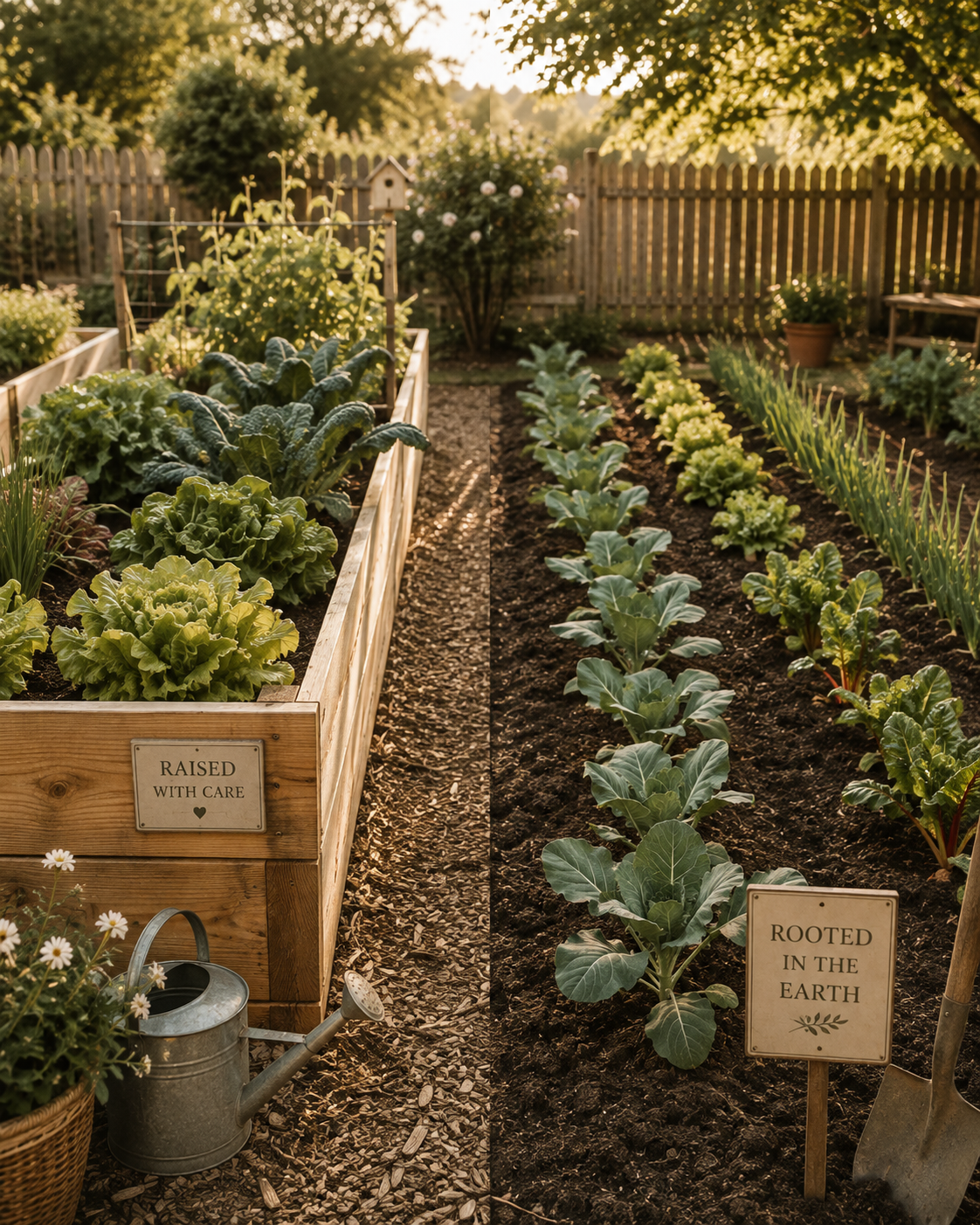
This is one of the very first decisions almost every new gardener faces, and it can feel surprisingly overwhelming. Raised beds seem to be everywhere on gardening blogs and Pinterest boards, but that does not automatically mean they are the right choice for you. Both raised beds and in-ground gardening are completely valid ways to grow food, and the right answer genuinely depends on your specific soil, space, budget, and goals.
The Quick Answer
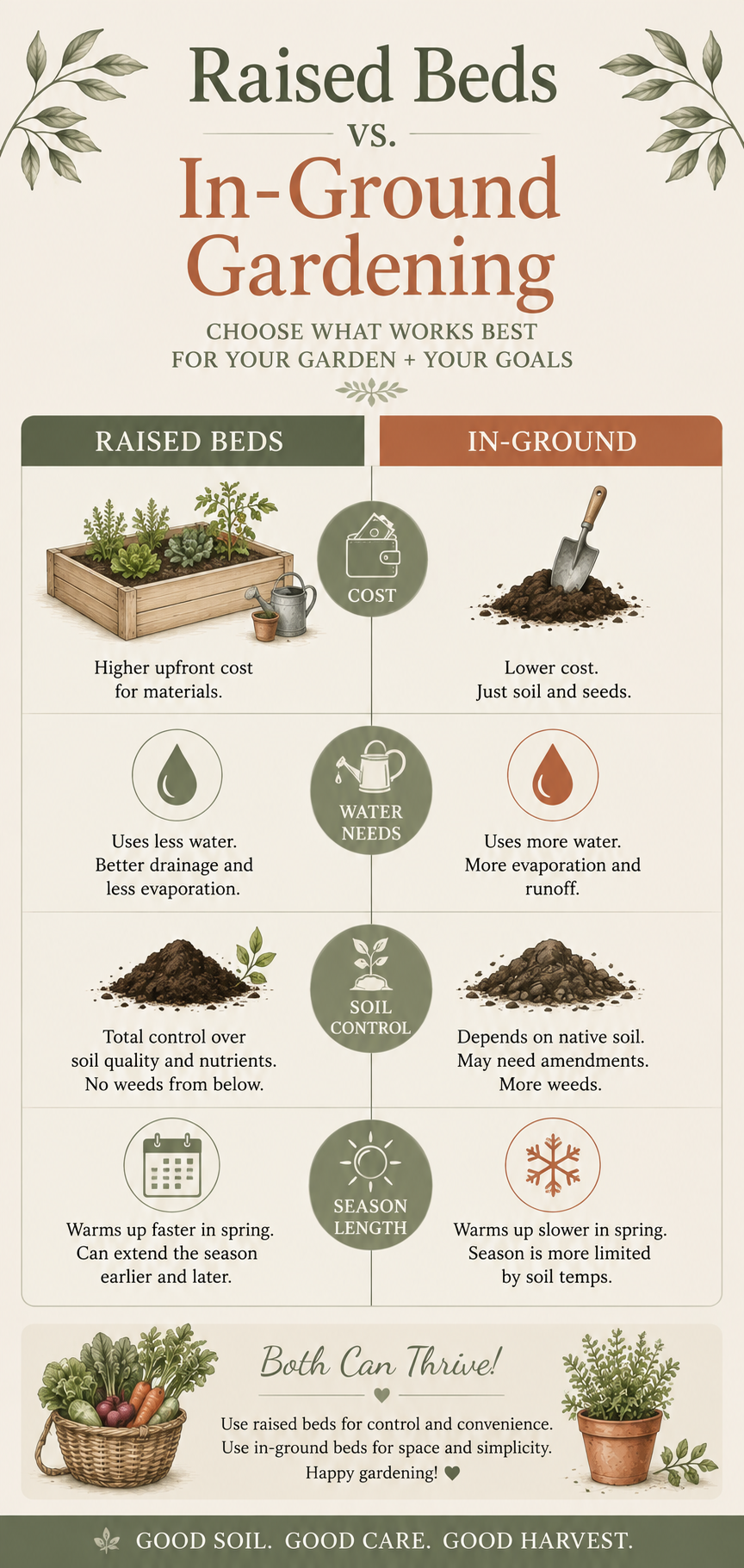
There is no universally "better" option here. Raised beds give you more control over soil quality, better drainage, and less physical strain, but they cost more upfront and dry out faster. In-ground gardening is cheaper to start, holds moisture better, and supports deeper root systems, but it depends heavily on the quality of the soil you already have.
Why Raised Beds Are So Popular
You control the soil completely. If your yard has rocky, heavily compacted, poorly draining, or otherwise difficult native soil, a raised bed lets you fill it with quality soil from day one.
They often extend your growing season. Raised beds tend to warm up faster in spring and retain heat longer into fall than ground-level soil.
They are easier on your body. Raised beds reduce how much bending and kneeling gardening requires.
They keep some pests out. Especially when lined with hardware cloth on the bottom, raised beds can help keep burrowing pests like gophers and voles away.
They reduce soil compaction. Since raised beds are not walked on, the soil inside tends to stay looser and better aerated.
Why In-Ground Gardening Still Makes Sense
It is the cheapest way to start. No lumber, no bulk soil purchase, no building required.
It holds moisture better. In-ground soil connects to the earth below it, so it retains moisture longer than raised beds.
It supports bigger root systems. Deep-rooted crops like pumpkins and melons often do better with unlimited root depth.
It is considered more regenerative long-term. Working directly with your native soil, improving it season after season, builds a genuinely healthier growing environment over time.
How to Decide Which Is Right for You
Test your native soil first. If it drains reasonably well and isn't heavily compacted, rocky, or contaminated, in-ground is a reasonable, low-cost start.
Consider your budget. Raised beds need upfront investment in materials and soil; in-ground only needs basic tools and amendments.
Think about your physical comfort. If bending at ground level is difficult, the elevated height of a raised bed is a real advantage.
Factor in your climate. In hot, dry climates, raised beds dry out faster. In cooler climates, faster spring warm-up is a benefit.
Think about what you want to grow. Deep-rooted crops may prefer in-ground unless your beds are built at least 12-18 inches deep.
A Realistic Cost Comparison
Raised beds require lumber or another building material, plus enough quality soil and compost to fill the bed completely, which for even one modest bed can add up to a meaningful upfront cost. Kits are convenient but typically cost more than building your own. Get my favorite starter kit here.
In-ground gardens mainly require tools you may already own, plus compost or other amendments worked into your existing dirt. For many beginners, this is genuinely the more affordable way to start.
Over time this gap narrows, since raised beds typically need less ongoing soil amendment once properly filled, while in-ground gardens may need continued yearly investment in compost.
Maintenance Differences Over Time
Raised beds tend to need more frequent watering, since they drain faster, especially in hot weather. They generally have fewer weed problems early on.
In-ground gardens hold moisture longer between waterings, but may require more consistent weeding, especially in the first year or two.
Neither option is meaningfully "harder" overall — the type of maintenance simply shifts.
You Do Not Have to Choose Just One
Many experienced gardeners eventually use both. A common approach is starting with a raised bed or two for crops that benefit most from controlled soil and easier access, while using in-ground rows for larger, deep-rooted crops or to save money as the garden expands.
What a Beginner Setup Might Look Like
If you choose raised beds: Start with one or two beds, roughly 4 feet wide, and at least 8 to 12 inches deep for most vegetables. You can get a starter kit here.
If you choose in-ground: Start by testing and amending a modest section of your yard, working in compost before your first planting.
If you are unsure: Consider starting with a single, inexpensive raised bed while also trying a small in-ground section nearby, and compare how each performs over one season.
Common Mistakes to Avoid
Choosing raised beds purely because they look nice online. Aesthetics shouldn't be the deciding factor over what fits your soil, budget, and goals.
Skipping a soil test before deciding. Many gardeners assume their soil is unusable without ever testing it.
Building raised beds too shallow for what you want to grow. A 6-inch bed will frustrate you if growing carrots, potatoes, or other root vegetables.
Underestimating the cost of filling a raised bed. Quality soil adds up quickly, and this sometimes surprises new gardeners.
Assuming in-ground gardening is automatically inferior. It has real, legitimate advantages.
Not planning for the long-term cost difference. Thinking beyond just the first season helps you budget realistically.
Frequently Asked Questions
Which option is truly better for a complete beginner?
Neither is universally better. In-ground is often cheaper and simpler if your soil is reasonably healthy; raised beds are worth it if your soil is genuinely poor or you want easier physical access.
How deep does a raised bed need to be?
Most vegetables do well in 8 to 12 inches, though root vegetables and larger crops benefit from 12 to 18 inches or more.
Do raised beds really need more watering?
Often yes, since they tend to drain and dry out faster than in-ground soil.
Can I convert an in-ground garden to raised beds later, or vice versa?
Yes, either direction is possible.
Is one option more beginner-friendly for avoiding weeds?
Raised beds tend to have fewer weed problems initially, since they start with fresh soil.
What is the cheapest way to start a garden this season?
In-ground gardening, using your native soil amended with compost, is generally the lowest-cost way to start.
Do raised beds actually extend my growing season?
Often yes, modestly, thanks to faster spring warm-up and longer fall heat retention.
Which option requires less ongoing maintenance?
Neither requires meaningfully less overall — raised beds need more watering, in-ground needs more weeding.
Can I start small and expand later, regardless of which option I choose?
Yes, and this is often the smartest approach either way.
What You Should Do Now
Test your native soil's drainage and quality before deciding
Consider your budget honestly, including the cost of filling a raised bed if you go that route
Think about your physical comfort with ground-level gardening
Choose one small section to start with this season, rather than committing to a huge setup right away
Remember you can always adjust, add, or combine approaches in future seasons
There is no wrong answer between raised beds and in-ground gardening. Both can produce a genuinely thriving garden. The best choice is simply the one that fits your soil, your budget, and your body.
https://homesteadandchill.com/raised-garden-beds-pros-cons/
https://www.epicgardening.com/raised-bed-vs-in-ground/
https://gardentherapy.ca/raised-beds-vs-in-ground/
https://www.gardeningchannel.com/raised-bed-gardens-vs-in-ground/
https://www.ourheritageofhealth.com/raised-bed-vs-in-ground-gardens-pros-and-cons/
https://journeywithjill.net/gardening/2019/05/07/raised-garden-bed-vs-in-ground-garden/
https://notquiteahomestead.com/raised-beds-vs-in-ground-gardening/
