Soft Sourdough Apple Cinnamon Rolls With Cream Cheese Frosting
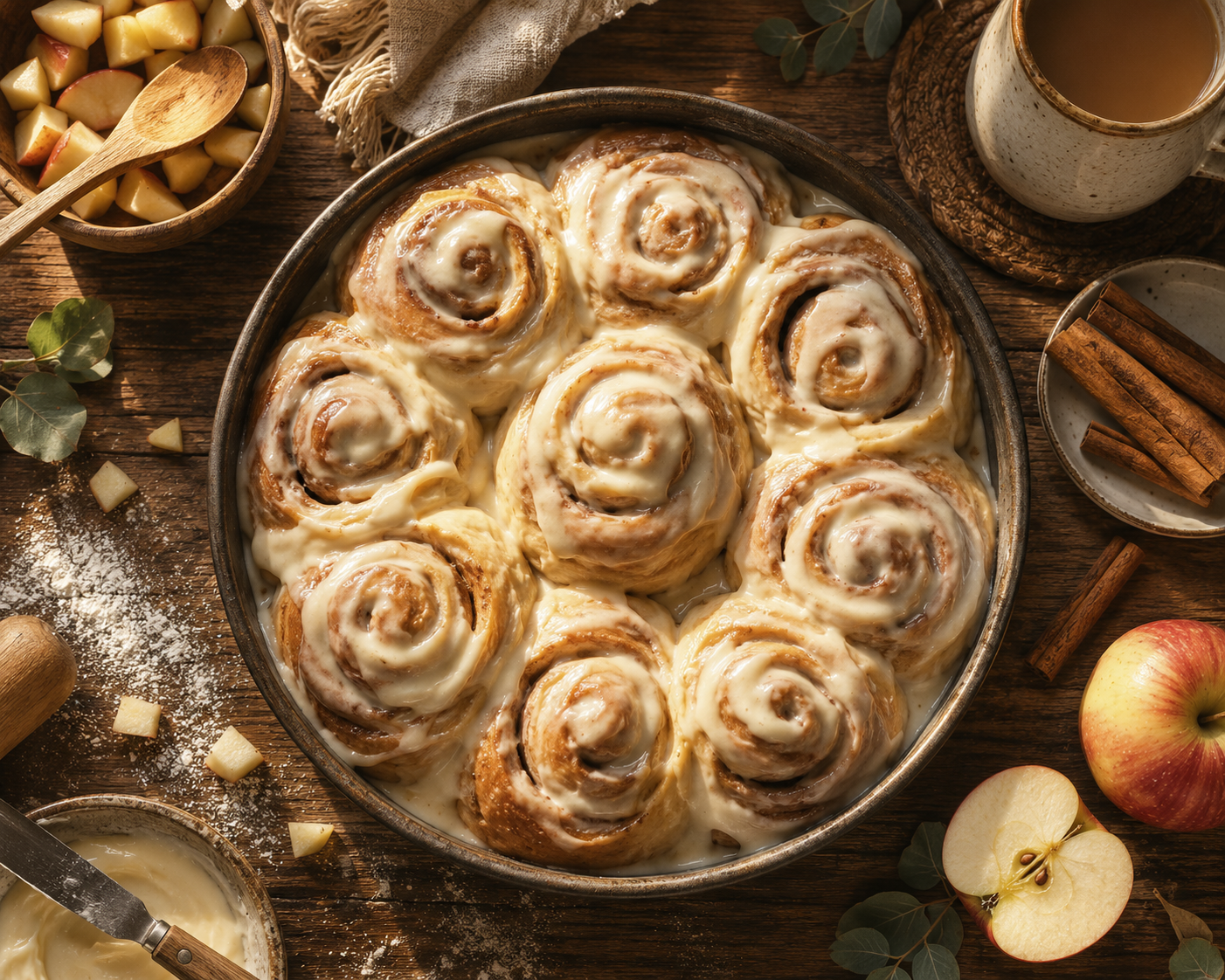
If you've got a sourdough starter bubbling away on your counter and apple season in full swing, these rolls are exactly where those two things belong. Soft, pillowy sourdough dough, a warm apple cinnamon filling, and a thick swoop of cream cheese frosting on top. This is the kind of recipe that makes a Saturday morning feel like an event.
The dough gets an overnight rise, so most of the work happens the day before, and you wake up to rolls ready to shape, rise once more, and bake fresh. Let's walk through it.
Why Sourdough Makes These Rolls Special
A sourdough-leavened dough brings something a packet of instant yeast simply can't. The long, slow fermentation develops a deeper flavor and a wonderfully soft, tender crumb, while also making the dough a little easier to digest for a lot of people. If you've been maintaining a starter and wondering what to do with it beyond bread, this is one of the most rewarding ways to put it to work.
New to Sourdough? A Quick Note
If you're just getting your starter going, know that these rolls really do need an active, well-established starter to rise properly, one that's been fed regularly and doubles reliably within 4 to 8 hours of feeding. A young or sluggish starter will still make delicious dough, but the rise will take longer and be less predictable, so budget extra time if your starter is still fairly new. If your starter isn't quite there yet, this recipe is worth bookmarking for a few weeks down the road rather than rushing into today.
What You'll Need
For the dough: 1 cup active, bubbly sourdough starter, three quarters cup whole milk (warmed slightly), one third cup granulated sugar, 1 large egg, one third cup unsalted butter (softened), 1 teaspoon salt, and 4 to 4 and a half cups all-purpose flour.
For the apple cinnamon filling: half a cup unsalted butter (softened), three quarters cup packed brown sugar, 2 tablespoons ground cinnamon, 1 tablespoon cornstarch, a pinch of nutmeg, and 1 and a half cups peeled, finely diced apples. If you have homemade apple butter on hand, a cup of that swirled in alongside the diced apples takes these rolls even further over the top.
For the cream cheese frosting: 4 ounces cream cheese (softened), 4 tablespoons unsalted butter (softened), 1 and a half to 2 cups powdered sugar, half a teaspoon vanilla extract, a pinch of salt, and a splash of milk if you'd like a thinner, more pourable finish.
Step 1: Mix and Knead the Dough
In a large mixing bowl or stand mixer, combine the sourdough starter, warmed milk, sugar, egg, softened butter, and salt. Mix until combined, then gradually add the flour, starting with 4 cups. Knead by hand for about 10 minutes, or with a stand mixer's dough hook for about 6 to 8 minutes, adding a little more flour only if the dough is too sticky to handle. You're looking for a smooth, soft, slightly tacky dough that holds together well.
Step 2: Let the Dough Rise Overnight
Place the dough in a lightly greased bowl, cover it, and let it bulk ferment at room temperature for 8 to 12 hours, or overnight. Fermentation time depends heavily on your kitchen's temperature and how active your starter is, so watch the dough rather than the clock. You're looking for it to grow by about 50 to 70 percent, not necessarily double, since enriched doughs with butter and sugar rise more slowly than a plain bread dough. If your kitchen runs warm, above 75 degrees, check it closer to the 8 hour mark rather than letting it go the full 12.
Step 3: Make the Filling
While your dough rises, or the next morning before shaping, stir together the softened butter, brown sugar, cinnamon, cornstarch, and nutmeg until it forms a spreadable paste. The cornstarch is a small but important detail here. It helps the filling stay put inside the rolls instead of oozing out and pooling in the pan as they bake.
Step 4: Roll, Fill, and Shape
Turn your risen dough out onto a floured surface and roll it into a large rectangle, roughly 16 by 12 inches. Spread the cinnamon filling evenly over the surface, all the way to the edges, then scatter the diced apples on top, or dollop and swirl in your apple butter if you're using it.
Starting from one long edge, roll the dough tightly into a log. Using a sharp knife or a piece of unflavored dental floss slid underneath and crossed over the top, slice the log into 12 even rolls. Arrange them cut side up in a greased 9x13 inch baking dish, leaving a little room between each one to expand.
Step 5: The Second Rise
You have two good options here. For same-day rolls, cover the pan and let the shaped rolls rise at room temperature for 1 to 4 hours, until they look puffy and are touching one another. For an overnight option, cover the pan tightly and refrigerate the shaped rolls overnight, then pull them out in the morning and let them sit at room temperature for 2 to 3 hours before baking to finish rising.
Either way, if you want extra soft, bakery-style rolls, pour about half a cup of heavy cream evenly over the tops right before they go into the oven. It sounds unusual, but it soaks into the dough as it bakes and makes for an incredibly tender roll.
Step 6: Bake
Preheat your oven to 350 degrees. Bake the rolls for 25 to 30 minutes, until they're golden brown on top and cooked through in the center. If the tops are browning too quickly before the centers finish, loosely tent the pan with foil for the last 10 minutes.
Step 7: Make the Frosting and Finish
While the rolls bake, beat the softened cream cheese and butter together until smooth, about 2 minutes. Add the powdered sugar, vanilla, and salt, and beat until fluffy, adding a splash of milk if you'd like a thinner consistency that melts into the warm rolls. Spread generously over the rolls while they're still warm for a melty finish, or let them cool slightly first if you'd prefer the frosting to stay more distinct on top.
Tips for Extra Soft, Bakery-Style Rolls
A few small details make a noticeable difference in how tender these rolls turn out. Warm your milk gently before mixing it into the dough, since a cold liquid can slow down the yeast activity from your starter right out of the gate. Don't skip kneading time, since a well-developed dough traps more air and bakes up softer than an underworked one. And that heavy cream poured over the tops before baking, mentioned above, really is worth doing if you want that classic, almost bready-pudding softness bakery cinnamon rolls are known for.
Baking the rolls close together in the pan, rather than spread out with lots of room, also helps. Rolls that touch as they rise and bake stay softer on their sides than ones left with space to form a firmer crust all the way around.
Make-Ahead and Storage Tips
These rolls are genuinely built for the overnight method described above, so don't hesitate to lean on it if mornings are busy in your house. Once baked, leftover rolls keep well covered at room temperature for about 2 days, or in the refrigerator for up to a week. To freeze, wrap unfrosted, cooled rolls tightly and freeze for up to 2 months, then thaw and warm before topping with fresh frosting.
Common Mistakes to Avoid
The most common issue is an overly stiff dough from adding too much flour too quickly, which results in denser, less tender rolls. Skipping the cornstarch in the filling is another easy mistake, leading to a gooey, leaking pan instead of neatly filled rolls. And rushing the rises, especially in a cold kitchen, tends to produce smaller, tougher rolls than giving the dough the time it actually needs.
Want More Recipes Like This?
If cozy, from-scratch recipes like this one are your kind of Saturday morning, join our email list so you never miss a new one as the seasons change. And if you love the idea of bringing a little more handmade, old-fashioned goodness into your home without doing all the baking yourself, keep an eye out. We're slowly building out a small shop of handmade goods to go along with everything we share here, and email subscribers will be the first to know when it opens.
A Simple Sourdough Cinnamon Roll Checklist
Use an active, recently fed sourdough starter at its peak. Mix and knead the dough until smooth and slightly tacky. Let the dough bulk ferment 8 to 12 hours, watching for a 50 to 70 percent rise rather than a strict double. Make the cornstarch-thickened filling before shaping. Roll, fill, and slice into 12 even rolls. Choose a same-day or overnight second rise depending on your schedule. Bake at 350 degrees for 25 to 30 minutes, and frost generously while warm.
Frequently Asked Questions
Can I use sourdough discard instead of active starter?
Active, recently fed starter gives these rolls the best rise and texture, since discard has less leavening power. Some bakers do use discard successfully with a small amount of added yeast, but for the best results with this recipe, use active starter that's bubbly and near its peak.
Do I have to use fresh apples, or can I use apple butter instead?
Either works beautifully, and combining a small amount of diced apple with a swirl of apple butter gives you the best of both, fresh texture and concentrated apple flavor throughout.
Why didn't my dough rise much overnight?
This usually comes down to kitchen temperature or starter strength. A cooler kitchen slows fermentation significantly, so look for a warmer spot, like inside the oven with just the oven light on, or give the dough more time rather than assuming something went wrong.
Can I make these rolls without an overnight rise?
Not easily, since the overnight bulk ferment is what develops both the rise and the flavor in a sourdough dough. If you're short on time, look for a same-day yeasted cinnamon roll recipe instead, since sourdough genuinely needs the extended fermentation time to perform well.
How do I keep the filling from leaking out during baking?
The cornstarch in the filling helps significantly, along with rolling the dough tightly and not overfilling right at the edges. A little filling escaping is normal and just adds a caramelized edge to the pan.
Can I halve this recipe for a smaller batch?
Yes, though sourdough doughs can be a little less predictable in smaller quantities. If you halve it, keep a close eye on fermentation time, since a smaller amount of dough can rise slightly faster than a full batch.
Your Next Step
Feed your starter tonight, and by tomorrow morning you'll have a pan of warm, apple-studded cinnamon rolls worth setting your alarm a little early for. If you make these, I'd love to see them. Save this one for the next cozy fall weekend on your calendar.
You Might Also Like):

Sources:
Sourdough Cinnamon Rolls - Easy Overnight - Little Spoon Farm
Sourdough Apple Cinnamon Rolls Recipe - Overnight Ferment - Unhurried Homemaker
Sourdough Cinnamon Rolls with Cream Cheese Topping - Farmhouse on Boone
Cream Cheese Frosting For Cinnamon Rolls - Boston Girl Bakes
Sourdough Apple Cinnamon Rolls (Overnight Recipe) - Somebody Feed Seb
