 Image 1 of 2
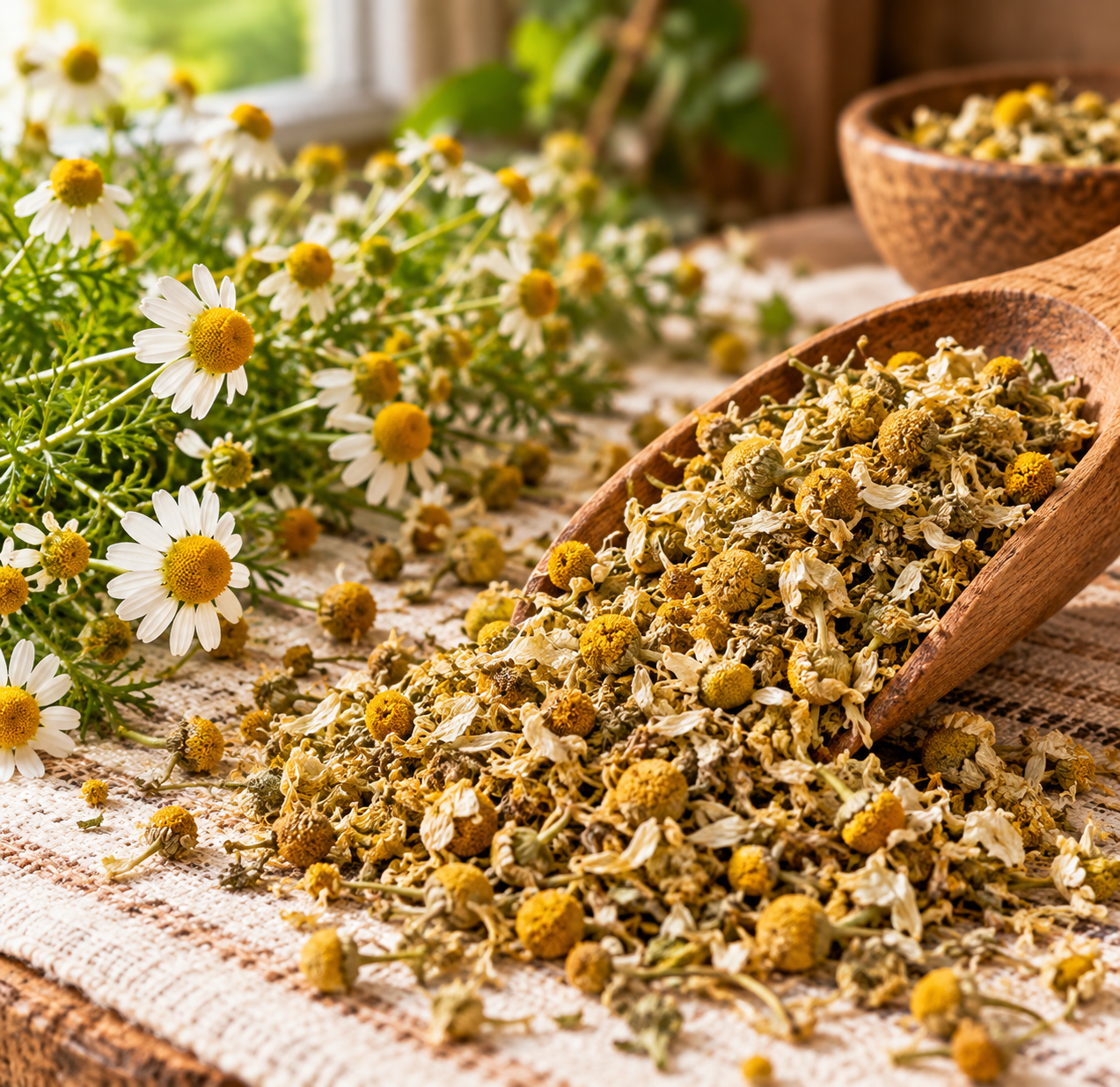 Image 2 of 2
Loose Leaf Chamomile Tea | Dried Chamomile Flowers, Caffeine-Free Single Herb
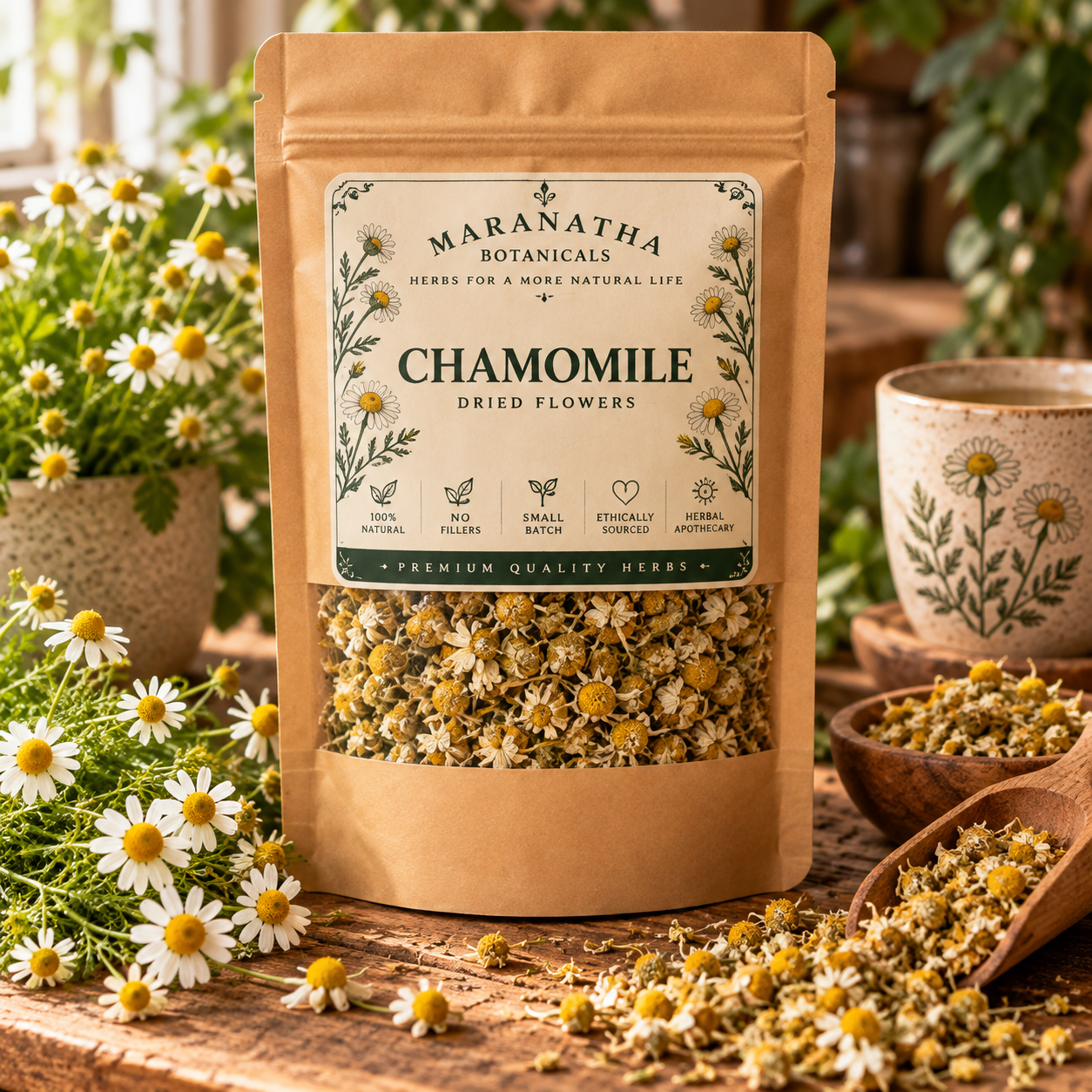
Some cups taste like home, and chamomile tea is one of them. Our loose leaf chamomile is made from dried golden flower heads that steep into a soft, honey-sweet cup with a whisper of apple. It's the kind of tea Grandma kept in a tin by the stove, packed for you in small batches and heat-sealed for freshness.
Quick Facts
- Type: Single herb, loose leaf herbal tea
- Botanical name: Matricaria chamomilla (German chamomile)
- Plant family: Daisy family (Asteraceae)
- Plant part: Flower heads
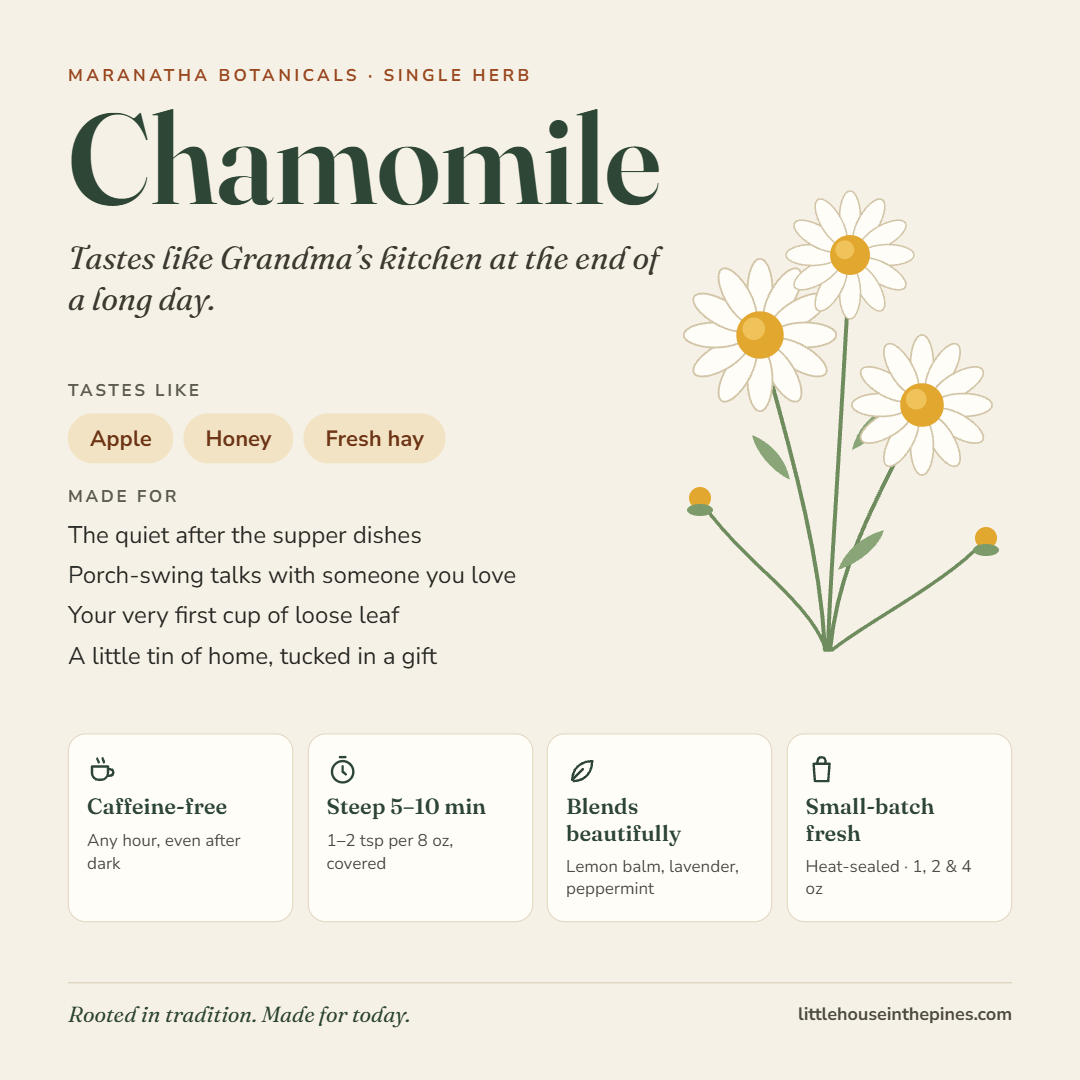
- Flavor notes: Apple, honey, fresh hay, soft floral
- Caffeine: Naturally caffeine-free
- Sizes: 1 oz, 2 oz and 4 oz bags; subscribe monthly and save 15%
- Brew time: 5–10 minutes, covered
What Is Chamomile?
Chamomile is a low-growing flowering herb with white petals circling a domed golden center, much like a tiny daisy. The tea is made from the dried flower heads. Its name comes from the Greek khamaimēlon, meaning "earth apple," for the apple-like scent of the fresh blossoms. In Spanish it's manzanilla, "little apple," and you'll still find it in many Texas pantries under that name.
Two plants share the chamomile name: German chamomile (Matricaria chamomilla) and Roman chamomile (Chamaemelum nobile). German chamomile is the one most often used for tea.
A Long History in the Home Apothecary
Chamomile has been loved for a very long time. Ancient Egyptians valued its golden blossoms, and Greek and Roman writers, including Dioscorides and Pliny, recorded it among the useful plants of their day. Through the Middle Ages it grew in monastery herb beds and cottage gardens across Europe. The Old English "Nine Herbs Charm" names mægðe, an herb usually identified as chamomile.
Folk herbalists traditionally steeped the flowers after a hearty meal and again in the evening as the house grew quiet. That evening ritual lasted so long that Beatrix Potter wrote it into The Tale of Peter Rabbit in 1902, when Mrs. Rabbit puts Peter to bed with a dose of chamomile tea. From European farmhouses to Mexican and Texas kitchens, a warm cup of chamomile has long been a sign that the day's work is done.
Flavor & Aroma
Chamomile brews into a pale gold cup that is delicate, floral and naturally sweet. Expect soft notes of apple and honey with a gentle, meadowy finish that some describe as fresh hay. There's no bitterness when it's brewed with care, so it's a lovely first herbal tea for anyone new to loose leaf.
How to Brew Chamomile Tea
A classic cup: Steep 1–2 teaspoons of dried chamomile flowers in 8 oz of just-boiled water for 5–10 minutes. Cover your mug while it steeps to hold in the delicate aroma, then strain.
A stronger infusion: Use up to 1 tablespoon of flowers per 8 oz and steep the full 10 minutes, covered.
Iced chamomile: Brew it double strength, let it cool, and pour it over ice with a slice of lemon for a warm Texas afternoon.
A spoonful of honey brings out its natural sweetness beautifully.
Blending Chamomile With Our Other Single Herbs
Chamomile is a gentle base that plays well with others, so it's a natural starting point for your own blends.
- With Lemon Balm: Adds a bright, lemony lift to chamomile's honeyed softness, a favorite pairing for evening cups.
- With Lavender: A small pinch adds a floral, garden-in-bloom note. Go easy, since lavender can quickly take over.
- With Peppermint: Makes a cool, refreshing cup for after supper.
- With rose petals or cinnamon: Rose makes it sweet and romantic, and a little cinnamon makes it cozy.
Chamomile vs. Similar Herbs
| Herb | Botanical name | Flavor | A lovely choice for |
|---|---|---|---|
| Chamomile | Matricaria chamomilla | Apple, honey, soft floral | A mild, sweet everyday cup |
| Lemon Balm | Melissa officinalis | Lemony, fresh, lightly minty | A brighter, citrusy herbal tea |
| Lavender | Lavandula angustifolia | Strongly floral, perfumed | A pinch in blends and baking |
| Peppermint | Mentha × piperita | Cool, crisp, bold mint | A refreshing after-supper cup |
Cautions
Chamomile is in the daisy family. If you're allergic to ragweed, chrysanthemums, marigolds or daisies, talk with your doctor before trying it, since allergic reactions can occur. Chamomile may interact with some medications, including blood thinners such as warfarin. If you are pregnant, nursing, taking any medication or managing a health condition, please check with your healthcare provider first. Ask your pediatrician before offering herbal tea to young children, and never give honey to babies under 12 months.
These statements have not been evaluated by the Food and Drug Administration. This product is not intended to diagnose, treat, cure, or prevent any disease.
Frequently Asked Questions
What does chamomile tea taste like?
Chamomile tastes mild, floral and naturally sweet, with notes of apple and honey. It has no bitterness when brewed with just-boiled water and a covered mug. Many people enjoy it plain, without any sweetener.
Is chamomile tea caffeine-free?
Yes, chamomile contains no caffeine at all. You can enjoy it any time of day, including late in the evening.
How much loose leaf chamomile do I use per cup?
Use 1–2 teaspoons of dried flowers per 8 oz of water. Chamomile flowers are light and fluffy, so a heaping spoonful is fine. Add more for a richer, deeper cup.
Can I make iced chamomile tea?
Absolutely. Brew it at double strength, let it cool, then pour it over ice. A slice of lemon or a sprig of fresh mint makes it extra refreshing.
Who should avoid chamomile tea?
People with allergies to ragweed or other daisy-family plants should talk with their doctor first. The same goes for anyone pregnant, nursing or taking medication, especially blood thinners.