How Do I Make Cleaning Feel Less Boring?

Let's be honest. Wiping the same counter, folding the same laundry, and vacuuming the same floors week after week can start to feel painfully repetitive. Cleaning is one of those tasks that never really finishes, and that endless, repetitive quality is exactly what makes it feel so boring for so many of us. The good news is that a few simple shifts can genuinely change how cleaning feels, without changing how much actual cleaning you have to do.
Why Cleaning Feels So Boring in the First Place
It is endlessly repetitive. Unlike a project with a clear finish line, cleaning has to be redone again almost as soon as it is done.
It rarely feels urgent or exciting. Your brain is wired to pay more attention to novel or urgent tasks, and routine cleaning is neither.
It often happens in silence, alone. Without something engaging your mind, cleaning can feel like pure, mindless drudgery.
It can feel invisible. A clean kitchen often goes unnoticed until it is dirty again, which makes the effort behind it feel unrewarded.
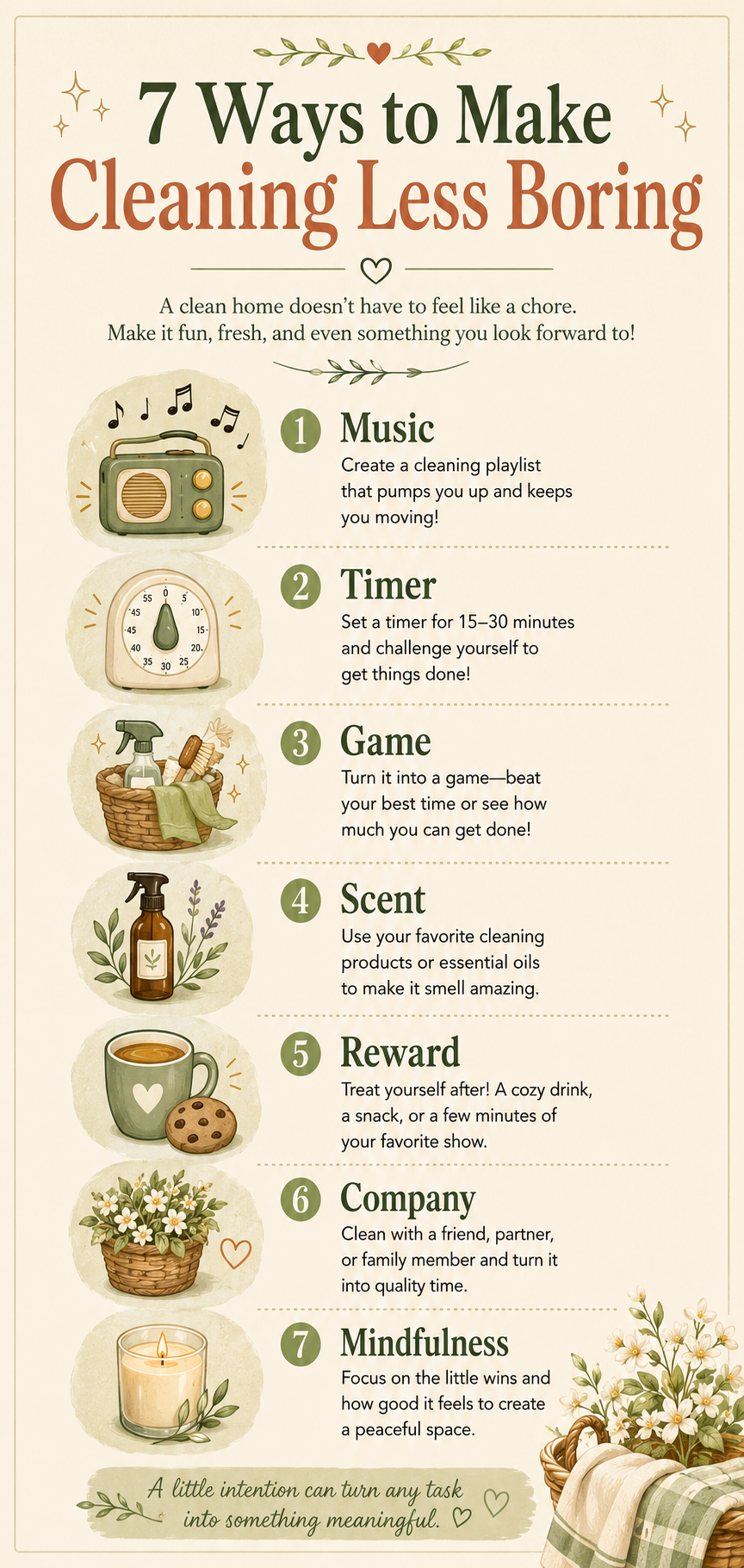
Turn On Something Good
Put on music, a podcast, or an audiobook while you clean. Upbeat music can turn cleaning into something closer to a mini dance session, while a gripping podcast or audiobook gives your mind something engaging to focus on. Try saving a favorite show or series specifically for cleaning time, so you actually look forward to it.
Break It Into Smaller Chunks
A whole house needing attention feels overwhelming. A single task feels manageable. Set a short timer, somewhere around 15 to 20 minutes, and focus on just one small area or task during that window.
Turn It Into a Game
Challenge yourself to finish a task before a specific song ends
Set a timer and see how much you can accomplish before it goes off
Race against your own best time from a previous cleaning session
Turn a family cleanup into a quick competition with kids



Make the Environment More Pleasant
Use a cleaning product with a scent you genuinely enjoy
Light a candle or turn on a diffuser before you start
Open windows for fresh air and natural light
Wear comfortable clothes you do not mind getting a little messy in
Build In a Reward
Enjoy a cup of coffee or tea in your freshly cleaned space once you are done
Watch an episode of a show you enjoy, guilt-free, after finishing
Take a relaxing bath or a few quiet minutes to yourself
Treat a finished cleaning session as your cue to sit down and actually enjoy the tidy space
Involve Other People
Call a friend or family member and chat while you both clean your own spaces
Turn a family cleaning session into shared time
Put on music the whole family enjoys and clean together
Trade cleaning company with a friend occasionally
Try Cleaning Mindfully Instead of Rushing Through It
It sounds counterintuitive, but slowing down and paying attention while you clean can actually make the task feel less tedious. Research on mindful dishwashing found that people who focused on small sensory details, the warmth of the water, the scent of the soap, the feel of a clean plate, reported feeling noticeably calmer and more mentally refreshed afterward compared to washing dishes on autopilot.
The Surprising Mental Benefits Behind the Boredom
Repetitive, structured tasks like folding laundry or wiping counters can lower stress and support emotional regulation, partly because they offer something predictable and controllable when other parts of life feel chaotic. A cluttered space also competes for your brain's attention, so clearing it can measurably improve focus and concentration. Small, completed cleaning tasks also trigger a genuine sense of accomplishment, giving your brain a small boost of motivation and satisfaction.
Reframe What You Are Actually Doing
Instead of "I have to clean this kitchen again," try noticing the actual purpose behind the task: caring for the people who eat in this space, creating a peaceful place to come home to, or simply tending to something that matters. For many Christian homemakers, this everyday, repetitive work can genuinely become a quiet act of care and stewardship rather than pure drudgery, not because the task itself changes, but because the posture behind it does.
A Sample "Make It Less Boring" Cleaning Session
Choose one specific area to tackle, rather than "the whole house"
Put on a favorite podcast or upbeat playlist
Light a candle or open a window
Set a 20-minute timer and work until it goes off
Reward yourself with a few quiet minutes and a cup of coffee once finished



Common Mistakes to Avoid
Trying to clean the whole house in one long session. Break it into smaller, timed chunks instead.
Cleaning in total silence when you know it drains you. If background noise genuinely helps you, do not skip it.
Never rewarding yourself for finishing. This makes cleaning feel like an endless, thankless task.
Comparing your cleaning routine to someone else's. What makes cleaning bearable is different for everyone.
Assuming boredom means something is wrong with you. Feeling bored by repetitive tasks is a completely normal, human response.
Frequently Asked Questions
Why does cleaning feel more boring to me than it seems to for other people?
It likely does not. Most people find routine cleaning tedious, even if they have found tricks that make it more bearable.
Does listening to something while cleaning actually help, or is it just a distraction?
For most people, it genuinely helps by giving your mind something engaging to focus on.
How do I get my kids excited about helping clean instead of resisting it?
Turning it into a timed challenge or pairing it with music often works well, along with cleaning alongside them.
What if none of these tricks make cleaning feel fun for me?
That is okay. The goal is a little less draining, not necessarily fun. Even a modest improvement is a real win.
Is it normal to dread cleaning even when I care about having a tidy home?
Yes. Caring about the result and enjoying the process are two completely different things.
How often should I switch up my cleaning routine to keep it from feeling stale?
Rotating your music, podcasts, or specific tricks every so often can help.
Is there any real evidence that cleaning actually helps with stress, or is that just a nice idea?
There is genuine research behind it. Studies have found that mindful, repetitive cleaning can reduce stress and nervousness, and a decluttered space can measurably improve focus.
Should I clean the whole house at once, or spread it out through the week?
Spreading tasks across several shorter sessions tends to feel far less boring and overwhelming than one long, exhausting cleaning day.
https://www.homesandgardens.com/solved/how-to-make-cleaning-fun
https://www.unexpectedlydomestic.com/cleaning-motivation/
https://balancethroughsimplicity.com/cleaning-more-fun/
https://retrohousewifegoesgreen.com/6-tips-to-get-motivated-to-clean/
https://palmbeachorganized.com/blog/cleaning-motivation-tips/
https://www.aol.com/lifestyle/9-ways-cleanup-time-fun-130045535.html
https://www.psychologytoday.com/us/blog/changepower/202208/8-surprising-psychological-benefits-of-routine-daily-tasks
https://www.healthcentral.com/mental-health/benefits-of-cleaning
