Can You Can Tomatoes With the Skin On?
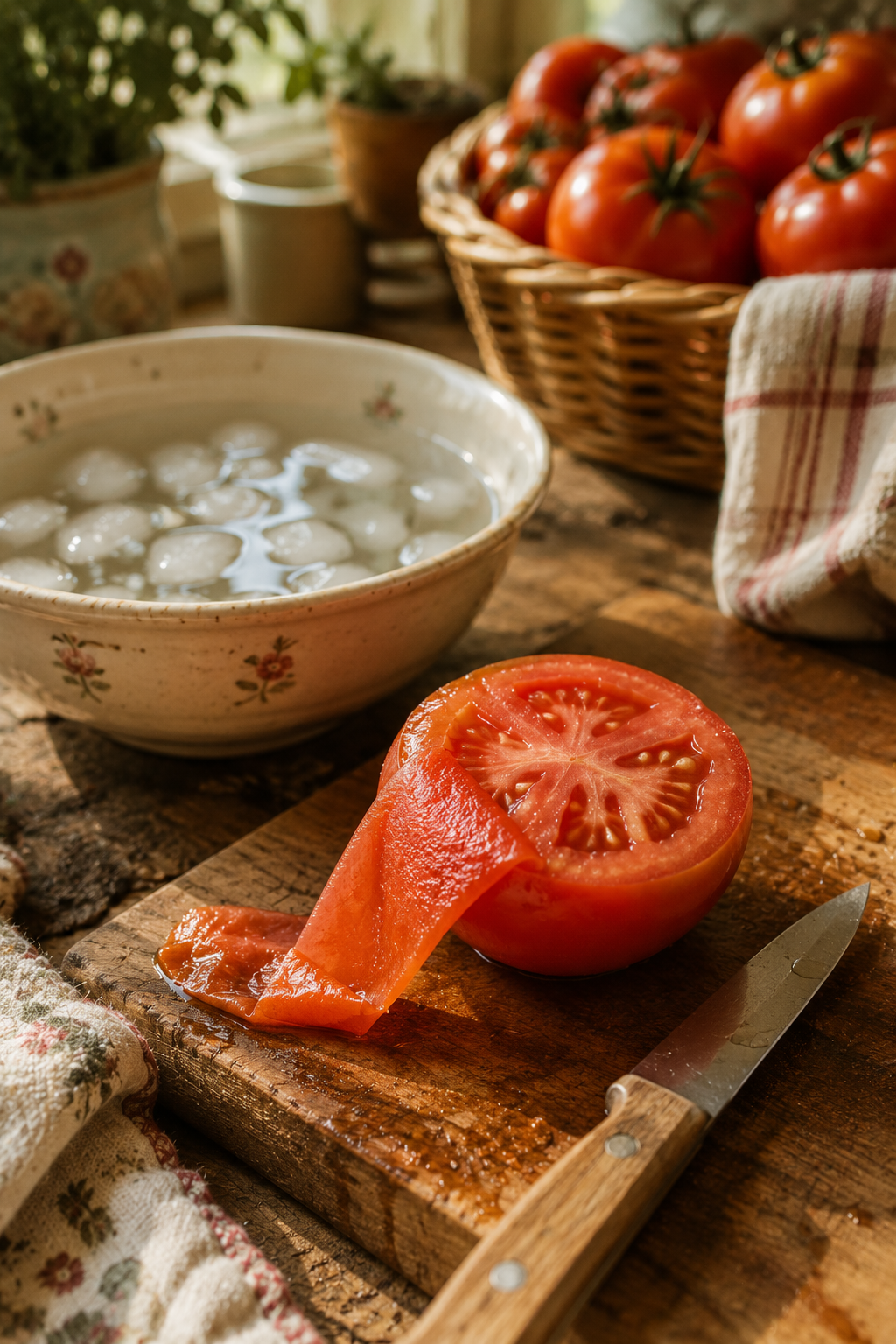
If you have ever stood at the stove with a giant bowl of tomatoes, wondering whether you really have to peel every single one before canning, you are not alone. Peeling tomatoes is easily one of the most tedious parts of the whole canning process. Here is the honest, research-backed answer, plus the easiest way to make peeling a lot less painful.
The Short Answer
No, you should not skip peeling tomatoes for canning, at least not if you are following a properly tested, safe canning recipe. Every research-tested tomato canning recipe from trusted sources like the National Center for Home Food Preservation is developed and tested using peeled tomatoes, and that peeling step is not just about texture or appearance. It genuinely affects both food safety and how reliably your jars process.
Why Peeling Actually Matters for Safety
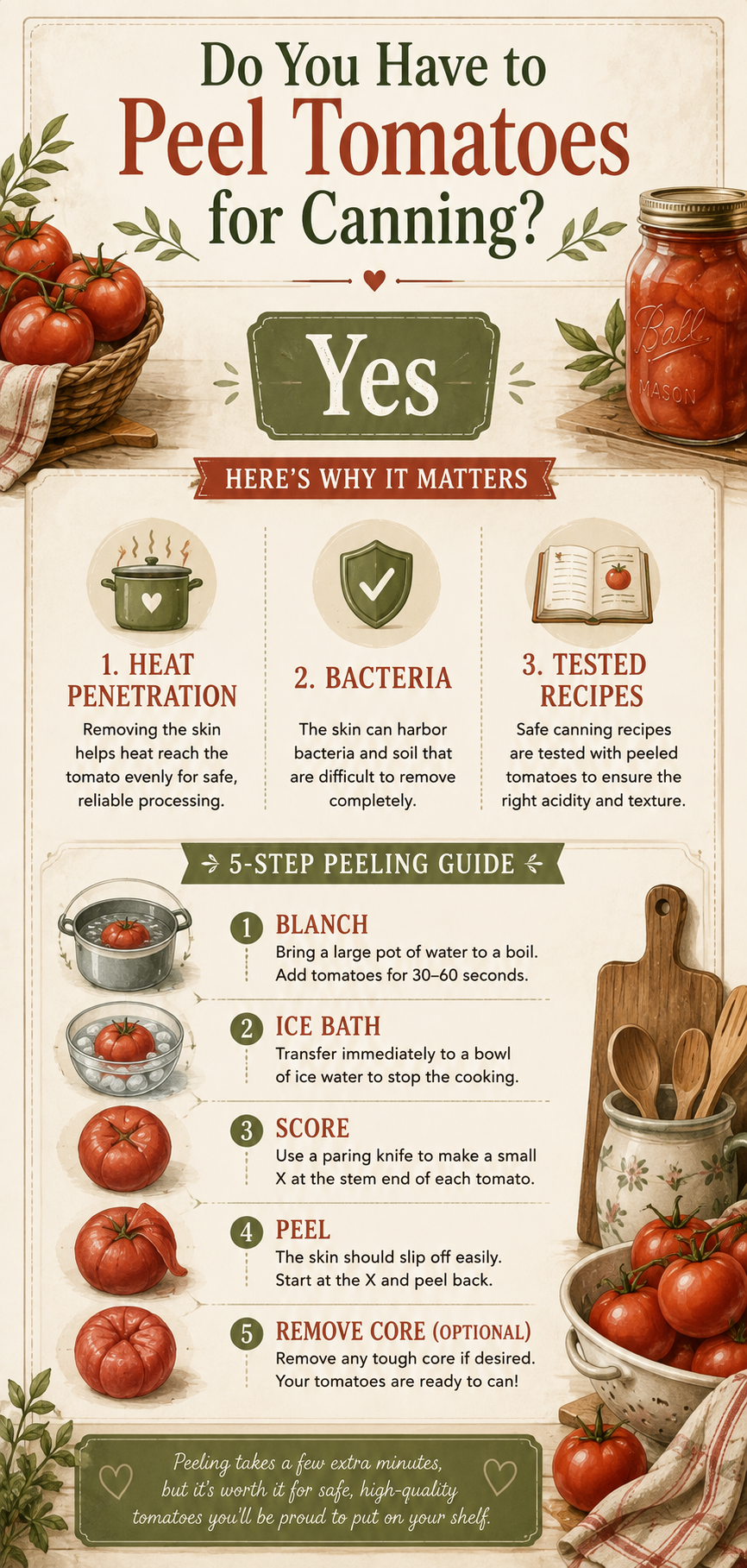
Skins can interfere with heat penetration. Tested processing times are calculated based on peeled tomatoes. Skins can change how heat moves through the jar during processing, which means a jar of unpeeled tomatoes may not reach the same safe internal temperature as a properly tested, peeled batch, even when processed for the exact same amount of time.
Skins carry more bacteria, yeast, and mold. The outer skin of a tomato naturally carries a higher microbial load than the flesh underneath. Removing the skin reduces that load before the jar is ever sealed and processed.
Tested recipes are specific for a reason. Every detail in a research-based canning recipe, including whether the tomatoes are peeled, was tested together as a complete system. Changing one variable means you are no longer following the tested, verified version of that recipe.
How to Water Bath Can Tomatoes Quickly and Safely
A Closer Look at Why Heat Penetration Matters So Much
When you process a jar of canned food, the goal is making sure heat reaches every part of the contents evenly, all the way to the center of the jar, for the full amount of time your recipe specifies. This is what destroys the organisms and enzymes that could otherwise cause spoilage or illness.
Tomato skins are tougher and denser than the flesh underneath, and a jar packed with unpeeled tomatoes can behave differently during processing than the tested version of that same recipe. Since processing times are calculated specifically around how heat moves through peeled tomatoes, introducing skins changes a variable the whole tested time was built around.

What Extension Offices and Food Safety Experts Actually Say
University extension offices, widely considered a gold-standard source for tested, research-based canning guidance, are consistent on this point. Multiple extension programs specifically address skin-on tomato canning and land on the same conclusion: peeling is not optional if you want your finished jars to match the safety profile of a properly tested recipe. This is not a case where reputable sources disagree — the guidance is unusually consistent.
What About Flavor and Texture?
Beyond safety, tomato skins tend to separate from the flesh during processing and can curl into tough, chewy bits floating in your finished jars. Many people also find skins add a slightly bitter edge. Peeling gives you a smoother, more pleasant final texture.
Water Bath Canning Tomatoes for Beginners
The Easiest Way to Peel Tomatoes for Canning
Bring a large pot of water to a rolling boil
Score a small X on the bottom of each tomato
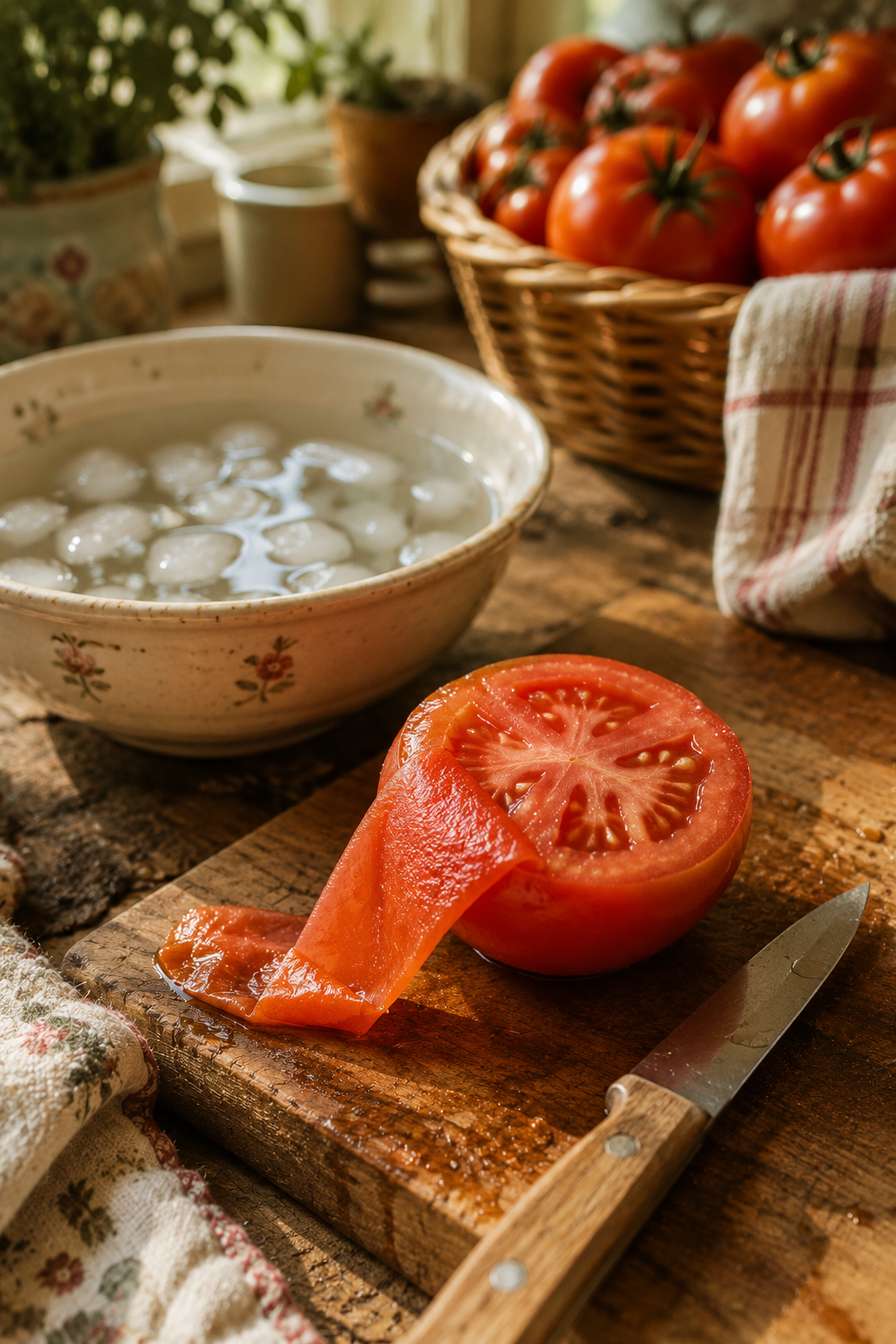
Drop the tomatoes into the boiling water for 30 to 60 seconds, just until the skin begins to split and curl
Immediately transfer them to a bowl of ice water to stop the cooking
Once cooled, the skins should slip off easily
Working in small batches keeps this process manageable.
What If I Really Do Not Want to Peel Them?
If peeling truly is not something you want to do, the safest option is choosing a different preservation method rather than skipping peeling within a canning recipe. Freezing whole, unpeeled tomatoes is a completely reasonable option, since freezing does not carry the same heat-penetration and bacterial-load concerns that canning does.
What If a Family Recipe Has Always Skipped Peeling?
It is common to hear about a grandmother or family recipe that skipped peeling and "always turned out fine." Home canning practices have been researched and refined significantly over the decades, and some older, informal methods are no longer considered safe by current standards, even if they did not cause a problem every single time. Botulism risk in particular is not something you can judge by past experience, since contamination is inconsistent and not something you can see, smell, or taste before it is too late. A method working out fine many times in the past does not mean the risk was never present.
If a treasured family recipe calls for unpeeled tomatoes, consider adapting it by adding the peeling step while keeping the rest of the recipe's character intact.
Common Mistakes to Avoid
Assuming a longer processing time compensates for unpeeled skins. There is no reliable, tested substitute for peeling.
Peeling inconsistently within the same batch. Peel all the tomatoes going into a batch, not just some.
Skipping the ice bath step. This is what makes skins easy to remove and stops the tomatoes from continuing to cook.
Using overripe tomatoes for peeling. Firm, ripe tomatoes peel more easily and consistently.
Rushing the blanching step. Watch for the skin visibly splitting as your cue to move them to the ice bath.
Frequently Asked Questions
Is it actually dangerous to can tomatoes with the skin on, or just not recommended?
Research-based sources treat this as a genuine safety concern, since skins can affect heat penetration and carry a higher bacterial load.
Does the same rule apply to freezing tomatoes?
No. Freezing tomatoes whole and unpeeled is a reasonable option since it doesn't involve the same heat-processing concerns.
How long does the skin need to blanch before it comes off easily?
Usually 30 to 60 seconds in boiling water, until the skin begins to split and curl.
Can I peel tomatoes ahead of time and refrigerate them before canning?
It's best to peel as close to your canning session as possible.
Does peeling apply to all tomato products, like sauce and juice too?
Most tested recipes call for peeled tomatoes, or the peeling happens during a straining step. Always follow the specific tested recipe.
What if my tested recipe does not explicitly mention peeling?
Choose a recipe from a well-established, research-based source like a university extension office or the NCHFP.
Why do different extension offices all agree on this specific point?
Because tomato canning recipes are developed and tested as a complete system, and peeling has consistently been part of that tested process.
Does peeling matter as much for pressure canning as it does for water bath canning?
The same core reasoning applies to pressure canning tomato-based products as well.
Is there a faster way to peel a large batch of tomatoes at once?
Blanching several at a time in a large pot speeds things up considerably, without overcrowding.
https://www.ksre.k-state.edu/news-and-publications/news/stories/2025/07/food-safety-peeling-tomatoes.html
https://nchfp.uga.edu/newsflash/why-should-you-peel-tomatoes-before-canning
https://blogs.extension.iastate.edu/answerline/2025/07/08/peel-tomatoes-before-preserving/
https://ask.extension.org/kb/faq.php?id=772298
https://ask.extension.org/kb/faq.php?id=598647
https://www.tastingtable.com/948219/why-you-need-to-peel-tomatoes-before-canning-them/
https://extension.k-state.edu/news-and-publications/news/stories/2025/07/food-safety-peeling-tomatoes.html
