What Does It Mean to Fear the Lord?

If you grew up hearing the phrase "fear of the Lord" and felt a little confused, or even uneasy, you are not alone. It is one of those phrases that shows up throughout Scripture, but it can sound strange to modern ears. Are we supposed to be scared of God? Does loving Him and fearing Him even make sense together? This post walks through what this phrase actually means, why it matters so much throughout the Bible, and what it can look like to live it out in an everyday, ordinary life.
Why This Phrase Trips People Up
In everyday language, fear usually means dread, anxiety, or being afraid of something that might hurt you. So when Scripture repeatedly tells believers to fear the Lord, it can sound jarring, almost like it is asking you to be afraid of the very God you are supposed to trust and love.
This confusion is understandable, but it comes from reading an old, richly layered word through a narrow, modern lens. The biblical concept behind "fear of the Lord" carries a much fuller meaning than simple dread, one that includes awe, reverence, humility, and a sober awareness of who God actually is.
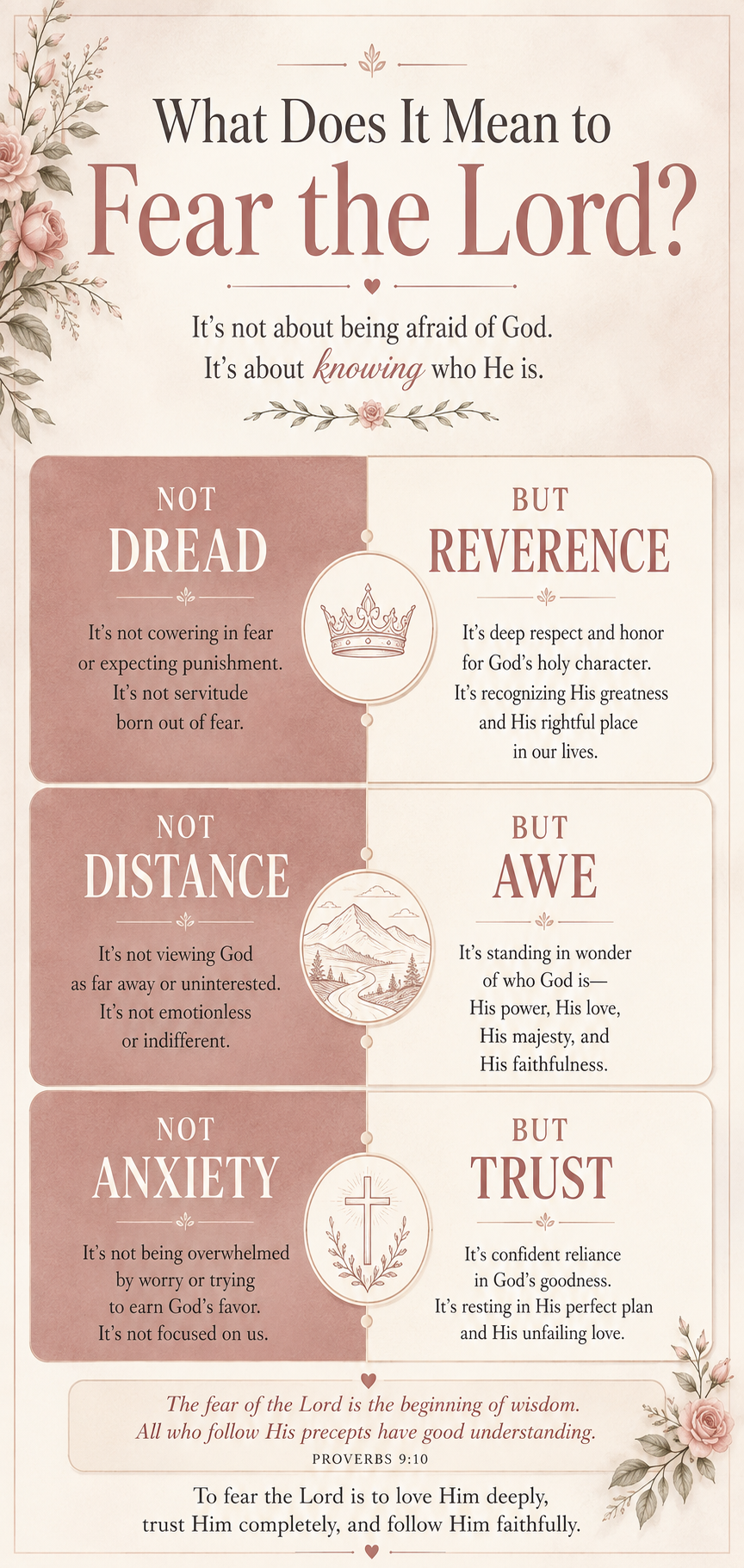
What Fear of the Lord Does Not Mean
It is not describing a terror that makes you want to run and hide from God, the kind of fear that pushes you away from a relationship rather than deepening one. It is not describing a picture of God as harsh, unpredictable, or eager to punish, waiting to catch you doing something wrong. And it is not meant to replace love, trust, or closeness with God. Scripture consistently holds fear of the Lord and love for God together, not as opposites, but as two sides of the same posture toward Him.
What Fear of the Lord Actually Means
At its core, the fear of the Lord describes a deep reverence, awe, and respect for who God is: His holiness, His authority, His power, and His goodness. It is the recognition that God is genuinely God, infinitely greater than we are, and that this truth should shape how we live, not just what we believe intellectually.
Think of it less like the fear of a threat and more like the awe you might feel standing at the edge of a vast canyon or watching a powerful storm roll in. There is a kind of reverent smallness in that moment, not because the canyon or the storm wants to hurt you, but because you are genuinely encountering something far bigger than yourself. Fear of the Lord carries that same sense of scale, except pointed toward the Creator of everything.
This kind of fear also includes a sober awareness that our lives are not hidden from God. Everything we think, say, and do matters to Him, and that awareness naturally shapes a desire to live in a way that honors Him, not out of anxious dread, but out of genuine respect for who He is.









Where This Idea Shows Up Throughout Scripture
The phrase "fear of the Lord" appears again and again across the Bible, particularly in the wisdom literature. It is described as the very starting point of wisdom itself, the foundation everything else is built on. Without this kind of reverence for God, true wisdom is described as something you simply cannot access, no matter how intelligent or well-informed you might otherwise be.
This theme is not limited to a single book or a single writer. It shows up in the wisdom books, in the Psalms, throughout Israel's history, and in the teaching of Jesus and the New Testament writers as well. Across the whole of Scripture, a right relationship with God is consistently described as beginning with this posture of reverence and awe.
How Fear and Love Fit Together
This is often where people get stuck, and it is worth addressing directly. Scripture also describes God's perfect love as something that drives out fear, specifically the kind of fear rooted in dread or punishment. So how can both be true at once?
The resolution lies in recognizing that these are two different meanings of the word "fear." The fear that love casts out is the anxious, dread-filled fear of punishment or rejection, the kind that makes you want to hide from someone rather than draw close to them. The fear of the Lord described throughout Scripture is something different: reverence, awe, and honor toward a God whose love you already trust.
Think of it this way: a child can deeply love a parent and also hold that parent in genuine, reverent respect, recognizing their authority and wisdom, without living in constant anxious dread of them. In a healthy relationship, love and reverence are not opposites. They actually deepen each other.
What This Actually Looks Like in Everyday Life
In your decisions. A genuine reverence for God shapes how you make choices, even small ones, with an awareness that your life is not lived in isolation from Him.
In your integrity. Fear of the Lord shapes how you act when no one else is watching.
In your worship. This kind of reverence shapes how you approach God, not casually or carelessly, but with genuine honor, even while also approaching Him with confidence and closeness.
In your humility. A right-sized understanding of God naturally produces humility, since recognizing how great God is puts our own knowledge and self-sufficiency into honest perspective.
In your obedience. Fear of the Lord motivates obedience that flows from respect and trust, rather than obedience motivated purely by fear of punishment.
Common Misunderstandings Worth Addressing
"Fearing God means being scared of Him." This flattens a rich, multi-layered biblical concept into simple dread, missing the reverence and honor actually at the heart of the phrase.
"This concept only applied under the old covenant." Christian traditions differ somewhat in how they discuss continuity between the Old and New Testaments on specific points, but the theme of reverent awe toward God shows up throughout the New Testament too. This is a good topic to explore further within your own church community.
"If I truly love God, I should not need to think about fearing Him at all." Love and reverent fear are not in competition in Scripture. A mature faith tends to hold both together.
"Fear of the Lord is only relevant for major, dramatic moral decisions." This posture is meant to shape ordinary, everyday life, not just big, obvious decisions.
Why This Matters So Much for Wisdom
Scripture describes this reverence as the actual starting point of wisdom, not one ingredient among many, but the foundation everything else is built upon. Wisdom, at its core, is about seeing life rightly. If you do not have an accurate view of who God is, everything else in your worldview tends to be built on a skewed foundation. Fear of the Lord corrects that foundation first, which then allows genuine wisdom to grow.
How to Grow in This Kind of Reverence
Spend regular time in Scripture, letting it shape your understanding of who God actually is
Spend time in genuine prayer, approaching God with both honesty and honor
Reflect honestly on God's character — holiness, power, goodness, and love together
Notice your own small, daily choices, and consider how an awareness of God's presence might shape them
Talk with mature, trusted believers about this concept
Worship regularly, since consistent worship naturally cultivates a posture of honor and awe over time
A Word for Anyone Who Grew Up With a Fear-Based, Anxious Faith
If you grew up in an environment where "fearing God" was taught primarily through guilt, shame, or anxious dread, it makes sense that this phrase might feel loaded or even painful. It is worth gently distinguishing between an unhealthy, fear-driven faith rooted in anxiety and control, and the healthy, biblical reverence this post has been describing.
Genuine fear of the Lord does not produce constant anxiety or a fragile, performance-based relationship with God. It produces a settled, grounded reverence that actually deepens trust and closeness over time. If your experience has felt more like the former, that distinction is worth exploring, ideally with a trusted pastor, counselor, or mentor.
Frequently Asked Questions
Does fearing God mean I should be afraid of Him?
Not in the sense of dread or terror. The biblical concept describes deep reverence, awe, and honor for who God is.
How can I fear God and also feel close to Him at the same time?
These are not opposites. A healthy relationship can hold both reverence and closeness together, similar to how a child can deeply love a parent while also respecting their authority.
Is fear of the Lord an Old Testament concept that no longer applies today?
The theme appears throughout the New Testament as well, though Christian traditions vary somewhat in how they explain the continuity between the testaments.
Why is fear of the Lord described as the beginning of wisdom?
Because an accurate view of who God is shapes everything else in a person's worldview.
What if my past experience with "fearing God" felt more like anxiety or shame than reverence?
That is worth gently exploring, since an anxious, fear-driven faith is different from the settled, healthy reverence described throughout Scripture.
How do I actually grow in this kind of reverence day to day?
Regular time in Scripture and prayer, honest reflection on God's character, and consistent worship.
Does fearing God mean I will not make mistakes anymore?
No. Fear of the Lord shapes the posture and direction of a person's life over time, but growth in this area is gradual.
https://www.biblestudytools.com/topical-verses/fear-the-lord-bible-verses/
https://www.logos.com/grow/min-fear-of-lord/
https://norden.thegospelcoalition.org/article/12-biblical-truths-about-the-fear-of-the-lord/
https://www.christianity.com/wiki/god/what-is-the-fear-of-the-lord.html
https://www.gotquestions.org/fear-God.html
https://rts.edu/resources/what-does-it-mean-to-fear-the-lord/
https://lifehopeandtruth.com/god/who-is-god/fear-of-the-lord/
