Old-Fashioned Peach Cobbler From Scratch: A Simple Late-Summer Recipe
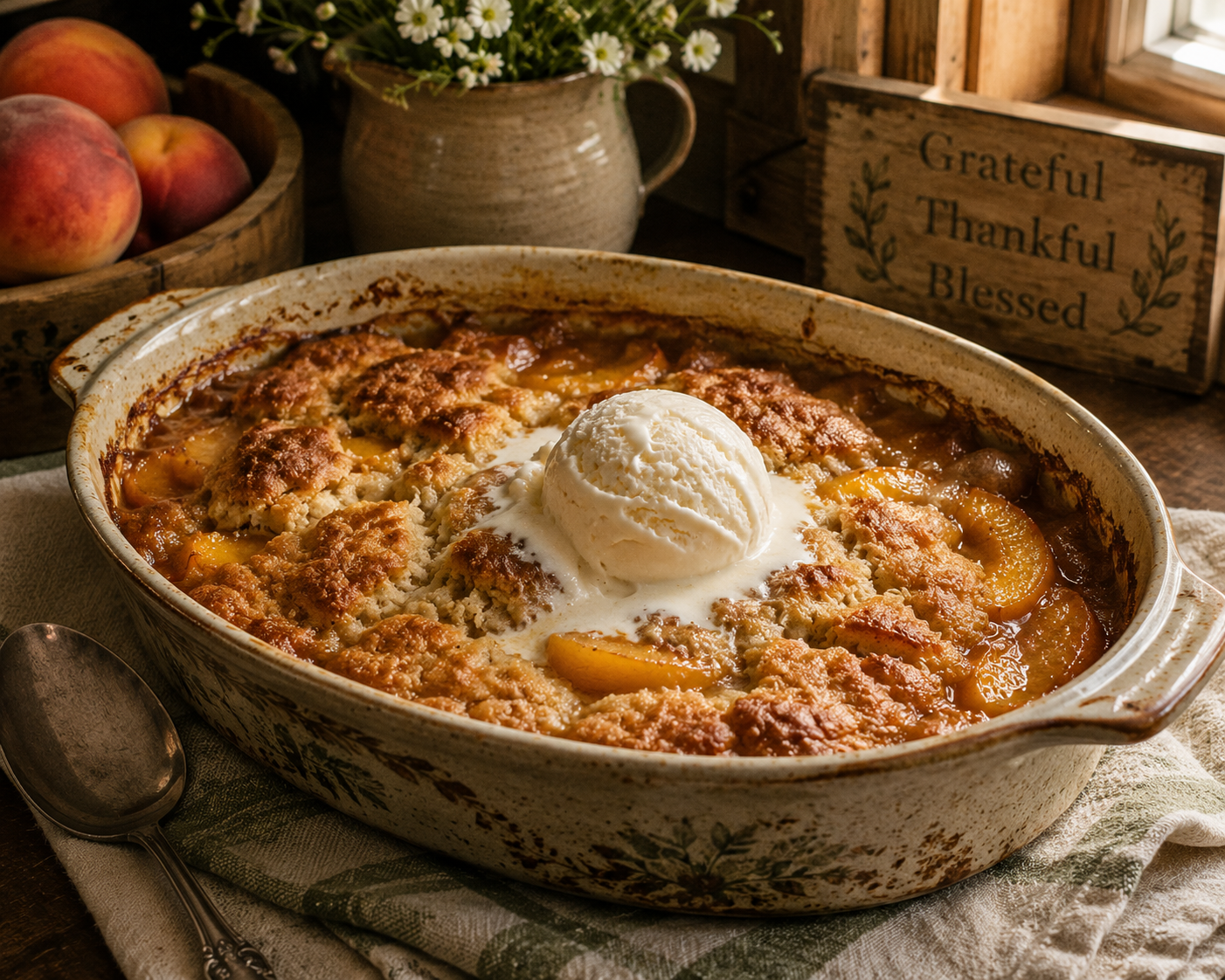
Late summer has a way of handing you more ripe peaches than you know what to do with, and honestly, there's no better problem to have. This old-fashioned peach cobbler is the recipe I turn to every single time, made completely from scratch with real ingredients you probably already have in your kitchen. No boxed cake mix, no shortcuts, just juicy peaches, a simple buttery batter, and that classic golden top that makes a cobbler a cobbler.
This recipe comes together in one bowl and one baking dish, and it fills the whole house with the kind of smell that brings everyone straight to the kitchen. Serve it warm with a scoop of vanilla ice cream melting into the peach juices, and you'll understand why this dessert has been a Southern summer staple for generations.
A Little Cobbler History
Cobbler has deep roots in early American kitchens, born out of necessity rather than fancy technique. Early settlers didn't always have the ingredients or tools on hand to make a proper pie crust, so they improvised, topping stewed fruit with a simple batter or biscuit dough and baking it over an open fire or in a wood stove. The name itself is thought to come from the rough, cobbled appearance of the finished topping, nothing fancy, just good food made from what was on hand.
That same spirit is exactly what makes this dessert worth keeping alive in your own kitchen today. It doesn't require special equipment or advanced baking skills, just ripe fruit, a few pantry staples, and a little patience while it bakes.
What You'll Need
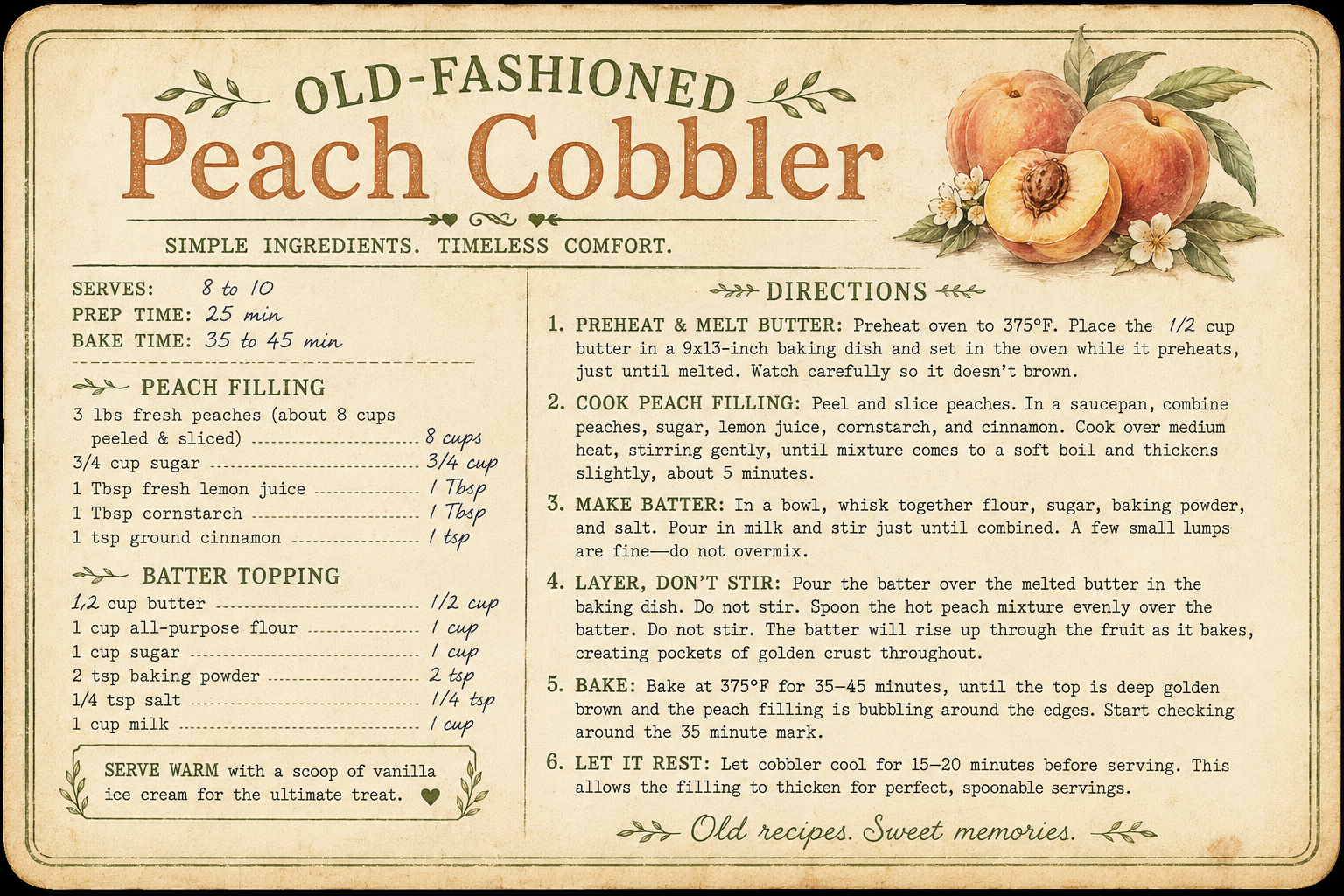
For the peach filling, you'll need about 3 pounds of fresh, ripe peaches, which comes out to roughly 8 cups once peeled and sliced, along with three quarters of a cup of sugar, a tablespoon of fresh lemon juice, a tablespoon of cornstarch, and a teaspoon of ground cinnamon.
For the batter topping, you'll need half a cup of butter, one cup of all-purpose flour, one cup of sugar, two teaspoons of baking powder, a quarter teaspoon of salt, and one cup of milk.
That's the whole ingredient list. Simple, pantry-friendly, and nothing you can't find at any grocery store.
Why This Recipe Works
This particular style of cobbler, sometimes called a self-rising or batter-style cobbler, is the version most associated with old-fashioned Southern kitchens. Instead of rolling out a pie crust or mixing up a biscuit topping to lay over the fruit, you simply pour a thin batter into a dish of melted butter, then spoon the hot fruit right on top without stirring.
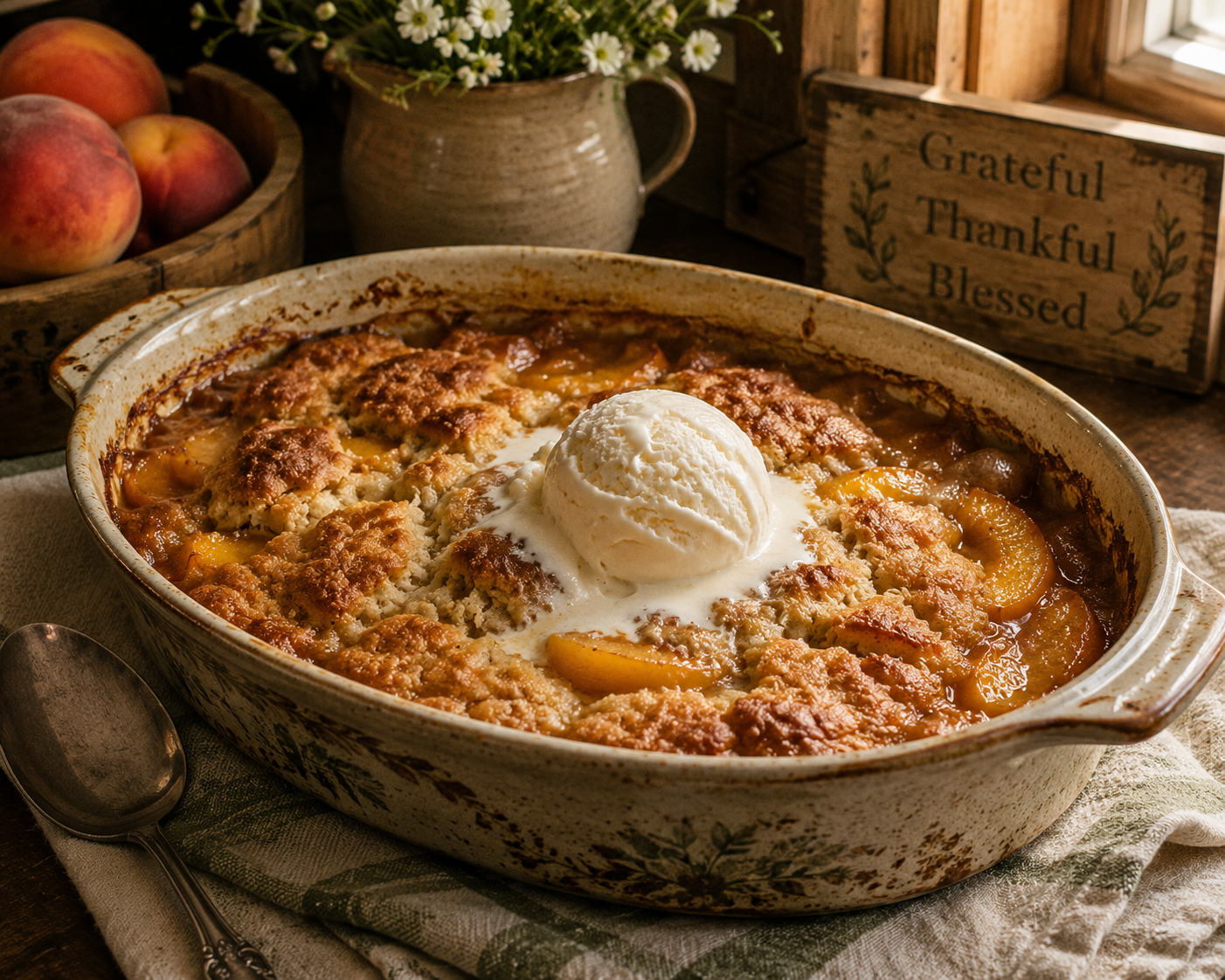
As it bakes, something almost magical happens. The batter rises up through the fruit on its own, creating pockets of tender, golden cake studded throughout with juicy peaches, rather than one uniform crust sitting neatly on top. It's a technique that's been passed down through generations precisely because it's forgiving, uses simple pantry staples, and turns out beautifully every time without any fussy technique required.
Choosing the Right Peaches
The success of this whole recipe really comes down to your peaches, so it's worth taking a moment at the store or farmers market to choose well. Ripe peaches smell sweet and fragrant even before you cut into them, and they'll feel heavy for their size. Gently press near the stem end. If it gives just slightly, the peach is ready. If it's rock hard, give it another day or two on the counter. If it's very soft or mushy, it's already past its prime for slicing neatly.
Freestone peaches, where the flesh pulls away easily from the pit, are much easier to work with for a cobbler than clingstone varieties, so look for freestone if your store labels them.
How to Peel Peaches the Easy Way
You don't need a paring knife and a lot of patience for this. Cut a small X into the bottom of each peach, then drop them into a pot of boiling water for 30 to 60 seconds, just until you see the skin start to loosen at the X. Use a slotted spoon to transfer them immediately into a bowl of ice water to stop the cooking.
Once they're cool enough to handle, the skins should slip right off with your fingers, starting from that scored X. If any spots are stubborn, a quick second dip in the boiling water usually does the trick.
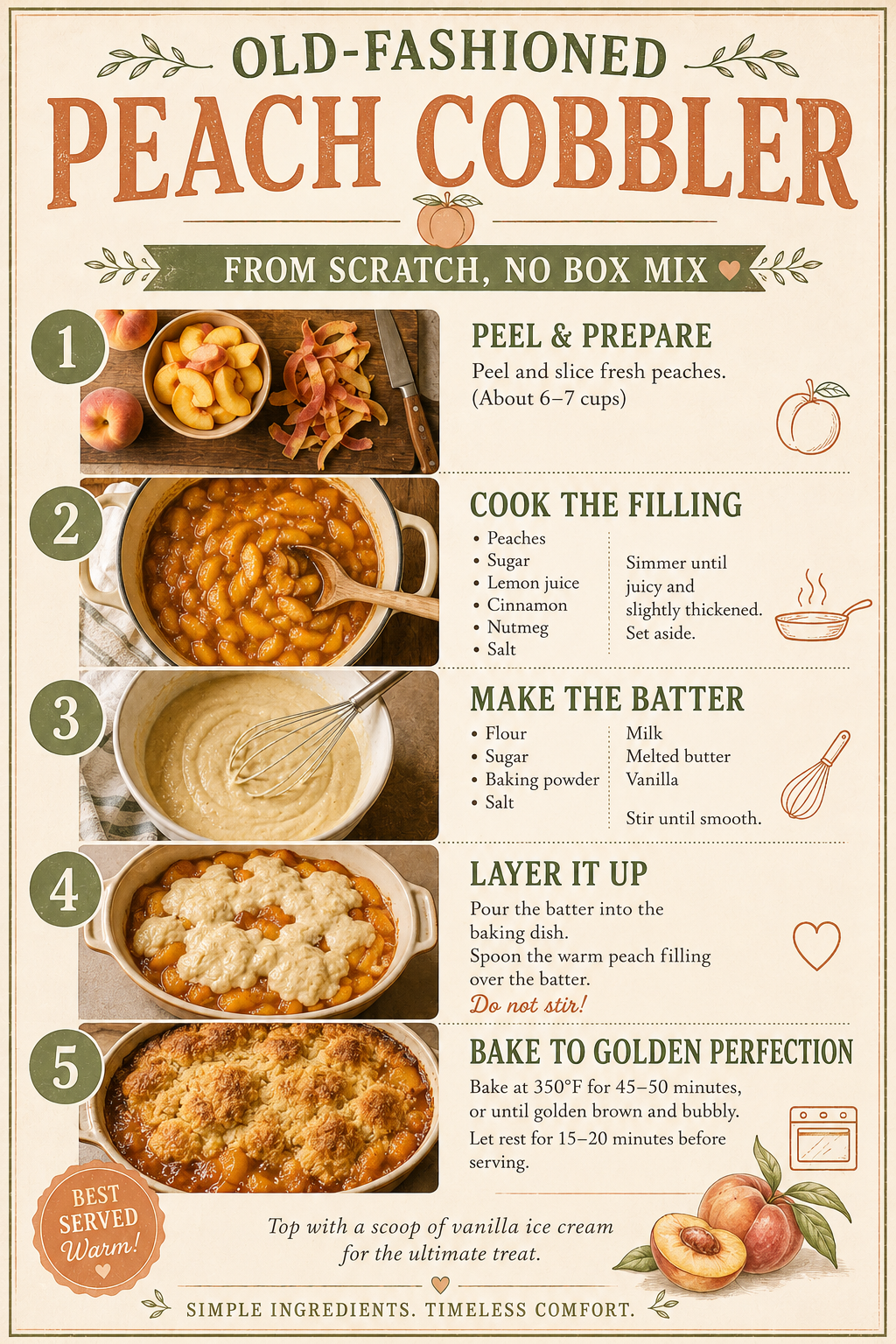
Step 1: Preheat and Melt the Butter
Preheat your oven to 375 degrees. Place the half cup of butter in a 9x13 inch baking dish and set it in the oven while it preheats, just until the butter melts completely. Keep an eye on it so it doesn't brown or burn.
Step 2: Cook the Peach Filling
While the butter melts, peel and slice your peaches and add them to a saucepan with the three quarters cup of sugar, lemon juice, cornstarch, and cinnamon. Cook over medium heat, stirring gently, until the mixture comes to a soft boil and the juices thicken slightly, about 5 minutes. This step ensures your filling isn't watery once it bakes.
Step 3: Make the Batter
In a mixing bowl, whisk together the flour, sugar, baking powder, and salt. Pour in the milk and stir just until combined. A few small lumps are perfectly fine. Overmixing will make your topping tough instead of light and tender.
Step 4: Layer, Don't Stir
Pour the batter directly over the melted butter in your baking dish. Do not stir them together. Next, spoon the hot peach mixture evenly over the top of the batter, again without stirring. This layering is what creates that classic old-fashioned cobbler texture, where the batter rises up through the fruit as it bakes, forming pockets of golden, buttery crust throughout.
Step 5: Bake Until Golden and Bubbly
Bake at 375 degrees for 35 to 45 minutes, until the top is deep golden brown and you can see the peach filling bubbling up around the edges. Every oven runs a little differently, so start checking around the 35 minute mark.
Step 6: Let It Rest Before Serving
This step is easy to skip when the smell is filling your kitchen, but resist the urge. Let the cobbler cool for 15 to 20 minutes before serving. The filling continues to thicken as it cools slightly, and you'll get much cleaner servings instead of a soupy mess straight from the oven. Serve warm with a scoop of vanilla ice cream on top.
Fresh, Frozen, or Canned Peaches?
Fresh peaches truly shine in this recipe when they're in season, but this cobbler works with frozen or canned peaches too if that's what you have on hand. If using frozen peaches, thaw and drain them well first to avoid excess liquid. If using canned peaches, drain them thoroughly and reduce the added sugar slightly, since canned peaches are often packed in syrup that's already sweet.
Common Mistakes to Avoid
The most common issue is a runny cobbler, which usually comes down to skipping the cornstarch step or not letting the filling cook down before assembling. Overmixing the batter is another common mistake, leading to a dense, tough topping instead of a light, tender one. And skipping the resting time before serving is an easy way to end up with a beautiful cobbler that falls apart the moment you scoop it.
Simple Variations to Try
Once you've made the classic version, this recipe is easy to play with. Add a splash of bourbon or vanilla extract to the peach filling for extra depth. Swap in a handful of fresh blueberries or blackberries alongside the peaches for a mixed fruit cobbler. Bake the filling and batter in individual ramekins for personal-sized servings at a summer gathering. Or top the peach filling with a rolled pie crust cut into strips instead of the poured batter, for a more traditional lattice-style cobbler if that's the version you grew up with.
Serving Suggestions
Vanilla ice cream is the classic pairing here, and for good reason. The cold, creamy scoop melting into the warm peach filling is hard to beat. A dollop of freshly whipped cream works beautifully too if you want something a little lighter. For an extra special touch, a light drizzle of caramel sauce or a sprinkle of toasted pecans over the top adds a little more texture and flavor to an already wonderful dessert.
This cobbler also makes a lovely addition to a late-summer potluck, church gathering, or Sunday dinner table. It travels well in its baking dish, and it's just as good served slightly warm as it is fully cooled the next day.
Storage and Reheating
Leftover cobbler keeps well covered at room temperature for up to 2 days, or in the refrigerator for up to 5 days. To reheat, warm individual portions in the microwave for 30 to 45 seconds, or reheat the whole dish covered in a 300 degree oven for about 15 minutes. This cobbler also freezes well once baked and fully cooled. Wrap tightly and freeze for up to 3 months, then thaw overnight in the refrigerator before reheating.
Frequently Asked Questions
Do I have to peel the peaches?
It's worth it for the best texture, since peach skins can turn slightly tough and chewy once baked. That said, if you're short on time, a thin-skinned, very ripe peach can sometimes be left unpeeled without much issue.
Can I use canned peaches instead of fresh?
Yes. Drain them well and reduce the added sugar in the filling slightly, since canned peaches are usually packed in a sweet syrup already.
Why did my peach cobbler come out runny?
This usually means the filling needed more time to cook down before baking, or the cornstarch was skipped. Letting the finished cobbler rest for 15 to 20 minutes before serving also helps the filling set up properly.
What's the difference between this and a peach cobbler with pie crust?
This version uses a simple poured batter that rises up through the fruit as it bakes, creating a soft, cakey texture throughout. A pie crust version instead uses strips or a full crust laid over the fruit, resulting in a flakier, more biscuit-like top.
Can I make this ahead of time?
You can prep the peach filling a day ahead and store it covered in the refrigerator, then make the batter fresh and assemble just before baking for the best texture.
Is this recipe gluten-free?
Not as written, but you can substitute a 1:1 gluten-free all-purpose flour blend in the batter with generally good results.
How many peaches equal 8 cups sliced?
On average, about 3 pounds of medium peaches, or roughly 8 to 10 whole peaches depending on their size, will give you approximately 8 cups once peeled and sliced.
Can I double this recipe for a larger crowd?
Yes, this recipe doubles well in a larger baking dish, such as a half sheet pan or two 9x13 dishes. Just keep in mind the bake time may need to increase slightly to fully cook the center.