How to Can Tomatoes at Home (A Safe Water Bath Canning Guide)
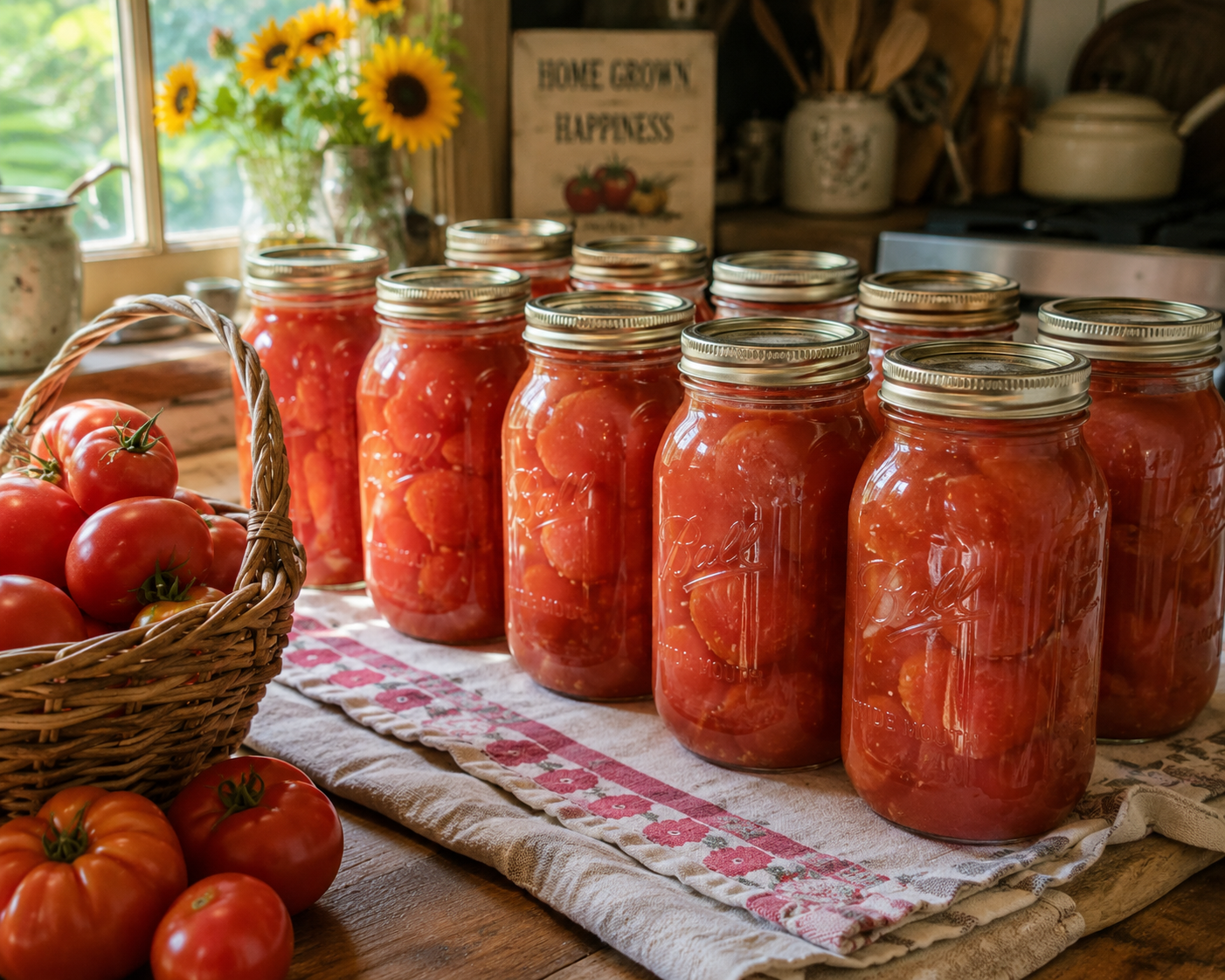
If your counter is covered in more tomatoes than your family can eat fresh, canning is one of the most satisfying ways to make that harvest last well into winter. Tomatoes are one of the more beginner-friendly foods to can, since they can be safely processed in a simple water bath canner rather than a pressure canner. There is one important safety detail that trips up a lot of new canners, though, and this guide walks you through the whole process correctly.
The One Safety Rule You Cannot Skip
Tomatoes sit right on the border between high-acid and low-acid foods. Some varieties, especially newer cultivars, very ripe fruit, or tomatoes from frost-damaged vines, can have a pH too high to be safely processed with a water bath canner alone. Because of this, every tested, safe tomato canning recipe requires adding a measured amount of acid to each jar before processing, regardless of how acidic your tomatoes taste. This is not optional, and taste is not a reliable way to judge acidity.
What You Will Need
Equipment: a large water bath canner or deep stockpot with a rack, canning jars (pints or quarts), new lids and bands, a jar lifter and canning funnel, a ladle and a bubble remover tool.
Ingredients: fresh, ripe tomatoes (roughly 2 to 3 pounds per quart), bottled lemon juice or citric acid (not fresh-squeezed), and salt, optional, for flavor only.
Choosing the Right Tomatoes for Canning
Choose tomatoes that are firm, ripe, and free of bruises, cracks, or soft spots. Paste-style tomatoes, like Roma varieties, tend to work especially well since they have less watery liquid and a meatier texture, though any ripe, healthy tomato variety can be canned successfully. Avoid tomatoes from a frost-damaged or already-dead vine, since these can have unpredictable acidity, along with any showing mold, unusual softness, or an off smell.
Hot Pack vs. Raw Pack: What Is the Difference
Raw pack means placing prepared, uncooked tomatoes directly into the jar and covering them with boiling water. This is the simpler, faster method.
Hot pack means briefly simmering prepared tomatoes on the stove before packing them into jars with their own cooking liquid. This can help tomatoes hold their shape and color a bit better over long-term storage.
Both are safe when following a correctly tested recipe and processing time for that method. Raw pack is often the easier starting point for beginners.
Step 1: Wash and Prep Your Tomatoes
Wash thoroughly and sort out any that are bruised, overripe, or show signs of mold or spoilage. Only can tomatoes in good condition.
Step 2: Blanch and Peel
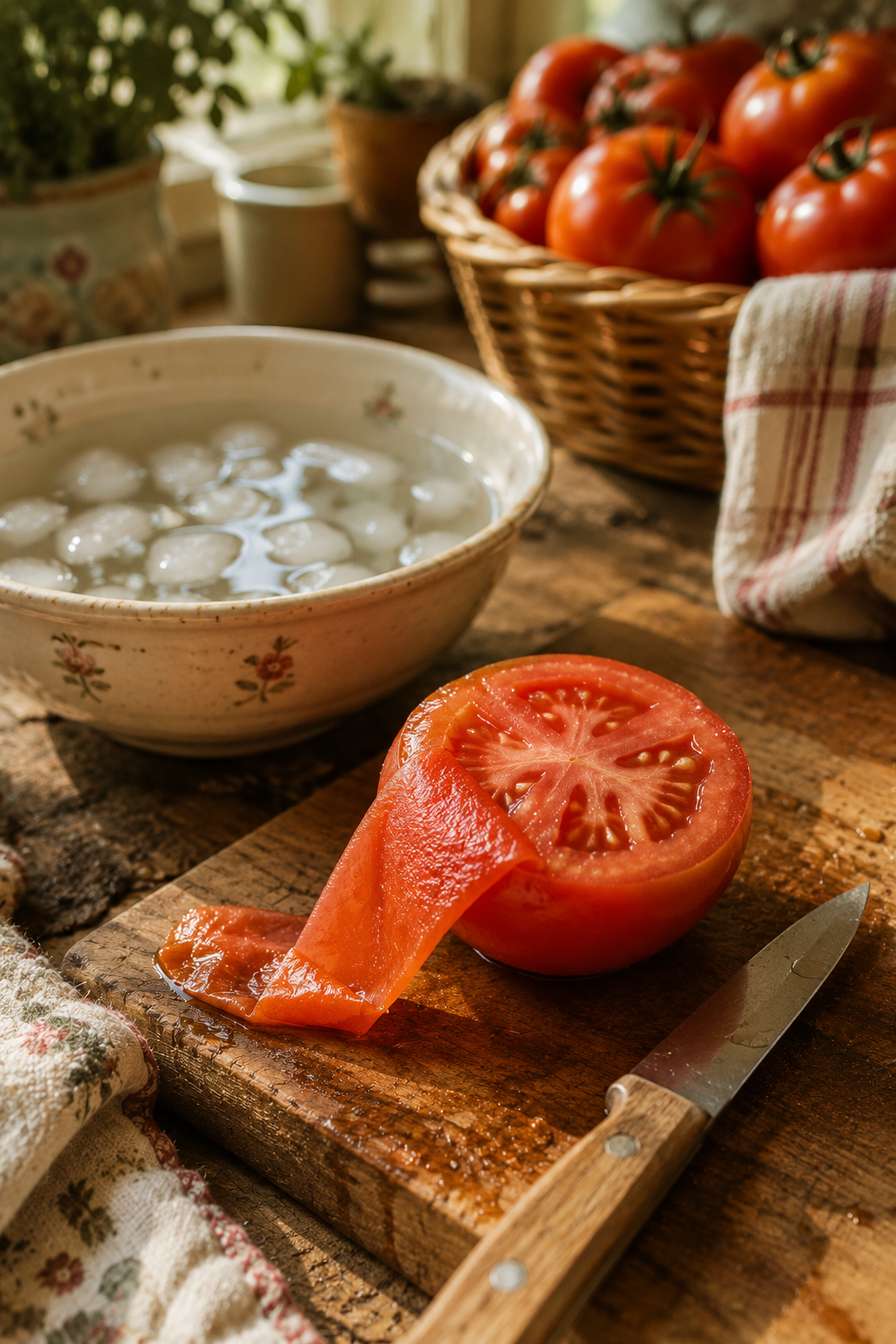
Bring a large pot of water to a boil. Dip tomatoes into the boiling water for 30 to 60 seconds, just until skins begin to split, then immediately transfer to a bowl of cold or ice water. Peel off the skins and remove the cores. Leave whole, halve, or quarter, depending on how you plan to use them.
Step 3: Acidify Your Jars
Add the correct amount of bottled lemon juice or citric acid directly to each empty, clean jar before packing in your tomatoes:
For quart jars: 2 tablespoons bottled lemon juice, or ½ teaspoon citric acid
For pint jars: 1 tablespoon bottled lemon juice, or ¼ teaspoon citric acid
You can substitute 4 tablespoons of 5 percent acidity vinegar per quart, though lemon juice or citric acid affects flavor less. Add 1 teaspoon of salt per quart if desired — salt is for flavor only and does not affect safety.
Step 4: Pack Your Jars
Pack your prepared tomatoes into the acidified jars, raw or hot-packed, following a specific tested recipe. Leave ½ inch of headspace. For raw pack, cover with boiling water, still leaving that ½ inch headspace. Run a bubble remover around the inside of the jar, wipe the rim clean, and place your lid and band on, tightened to fingertip-tight.
Step 5: Process in Your Water Bath Canner
Lower jars into the canner, fully covered by at least an inch of water. Bring to a rolling boil and process for the correct time:
Pint jars:
0-1,000 feet: 40 minutes
1,001-3,000 feet: 45 minutes
3,001-6,000 feet: 50 minutes
Above 6,000 feet: 55 minutes
Quart jars:
0-1,000 feet: 45 minutes
1,001-3,000 feet: 50 minutes
3,001-6,000 feet: 55 minutes
Above 6,000 feet: 60 minutes
Always check a current, tested source for the exact time matching your specific recipe (whole, crushed, or juiced).
Step 6: Cool and Check Seals
Let jars sit in the water about 5 minutes after processing, then remove with a jar lifter onto a towel, undisturbed, for 12 to 24 hours. Press the center of each lid — if it doesn't flex, it sealed properly. Refrigerate and use within a few days any jar that didn't seal, or reprocess with a new lid within 24 hours.
What About Crushed Tomatoes, Sauce, or Juice?
This guide covers whole and halved tomatoes packed in water. Crushed tomatoes, sauce, and juice follow the same acidification principle but have their own preparation steps and processing times. Always use a separate, tested recipe rather than assuming the same times apply.
Storing Your Canned Tomatoes
Store sealed jars in a cool, dark place, ideally 50-70°F. Properly sealed jars are generally good for up to a year, though quality is typically best within that first year. Label jars with the canning date.
Common Mistakes to Avoid
Skipping the acid. Never skip this, regardless of how your tomatoes taste.
Using fresh-squeezed lemon juice instead of bottled. Fresh juice acidity varies too much to reliably guarantee safety.
Guessing at processing times. Always match the time to your jar size, altitude, and preparation method.
Not adjusting for altitude. Can result in under-processed jars even if every other step was correct.
Reusing old canning lids. Lids are one-time use only.
Canning overripe or spoiling tomatoes. Only can tomatoes in good, fresh condition.
Frequently Asked Questions
Do I really need to add lemon juice if my tomatoes taste very acidic?
Yes. Taste isn't a reliable indicator of pH, and tomato acidity varies by variety, ripeness, and growing conditions.
Can I use fresh lemons instead of bottled lemon juice?
No. Bottled lemon juice has a standardized, reliable acidity level.
Do I need a pressure canner for tomatoes?
Not for plain, properly acidified tomatoes. However, recipes with added low-acid ingredients like meat typically require pressure canning.
How long do home-canned tomatoes last?
Generally safe for up to a year, with best quality within that first year.
What if a jar does not seal?
Refrigerate and use within a few days, or reprocess with a new lid within 24 hours.
Can I skip peeling the tomatoes?
Peeling is recommended for texture but doesn't affect safety. Check your specific tested recipe before skipping.
Does adding salt affect how safe the canned tomatoes are?
No. Salt is purely for flavor.
What is the difference between raw pack and hot pack, and does it matter for safety?
Both are safe when you follow the correctly tested processing time for that specific method.
Which type of tomato is best for canning?
Firm, ripe, healthy tomatoes. Paste-style varieties like Roma are popular for their lower water content.
Can I mix different tomato varieties in the same jar?
Yes, as long as all tomatoes are ripe, firm, and in good condition.
https://nchfp.uga.edu/how/can/how-do-i-can-tomatoes/canning-tomatoes-introduction/
https://nchfp.uga.edu/how/can/how-do-i-can-tomatoes/whole-or-halved-tomatoes-packed-in-water/
https://nchfp.uga.edu/how/can/how-do-i-can-tomatoes/whole-or-halved-tomatoes-packed-raw-without-added-liquid/
https://ucanr.edu/site/uc-master-food-preservers-inyo-and-mono-counties/canning-tomatoes
https://www.canr.msu.edu/news/tomatoes_canning_safely_at_home
https://site.extension.uga.edu/forsyth/fresh-and-local-foods-for-august-tomatoes
https://extension.sdstate.edu/canned-tomatoes-water
