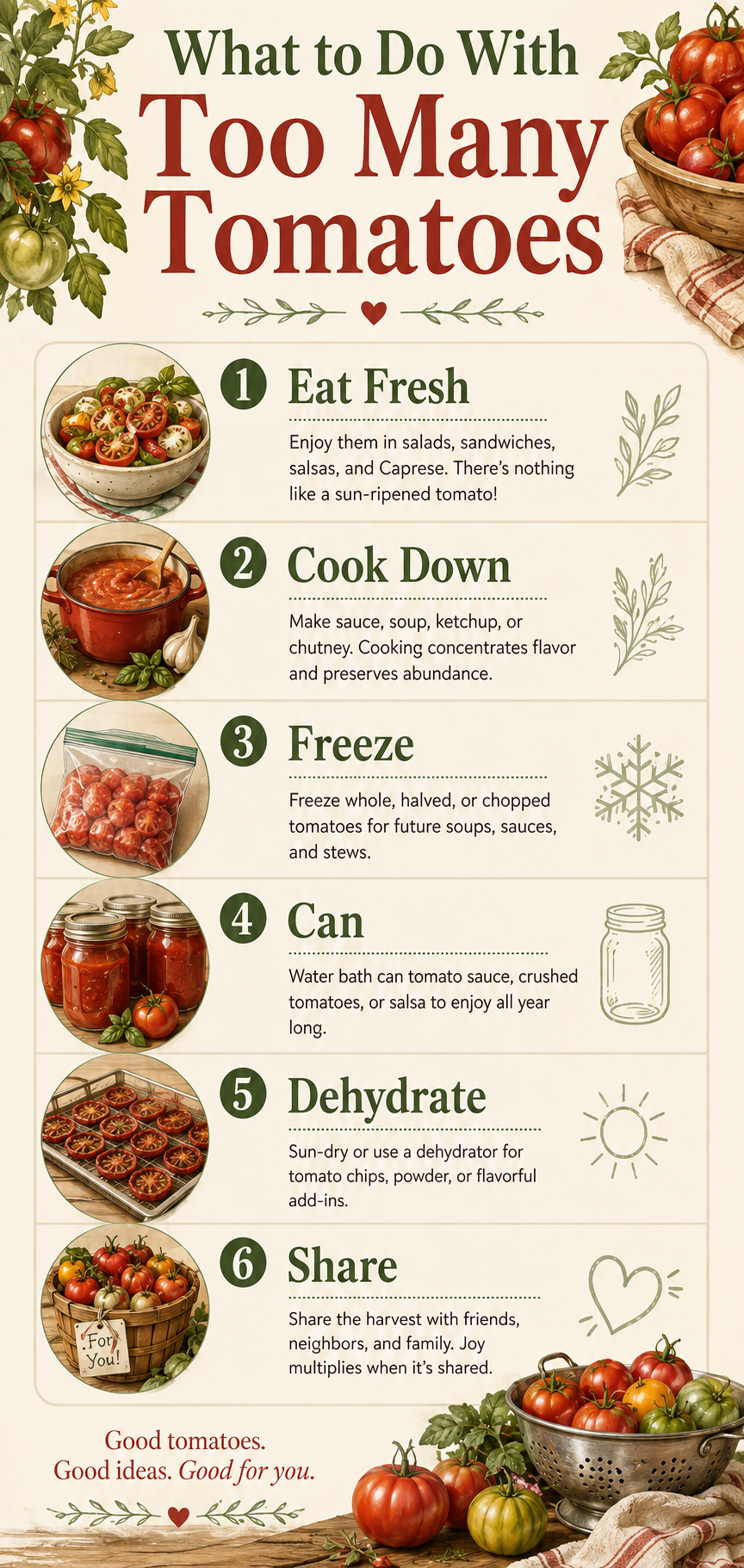
What to Do with Too Many Tomatoes from the Garden
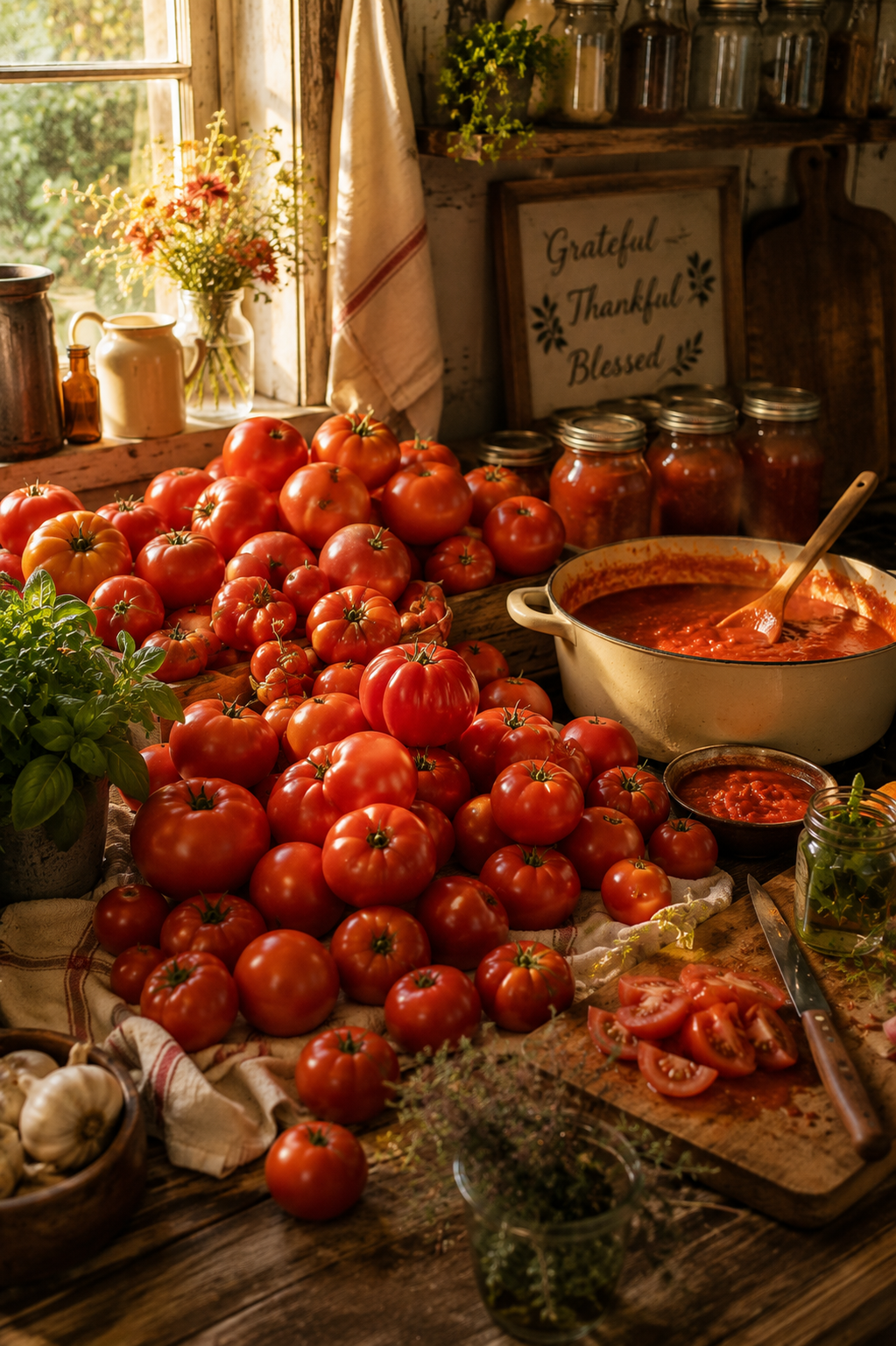
There is a very specific kind of joy in a productive tomato plant, right up until your kitchen counter looks like a produce stand and you are running out of places to put them all. If you are drowning in tomatoes right now, take a breath. This is a wonderful problem to have, and there are far more ways to use up a big tomato harvest than just eating salad after salad.
First, Sort Your Tomatoes by Condition
Before deciding what to do with your harvest, take a quick pass through and sort your tomatoes into three groups: perfectly ripe and ready to use now, slightly overripe or soft (great for cooking down into sauce or soup), and any with cracks or blemishes (trim away bad spots and use those pieces first, or compost anything truly spoiled). This sorting step saves you from wasting good tomatoes on the wrong use.
Quick Ways to Use Them Fresh
Toss chopped tomatoes into salads, grain bowls, or a simple cucumber and tomato salad
Make a quick batch of bruschetta with chopped tomatoes, garlic, basil, and a little olive oil
Slice thick tomato slabs and layer them with fresh mozzarella and basil for a simple caprese plate
Blend a batch of fresh salsa with onion, cilantro, and lime
Roast a whole tray of halved tomatoes with olive oil and garlic, which shrinks the volume dramatically
Cook Them Down Into Something Bigger
Marinara or pasta sauce, simmered down and used fresh or frozen for later
Tomato soup, a classic way to use a large batch at once, and it freezes beautifully
Salsa, whether fresh or cooked
Roasted tomato pasta sauce, made by roasting a tray of tomatoes with garlic and olive oil, then blending
Shakshuka or a simple tomato-based stew, which can use several pounds in one dish
Cooking tomatoes down concentrates their flavor and shrinks their volume significantly.
Freeze Them (The Easiest Preservation Method)
If canning feels intimidating or you don't have the time right now, freezing is genuinely the simplest way to preserve a big harvest, with no special equipment or acidification step required.
To freeze whole tomatoes: wash and dry them, core them, freeze on a baking sheet until solid, then transfer to freezer bags.
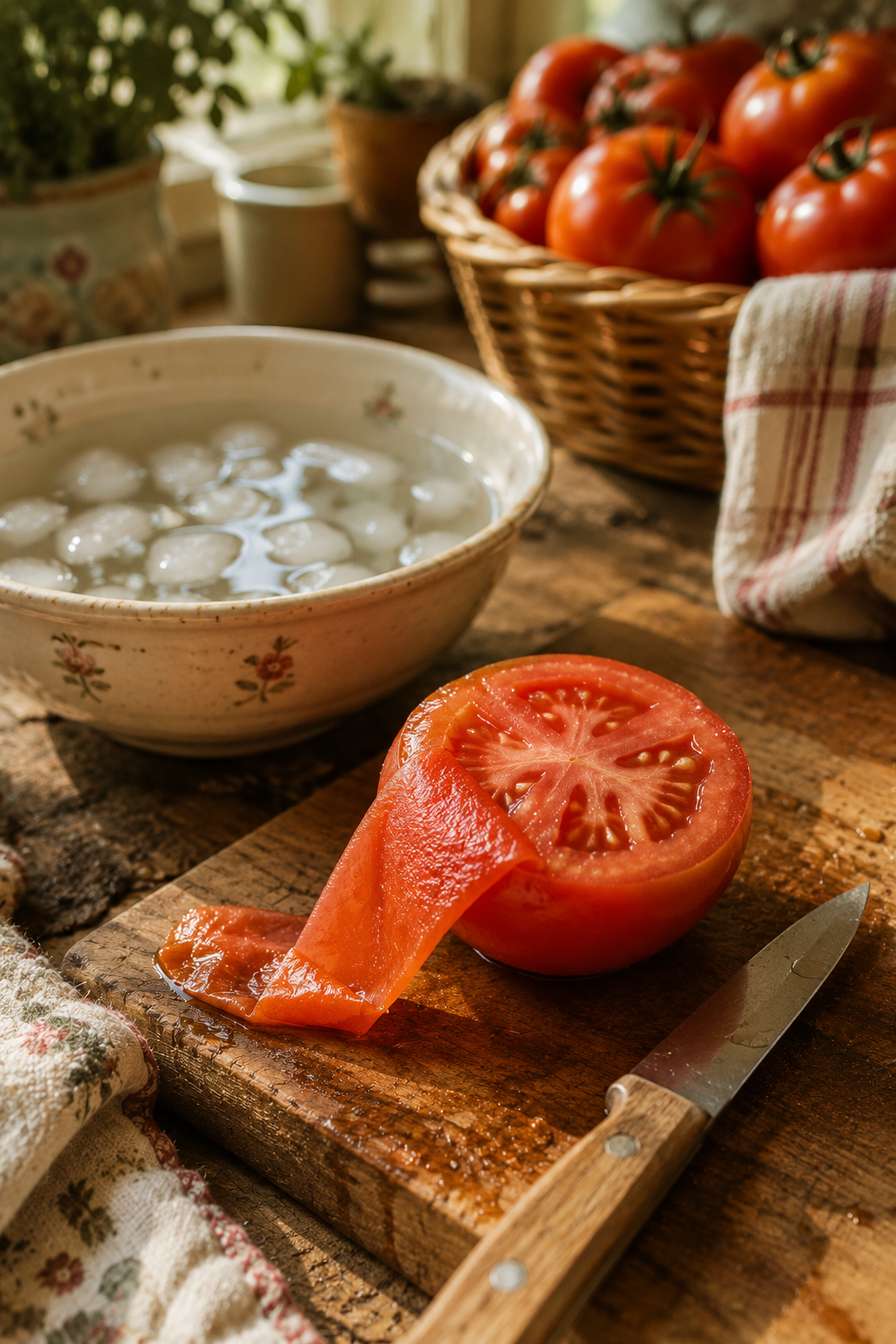
To freeze peeled, blanched tomatoes: score an X on the bottom, blanch in boiling water about 30 seconds until skin splits, transfer to an ice bath, slip off skins, then freeze on a tray before bagging.
Frozen tomatoes work wonderfully in sauces, soups, and stews later, though their texture changes once thawed. Properly frozen tomatoes generally keep well for up to about a year.
Consider Canning for Longer-Term Storage
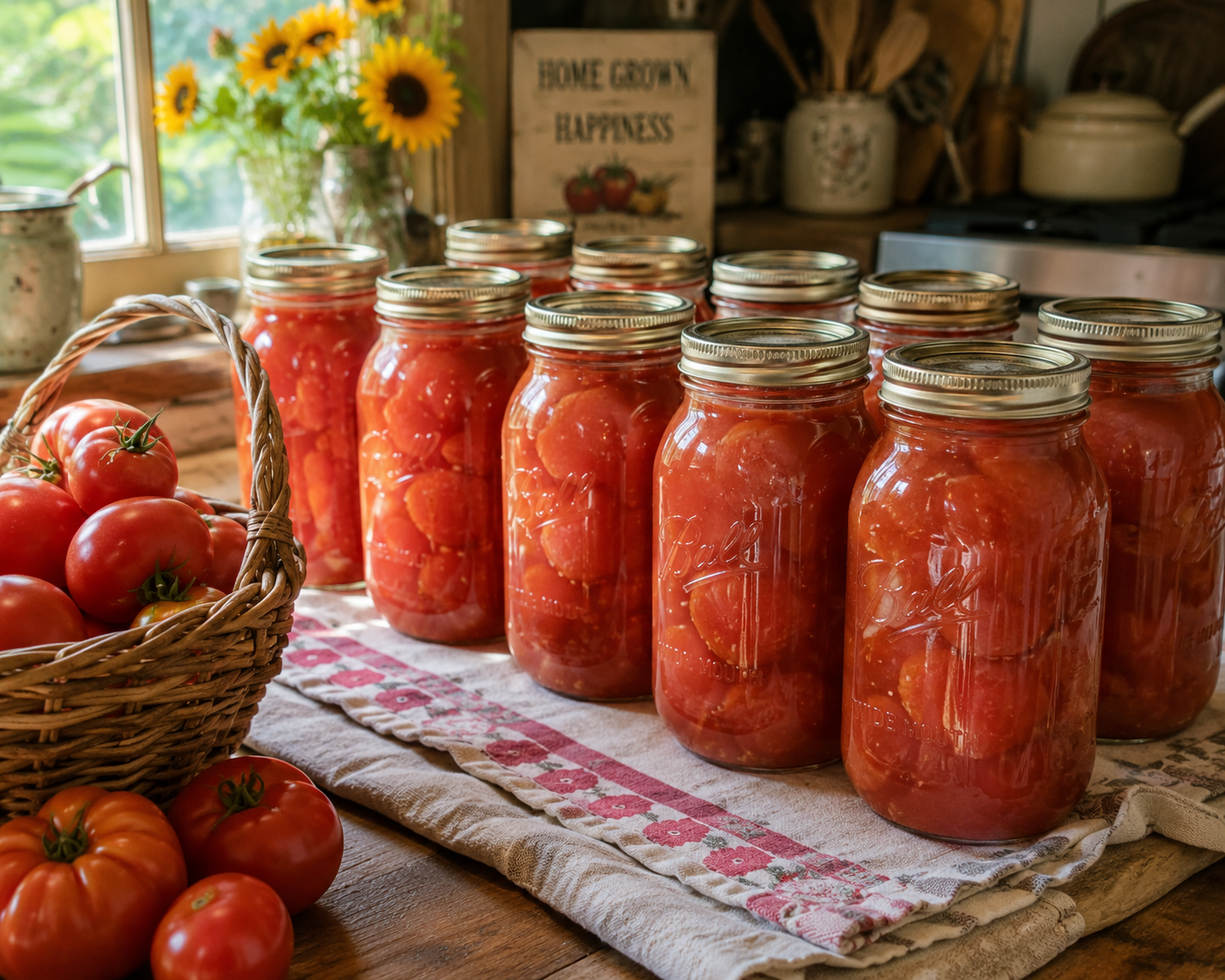
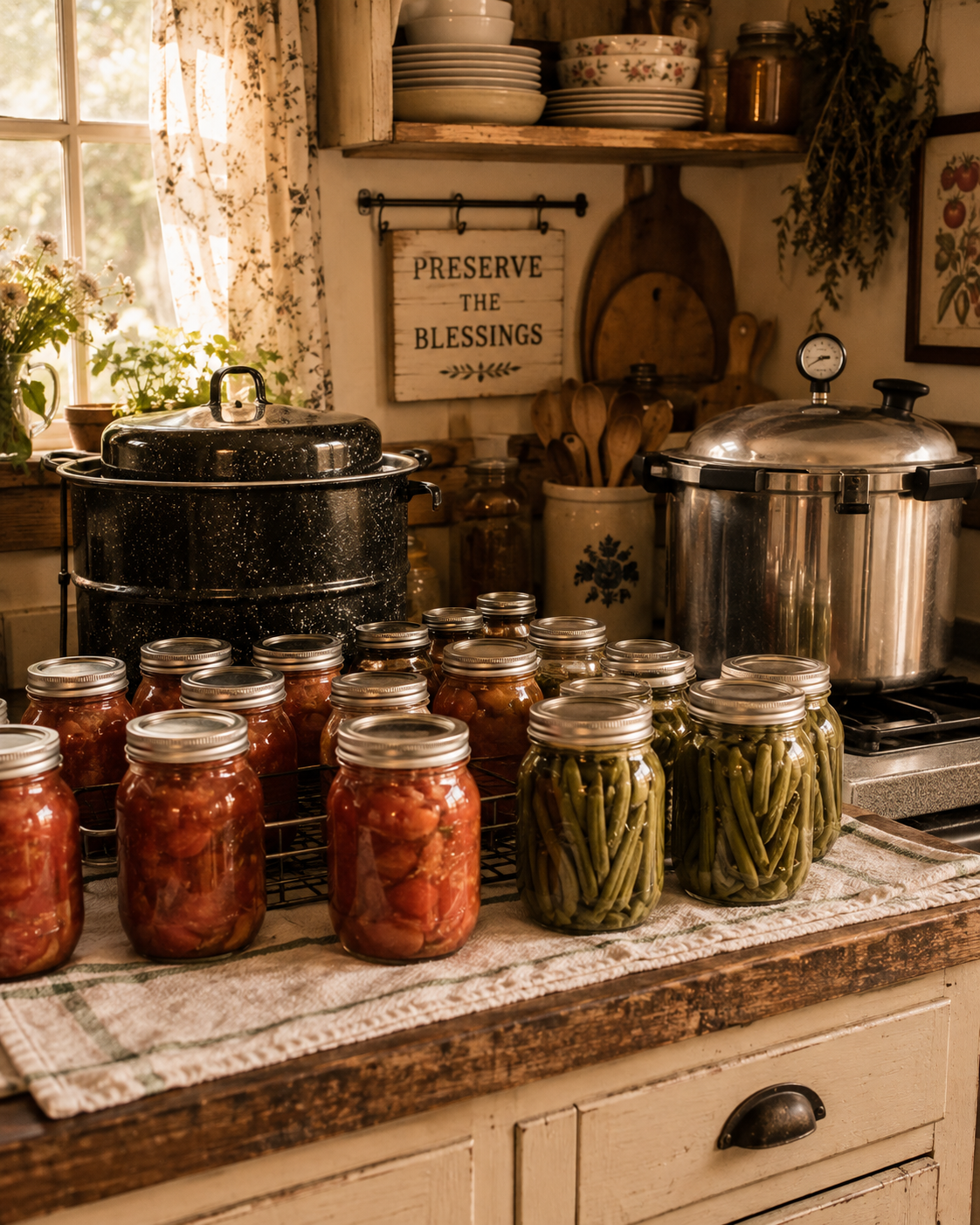
If you want your harvest to last on a pantry shelf rather than in your freezer, water bath canning is a well-established, safe option for whole, crushed, or juiced tomatoes, as long as you follow a properly acidified, tested recipe, including bottled lemon juice or citric acid in each jar.
How to Can Tomatoes at Home Quickly and Safely
Dehydrating and Other Preservation Options
Dehydrating produces intensely flavorful dried tomatoes or, once ground, tomato powder.
Tomato paste made from scratch and frozen in small portions (like an ice cube tray) gives you concentrated flavor ready to drop into future recipes.
Pickled green tomatoes, if your harvest includes some that never quite ripened, are a great way to use those up.
Turn a Big Batch Into Ready-Made Freezer Meals
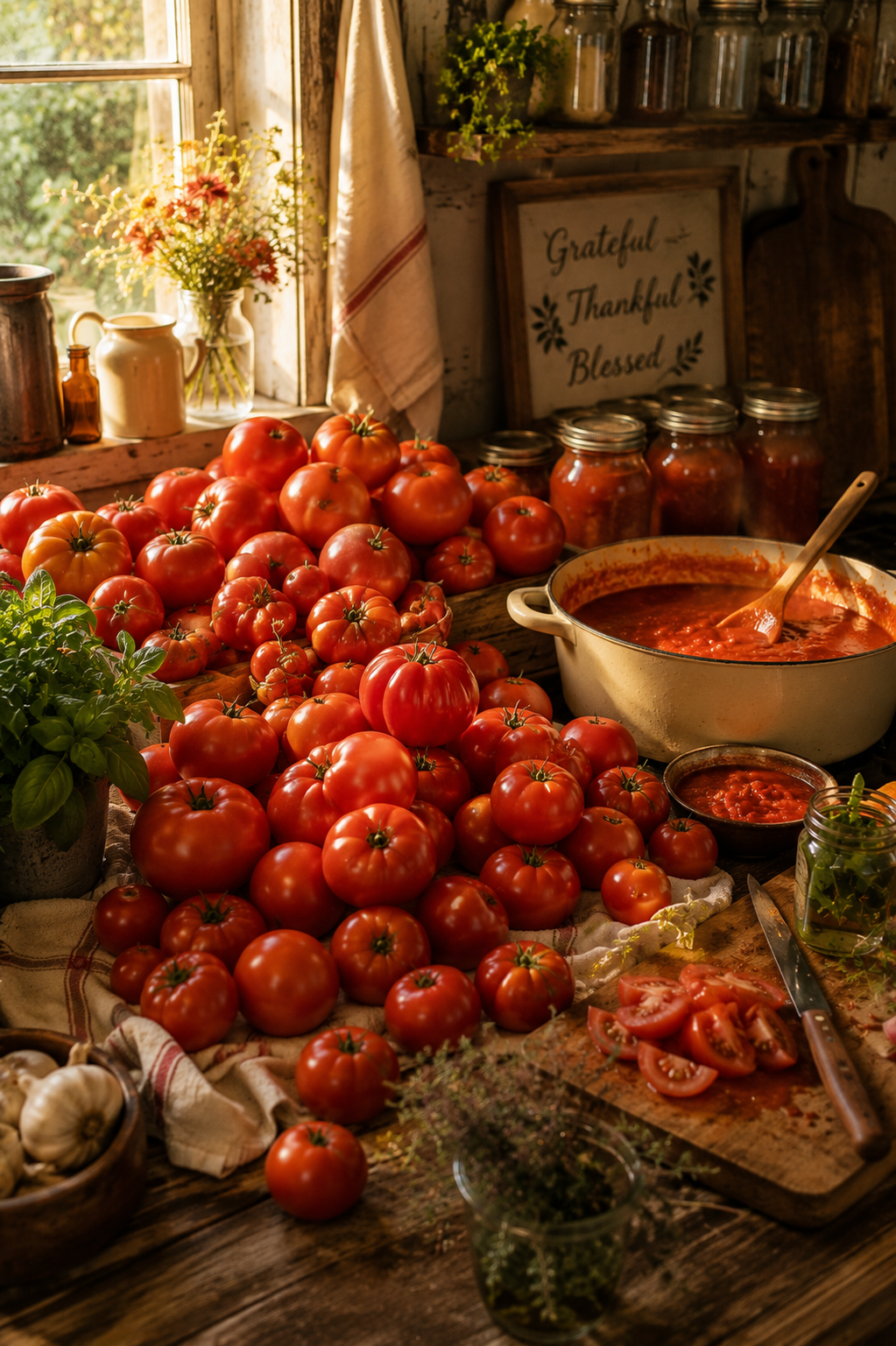
Beyond plain frozen tomatoes or sauce, consider turning part of your harvest into fully prepared, freezer-ready meals. A big pot of tomato-based soup, chili, or a simmered pasta sauce with meat already added can be portioned and frozen, giving you an easy dinner solved on a busy night months from now.
Let Your Kids Help With the Overflow
Even young kids can wash tomatoes or pull off stems. Older kids can help measure ingredients or pack containers for the freezer. This turns an overwhelming chore into a shared family activity and teaches children what it looks like to use a harvest well.
A Quiet Word on Not Letting Good Food Go to Waste
Scripture speaks often about being a faithful steward of what you have been given, using resources well rather than carelessly, and a garden bursting with more tomatoes than you can eat fresh is a small, everyday opportunity to live that out. You do not need to preserve every last tomato perfectly, but making a genuine effort to use, share, or preserve your harvest rather than letting it rot is its own quiet act of gratitude.
Share the Extra
Offer extras to neighbors, coworkers, or friends
Check whether your local food bank or soup kitchen accepts fresh produce donations
Trade with other gardening friends
Bring a basket to church or a community gathering
A Simple Tomato Overflow Action Plan
Sort your tomatoes by condition first
Set aside a reasonable amount for fresh eating this week
Cook down a big batch of sauce or soup with the next portion
Freeze whatever you cannot use fresh or cook down immediately
Can a batch if you have the time and equipment
Give away or donate whatever is left over
Common Mistakes to Avoid
Letting tomatoes sit too long before deciding what to do with them. Sort and act within a day or two of picking.
Trying to can everything without proper acidification. Always use a tested recipe and the correct amount of bottled lemon juice or citric acid.
Freezing tomatoes without any prep. A few extra minutes to core or peel first makes them easier to use later.
Forgetting to label and date frozen or canned tomatoes.
Trying to use every tomato yourself. Sharing or donating extras is completely legitimate, not a failure to use your garden fully.
Frequently Asked Questions
What is the fastest way to use up a large tomato harvest?
Cooking them down into a big batch of sauce or soup shrinks volume quickly and can be frozen for later.
Do I need to peel tomatoes before freezing them?
Not necessarily. You can freeze them whole and unpeeled for cooked dishes later.
How long do frozen tomatoes last?
Generally up to about a year.
Is freezing or canning better for preserving tomatoes?
Neither is universally better — freezing is simpler, canning offers shelf-stable storage. Many gardeners use both.
Can I use overripe or slightly soft tomatoes for anything?
Yes, they're often perfect for cooking down into sauce, soup, or salsa.
What should I do with tomatoes that never ripened before the season ended?
Green tomatoes can be pickled, fried, or used in specific green tomato recipes.
Where can I donate extra tomatoes if I have too many to use?
Check with a local food bank, soup kitchen, or community fridge.
Can I turn my tomato harvest into freezer meals instead of just plain frozen tomatoes?
Yes — cooking a full soup, chili, or sauce and freezing it in portions gives you a ready-made dinner later.
How can I get my kids involved in dealing with a big harvest?
Young kids can wash tomatoes; older kids can measure ingredients or pack freezer containers.
What if I genuinely cannot use, freeze, can, or give away all of my tomatoes in time?
Do your best with the time you have, and let go of any that spoil. A garden overflow is a sign of abundance, not a test to pass perfectly.