This post may contain affiliate links. We only share things we use on our homestead.
If you've ever walked out to the coop with a bowl of kitchen scraps, you know the stampede that follows. Chickens love treats, and honestly, we love giving them.
But when the weather turns cold and the egg basket starts coming back half-empty, it's tempting to think more treats will help. Usually, the opposite is true.
That's where the 90/10 rule for chickens comes in. It's a simple guideline that keeps your flock healthy, laying and still enjoying a little something special.
Quick answer: The 90/10 rule means at least 90% of a chicken's diet should be a complete layer feed, and no more than 10% should be treats and scraps. Too many treats dilute the protein and calcium hens need, which can slow egg laying, weaken eggshells and lead to overweight hens.
In this post:
What the 90/10 rule means
How much is 10%?
12 healthy winter treats for chickens
5 foods chickens should never eat
Winter feeding tips
FAQ
1. What the 90/10 Rule Means
A complete layer feed is carefully balanced to give hens everything they need: protein for feathers and eggs, calcium for strong shells, and the right mix of vitamins and minerals.
Treats, on the other hand, are like dessert. Most kitchen scraps and scratch grains are low in protein and calcium. When hens fill up on them, they eat less of their balanced feed and miss out on the nutrients that keep them healthy.
The 90/10 rule keeps things in balance: 90% complete feed, 10% treats. Your hens still get the fun of treats, without the downsides.
2. How Much Is 10%?
An average laying hen eats about a quarter pound (roughly ½ cup) of feed a day. Ten percent of that works out to about 1 to 2 tablespoons of treats per hen per day.
For a flock of six hens, that's only about ½ cup of treats a day, total. It's less than most of us think!
A note on greens: Many chicken keepers don't count fresh leafy greens, grass and garden weeds toward the 10%, since free-ranging chickens eat them naturally. Grains, seeds, bread and table scraps should always count.
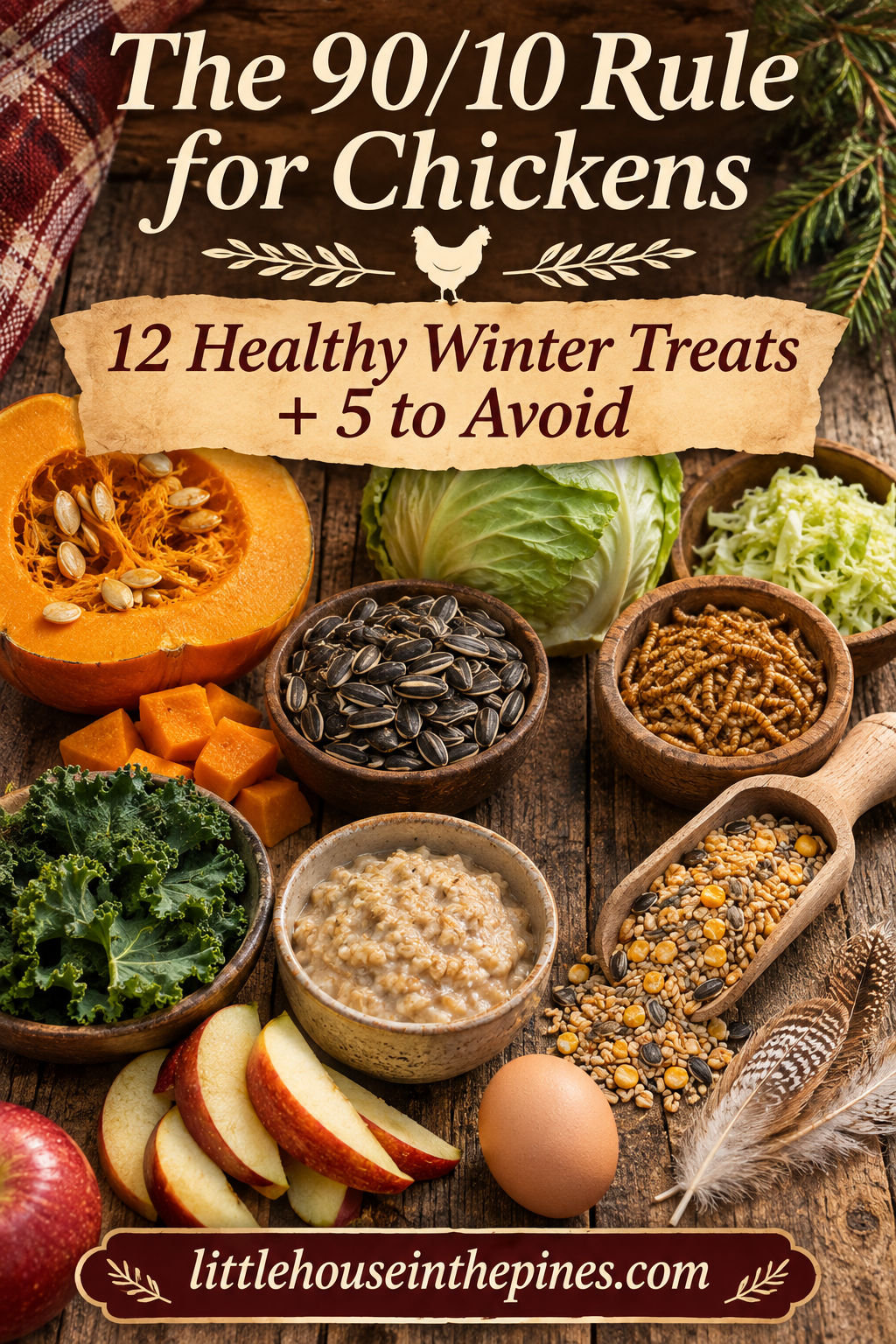
3. 12 Healthy Winter Treats for Chickens
These treats are great choices for cold-weather months. Remember to keep the total to about 10% of their diet.
1. Scratch Grains (in the Evening)
Scratch is a classic winter treat. Toss a small handful in the late afternoon, after your hens have eaten their feed for the day. It keeps them busy scratching and gives them something to digest overnight.
2. Black Oil Sunflower Seeds
These seeds are rich in fat and protein, which is helpful during cold snaps and molting season.
3. Mealworms or Black Soldier Fly Larvae
Dried insects are packed with protein, making them a great treat during the fall molt when hens are regrowing feathers. Black soldier fly larvae also contain calcium.
4. Pumpkin
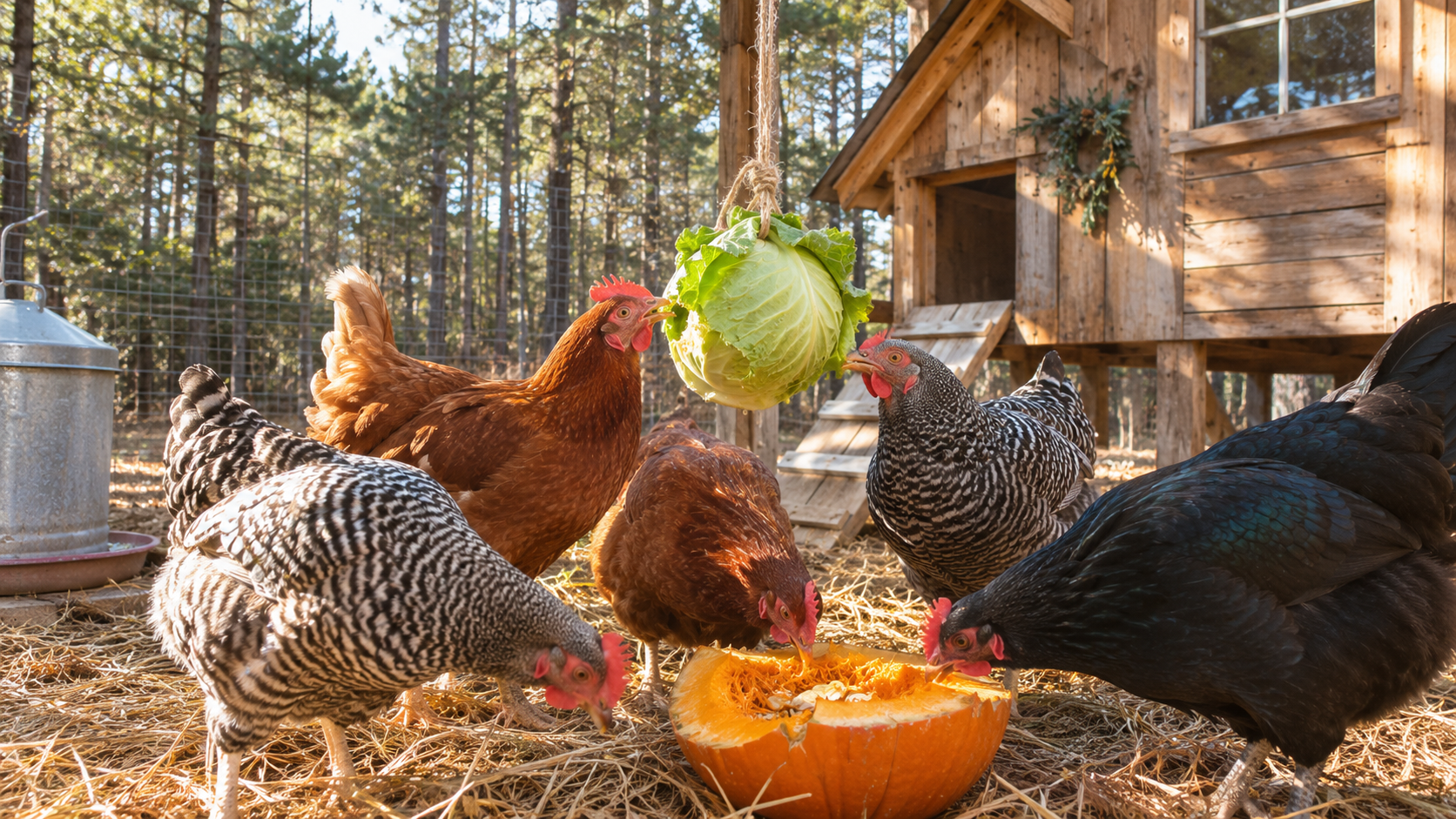
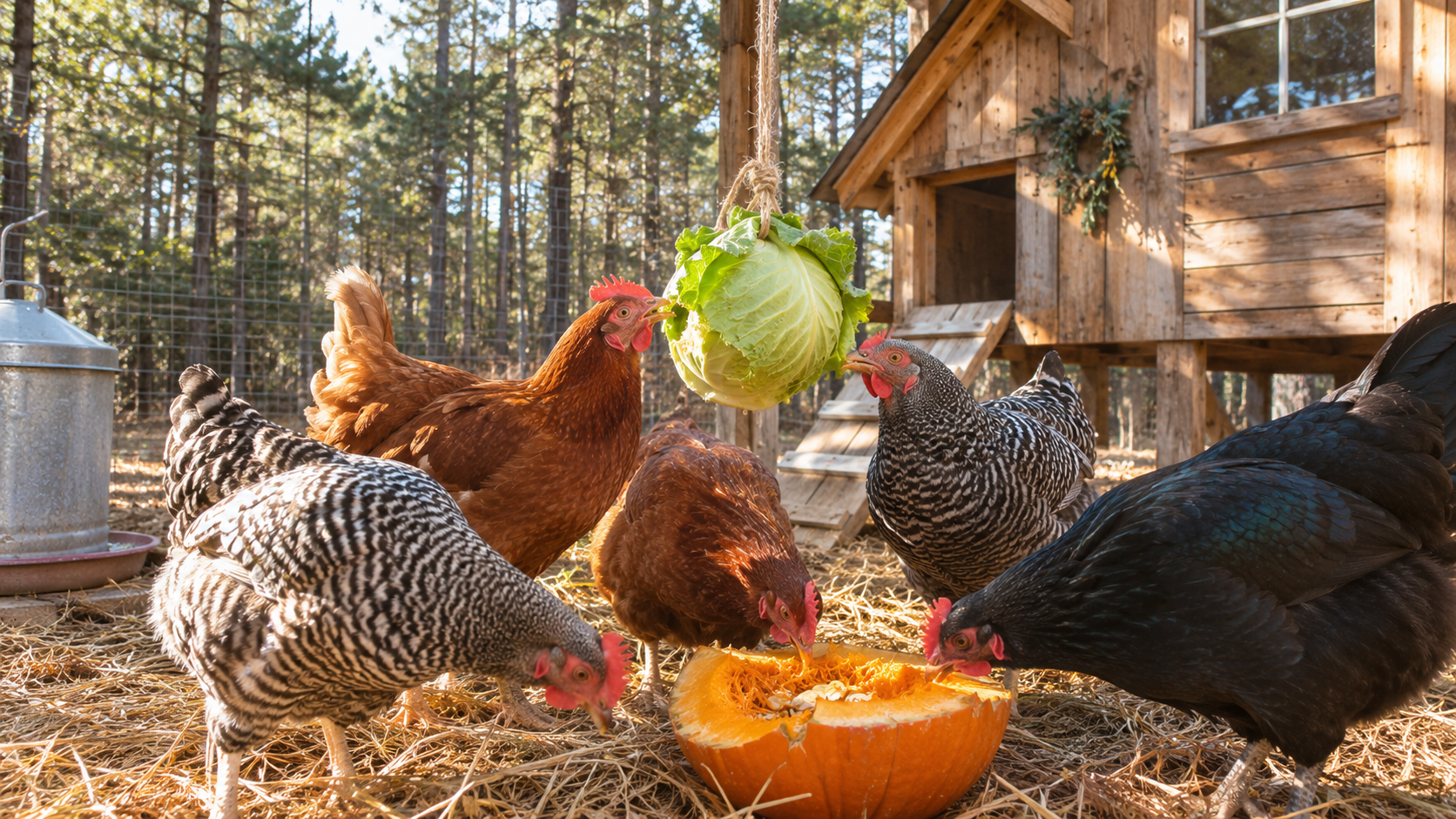
After fall decorating season, give leftover pumpkins (without paint or wax) to your flock. Crack them open, and the hens will eat the flesh and seeds.
5. Cooked Winter Squash
Butternut, acorn and other winter squash, raw or cooked, make a colorful treat in the coldest months.
6. Leafy Greens from the Garden
Kale, collards, chard, lettuce and turnip greens from your winter garden are perfect chicken treats.
7. A Hanging Cabbage
Hang a whole head of cabbage from a string in the run, just above head height. Your hens will peck at it for hours. It's a great boredom-buster on days they're stuck inside.
8. Warm Oatmeal
A small scoop of plain, cooked oatmeal on a frosty morning is a cozy treat. Skip the sugar and salt.
9. Scrambled Eggs
It may sound strange, but cooked eggs are an excellent source of protein for chickens. Always cook them first so your hens don't learn to eat their own eggs.
10. Apples (Without Seeds)
Chopped apples are a sweet treat. Remove the core and seeds first.
11. Garden Weeds and Clover
Chickweed, clover and dandelions from around the yard are free, healthy and loved by chickens.
12. Sprouted Grains
Sprouting wheat, barley or oats in a tray gives your flock fresh greens even in the dead of winter. It's a fun project to do with kids.
4. 5 Foods Chickens Should Never Eat
Chickens will eat almost anything, so it's up to us to keep these off the menu.
1. Avocado
Avocados contain persin, a toxin that's harmful to many birds. The skin, pit and leaves are the most dangerous parts. It's safest to skip avocado completely.
2. Raw or Dried Beans
Uncooked dried beans contain a natural toxin called phytohaemagglutinin, which can make chickens very sick. Fully cooked beans are generally considered safe, but never feed them raw or dried.
3. Moldy or Spoiled Food
Mold can contain toxins that make chickens seriously ill. If you wouldn't eat it, don't give it to your flock. The compost pile is a better home for it.
4. Chocolate and Caffeine
Chocolate, coffee grounds and tea leaves contain theobromine and caffeine, both of which are toxic to birds.
5. Salty, Sugary or Processed Food
Chips, crackers, candy, fast food and heavily seasoned leftovers can contain far too much salt and fat for a small bird.
Also worth avoiding: green potato peels and green tomatoes (which contain solanine), and anything sprayed with pesticides.
5. Winter Feeding Tips
Keep feed available all day. Hens may eat a little more feed in cold weather to stay warm. Let them eat their layer feed freely instead of adding more treats.
Add protein during the molt. Many hens lose and regrow feathers in fall. A higher-protein feed or a few extra mealworms can help them through it.
Offer oyster shell on the side. Keep a separate dish of oyster shell so laying hens can get the extra calcium they need.
Keep water from freezing. Hens drink less when water is icy, and less water means fewer eggs.
Give scratch before bed. A small handful in the late afternoon gives them something to digest overnight.
6. Frequently Asked Questions
Is scratch grain a treat?
Yes. Scratch grains are a treat, not a complete feed. They're low in protein and calcium, so they should count toward the 10% treat limit. Feed them in small amounts, ideally in the late afternoon.
Should I feed chickens more in winter?
Chickens may naturally eat a little more feed in cold weather to stay warm. The best approach is to keep their complete layer feed available all day, rather than adding extra treats.
Can chickens eat Thanksgiving leftovers?
Some of them. Plain vegetables, pumpkin, squash, cooked rice and plain cooked turkey in small amounts are fine. Skip salty, buttery, sugary or heavily seasoned dishes, and anything moldy.
A Little Treat Goes a Long Way
Treats are one of the best parts of keeping chickens. They bring your flock running and make chores more fun. Just remember the 90/10 rule, and your hens will stay healthy and keep filling your egg basket all winter long.
What's your flock's favorite treat? Tell us in the comments below!
Hi, I’m Miss B!
Welcome to Little House in the Pines, where our family is learning to live simply and faithfully on our little homestead in the Piney Woods of East Texas. Here you’ll find what we’re growing in the garden, what’s happening in the chicken coop, what’s simmering on the stove, and what the Lord is teaching us through it all.
We love exploring the Hebrew roots of our faith in Yeshua, and we’re always learning, always making mistakes, and always grateful for His grace. Pull up a chair and stay a while!

Further Reading:
Chickens: Diets for All Life Stages · VCA Animal Hospitals (Section 1)
Chicken Treats: Are They Good for My Laying Hens? · Purina Animal Nutrition (Section 1, the 90/10 rule)
Treats and Snacks: Are They Good for My Hens? · Purina Animal Nutrition
10 Foods You Should Never Feed Chickens · UF/IFAS Extension, Holmes County (Section 4)
Avoid Giving These Toxic Foods to Your Chickens · Hobby Farms (Section 4)
Up to Scratch: A Guide to Specialty Grains for Chickens · Hobby Farms (Treat 1, scratch grains)
Feed the Right Chicken Treats to Your Flock · Hobby Farms
