This post may contain affiliate links. We only share things we use on our homestead.
Most people think of baby chicks as a springtime thing, with the feed store bins full of peeping fluff balls around Easter. But chicken fever doesn't always wait for spring.
Maybe you just moved to the country, a neighbor is rehoming a few hens, or you want a head start on next year's eggs. So, can you get chickens in November?
Yes, you can. You'll just need to plan a little differently than you would in April. Here are seven things to know before you bring home fall chicks.
Quick answer: Yes, you can get chickens in November, but baby chicks need a warm brooder indoors or in a draft-free space for about 6 weeks, until they're fully feathered. Many beginners find it easier to buy started pullets or young hens in fall, since they're already feathered and ready for cold nights.
In this post:
Chicks, pullets or hens: which to buy in fall
Set up a warm, safe brooder
Choose a heat plate over a heat lamp
Fall chicks stay inside longer
Will fall chicks lay in spring?
Where to buy chickens in late fall
Choose breeds that handle cold (and Texas heat)
FAQ
1. Chicks, Pullets or Hens: Which to Buy in Fall
You have three options, and each one works a little differently in the colder months:
Day-old chicks are the cheapest and the most fun, but they need the most care. They'll live in a brooder for about 6 weeks before they can go outside.
Started pullets are young hens, usually 6 to 16 weeks old. They're fully feathered and can move straight into your coop, which makes them a great fall choice for beginners.
Laying hens give you eggs the soonest. Just know that many hens slow down or stop laying in late fall and winter because of the shorter days, so don't be surprised if your new girls take a break.
2. Set Up a Warm, Safe Brooder
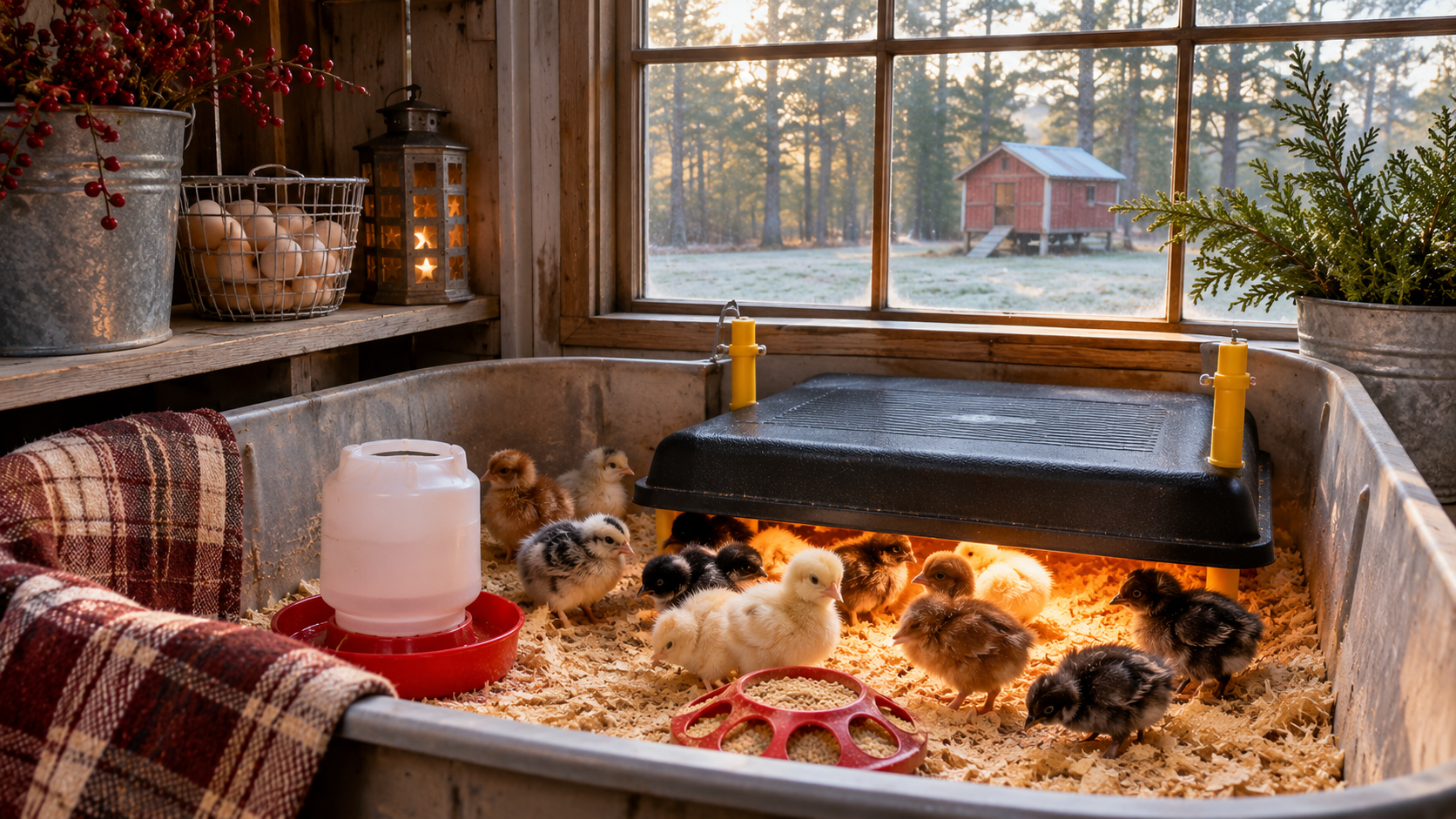
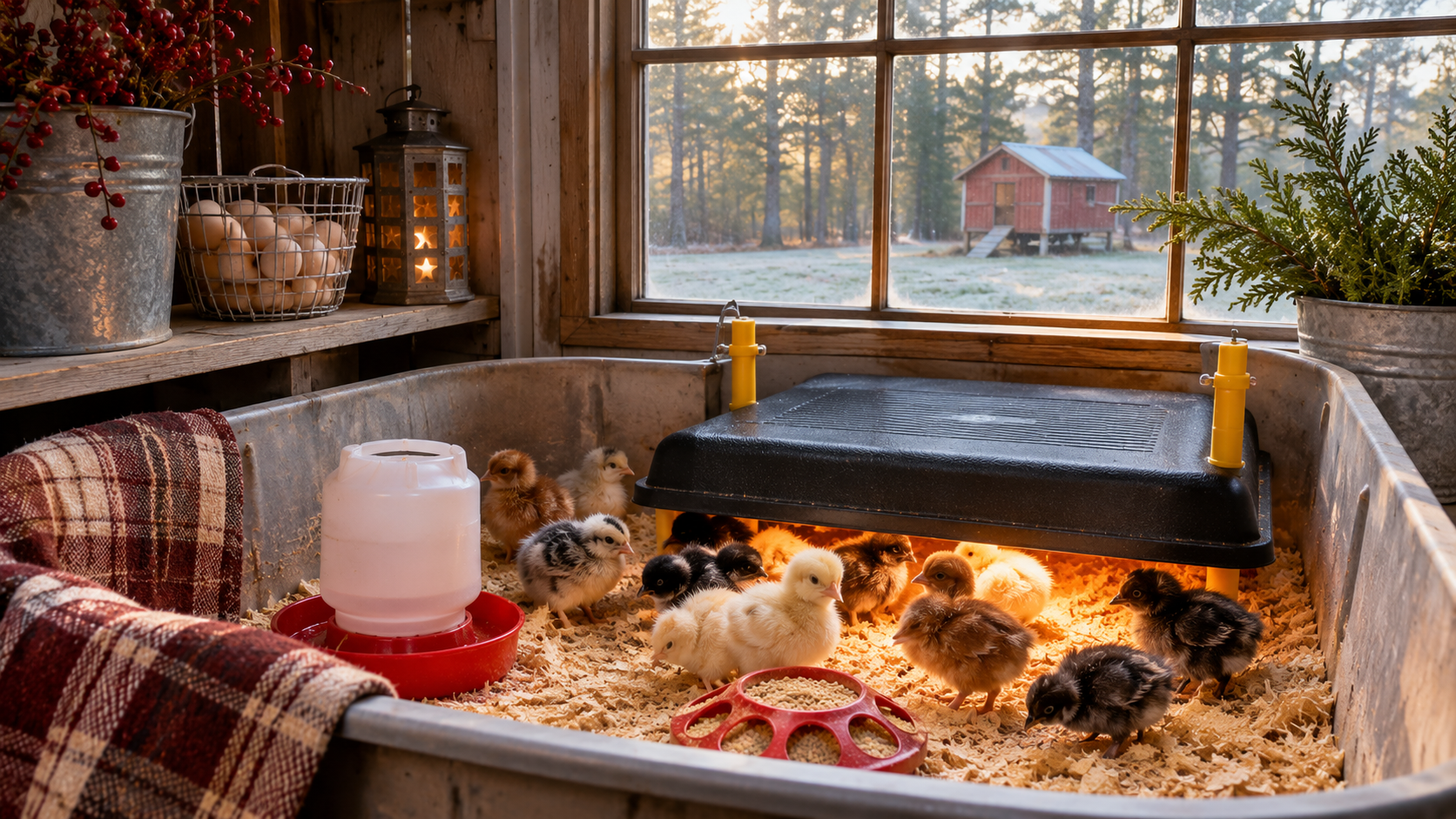
A brooder is a warm, enclosed space where chicks live until they can regulate their own body temperature. It can be as simple as a large plastic tub, a stock tank or a wooden box in your garage, mudroom or laundry room.
Here's what you'll need:
A draft-free spot away from pets and small children
2 to 3 inches of pine shavings (not cedar, which can irritate their lungs)
A chick feeder with chick starter feed
A chick waterer with shallow water so chicks can't drown
A heat source (more on that next)
A thermometer
Chicks need it warm, about 90 to 95°F for the first week. Then you can lower the temperature by about 5 degrees each week until they're fully feathered.
Watch the chicks, not just the thermometer. If they're huddled together under the heat, they're cold. If they're crowded against the far walls and panting, they're too hot. Happy chicks spread out, eat, drink, nap and chirp softly.
3. Choose a Heat Plate Over a Heat Lamp
Heat lamps are cheap and easy to find, but they're one of the most common causes of barn and coop fires. The bulbs get extremely hot, dusty bedding catches fire easily, and a lamp that falls into the shavings can be a disaster.
If you do use a heat lamp, never hang it by its cord. Secure it with a chain, keep it well away from the bedding, and check it often.
A safer choice is a brooder heat plate. Chicks snuggle underneath it the same way they would under a mother hen. Heat plates use less electricity and are much less likely to start a fire. They're especially worth it in a garage or attached mudroom.
Get a reputable heat plate and poultry brooder here →
4. Fall Chicks Stay Inside Longer
Chicks are fully feathered at around 6 weeks old. In spring, they can usually move outside right away. In late fall and winter, it's best to take it slowly.
Once your chicks are fully feathered, give them a week or so to adjust. Turn the heat down, then off, during the day. Next, move them to the coop on a mild stretch of weather. If they're your only chickens, a smaller group may need a draft-free coop with deep bedding to stay warm together.
Here in East Texas, our mild winters make this much easier than it would be up north.
Get a chick feeder and waterer set here →
5. Will Fall Chicks Lay in Spring?
Most hens start laying at about 18 to 24 weeks old, depending on the breed. That means chicks hatched in November will usually start laying sometime in the spring, right as the days get longer.
That's one of the best parts of raising fall chicks. Your new pullets often start laying just as your older hens finish their winter break.
6. Where to Buy Chickens in Late Fall
Many feed stores don't stock chicks again until late winter or spring, so you may need to look elsewhere:
Hatcheries: Many ship year-round, but some limit shipping in the coldest months or require minimum orders so chicks stay warm in the box.
Local breeders: Check farm groups, poultry clubs and community boards. You can often find started pullets this time of year.
Neighbors rehoming hens: A great option, but ask about the hens' age and health.
Biosecurity tip: Look for flocks that take part in the National Poultry Improvement Plan (NPIP). If you're adding birds to an existing flock, keep the newcomers separate for about 30 days to make sure they're healthy.
7. Choose Breeds That Handle Cold (and Texas Heat)
In most of the country, "cold-hardy" is all that matters. In East Texas, your chickens also need to survive July!
These dual-purpose breeds handle both our cold snaps and our summers well:
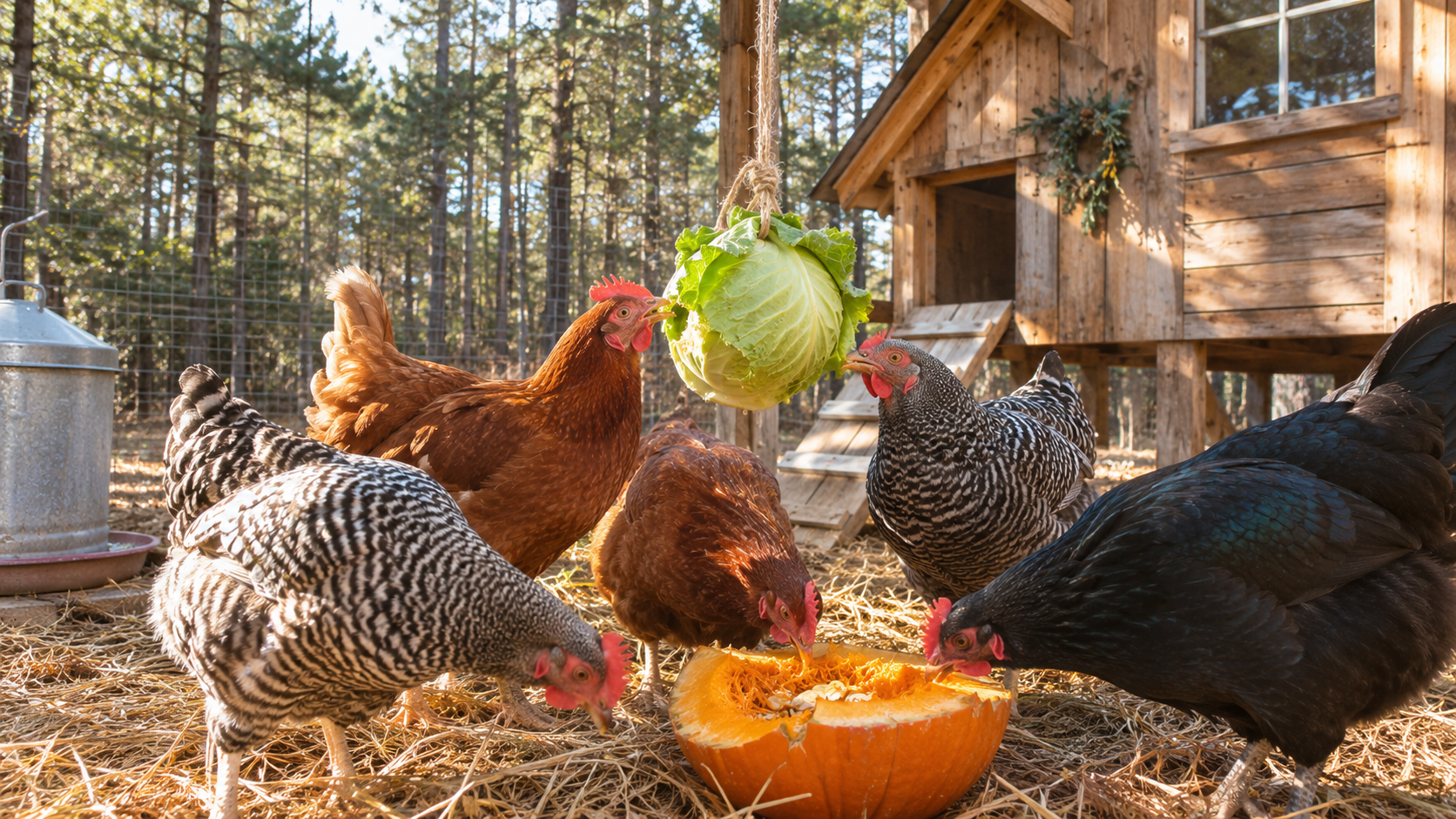
Rhode Island Reds: Hardy, friendly and great layers
Barred Plymouth Rocks: Calm, cold-hardy and beginner-friendly
Australorps: Excellent layers of brown eggs
Easter Eggers: Small pea combs resist frostbite, and they lay colorful eggs
Buff Orpingtons: Gentle and cold-hardy, but give them plenty of shade in summer
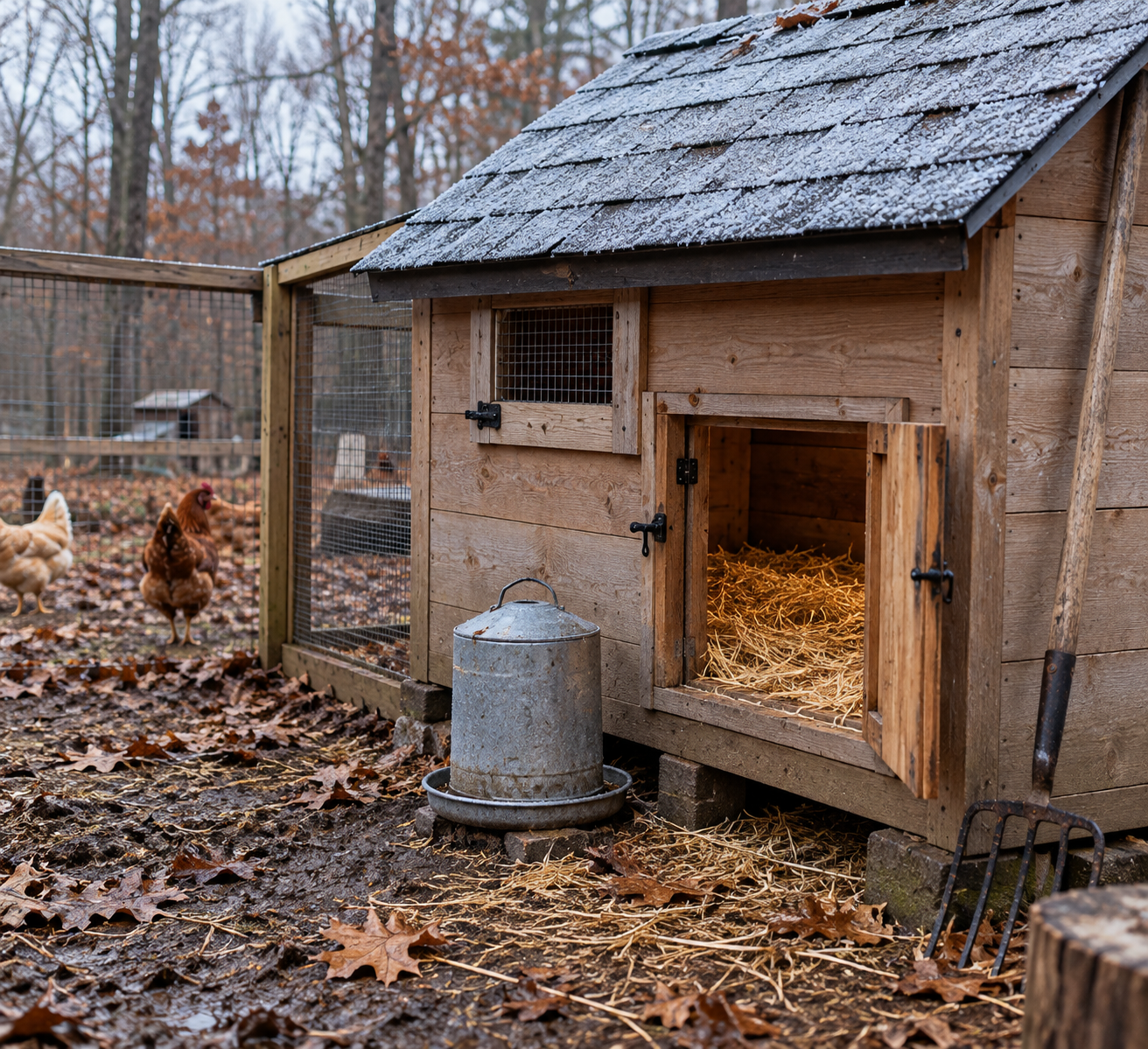
Breeds with small combs, like pea or rose combs, are less likely to get frostbite during a hard freeze.
8. Frequently Asked Questions
Do feed stores sell chicks in November?
Some do, but many don't restock chicks until late winter or spring. Call your local feed store to ask. If they don't have chicks, try a hatchery, a local breeder or a poultry club.
How cold is too cold for chicks?
Baby chicks can't regulate their own body temperature until they're fully feathered at about 6 weeks old. In their first week, they need it about 90 to 95°F near the heat source. Without a reliable heat source, even a cool room can be too cold for young chicks.
How long do chicks need a heat source?
Most chicks need supplemental heat for about 6 weeks, until they're fully feathered. Lower the temperature by about 5 degrees each week. In winter, take an extra week or so to help them adjust before moving them outside.
Fall Chicks Can Be a Great Start
Raising chickens in November takes a little more planning, but it has some real rewards. You'll have time to get to know your birds over the quiet winter months, and they'll be ready to lay right as spring arrives.
Whether you start with fluffy chicks or a few started pullets, your future self will thank you every time you gather an egg.
Are you thinking about getting chickens this fall? Tell us in the comments which breeds you're considering!

Hi, I’m Miss B!
Welcome to Little House in the Pines, where our family is learning to live simply and faithfully on our little homestead in the Piney Woods of East Texas. Here you’ll find what we’re growing in the garden, what’s happening in the chicken coop, what’s simmering on the stove, and what the Lord is teaching us through it all.
We love exploring the Hebrew roots of our faith in Yeshua, and we’re always learning, always making mistakes, and always grateful for His grace. Pull up a chair and stay a while!


Further Reading:
Raising Baby Chicks · Oregon State University Extension
Brooding Chicks Fact Sheet · Ohio State University Extension
Beginner's Guide to Raising Chickens (PDF) · NDSU Extension
Care of Baby Chicks (PDF) · University of Florida IFAS Extension
Brooding and Raising Chicks (PDF) · University of Kentucky
Brooding and Rearing Chicks (PDF) · University of Missouri Extension
More About Chickens · NC State Extension
Brooding Baby Chicks (PDF) · UT Extension, Coffee County
