5 Best Chicken Coop Kits for Raising Backyard Chickens
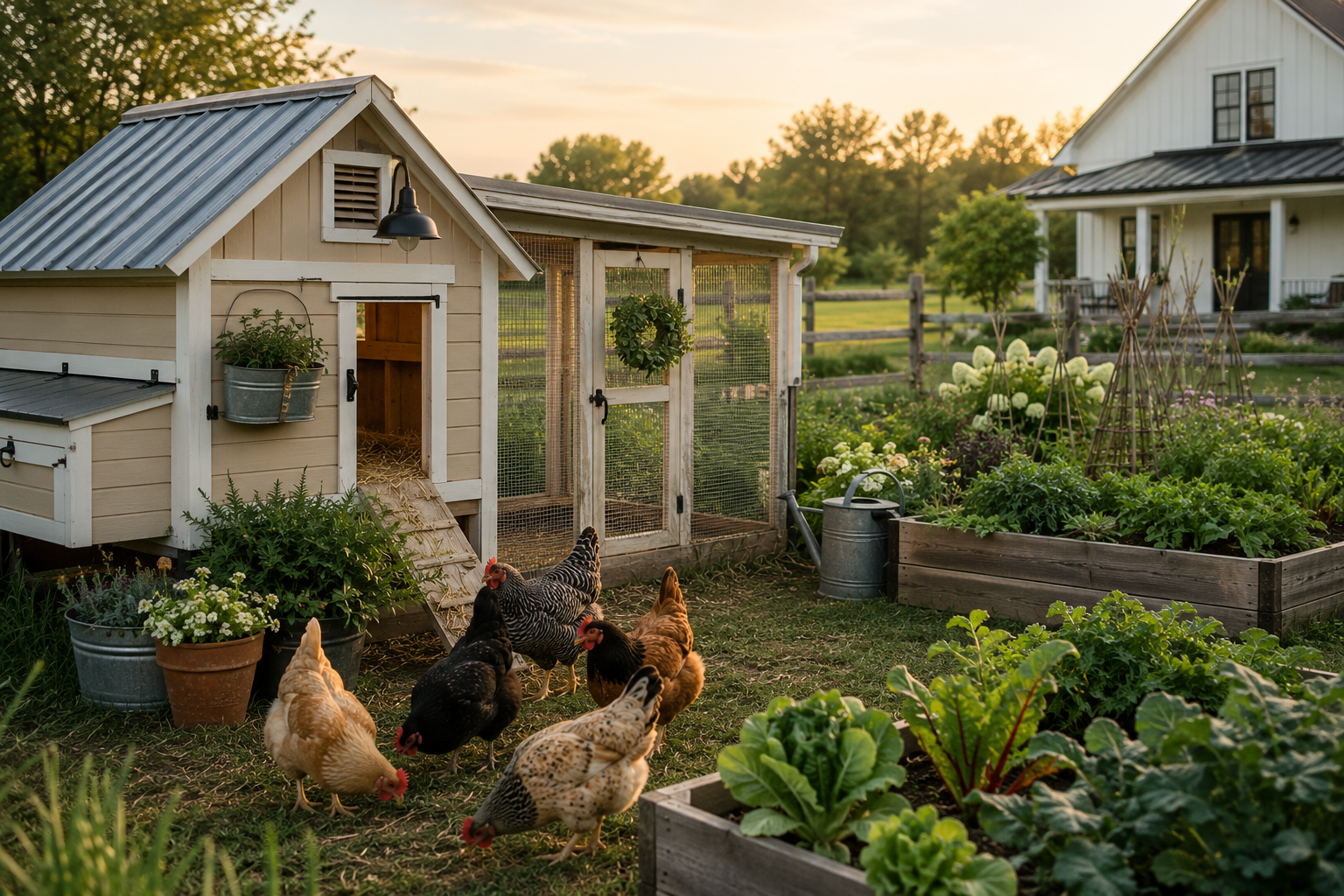
Bringing home your first chickens is one of the most exciting steps in homesteading, but it can also feel a little overwhelming once you realize how many coop options are out there. A good coop keeps your girls safe from predators, dry through storms, and comfortable enough to keep laying happily. A bad one means midnight raccoon scares and constant repairs. Below are five real, well-reviewed coop kits that cover everything from a small starter flock to a larger backyard operation, so you can pick the one that actually fits your space and your birds.
What to Look for in a Chicken Coop Kit
Before we get to the picks, here is what actually matters when comparing coops:
Space. Aim for at least 2 to 4 square feet of coop space per bird, plus more room in an attached run.
Predator protection. Look for solid latches, hardware cloth (not flimsy chicken wire) over any openings, and a floor that keeps digging predators out.
Ventilation. Chickens need airflow even in winter to prevent respiratory issues, so vents near the roofline matter.
Ease of cleaning. A pull-out tray or walk-in design saves you real time every single week.
Weatherproofing. A waterproof roof panel and elevated floor keep the coop dry and help it last through rain and snow.
Keep these in mind as you look through the picks below.
Coop Kit vs. Building Your Own
Before you buy, it is worth asking whether a kit or a DIY build makes more sense for your family. A pre-built kit like the ones below arrives with everything cut, drilled, and ready to assemble, usually in an afternoon with two people and a screwdriver. That convenience does come at a price premium compared to lumber bought separately.
Building your own coop from scratch can save money if you already have basic carpentry skills and some free weekends, but it takes real planning to get ventilation, predator-proofing, and nesting box placement right. For most first-time chicken keepers, a kit is the faster, more reliable way to get your flock safely housed while you are still learning the ropes. You can always build a second, custom coop later once you know exactly what you want.
How Much Should You Expect to Pay
Chicken coop kits vary widely in price depending on size and materials. As a rough guide, small starter coops for 2 to 4 hens typically run somewhere in the low hundreds of dollars, mid-size coops for 5 to 8 hens land a bit higher, and large walk-in or 10-plus bird coops cost the most upfront. It is tempting to buy the cheapest option you find, but a flimsy coop often needs repairs or full replacement within a year or two, which ends up costing more in the long run than buying a sturdier coop the first time.
1. OverEZ Classic Medium Chicken Coop
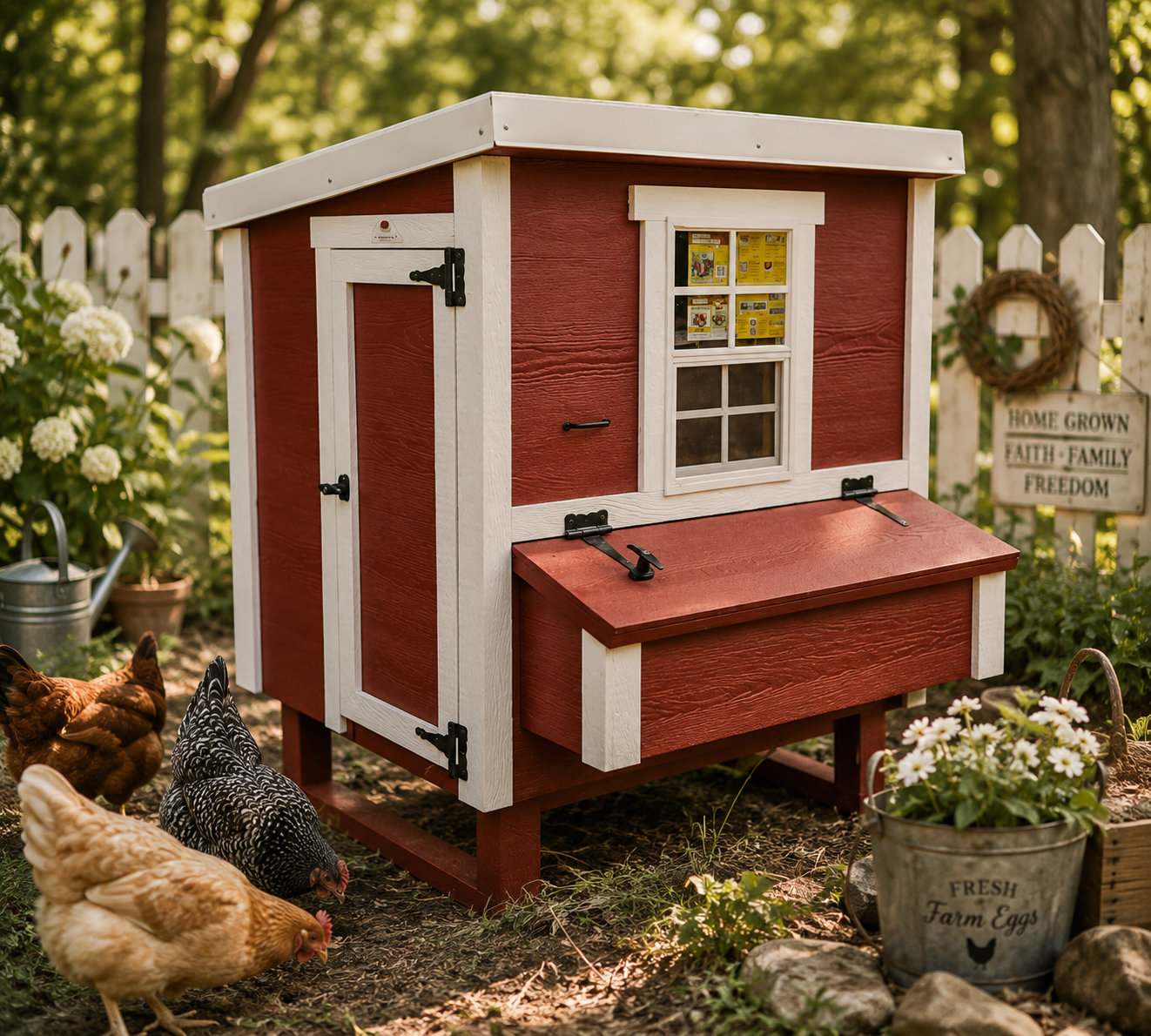
Best for: Serious homesteaders with 6–10 hens
If you're planning to keep chickens for years, the OverEZ is one of the highest-rated premium prefab coops available. It's made in the USA with solid wood construction, walk-in access, exterior nesting boxes, and excellent ventilation. Unlike many budget coops, its advertised capacity is much closer to reality.
Pros
Made in the USA
Walk-in design
Heavy-duty construction
Excellent long-term investment
2. Aivituvin Large Wooden Chicken Coop with Run
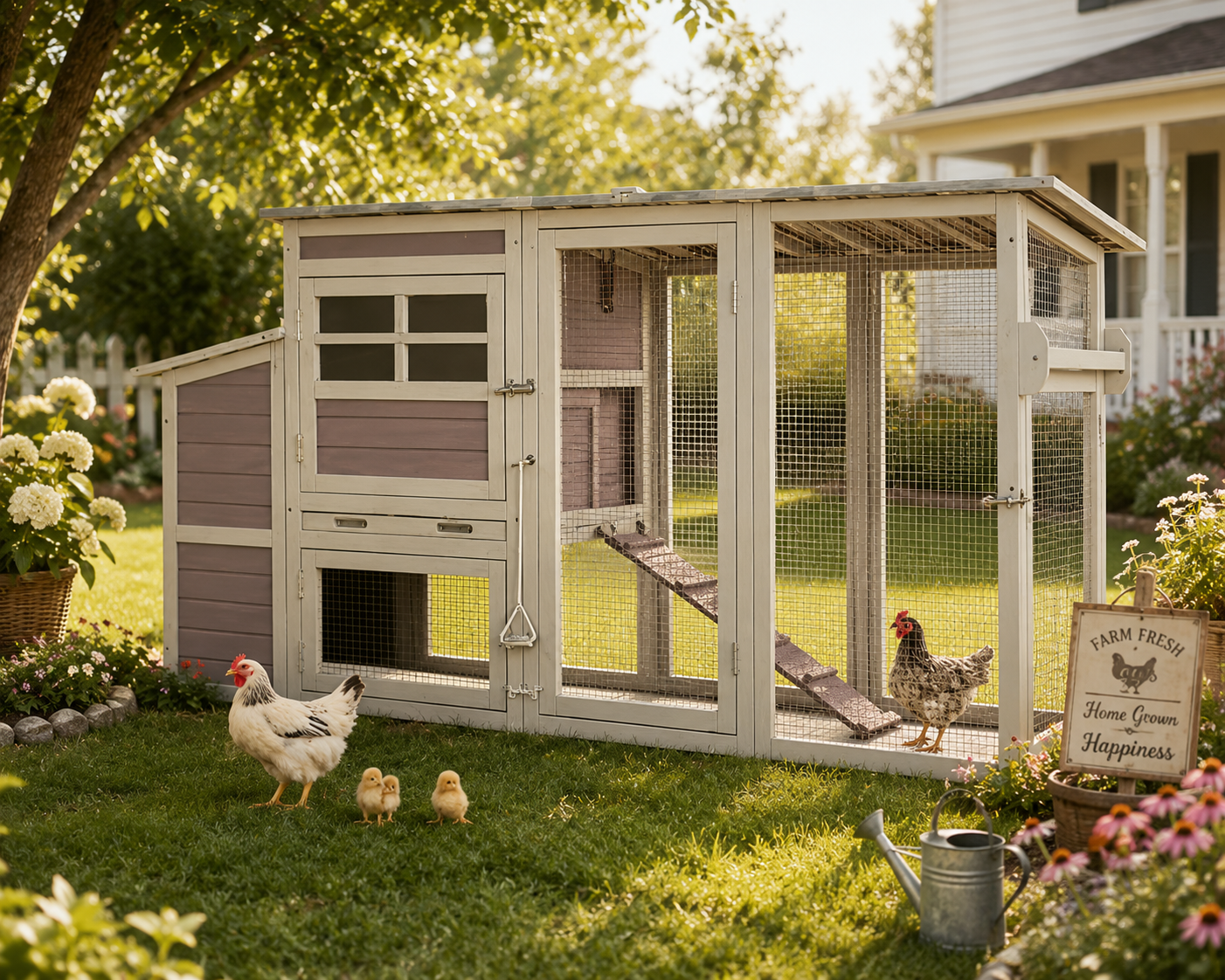
Best for: First-time chicken keepers with 3–5 hens
Aivituvin has become one of Amazon's most popular coop brands. This model includes nesting boxes, a pull-out cleaning tray, weatherproof roof, and attached run. Experts note it's one of the better values in the mid-range price category, though upgrading the wire to hardware cloth improves predator protection.
Pros
Great value
Easy egg collection
Pull-out cleaning tray
Excellent beginner coop
3. SnapLock Formex Large Chicken Coop
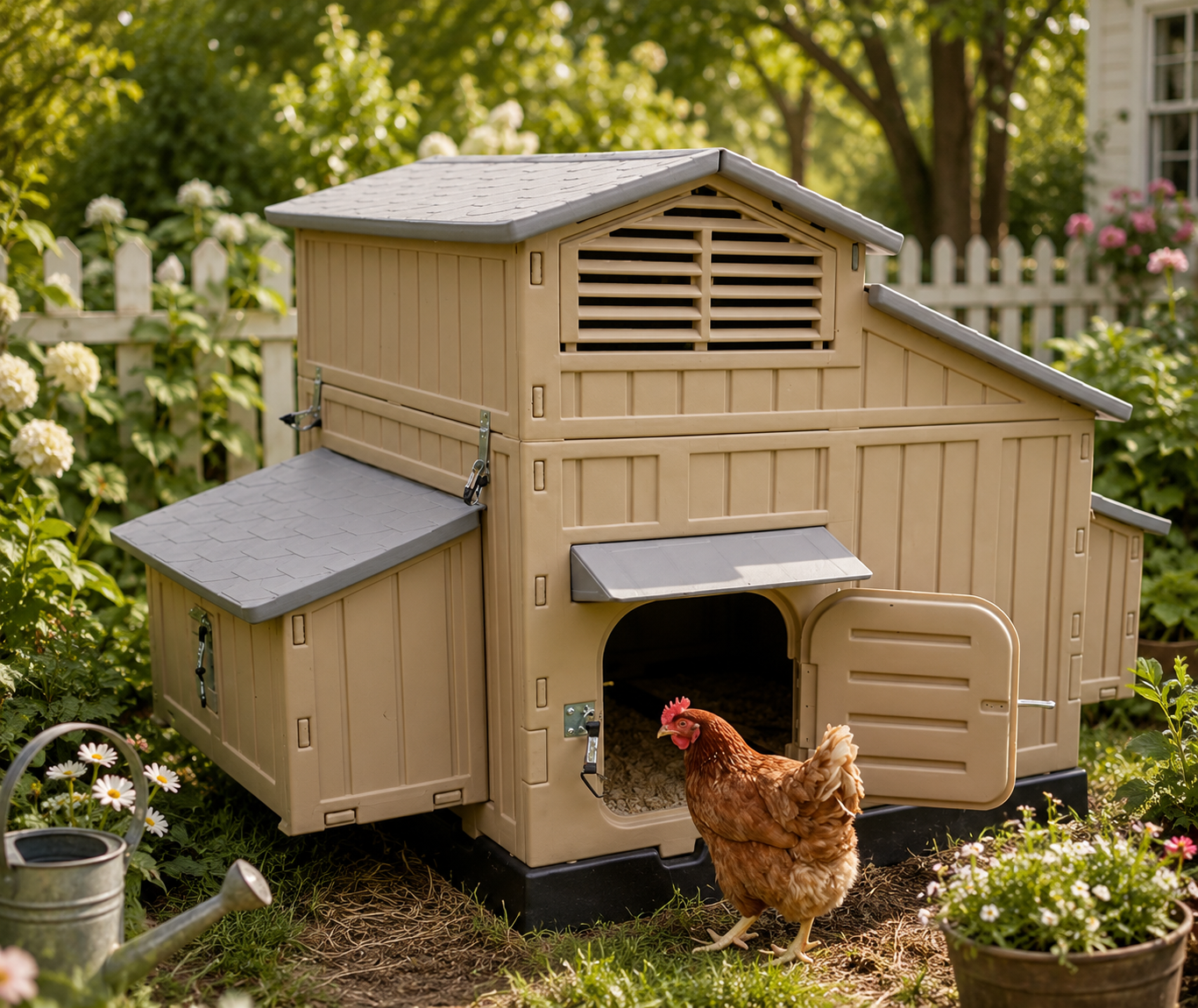
Best for: Low-maintenance backyard flocks
Unlike traditional wooden coops, the SnapLock Formex is made from durable recycled plastic that won't rot, warp, or require repainting. It's extremely easy to clean and holds up well in wet climates.
Pros
Weather resistant
Doesn't rot
Easy to sanitize
Long lifespan
4. Magazoopet Large Chicken Coop
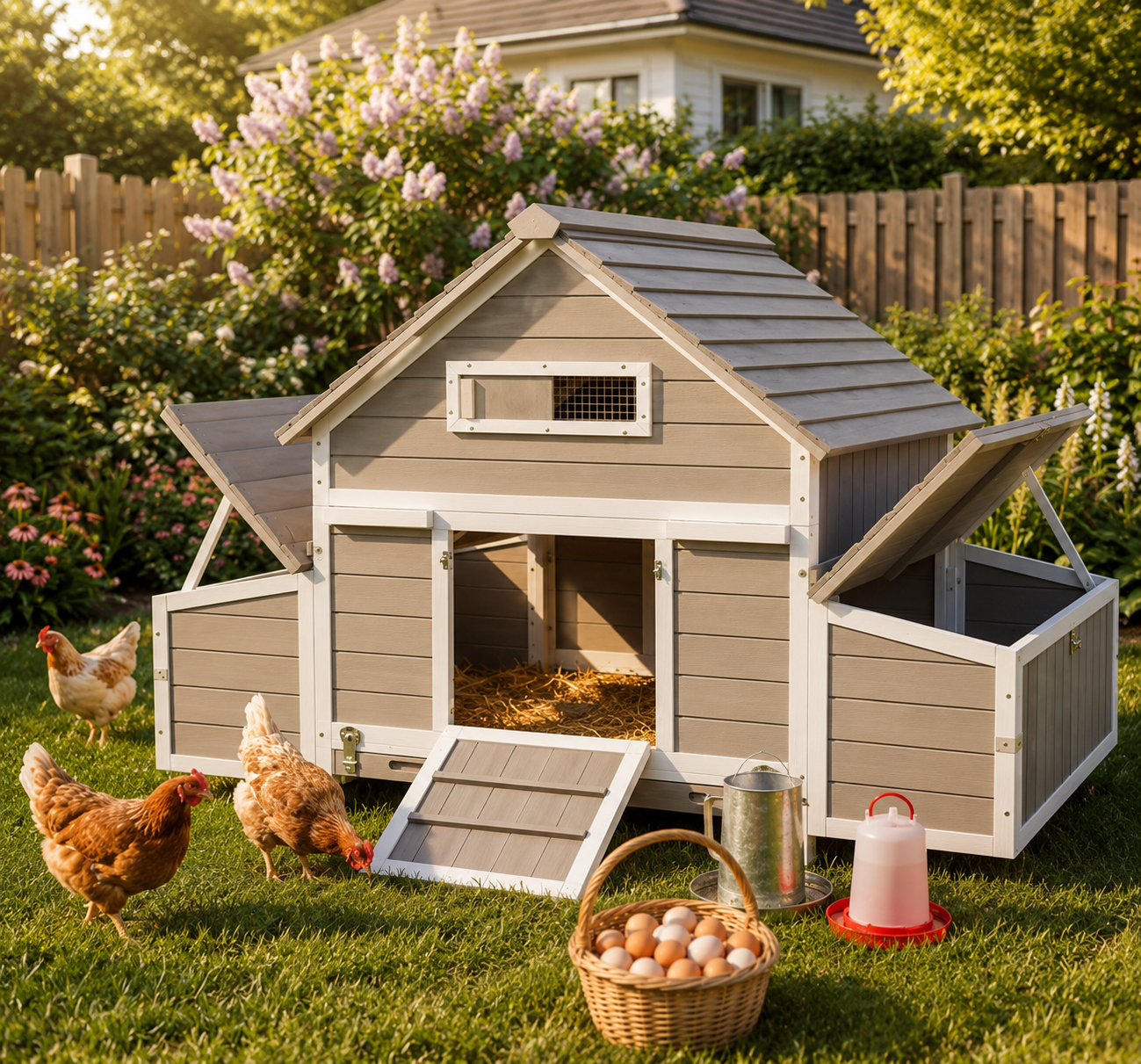
Best for: Budget-conscious beginners
This expandable wooden coop has become a popular choice for new backyard chicken owners. It features multiple nesting boxes, pull-out trays, predator-resistant locks, and room to attach a larger run as your flock grows.
Pros
Affordable
Expandable
Multiple access doors
Good starter coop
5. BuddyManor Large Chicken Coop with Run
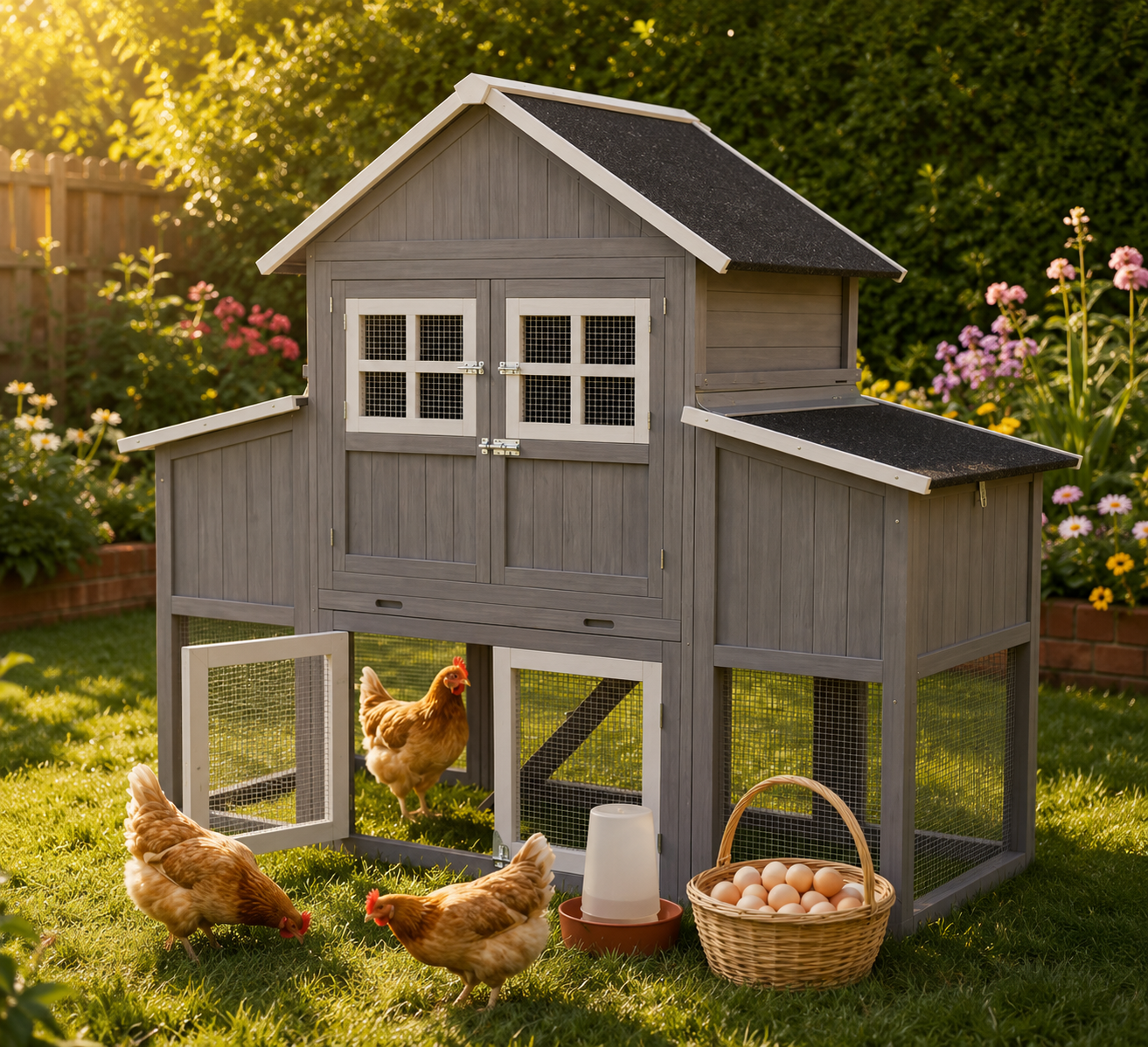
Best for: Medium-Large backyard flocks
If you're planning on keeping 6-8 hens, this compact coop offers excellent value. It includes a nesting box, enclosed run, and weather-resistant fir wood construction while remaining one of the more affordable quality options.
Pros
Compact footprint
Great for beginners
Includes run
Budget-friendly
How to Choose the Right Coop for You
If this is your very first flock, start small with the Aivituvin coop. You can always add a second coop or upgrade later once you know how much you enjoy keeping chickens.
If your time is tight, the Aivituvin coop will save you real minutes every single day, which adds up over a year of daily care.
If you live somewhere rainy or snowy, prioritize a coop with a solid waterproof roof panel, like the SnapLock option, so you are not fighting leaks and mildew all winter.
If you already know you want a bigger flock, it is almost always cheaper to buy one larger coop like the BuddyManor up front than to buy a small coop now and replace it in a year.
A Few Setup Tips Once Your Coop Arrives
Place the coop on level, well-draining ground so water does not pool underneath it
Add a layer of pine shavings or straw before your hens move in
Check every latch and gap for predator-proofing before the first night, since raccoons and weasels are surprisingly good at finding weak spots
Give your hens a few days to get used to the coop before letting them free-range, so they learn where "home" is
Common Coop-Buying Mistakes to Avoid
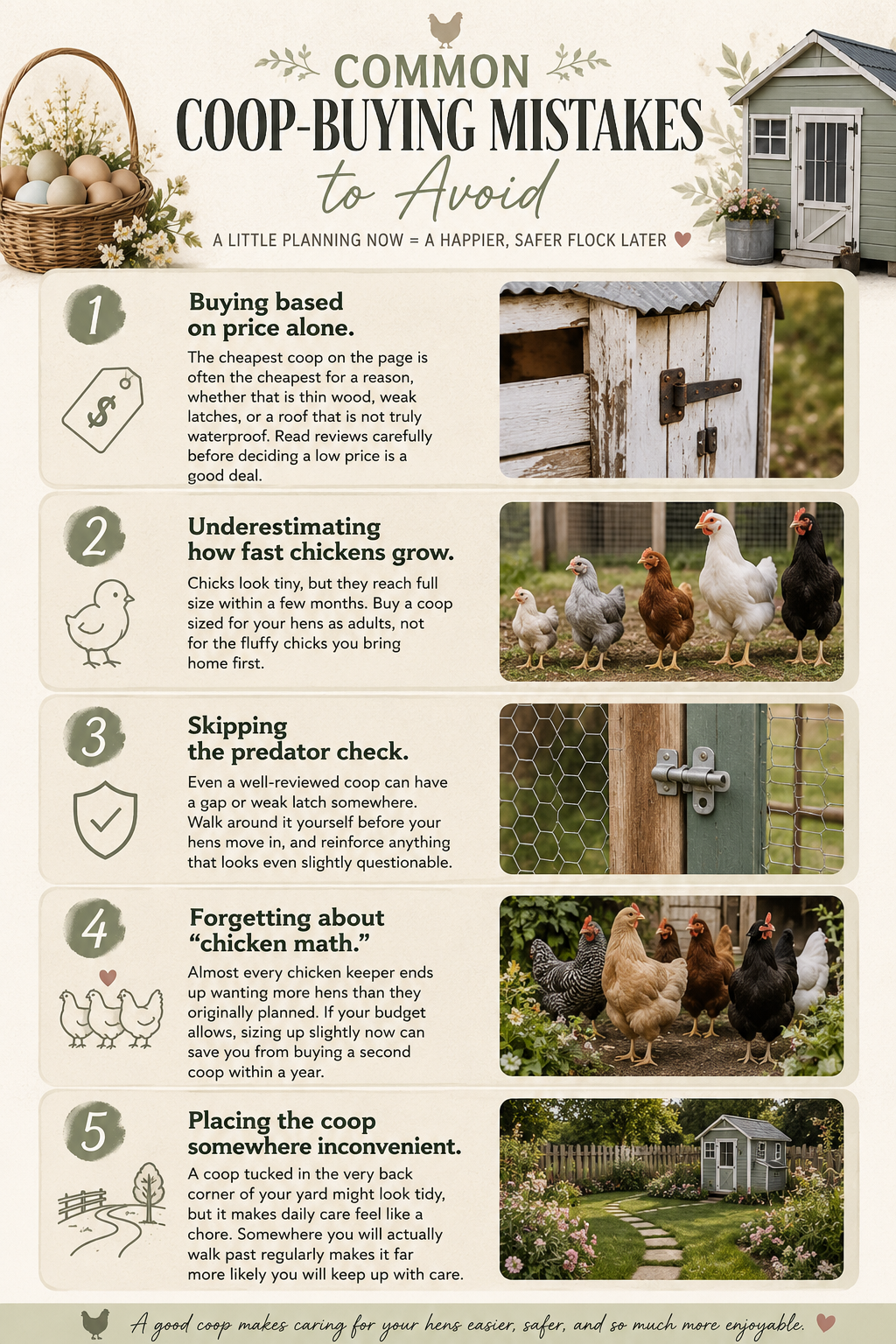
Buying based on price alone. The cheapest coop on the page is often the cheapest for a reason, whether that is thin wood, weak latches, or a roof that is not truly waterproof. Read reviews carefully before deciding a low price is a good deal.
Underestimating how fast chickens grow. Chicks look tiny, but they reach full size within a few months. Buy a coop sized for your hens as adults, not for the fluffy chicks you bring home first.
Skipping the predator check. Even a well-reviewed coop can have a gap or weak latch somewhere. Walk around it yourself before your hens move in, and reinforce anything that looks even slightly questionable.
Forgetting about "chicken math." Almost every chicken keeper ends up wanting more hens than they originally planned. If your budget allows, sizing up slightly now can save you from buying a second coop within a year.
Placing the coop somewhere inconvenient. A coop tucked in the very back corner of your yard might look tidy, but it makes daily care feel like a chore. Somewhere you will actually walk past regularly makes it far more likely you will keep up with care.
Frequently Asked Questions
How many chickens can fit in a small coop?
As a general rule, aim for 2 to 4 square feet of coop space per bird, plus additional space in an attached run. A coop rated for "2 to 4 chickens" usually means comfortably, not as a hard maximum.
Do I need a run, or just a coop?
A run gives your chickens safe daytime space to move, scratch, and dust bathe without free-ranging unsupervised. Unless you plan to let your flock roam freely under close supervision every day, an attached run is well worth having.
Is chicken wire good enough for predator protection?
Not usually. Standard chicken wire keeps chickens in, but it does not reliably keep determined predators like raccoons out. Hardware cloth, which has smaller and sturdier openings, is the safer choice for any gaps or windows.
How do I keep a wooden coop from rotting?
Look for coops with a waterproof roof panel, keep the coop off bare dirt when possible, and reapply a pet-safe wood sealant every year or two, especially in wet climates.
Can these coops handle winter weather?
Most of these coops are designed to handle typical four-season weather, but in especially cold climates, you may want to add extra insulation or a draft-free but ventilated winter setup to keep your hens comfortable.
How long does it take to assemble a coop kit?
Most kits this size take two people somewhere between two and five hours, depending on the model, though larger coops like the GUTINNEEN option may take a full afternoon or spread across two days.
Should I buy a coop before or after getting chicks?
Always set up the coop before bringing home chicks or hens. You will want it fully assembled, predator-proofed, and stocked with bedding, feed, and water before your birds ever arrive.
Do I need to treat or seal a wooden coop right away?
Many kits arrive with a factory coating, but adding your own coat of pet-safe sealant before your first hens move in gives extra protection, especially around joints and the roofline.


















https://www.usda.gov/topics/farming
https://www.cdc.gov/healthy-pets/about/backyard-poultry.html
https://poultry.extension.org/
https://www.fsis.usda.gov/food-safety/safe-food-handling-and-preparation/poultry
https://ucanr.edu/site/poultry
https://extension.psu.edu/animals-and-livestock/poultry

How to use oxygen absorbers for long-term food storage — what size you need, which foods they work with, and the simple beginner guide to a pantry that lasts.