This post may contain affiliate links. We only share things we use on our homestead.
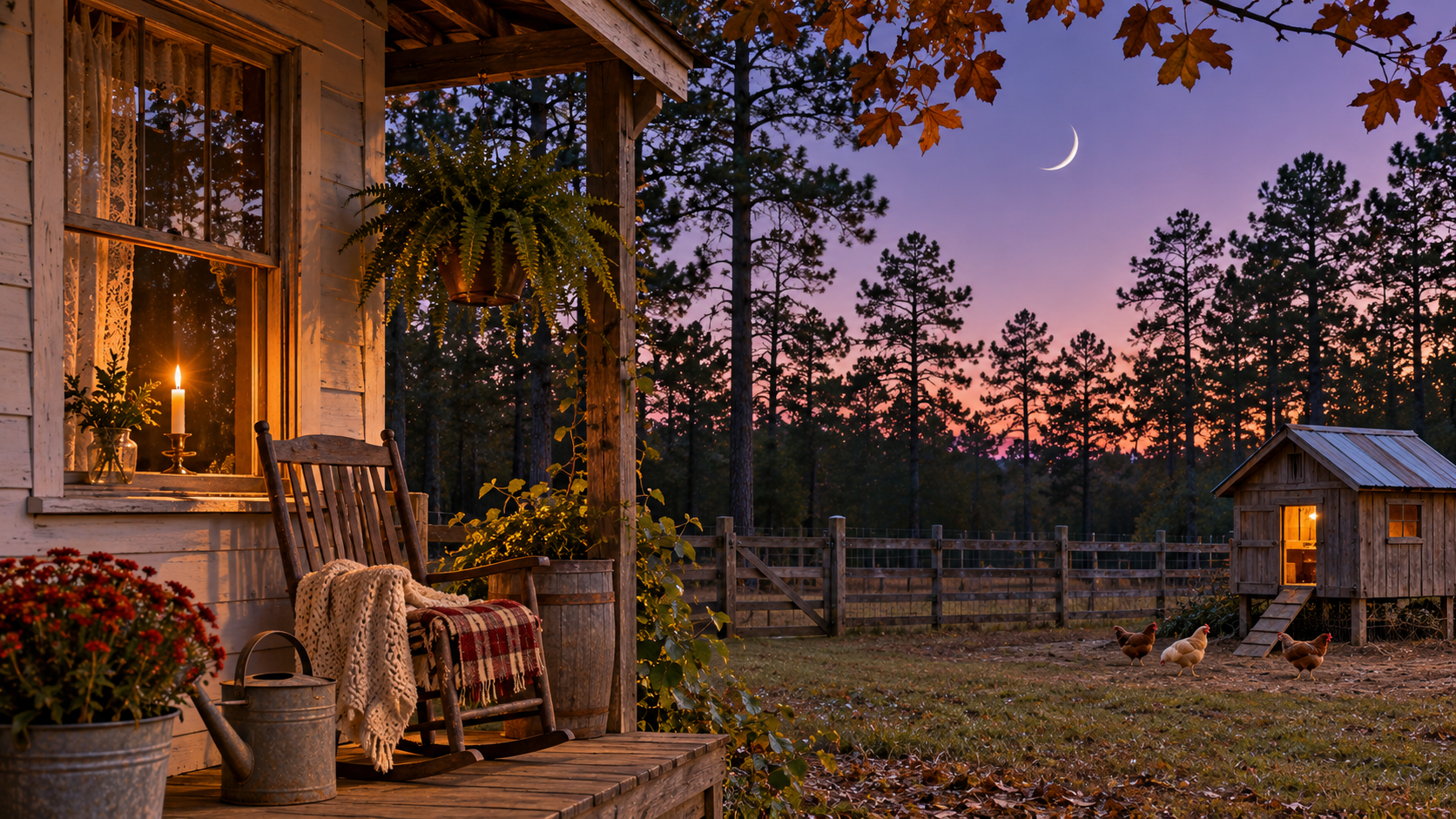
Out here in the pines, I've learned to watch the sky. When the moon is full, the coyotes sing and the chickens get restless. When it's dark, the stars over the pasture are brighter than anything you'll see in town.
Long before calendars hung on our kitchen walls, God gave His people the moon to mark time. "He appointed the moon for seasons" (Psalm 104:19). And each time a thin new crescent appeared, Israel celebrated the start of a new month, called Rosh Chodesh.
This week marks Rosh Chodesh Kislev, the beginning of the month that holds Hanukkah. Here's what it means, and some simple ways you can welcome it with your family.
Quick answer: Rosh Chodesh means "head of the month" in Hebrew. It marks the new moon that begins each month on the Hebrew calendar. Kislev is the ninth month of the biblical year and holds Hanukkah, the Feast of Dedication, which Yeshua Himself attended in John 10:22–23. In 2026, Rosh Chodesh Kislev falls on November 10–11.
In this post:
What Rosh Chodesh means
Why Kislev matters: the month of dedication
A note on grace
6 ways to welcome Kislev
A Rosh Chodesh prayer
FAQ
1. What Rosh Chodesh Means
Rosh means "head" and chodesh means "month," from the Hebrew root for "new." Together, Rosh Chodesh means "head of the month." It's the day of the new moon, when the first sliver of light reappears in the sky.
The new moon shows up all through Scripture:
God told Israel to blow trumpets "in the beginnings of your months" as a memorial before Him (Numbers 10:10).
The psalmist sang, "Blow up the trumpet in the new moon" (Psalm 81:3).
King Saul held a new moon feast, and David's empty seat at the table set the story of his friendship with Jonathan in motion (1 Samuel 20:5, 24–27).
The prophet Isaiah looked ahead to a day when "from one new moon to another… shall all flesh come to worship before me" (Isaiah 66:23).
Because the Hebrew calendar follows the moon, some months have 29 days and others have 30. When the month before has 30 days, Rosh Chodesh is observed for two days: the last day of the old month and the first day of the new one. That's the case this year.
2. Why Kislev Matters: The Month of Dedication
Kislev is the ninth month of the biblical calendar, counting from Nisan in the spring. It's mentioned by name in Scripture, where Nehemiah heard the news about Jerusalem's broken walls "in the month Chisleu" (Nehemiah 1:1).
Kislev is best known as the month of Hanukkah, which begins on the 25th. Hanukkah remembers the rededication of the Temple in 164 B.C., after the Maccabees drove out the foreign rulers who had defiled it.
There's a beautiful Scripture connection here, too. Through the prophet Haggai, God spoke about "the four and twentieth day of the ninth month," the day the foundation of His temple was laid, and promised, "from this day will I bless you" (Haggai 2:18–19). Kislev has long been a month of building, dedicating and blessing.
Most meaningful of all, Yeshua Himself was in the Temple during this feast: "And it was at Jerusalem the feast of the dedication, and it was winter. And Jesus walked in the temple in Solomon's porch" (John 10:22–23). It was there that He declared, "I and my Father are one" (John 10:30).
[Newsletter signup #1: "Get our free printable Hebrew calendar for Kislev! Join the Little House in the Pines newsletter for weekly devotionals, Bible studies and homestead recipes." Email field + "Send My Calendar" button]
3. A Note on Grace
Before we go further, I want to be clear: you don't have to keep Rosh Chodesh to be right with God. Our salvation rests completely on the finished work of Yeshua, received by grace through faith (Ephesians 2:8–9).
Paul wrote, "Let no man therefore judge you in meat, or in drink, or in respect of an holyday, or of the new moon, or of the sabbath days: Which are a shadow of things to come; but the body is of Christ" (Colossians 2:16–17).
A shadow isn't the real thing, but it does point to it. That's how our family approaches the biblical calendar. We don't observe the new moon out of obligation. We enjoy it as a gift, a rhythm that helps us stop, look up and remember the Messiah these days point to.
4. 6 Ways to Welcome Kislev
None of these are rules. They're simple ideas to help your family slow down and turn your hearts toward the Lord as the month begins.
1. Read the Kislev Scriptures Together
Read John 10:22–42 as a family, where Yeshua walks in the Temple during the Feast of Dedication. Then read Haggai 2:10–19 and talk about what it means that God blesses the work He builds.
2. Light a Candle and Pray
After sunset, step outside to look for the new moon, or light a single candle at the supper table. Thank God for His faithfulness last month, and invite Him into the month ahead. Yeshua is "the light of the world" (John 8:12), and Kislev is the month of light.
3. Set Your Intentions for the Month
The new moon is a natural fresh start. Take a few minutes to journal: What do you want to dedicate to the Lord this month? What do you want to let go of? Write down one verse to carry with you.
4. Share Something Sweet
New moons in Scripture were often celebrated around the table. Bake something special, invite a neighbor over, or bring a treat to someone who's lonely this season. (Our sweet potato biscuits with honey butter would be perfect!)
5. Plan Your Hanukkah Celebration
In 2026, Hanukkah begins at sundown on Friday, December 4, and the eighth candle is lit on Thursday, December 11. Use the start of Kislev to gather candles, choose a Scripture for each night, and plan a few family traditions.
6. Dedicate Your Home to the Lord
Hanukkah means "dedication." Paul reminds us that our bodies are the temple of the Holy Spirit (1 Corinthians 6:19). This month, walk through your home, pray over each room, and dedicate your household, your land and your work to the Lord.
5. A Rosh Chodesh Prayer
Blessed are You, LORD our God, King of the universe, who appointed the moon for seasons and the sun to know its going down.
Thank You for Your faithfulness through every month that has passed. As this month of Kislev begins, I dedicate my heart, my home and my work to You.
Your mercies are new every morning (Lamentations 3:22–23). Let this new month be full of Your light, and let our lives point to Yeshua, the true Light of the world.
In the name of Yeshua, amen.

Pin it for later!
6. Frequently Asked Questions
When does Kislev start in 2026?
Rosh Chodesh Kislev is observed for two days in 2026: Tuesday, November 10, and Wednesday, November 11. Because Hebrew days begin at sundown, it starts on the evening of Monday, November 9. The 1st of Kislev falls on November 11.
Do Christians have to keep the new moons?
No. Colossians 2:16–17 says believers shouldn't be judged regarding a new moon, because these days are "a shadow of things to come; but the body is of Christ." Salvation comes by grace through faith in Yeshua. Many believers still enjoy the new moon as a time of prayer and renewal.
When is Hanukkah 2026?
Hanukkah 2026 begins at sundown on Friday, December 4, and lasts eight nights, ending at nightfall on Saturday, December 12.
A Month of Light and Dedication
The new moon starts as the smallest sliver of light, and it grows a little brighter every night. May this month of Kislev be like that for your family, with His light growing a little brighter in your home each day.
How does your family mark the new month or prepare for Hanukkah? Share your traditions in the comments below!

Hi, I’m Miss B!
Welcome to Little House in the Pines, where our family is learning to live simply and faithfully on our little homestead in the Piney Woods of East Texas. Here you’ll find what we’re growing in the garden, what’s happening in the chicken coop, what’s simmering on the stove, and what the Lord is teaching us through it all.
We love exploring the Hebrew roots of our faith in Yeshua, and we’re always learning, always making mistakes, and always grateful for His grace. Pull up a chair and stay a while!









Further Reading:
1. Rosh Chodesh Kislev 2026 · Hebcal
2. Hebrew Calendar 5787 (printable PDF) · Hebcal
3. Rosh Chodesh: Head of the Month · Hebrew for Christians
4. The Significance of the Moon · Hebrew for Christians
5. Why the Hebrew Celebration of Rosh Chodesh Is Important for Believers · Dr. Sam Nadler, Charisma News
6. The New Moon Feast · Bible Hub Topical Encyclopedia
7. The Temple: Its Ministry and Services, "The New Moons" · Alfred Edersheim, Christian Classics Ethereal Library
8. Rosh Chodesh Kislev · Am Hazak