This post may contain affiliate links. We only share things we use on our homestead.
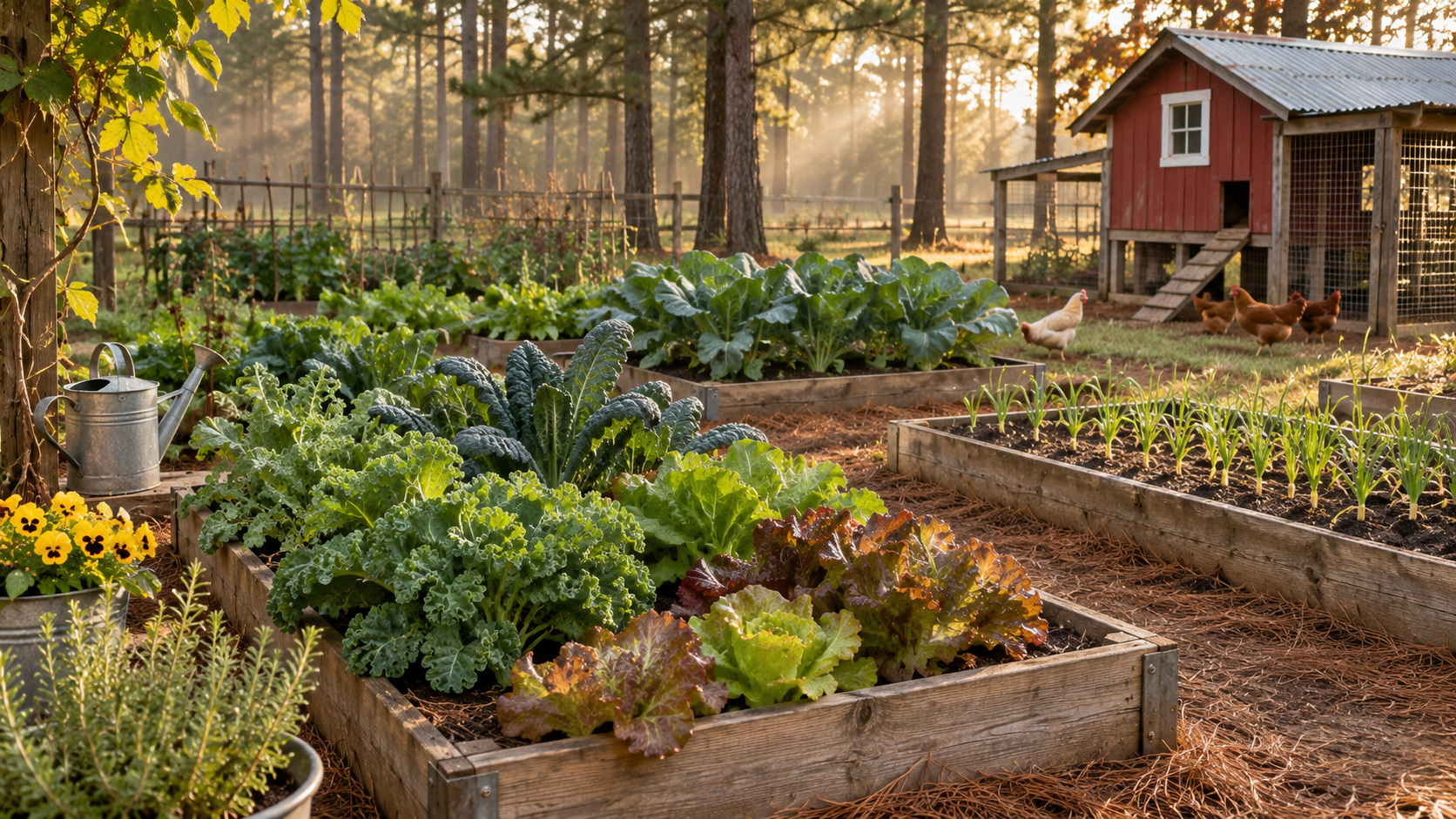
When the pecans start dropping and the mornings finally feel crisp, most of the country is putting its garden to bed. Here in the Piney Woods, we're just getting a second wind.
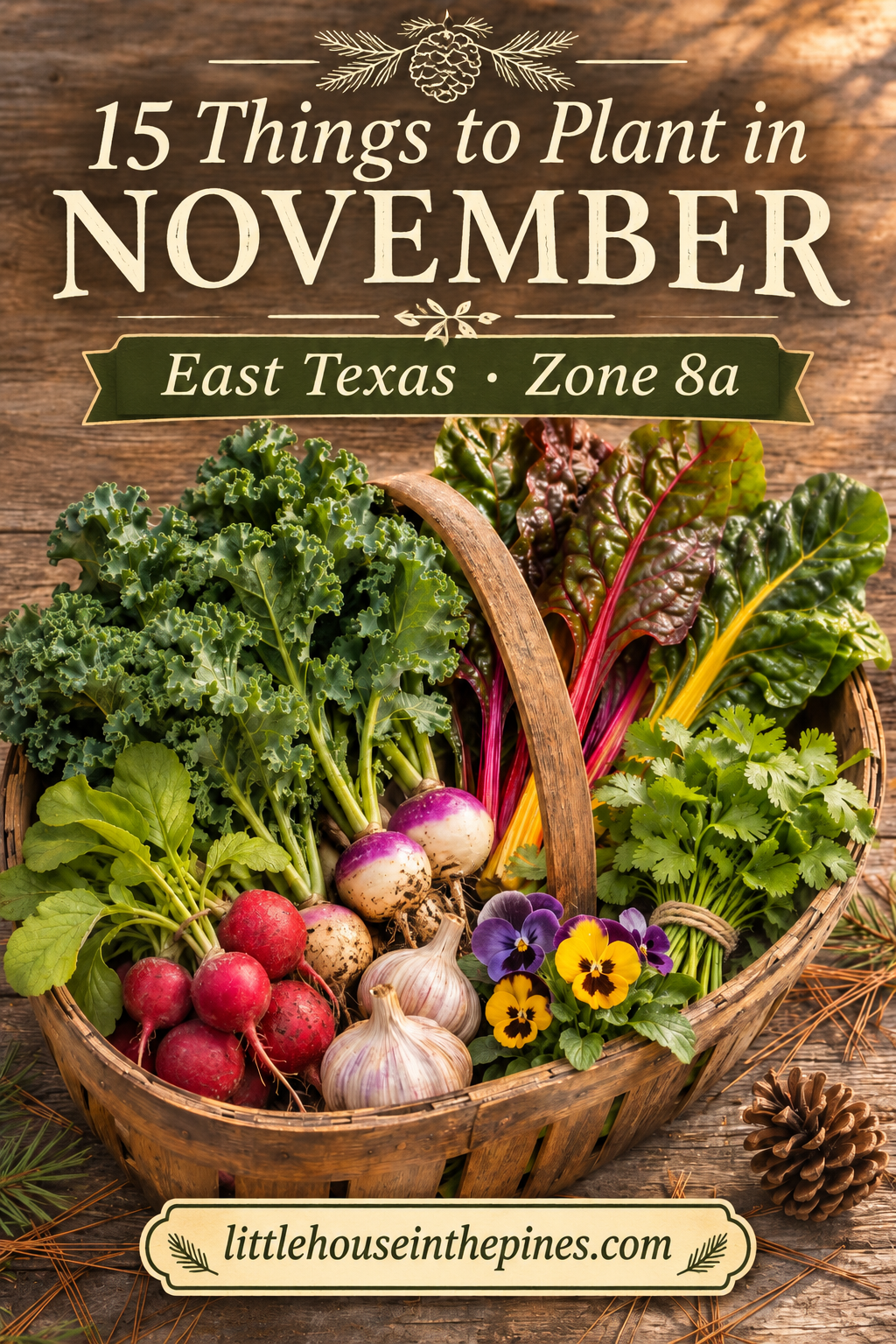
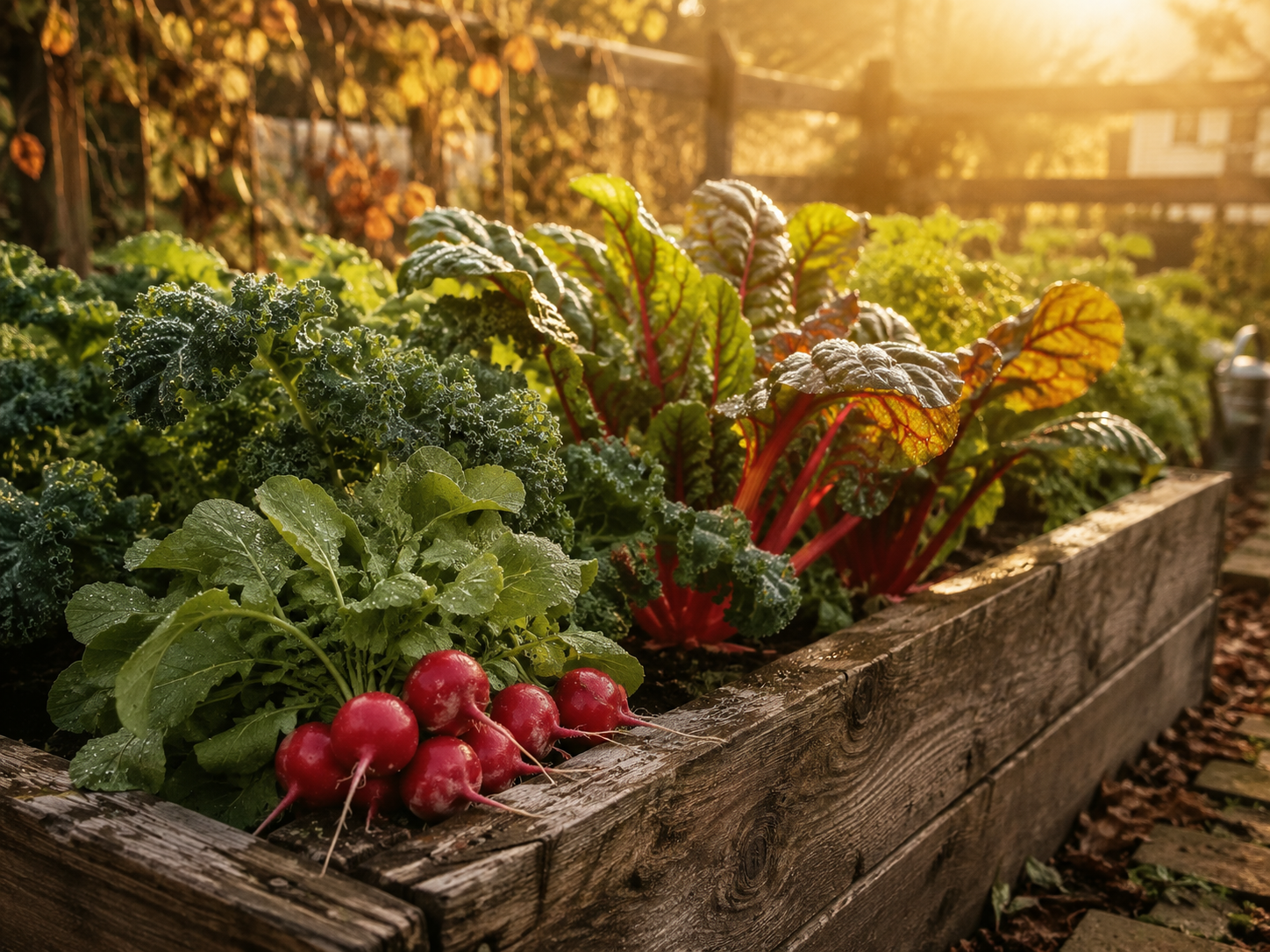
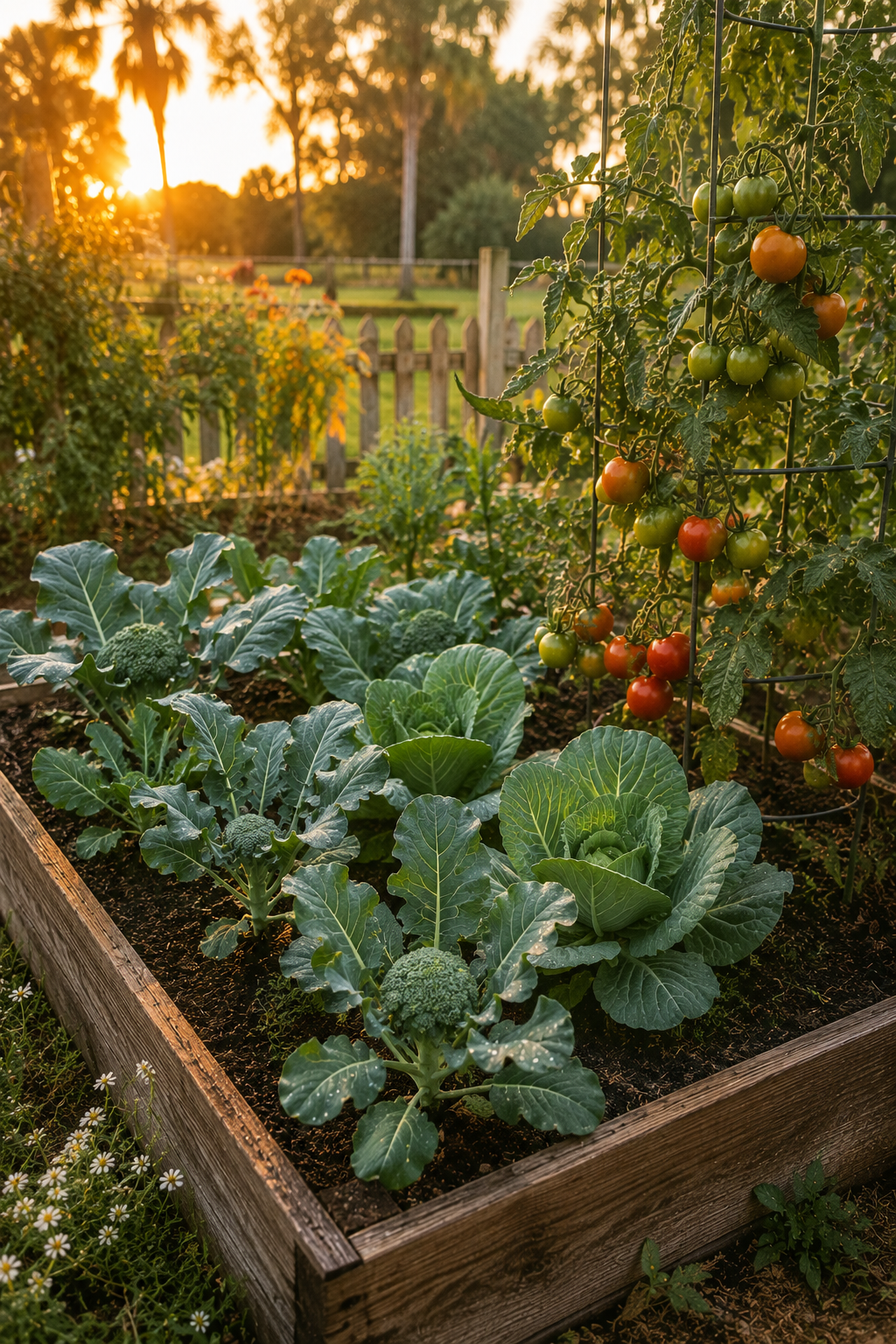
If you're wondering what to plant in November in East Texas, the good news is that the list is long. Our mild winters make November one of the best months of the year to grow leafy greens, root crops, garlic and cheerful cool-weather flowers. Many of them taste even sweeter after a light frost.
Whether you're brand new to gardening or just moved to East Texas, this list will help you get the most out of your fall and winter garden.
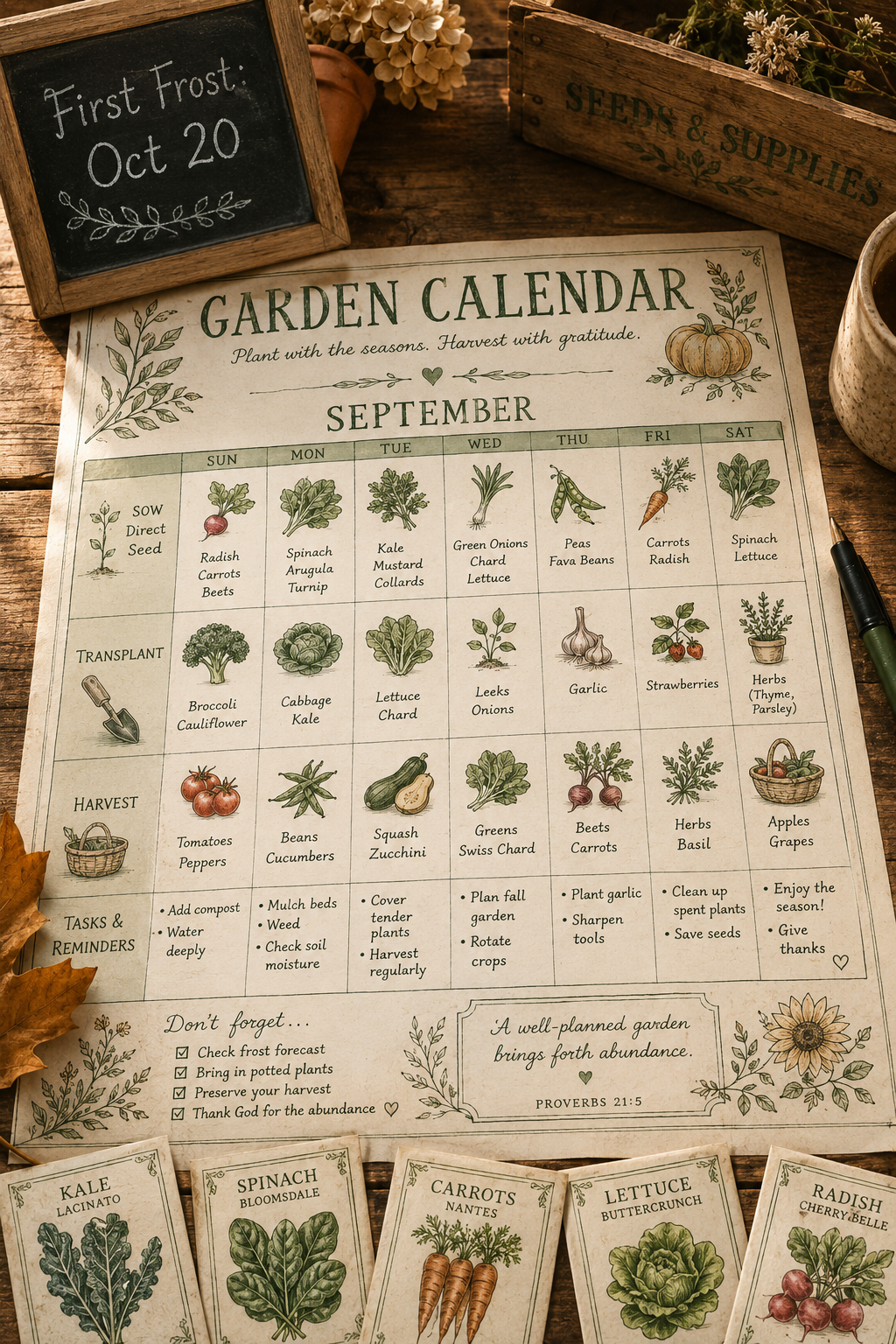
Quick answer: In East Texas (zone 8a), November is a great month for cool-season crops. Plant garlic, onion sets, spinach, lettuce, kale, collards, mustard greens, turnips, radishes and carrots, along with herbs like cilantro and parsley. Pansies, violas, snapdragons and daffodil bulbs also go in now.
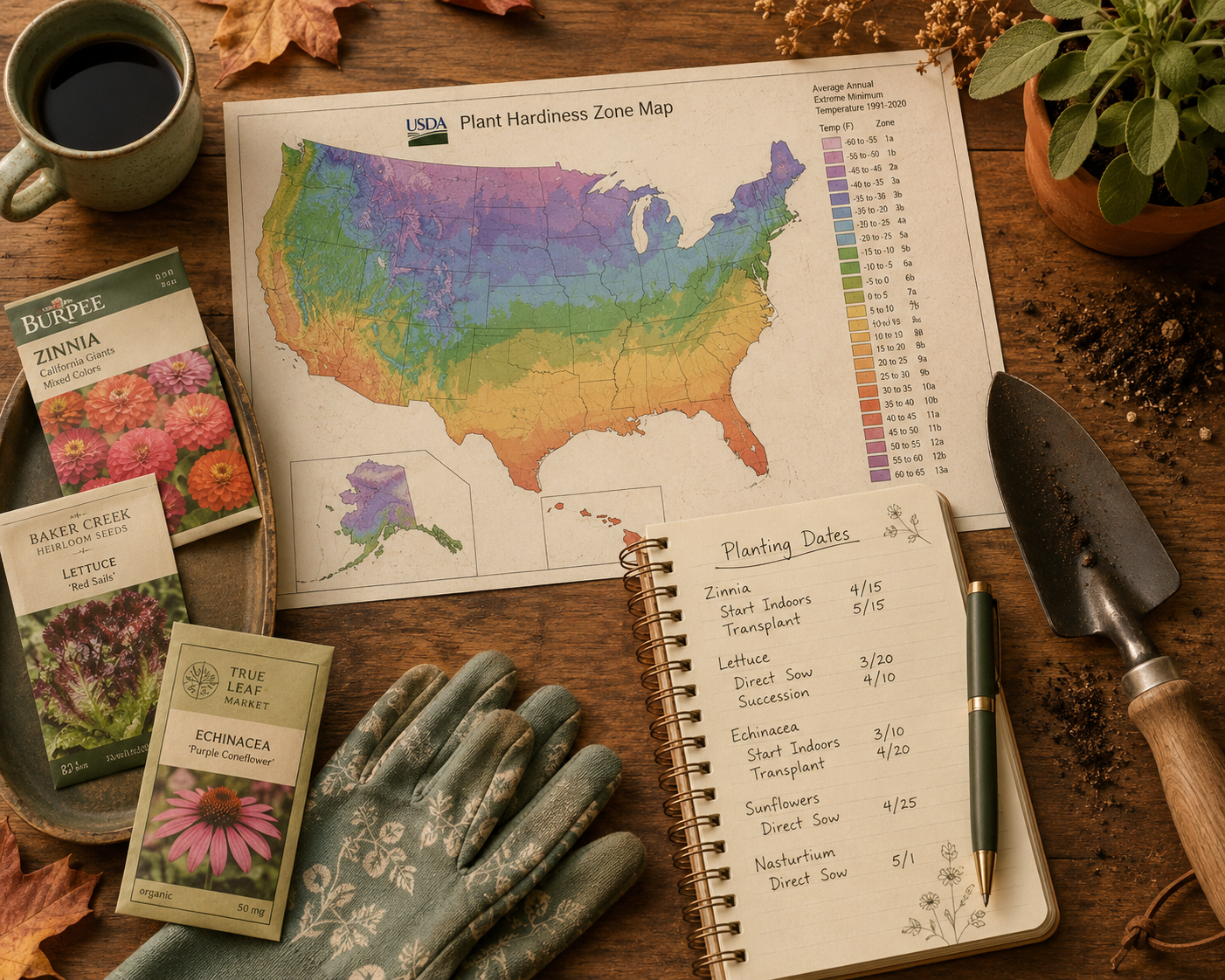
1. Know Your Zone and First Frost Date
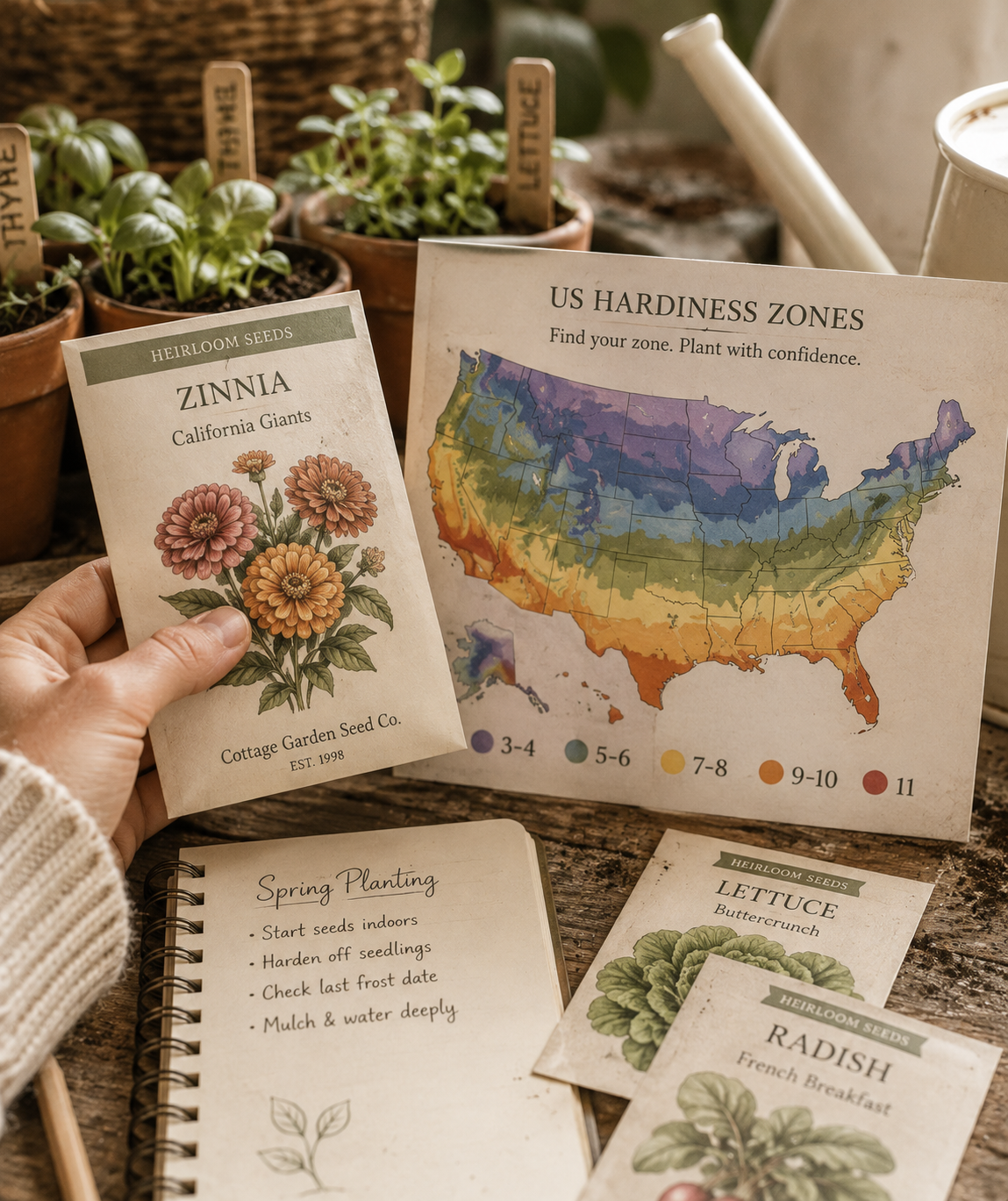
Most of East Texas falls in USDA hardiness zone 8a, with some southern counties around Lufkin and Nacogdoches in zone 8b. That means our coldest winter nights usually bottom out between 10°F and 20°F.
Our first frost typically arrives sometime between mid-November and early December, depending on where you live. Hard freezes are usually short, and most days warm back up into the 50s and 60s. That's why cool-season crops do so well here all winter long.
Beginner tip: Look up your ZIP code on the USDA Plant Hardiness Zone Map, then call or visit your county's Texas A&M AgriLife Extension office for local frost dates.
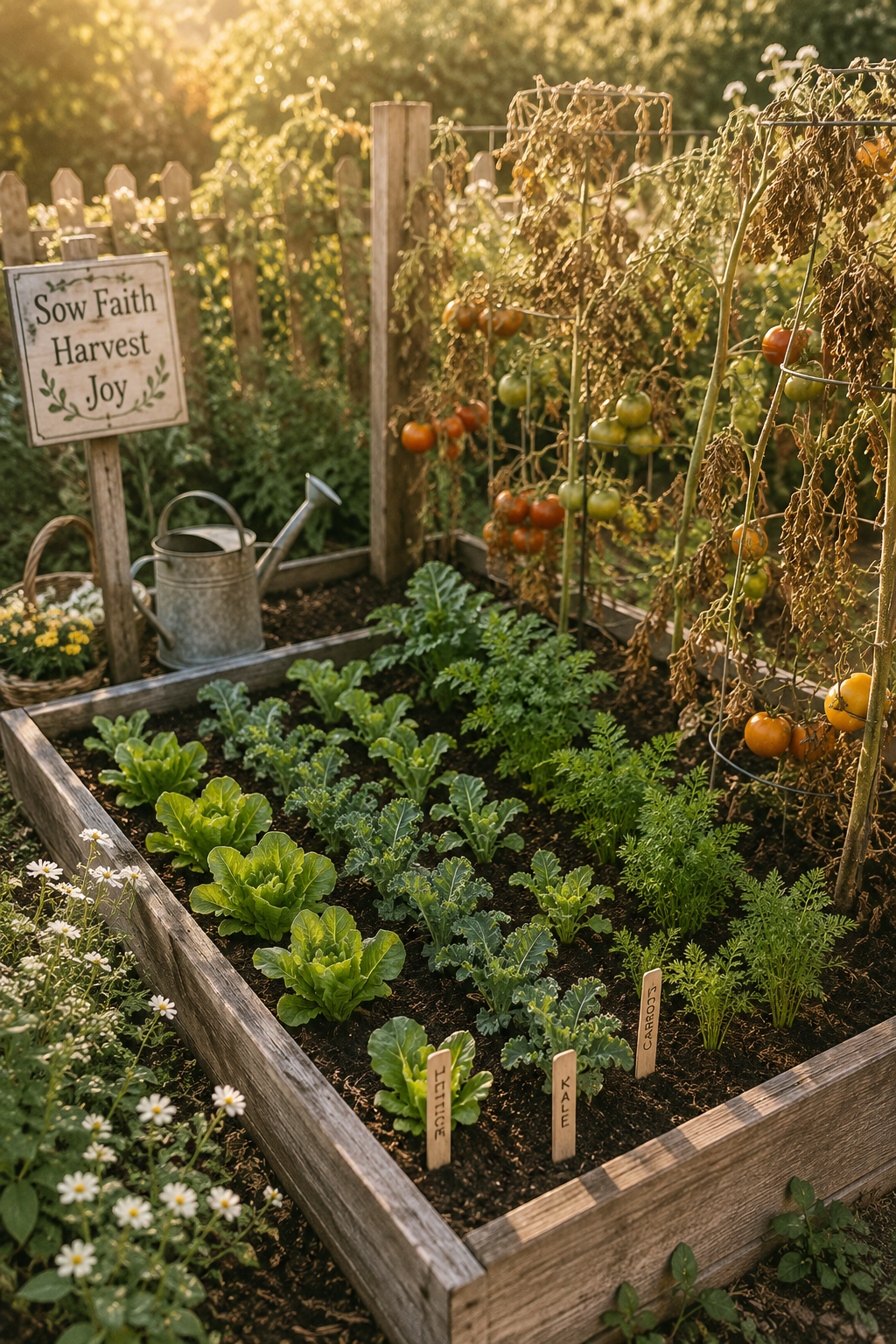
2. 10 Vegetables to Plant in November in East Texas
1. Garlic
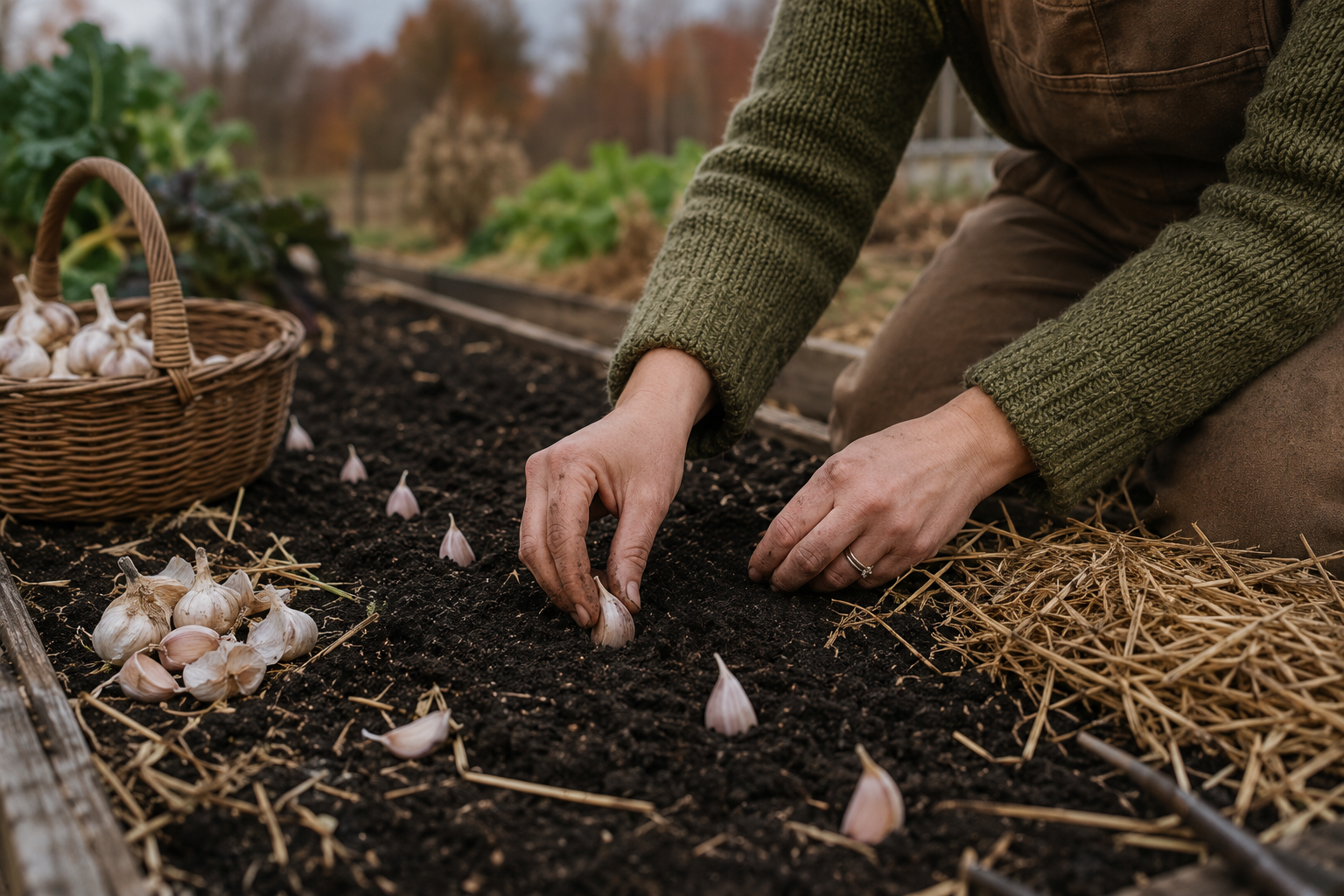
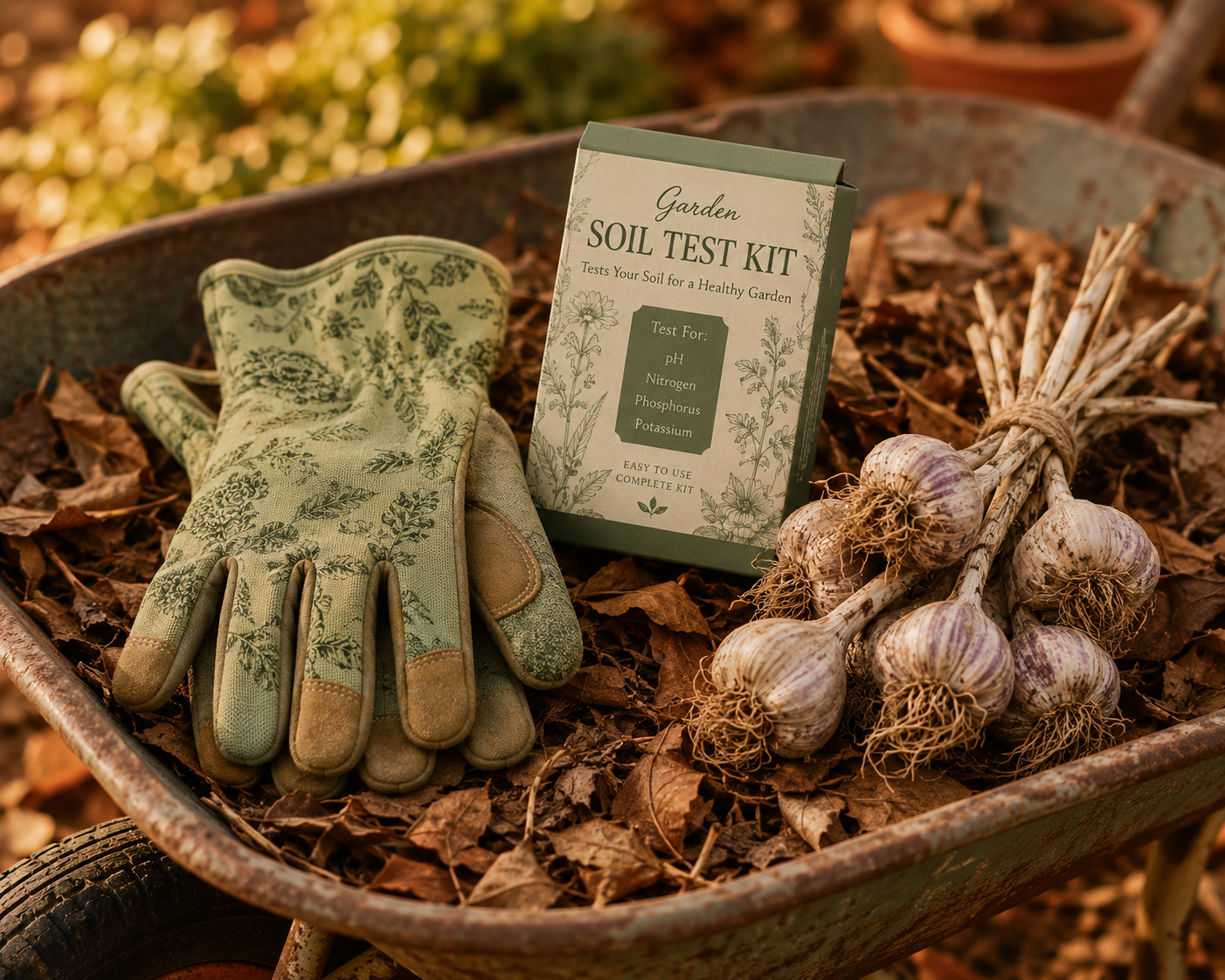
If you only plant one thing this month, make it garlic. Plant individual cloves pointy side up, about 2 inches deep and 6 inches apart. It grows slowly all winter and is ready to harvest in late May or June. Softneck and Creole types do best in our mild winters.
2. Onion Sets
Onion sets planted now will give you green onions all winter. For big bulb onions, wait until January or February and plant short-day onion transplants like Texas 1015Y or Texas Legend.
3. Spinach
Spinach loves cool weather and bolts quickly in the heat, so fall is its season to shine. Sow seeds directly in the garden, half an inch deep, and keep the soil moist until they sprout.
Get it here→
4. Lettuce
Leaf lettuces like Black Seeded Simpson and Buttercrunch grow quickly in November. Transplants give you a head start, but seeds work too. Harvest the outer leaves and the plant keeps growing.
Get it here →
5. Kale
Kale is one of the easiest winter crops for beginners. It shrugs off light frosts and gets sweeter in cold weather. Plant transplants 12–18 inches apart.
Get it here →
6. Collard Greens
No Southern garden is complete without collards. They're tough, productive and can handle temperatures into the teens. A few plants will feed a family all winter.
7. Turnips
Turnips give you two harvests in one: tender greens and sweet roots. Sow seeds directly and thin seedlings to 3–4 inches apart. Most varieties are ready in 40–60 days.
8. Radishes
Radishes are perfect for kids and impatient gardeners because many are ready in under a month. Sow a short row every two weeks for a steady supply.
Get it here →
9. Carrots
Carrots like loose, sandy soil, which many East Texas gardens already have. Sow the tiny seeds shallowly and keep them moist. Shorter varieties like Danvers or Chantenay do well in heavier soil.
Get it here →
Get Danvers here →
10. Mustard Greens
Mustard greens grow fast and add a peppery kick to winter meals. Southern Giant Curled is a classic choice for our area.
Get it here →


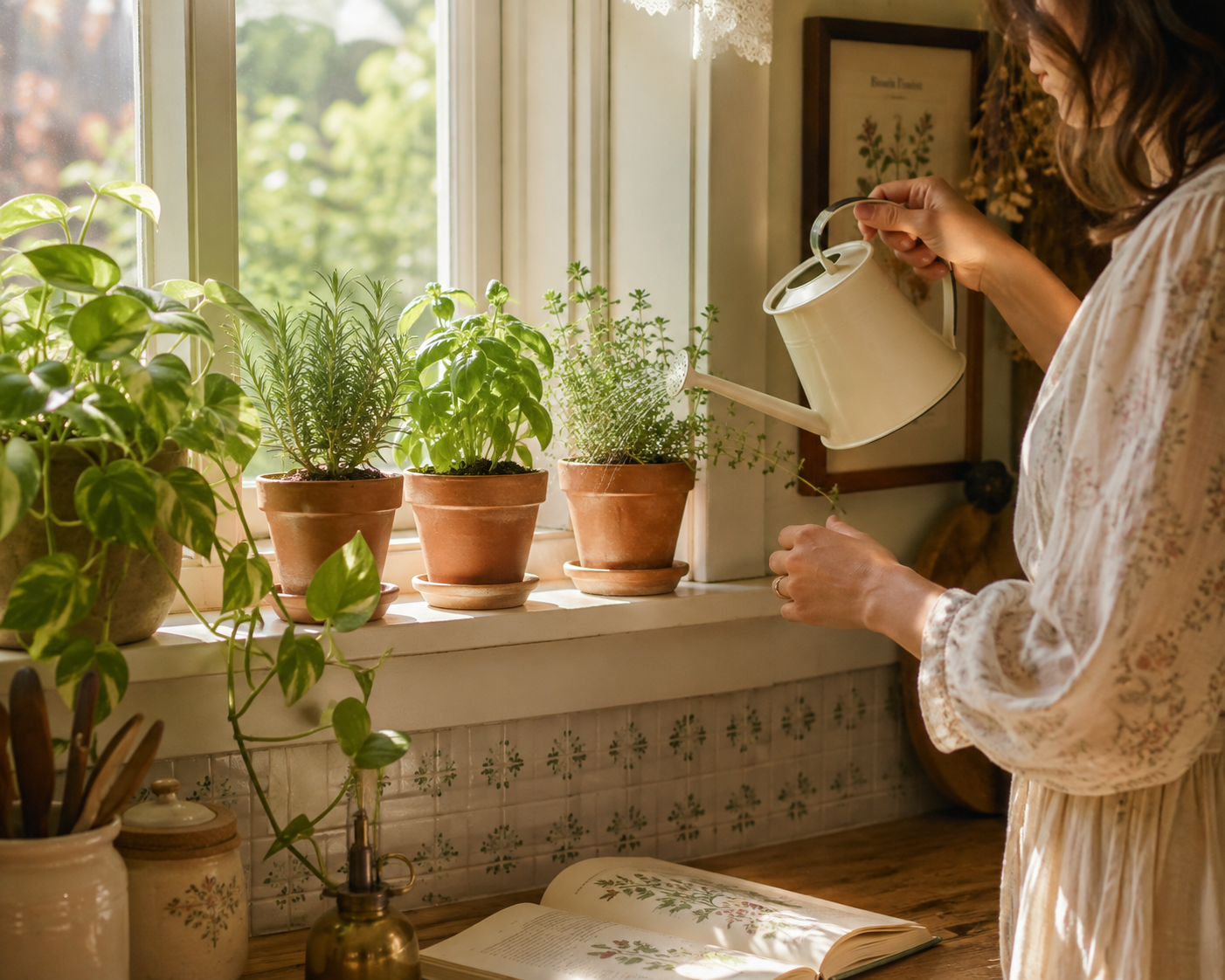
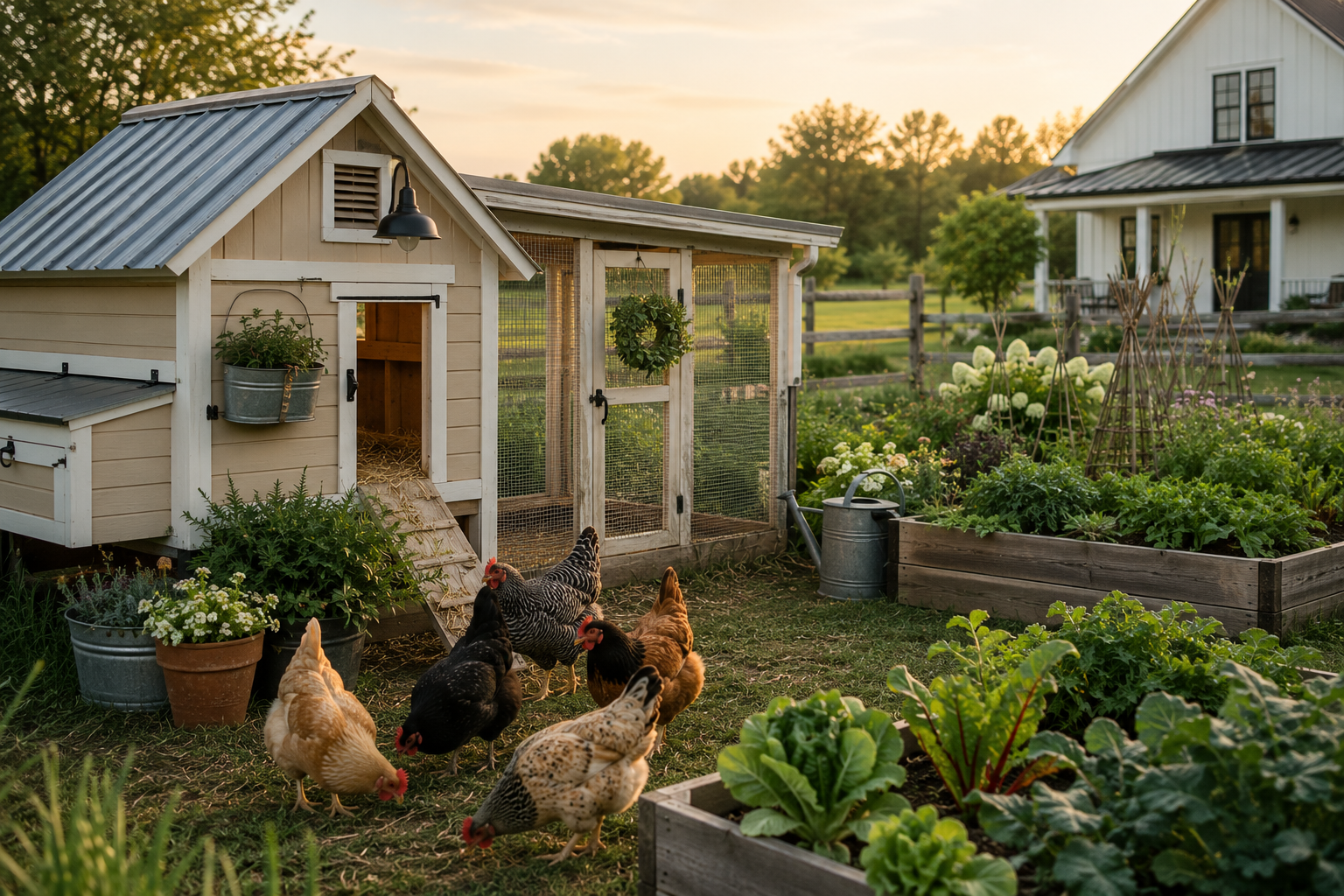
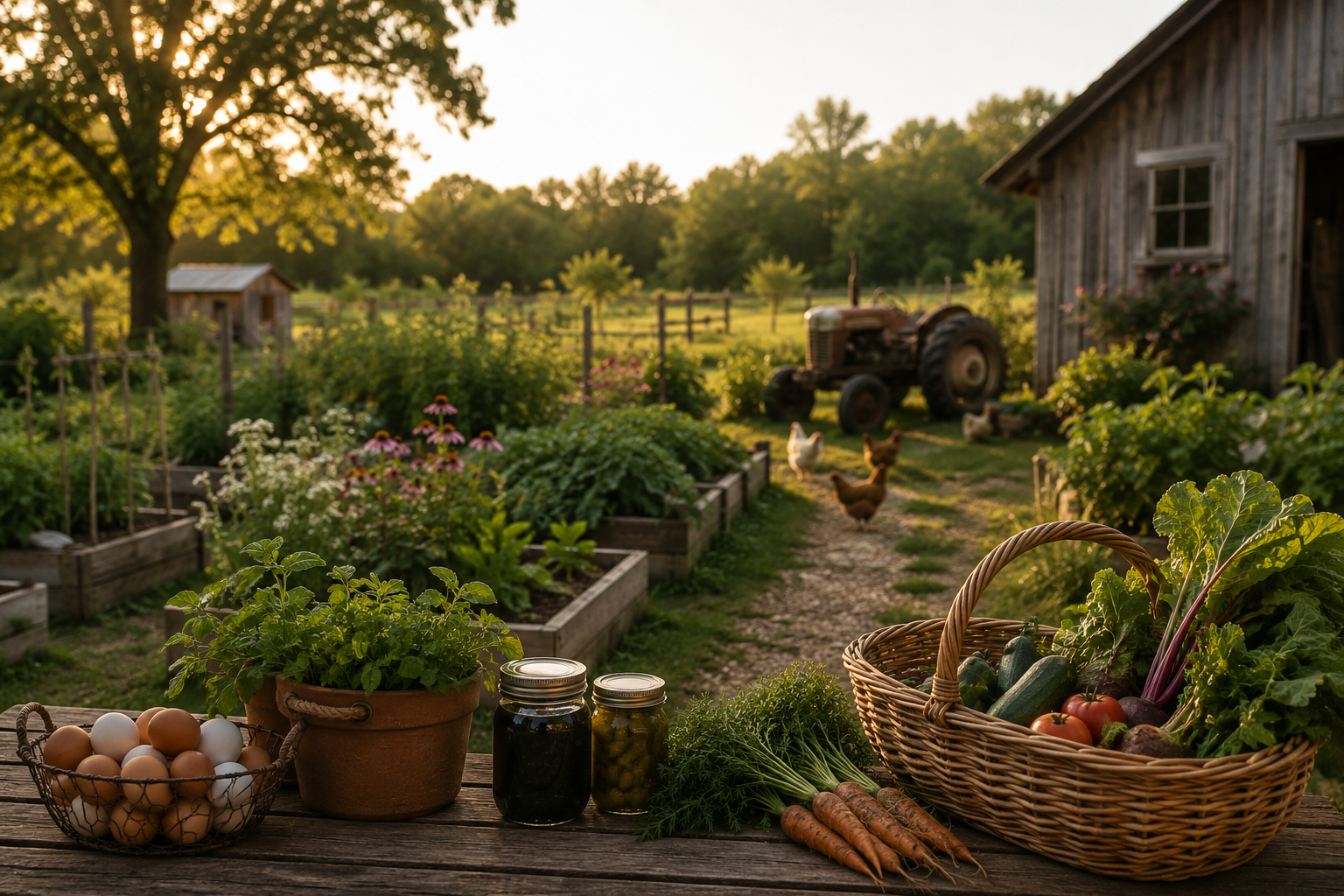
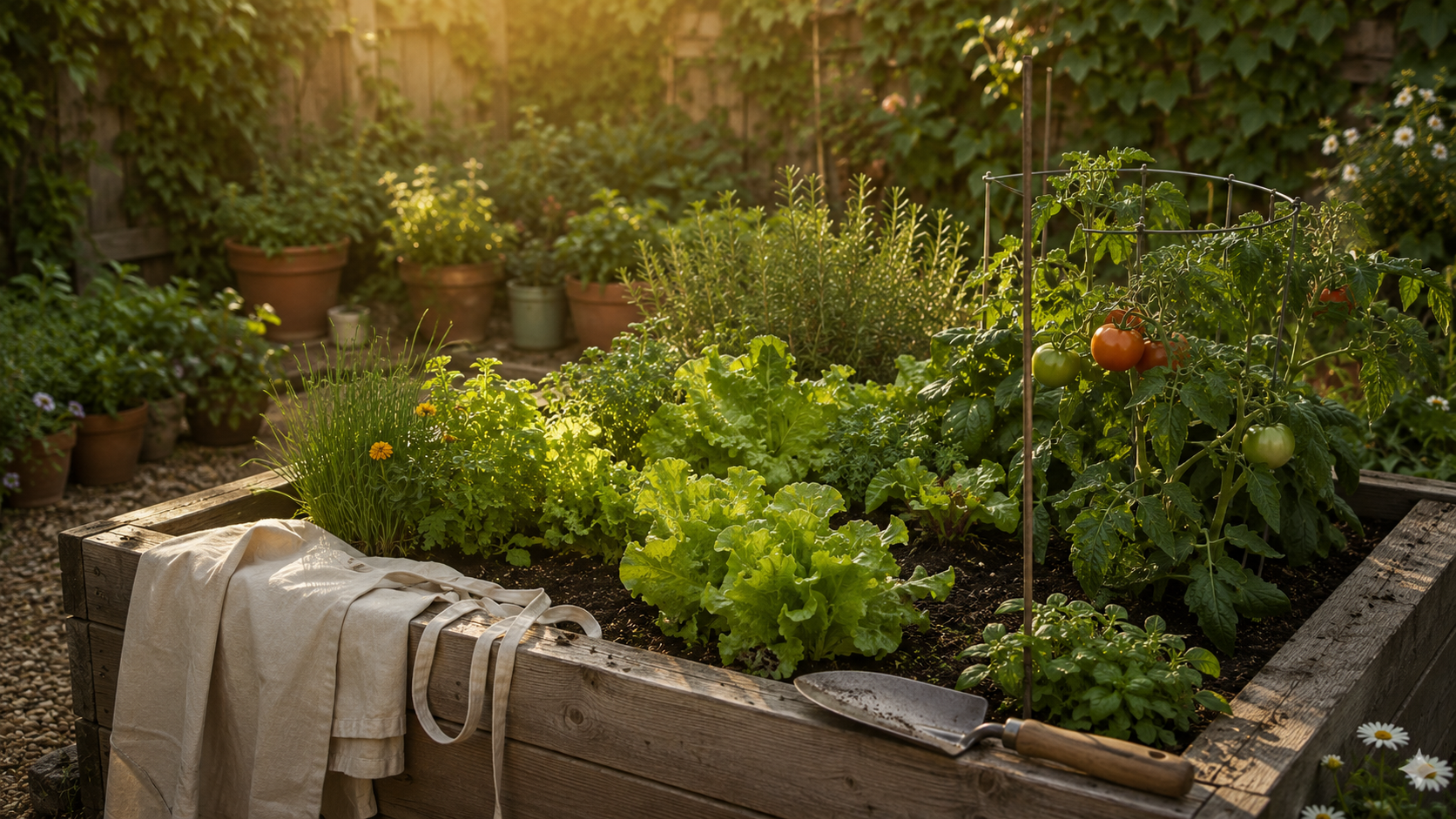
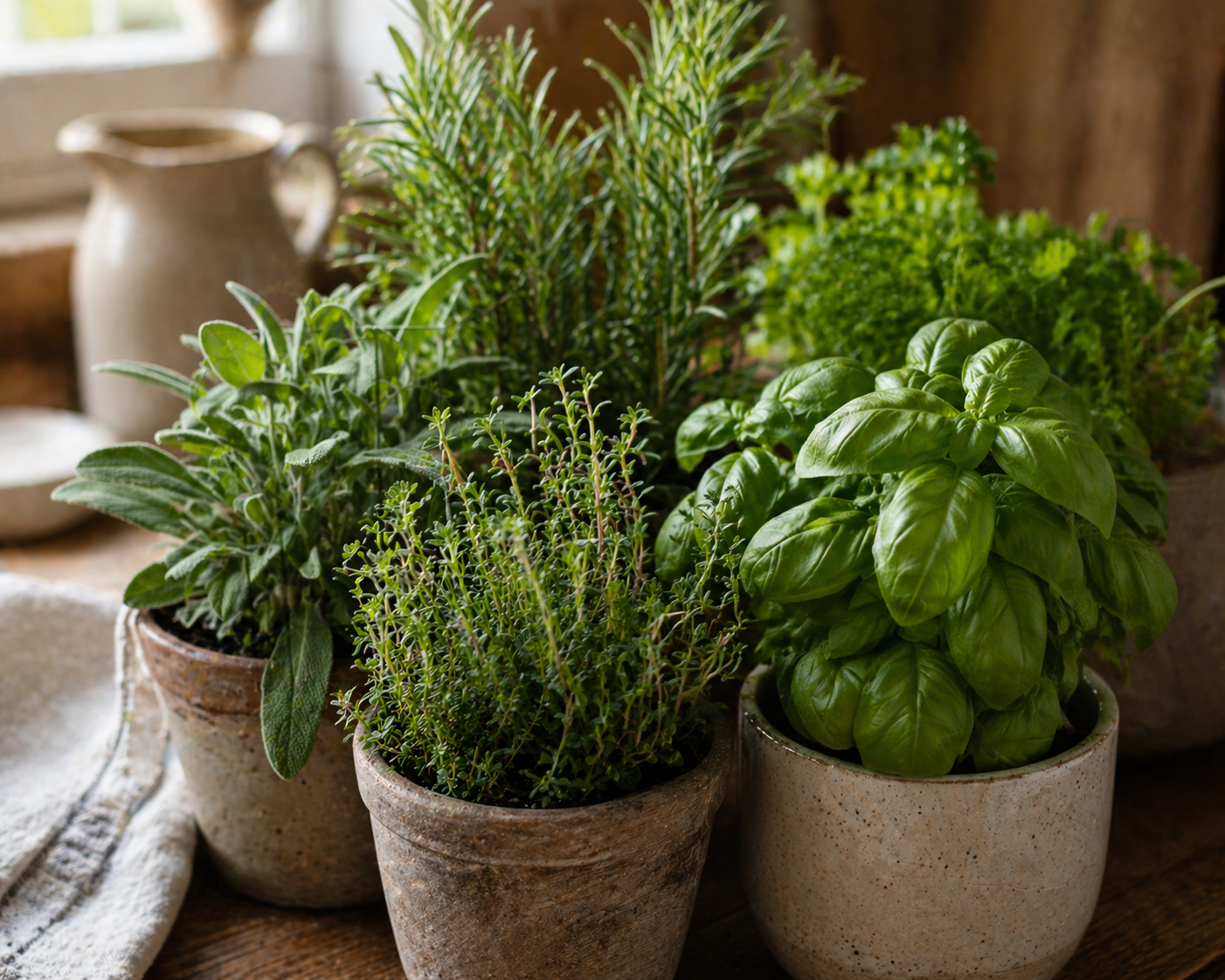

3. 2 Herbs to Plant in November
11. Cilantro
In Texas, fall is the best time to grow cilantro. It bolts quickly once spring heats up, but it thrives through our mild winters. Sow seeds directly every few weeks.
Get it here →
12. Parsley
Parsley is hardy, pretty and easy to grow. Plant transplants now for fresh parsley all winter and into spring. It's also a host plant for black swallowtail caterpillars.
Get it here →
4. 3 Flowers to Plant in November
13. Pansies and Violas
Pansies and violas bloom through most of the winter here and bring color when everything else is green and brown. Bonus: violas are edible, and they make a pretty garnish.
Get Pansies here →
Get Violas here →
14. Snapdragons
In Texas, snapdragons planted in fall grow strong roots over winter and put on a big show in early spring.
Get it here →
15. Daffodil Bulbs
Daffodils are deer-resistant and come back year after year. Choose varieties known to do well in the South, like Carlton, Ice Follies and jonquils. Tulips, on the other hand, usually need to be pre-chilled in the refrigerator here and are often treated as annuals.
Get it here →
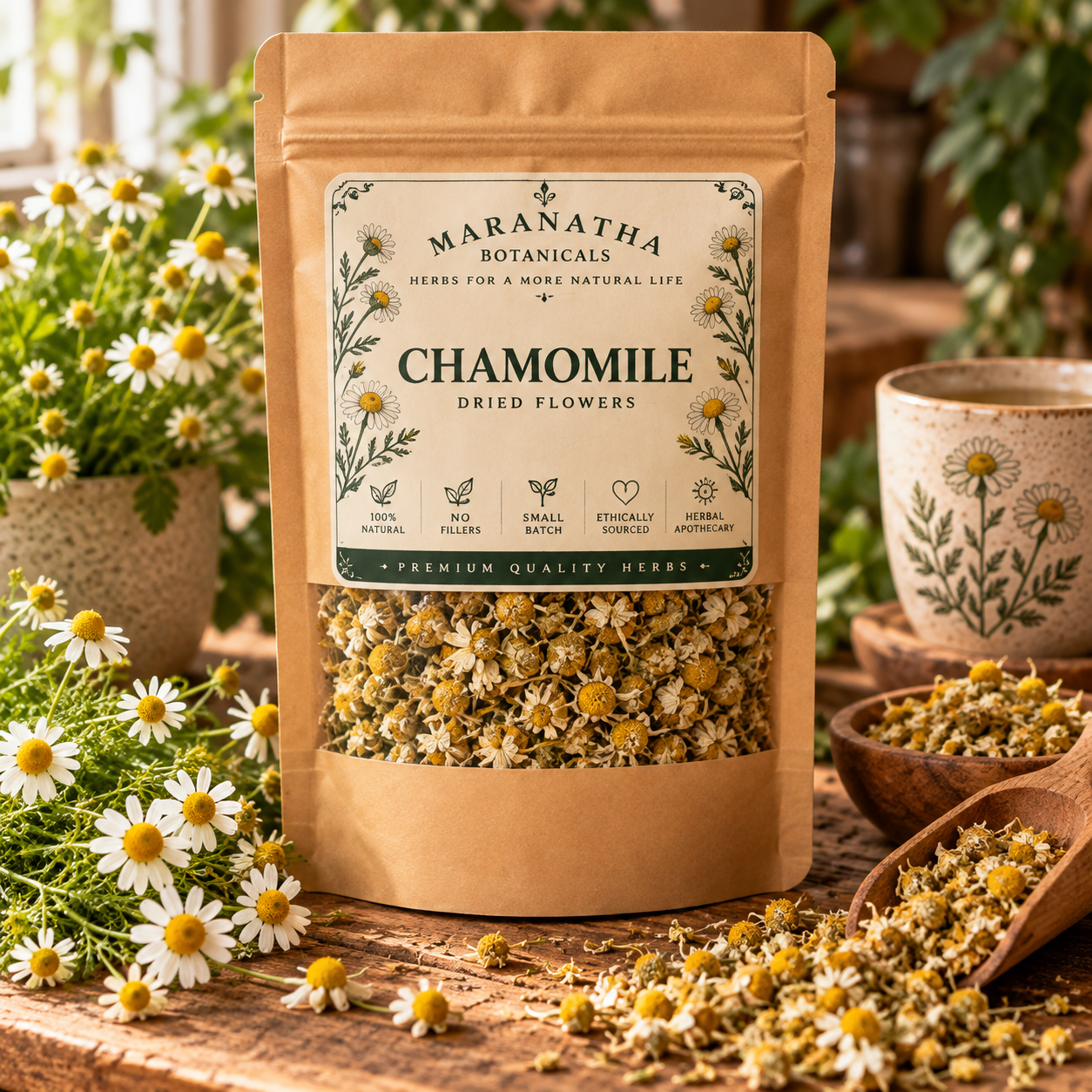
Some cups taste like home, and chamomile tea is one of them. Our loose leaf chamomile is made from dried golden flower heads that steep into a soft, honey-sweet cup with a whisper of apple. It's the kind of tea Grandma kept in a tin by the stove, packed for you in small batches and heat-sealed for freshness.
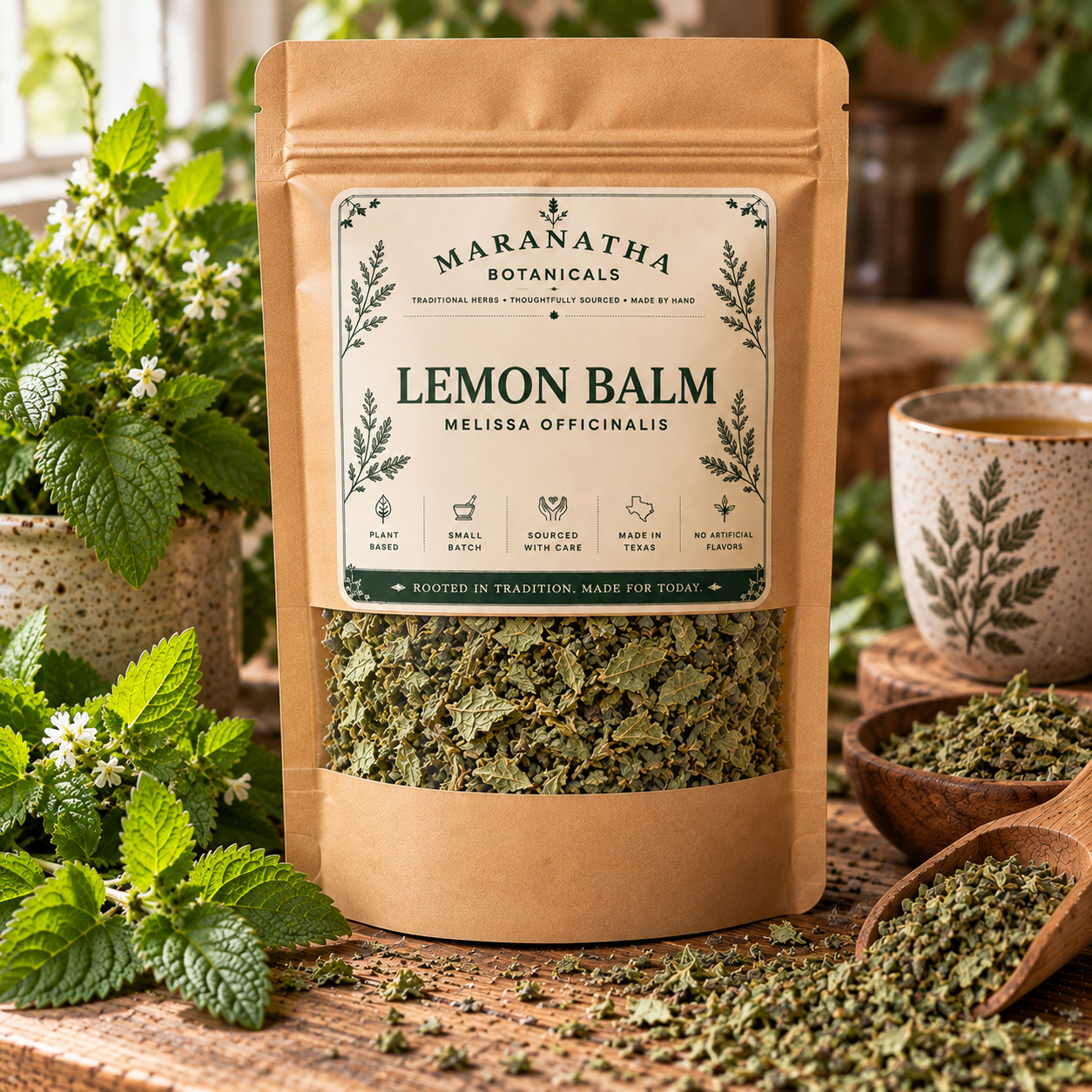
Bright, lemony loose leaf lemon balm tea with a soft mint finish. Lovely hot or iced, caffeine-free and small-batch from our East Texas apothecary.
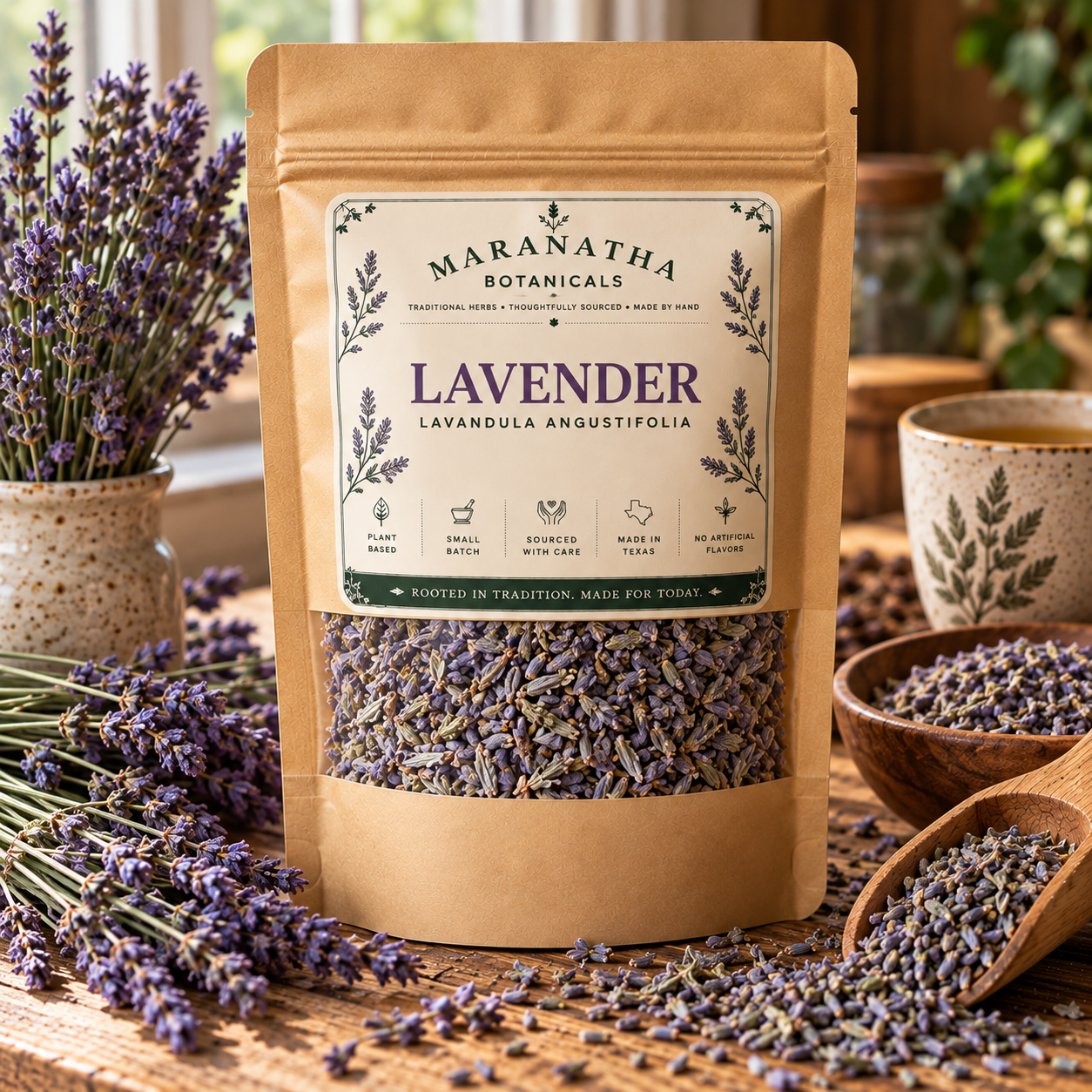
Culinary-grade English lavender buds for a soft, floral cup, lavender lemonade and baking. Caffeine-free and small-batch from our East Texas apothecary.
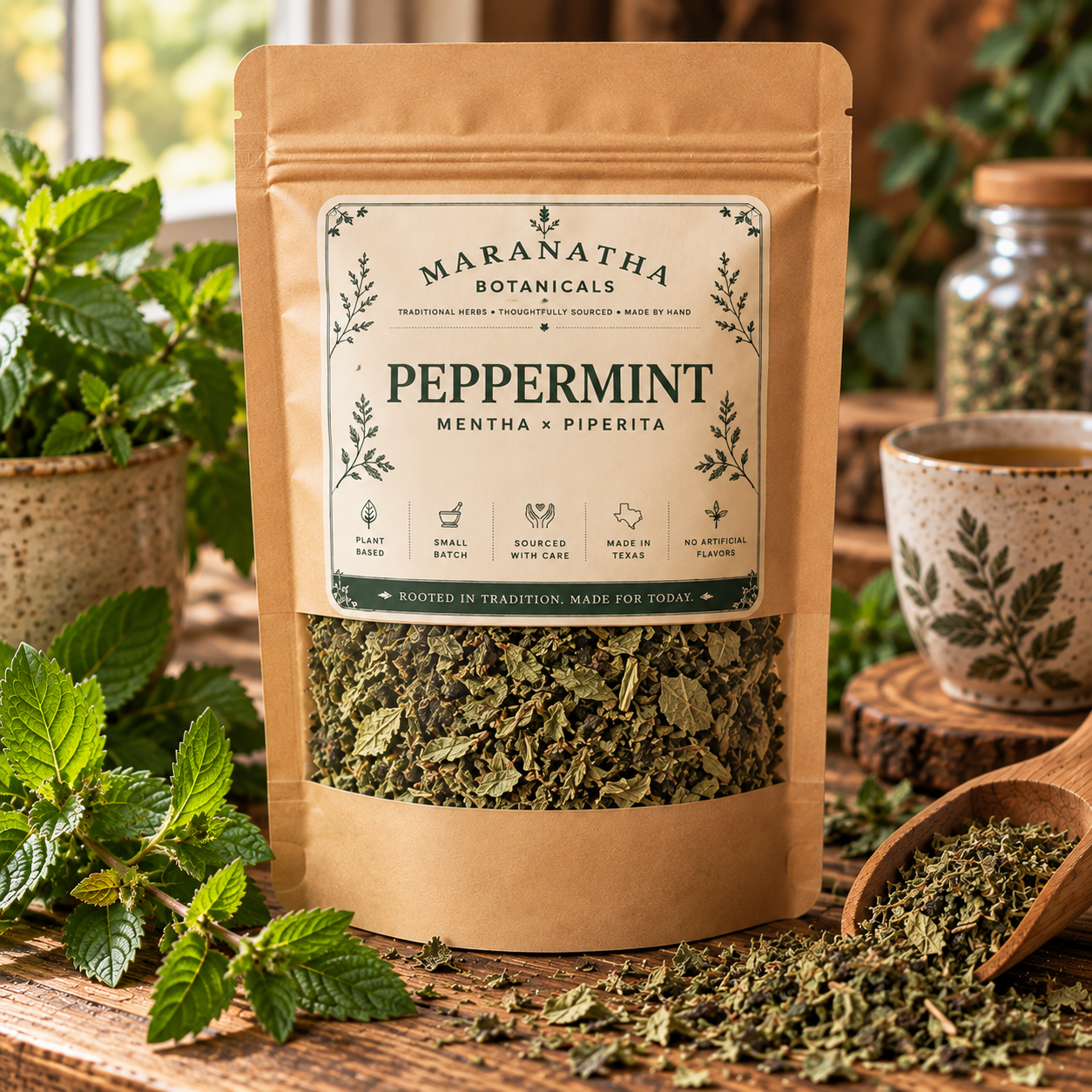
Bright, boldly cool loose leaf peppermint tea with a naturally sweet finish. Lovely hot or iced, caffeine-free and small-batch from East Texas.
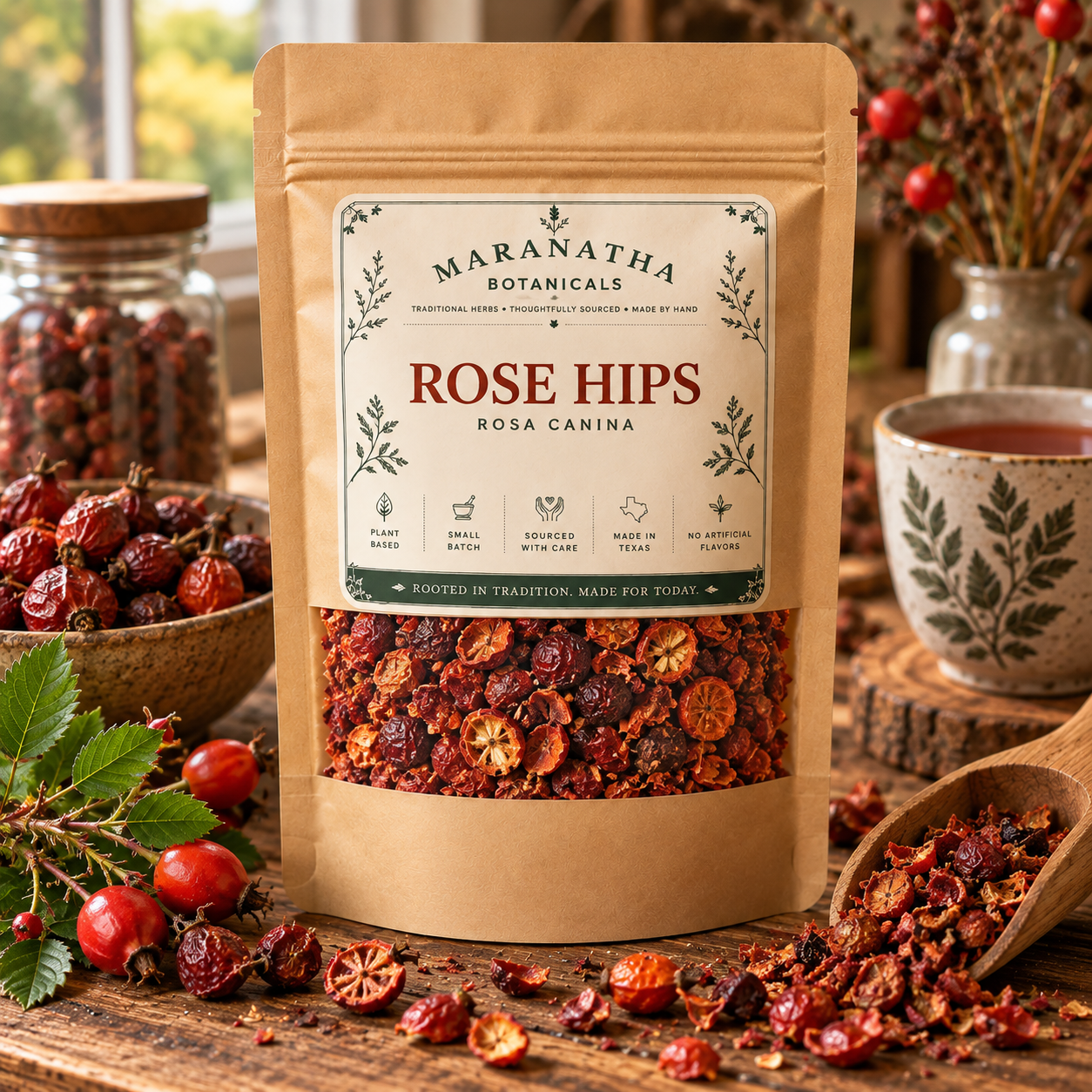
Tart, fruity loose leaf rose hip tea with a rosy-amber glow and a hint of apple. Caffeine-free and small-batch from our East Texas apothecary.
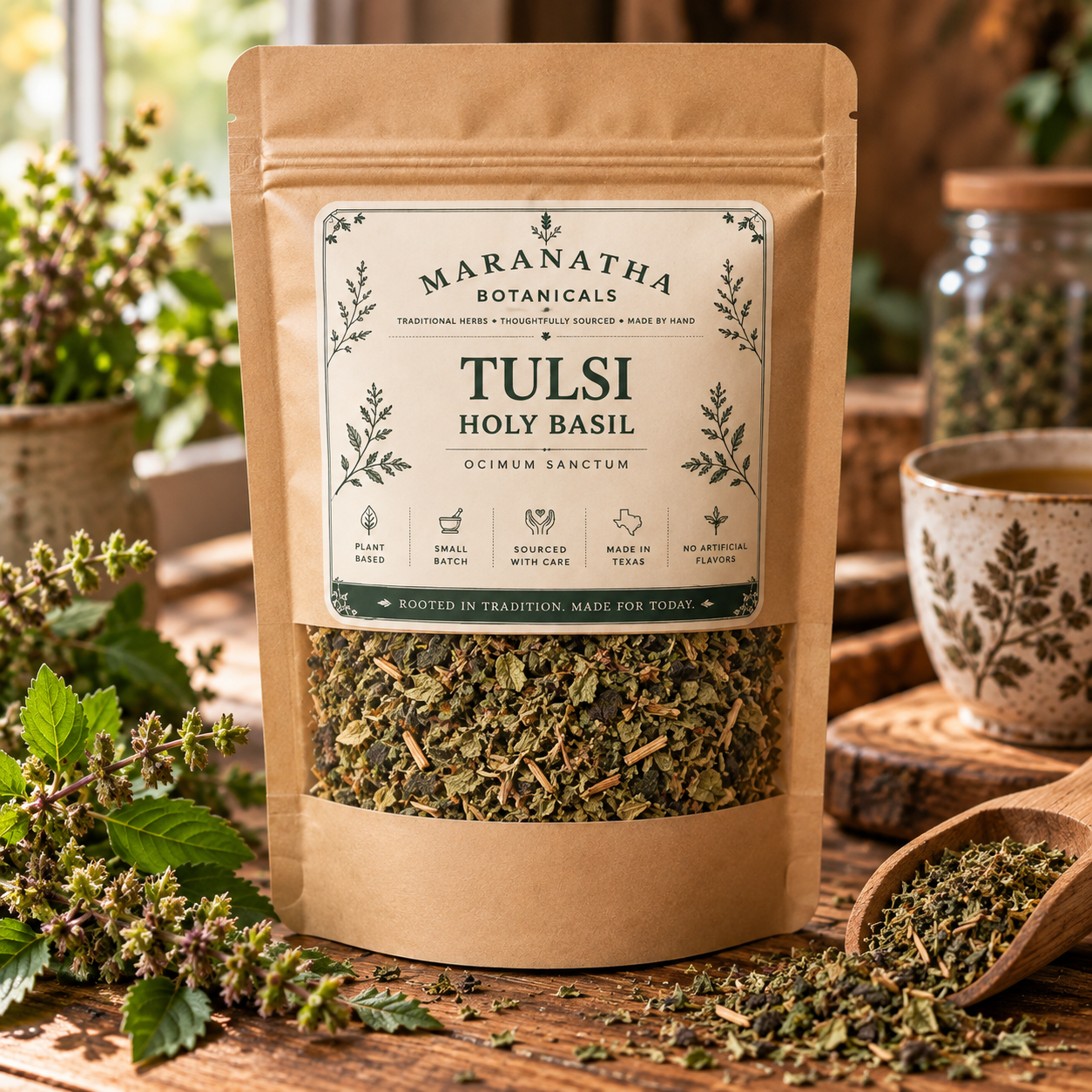
Warm, aromatic loose leaf tulsi (holy basil) tea with notes of clove, mint and soft pepper. Caffeine-free and small-batch from our East Texas apothecary.
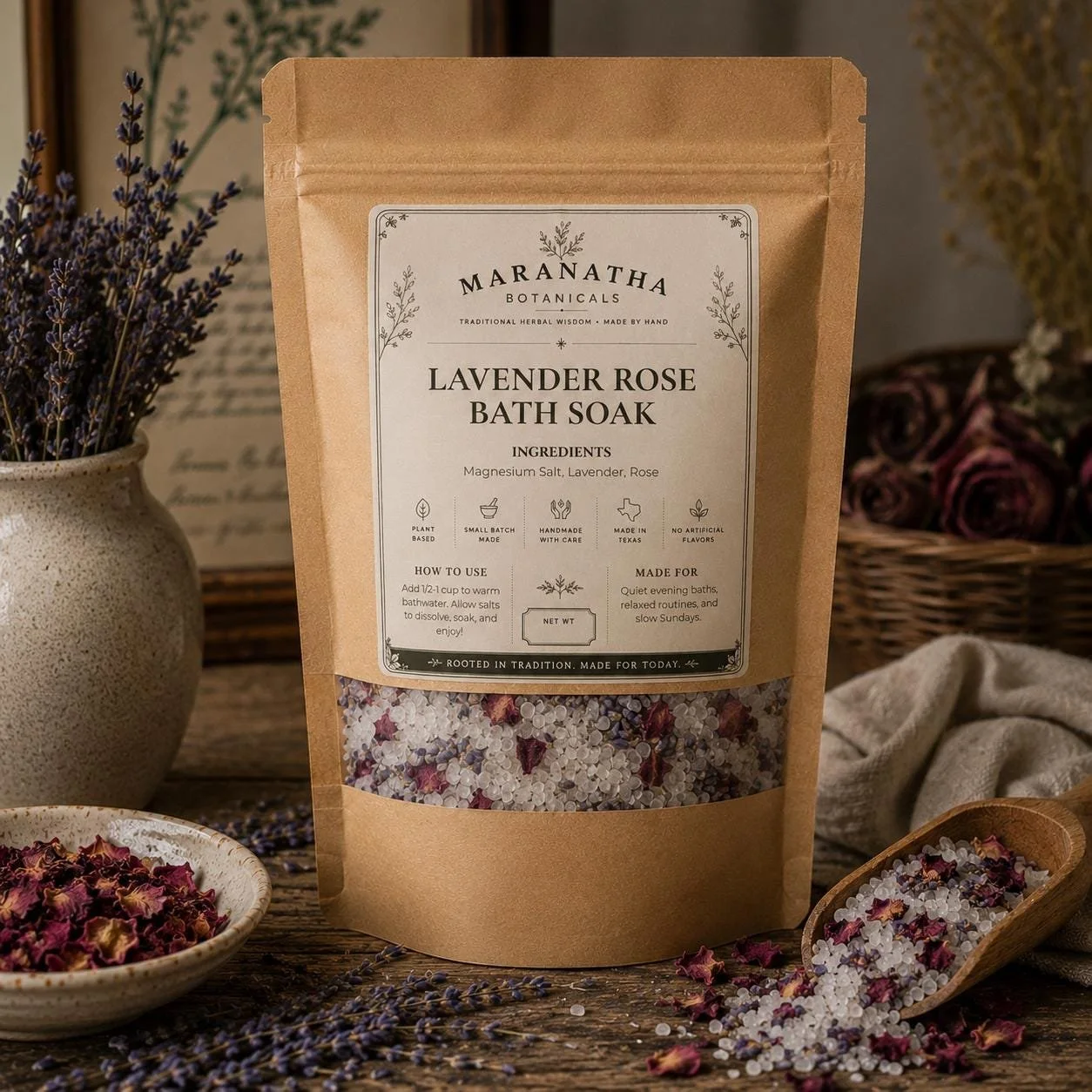
Dried lavender and rose petals for a soft, floral soak at the end of a long day. Small-batch in East Texas. A sweet self-care gift for her.
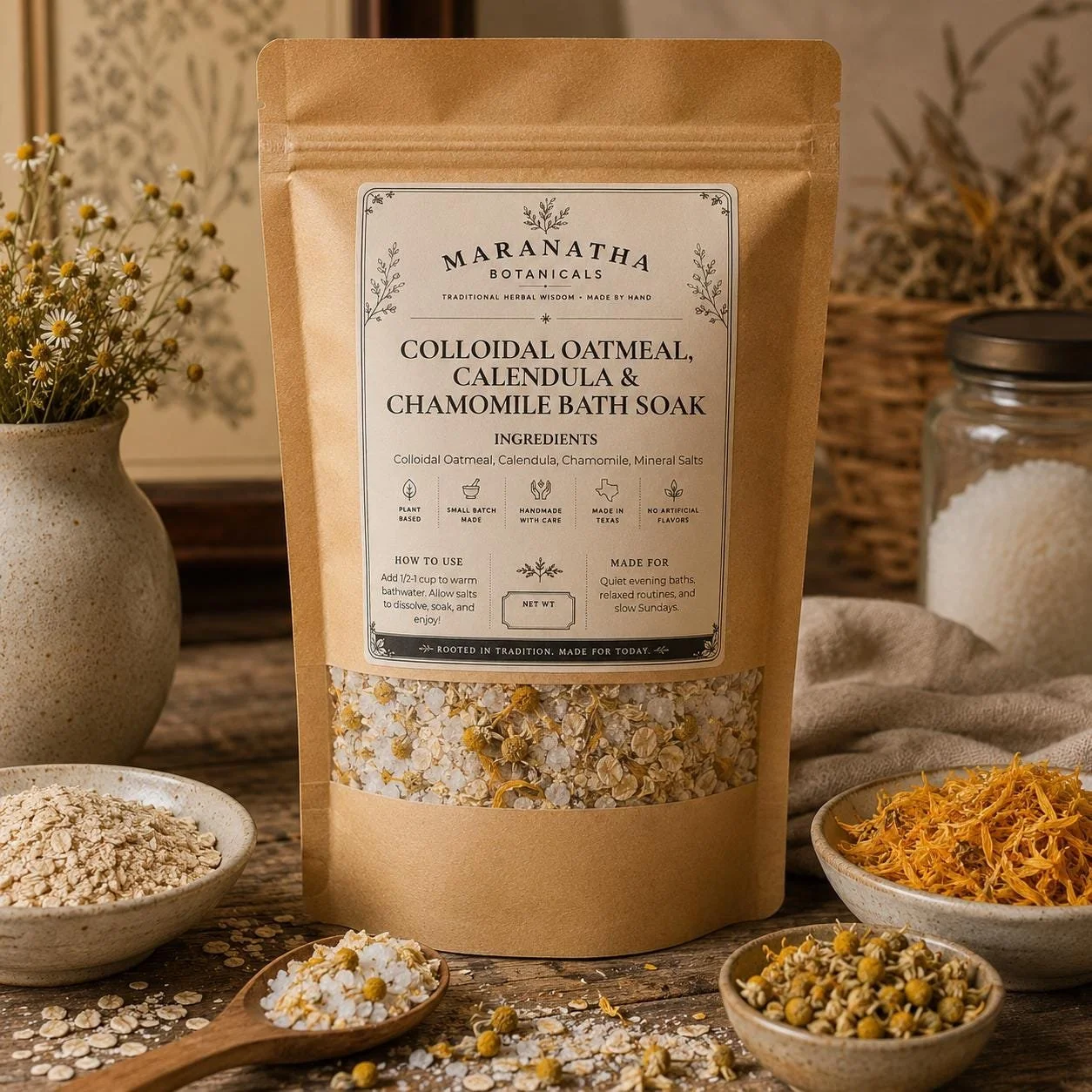
Our Colloidal Oatmeal, Calendula & Chamomile Bath Soak brings together finely milled oatmeal, mineral salts, and two classic herbalist's-cupboard flowers in one uncomplicated botanical bath.
Rather than relying on perfume or elaborate fragrance blends, this formula is about the ingredients themselves: creamy colloidal oatmeal dispersed through warm water, mineral salts, sunny calendula petals, and delicate chamomile flowers.
It's an old-fashioned oatmeal bath reimagined for the modern home apothecary.
THE BATHING EXPERIENCE
Add the soak to warm bathwater and allow the mineral salts to dissolve and the colloidal oatmeal to disperse through the water.
The oatmeal gives the bath a soft, cloudy appearance and silky feel, while calendula and chamomile add the beauty and character of real dried botanicals.
The experience is understated, botanical, and comforting—particularly lovely when you're craving a warm bath without a strong perfume.
WHAT IT'S MADE WITH
COLLOIDAL OATMEAL
Finely milled oatmeal is the ingredient that sets this formula apart from Maranatha's more traditional salt-and-flower bath soaks.
When properly dispersed in bathwater, colloidal oatmeal creates the soft, cloudy, almost creamy appearance associated with traditional oatmeal baths.
Oats also have a long history in topical preparations and personal-care products.
CALENDULA
Those unmistakable golden petals bring color and botanical character to an otherwise soft, neutral blend.
Calendula has a long history in traditional herbal preparations and botanical body care, making it a natural companion to oatmeal in an old-fashioned bath formulation.
CHAMOMILE
Small dried chamomile flowers add a subtly sweet, herbaceous character without turning this into a heavily perfumed bath product.
Chamomile is one of the classic herbs of European and Western home herbal traditions and has historically appeared in bathing and personal-care preparations.
MINERAL SALTS
The mineral salt base provides the familiar dissolving salt component of the bath and carries the oatmeal and dried botanicals throughout the mixture.
AROMA & TEXTURE
Aroma: Naturally mild, softly herbal, with the subtle character of dried chamomile and calendula.
Bath experience: Soft • Cloudy • Botanical • Mildly herbal
Texture: Mineral salts blended with finely milled oatmeal and visible dried flowers.
HOW TO USE
Add 1/2 cup to 1 cup to warm bathwater.
Allow the mineral salts to dissolve and the colloidal oatmeal to disperse throughout the water.
Soak and enjoy.
MADE FOR
• Quiet, fragrance-free bath routines
• Oatmeal bath lovers
• Naturally mild botanical self-care
• Cool-weather baths
• Slow Sunday evenings
• Traditional herbal and home-apothecary enthusiasts
• Thoughtful botanical gifts
SIZE & NUMBER OF BATHS
Net Wt. up to 16oz
Approximately 1-8 bath(s)
Number of baths will vary according to the amount used.
IMPORTANT INFORMATION
For external use only.
Avoid contact with eyes.
Discontinue use if irritation occurs.
Chamomile and calendula belong to the Asteraceae family. Individuals with known sensitivities to ragweed or related plants should use appropriate caution.
Oat-derived ingredients may not be appropriate for everyone with oat sensitivities.
Use caution when entering and exiting the bathtub.
Keep out of reach of children.
Colloidal oatmeal may leave residue in the bathtub. Rinse the tub after use and use appropriate caution, as bath products may make surfaces slippery.
STORAGE
Keep tightly sealed in a cool, dry place away from moisture.
Do not introduce water into the pouch.
ABOUT MARANATHA BOTANICALS
Maranatha Botanicals creates small-batch botanical goods inspired by the practical traditions of the old home apothecary.
We bring familiar herbs, flowers, grains, and traditional preparations into modern homes through products that are beautiful, uncomplicated, and made to be used.
Rooted in tradition. Made for today.
Due to the nature of this product, returns are not accepted.
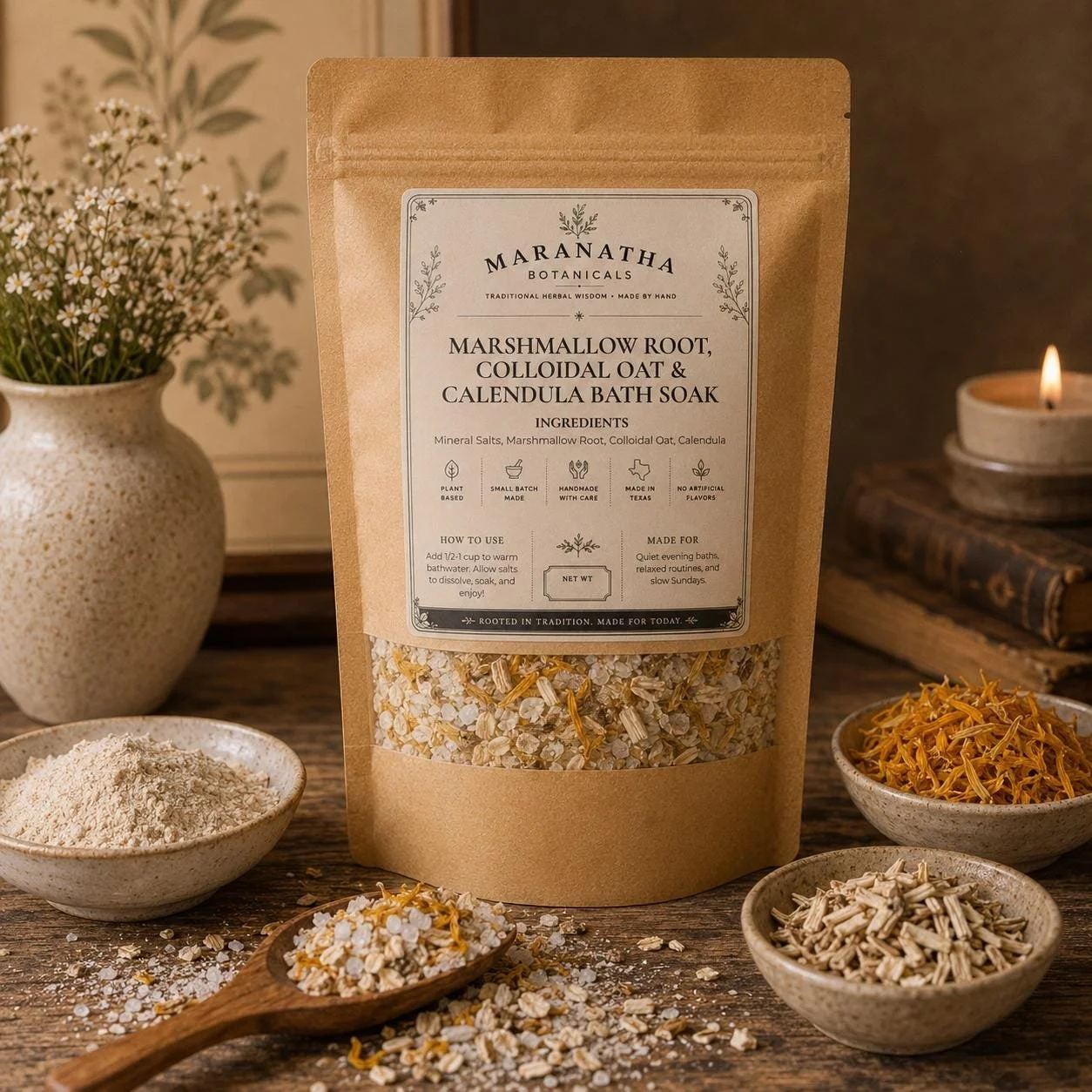
Our Marshmallow Root, Colloidal Oat & Calendula Bath Soak takes inspiration from those old-fashioned preparations.
Finely milled colloidal oatmeal is paired with dried marshmallow root and golden calendula, then blended with mineral salts to create a quiet botanical bath that's distinctly different from heavily perfumed bath salts.
Add it to warm water and the salts begin to dissolve while the colloidal oatmeal disperses, creating a softly cloudy bath surrounded by real botanical ingredients.
Simple. Useful. Rooted in herbal tradition.
THE BATHING EXPERIENCE
This is one of Maranatha Botanicals' quieter bath blends.
Rather than being built around a strong floral fragrance, the experience comes from the ingredients themselves.
Colloidal oatmeal disperses through the bathwater for a soft, cloudy appearance and silky bathing feel. Marshmallow root adds the rustic character of a traditional root preparation, while golden calendula petals make the finished blend visibly botanical.
The aroma is naturally mild and earthy rather than perfumed.
Think old-fashioned oatmeal bath meets herbalist's cupboard.
WHAT IT'S MADE WITH
COLLOIDAL OATMEAL
Finely milled colloidal oatmeal disperses through water rather than behaving like ordinary rolled oats.
It gives this blend its characteristic soft, cloudy appearance and helps create the silky sensory quality that makes an oatmeal bath so distinctive.
Oat preparations have a long history in traditional bathing and body care, while colloidal oatmeal remains a widely recognized ingredient in modern cosmetic formulations.
MARSHMALLOW ROOT
Not the confection—the herb.
Marshmallow (Althaea officinalis) is a traditional European and Western herbal ingredient with a long history of use in preparations made from its roots and leaves.
The root is naturally rich in mucilaginous plant compounds, which develop a characteristic slippery texture when hydrated. In this bath blend, dried marshmallow root adds an unusual old-apothecary botanical element that distinguishes the formula from an ordinary oatmeal bath.
CALENDULA
Golden calendula petals bring color and recognizable botanical character to the pale oatmeal-and-mineral blend.
Calendula has a long history in traditional herbal preparations and botanical body care, making it a natural companion to oats and marshmallow root.
MINERAL SALTS
Mineral salts create the dissolving foundation of the bath soak and carry the oatmeal and botanicals throughout the blend.
Mineral bathing itself has a long history across cultures, although we make no claims about transdermal magnesium absorption.
AROMA & TEXTURE
Aroma: Mild • Earthy • Naturally botanical
Bath Experience: Soft • Cloudy • Silky • Botanical
Appearance: Pale mineral salts and oatmeal contrasted with pieces of marshmallow root and golden calendula petals.
HOW TO USE
Add 1/2-1 cup to warm bathwater.
Allow the mineral salts to dissolve and colloidal oatmeal to disperse throughout the water.
Soak and enjoy.
Rinse the bathtub thoroughly after use.
MADE FOR
• Old-fashioned oatmeal baths
• Quiet evening routines
• Naturally mild botanical baths
• Herbalist and home-apothecary enthusiasts
• Cold-weather bathing
• Shoppers who dislike heavily perfumed bath products
• Practical botanical gifts
SIZE & NUMBER OF BATHS
SINGLE USE
3.5 × 5.5" Pouch
Target Fill: 3–4 oz
Approximately 1-2 baths
FULL SIZE
6.7 × 9.4" Pouch
Target Fill: 14–16 oz
Approximately 4-8 baths
Number of baths may vary according to amount used.
INGREDIENTS
Ingredients:
Mineral salts, marshmallow root, colloidal oatmeal, calendula.
IMPORTANT INFORMATION
For external use only.
Avoid contact with eyes.
Discontinue use if irritation occurs.
Calendula belongs to the Asteraceae family. Those with known sensitivities to ragweed or related plants should use appropriate caution.
Contains an oat-derived ingredient.
Bath products may make surfaces slippery. Use caution when entering and exiting the bathtub.
Rinse tub thoroughly after use to remove oatmeal and botanical residue.
Keep out of reach of children.
STORAGE
Keep tightly sealed in a cool, dry location away from moisture.
Do not introduce water into the pouch.
ABOUT MARANATHA BOTANICALS
Maranatha Botanicals creates small-batch botanical goods inspired by the practical traditions of the old home apothecary.
We bring familiar herbs, roots, flowers, grains, and traditional preparations into modern homes through products designed to be beautiful, uncomplicated, and genuinely useful.
Rooted in tradition. Made for today.
Due to the nature of this product, no returns are accepted.
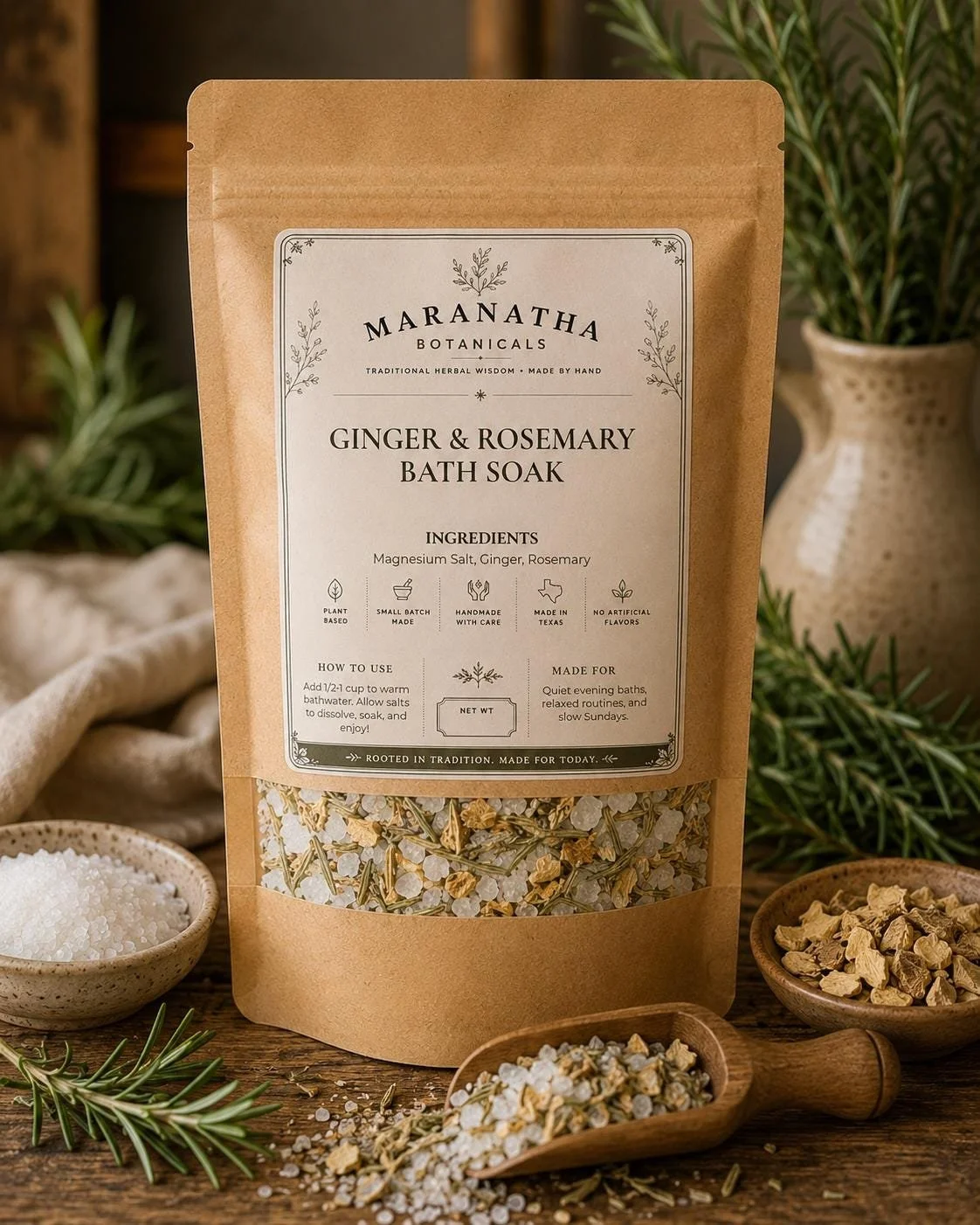
Maranatha Botanicals Ginger & Rosemary Bath Soak combines mineral salts with dried ginger and aromatic rosemary for a warm, distinctly herbaceous bathing experience inspired by traditional home herbalism.
Open the pouch and you'll recognize the ingredients immediately: pale mineral crystals, pieces of dried ginger, and fragrant rosemary leaves.
No elaborate perfume blend is needed.
Just herbs, minerals, warm water, and a little time.
THE BATHING EXPERIENCE
Add the blend to warm bathwater and allow the mineral salts to dissolve while ginger and rosemary steep in the water.
Rosemary contributes its unmistakable green, resinous, garden-herb aroma. Ginger adds warmer, earthy-spicy notes that give the blend a completely different personality from Maranatha's floral bath soaks.
The result is an aromatic, herb-forward bath particularly well suited to crisp mornings, rainy afternoons, cold-weather evenings, or a long bath after you've spent the day working with your hands.
For easier cleanup, the dried herbs may be contained in a suitable bath bag after you've confirmed the best method during product testing.
WHAT IT'S MADE WITH
GINGER
Pungent, earthy, spicy, and unmistakably warm in character, ginger has traveled through culinary, bathing, and herbal traditions for centuries.
Its aroma and sensory character make it particularly fitting for a bath intended to feel warm and invigorating without relying on artificial fragrance.
ROSEMARY
Rosemary brings the garden straight into the bath.
Its distinctive herbaceous, pine-like aroma has made it a familiar ingredient in traditional bathing, hair care, body preparations, household herbalism, and aromatic preparations.
Whole dried rosemary also gives the blend an immediately recognizable botanical appearance.
MINERAL SALTS
Mineral salts create the dissolving foundation of the soak and provide contrast against the green rosemary and golden-brown ginger.
Mineral bathing has a long history in bathing traditions around the world.
Maranatha Botanicals does not claim that magnesium from this product is absorbed through the skin or corrects magnesium deficiency.
AROMA
Herbaceous • Spicy • Earthy • Warm
Rosemary provides a fresh, green, slightly resinous herbal aroma while ginger contributes warm, spicy depth.
This isn't intended to smell like a conventional fragranced bath product. Its character comes from the actual dried herbs.
HOW TO USE
Add 1/2-1 cup to warm bathwater.
Allow the mineral salts to dissolve and the botanicals to steep as you bathe.
For easier cleanup, place the soak inside an appropriate reusable bath bag before adding it to the bath, if confirmed suitable during your soak testing.
Rinse the bathtub after use.
MADE FOR
• Cold-weather baths
• Crisp fall and winter evenings
• Post-garden or outdoor routines
• Morning baths when you want something fresh and herbaceous
• Rosemary and ginger lovers
• Shoppers who prefer herbal aromas over floral perfume
• Old-fashioned home-apothecary gifts
SIZE & NUMBER OF USES
SINGLE USE
3.5 × 5.5" Pouch
Target Fill: 3–4 oz
Approximately 1-2 baths
FULL SIZE
6.7 × 9.4" Pouch
Target Fill: 14–16 oz
Approximately 4-8 baths
IMPORTANT INFORMATION
For external use only.
Avoid contact with eyes and other sensitive areas.
Discontinue use if irritation occurs.
Do not use on broken or irritated skin.
Bath products may make surfaces slippery. Use caution when entering and exiting the bathtub.
Rinse the tub after use to remove botanical residue.
Keep out of reach of children.
STORAGE
Keep tightly sealed in a cool, dry location.
Protect from moisture.
Do not introduce water into the pouch.
ABOUT MARANATHA BOTANICALS
Maranatha Botanicals creates small-batch botanical goods inspired by the practical traditions of the old home apothecary.
We bring familiar herbs, roots, flowers, minerals, and traditional preparations into modern homes through products designed to be beautiful, uncomplicated, and genuinely useful.
Rooted in tradition. Made for today.
Note: Due to the nature of this product, returns are not accepted.
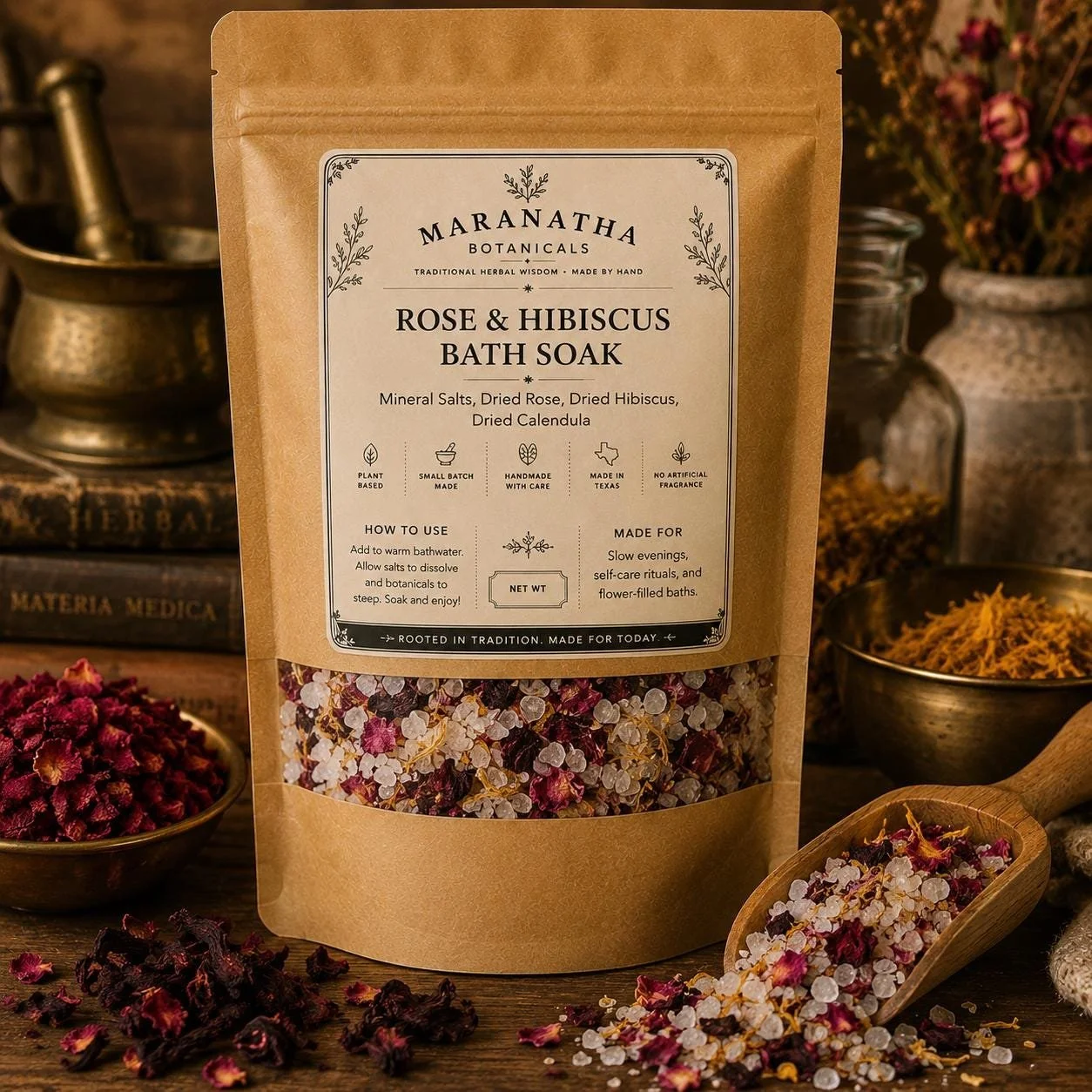
Long before shelves were filled with elaborately fragranced bath products, flowers, herbs, aromatic waters, and mineral bathing were already part of beauty and bathing traditions around the world.
Our Rose & Hibiscus Bath Soak takes inspiration from that simpler tradition.
Real dried rose, richly colored hibiscus, and golden calendula are folded through mineral salts by hand, creating a bath blend that's as beautiful in the pouch as it is scattered through warm water.
No mystery ingredients disguised behind a romantic name.
Just mineral salts and recognizable flowers from the botanical cupboard.
THE BATHING EXPERIENCE
Add the soak to warm bathwater and allow the mineral salts to dissolve as the flowers begin to hydrate.
Rose creates the blend's familiar floral character, while hibiscus contributes deep jewel-toned botanical color and calendula adds flashes of warm gold.
The result is a distinctly flower-forward bath that feels more like bringing the garden indoors than opening a conventional jar of bath salts.
Because hibiscus contains strong naturally occurring pigments, you should soak-test the final formula for water coloration, tub staining, textile staining, and cleanup before publishing claims about the finished experience.
WHAT IT'S MADE WITH
ROSE
Perhaps no flower is more closely intertwined with historical beauty and bathing traditions than the rose.
Real dried rose petals provide visible floral texture and delicate botanical character while giving the blend its unmistakably romantic appearance.
HIBISCUS
Deep crimson hibiscus gives this blend its dramatic botanical color.
CALENDULA
Calendula introduces warm golden petals that contrast beautifully against the deeper rose and hibiscus tones.
Its long history in traditional herbal and botanical body-care preparations also makes it a natural fit within this flower-centered formula.
MINERAL SALTS
Mineral salts form the pale, crystalline foundation of the blend, allowing the colors and textures of the three flowers to remain clearly visible.
Mineral bathing traditions can be found throughout history and across cultures.
AROMA & APPEARANCE
Botanical Character: Floral • Earthy • Garden-inspired
Appearance: Pale mineral crystals scattered with rose petals, crimson hibiscus, and golden calendula.
Bath Experience: Floral • Colorful • Botanical • Old-fashioned
HOW TO USE
Add 1/2-1 cup to warm bathwater.
Allow the mineral salts to dissolve and botanicals to steep as you bathe.
For easier cleanup, use the blend inside a reusable bath bag if desired and if confirmed appropriate during product testing.
Rinse bathtub thoroughly after use.
MADE FOR
• Flower-filled evening baths
• Rose and botanical lovers
• Garden-inspired self-care
• Slow Sunday routines
• Mother's Day and birthday gifts
• Bridesmaid and bridal self-care gifts
• Herbalist and home-apothecary enthusiasts
• Beautiful additions to a botanical bath collection
SIZE & NUMBER OF USES
SINGLE USE
3.5 × 5.5" Pouch
Target Fill: 3–4 oz
Approximately 1–2 baths
FULL SIZE
6.7 × 9.4" Pouch
Target Fill: 14–16 oz
Approximately 4–8 baths
Bath counts are approximate and depend upon the amount used.
IMPORTANT INFORMATION
For external use only.
Avoid contact with eyes and sensitive areas.
Discontinue use if irritation occurs.
Do not use on broken or irritated skin.
Calendula belongs to the Asteraceae family. Individuals with known sensitivities to ragweed or related plants should use appropriate caution.
Bath products may make surfaces slippery. Use caution when entering and exiting the bathtub.
Keep out of reach of children.
STORAGE
Keep tightly sealed in a cool, dry location away from moisture.
Do not introduce water into the pouch.
Botanical ingredients naturally vary somewhat in color, size, and appearance from batch to batch.
ABOUT MARANATHA BOTANICALS
Maranatha Botanicals creates small-batch botanical goods inspired by the practical traditions of the old home apothecary.
We bring familiar flowers, herbs, roots, grains, and minerals into modern homes through simple botanical preparations designed to be beautiful, useful, and rooted in tradition.
Rooted in tradition. Made for today.
Due to the nature of this product, returns are not accepted.
Due to the nature of this product, returns are not accepted.
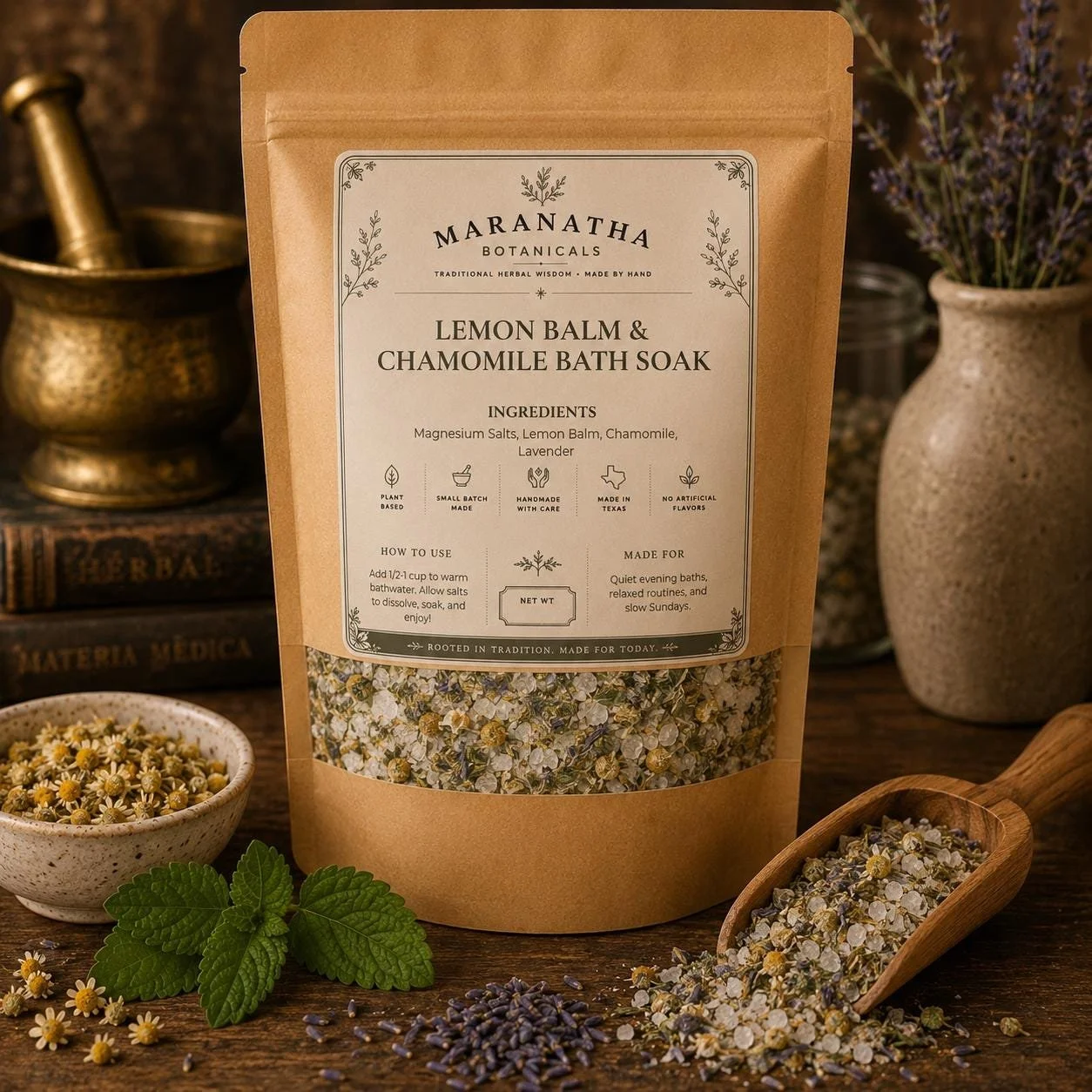
Chamomile. Lavender. Lemon balm.
Plants grown in cottage gardens, gathered from herb beds, dried in kitchens, and incorporated into countless traditional household preparations.
Our Lemon Balm & Chamomile Bath Soak brings those familiar herbs together in a simple mineral bath inspired by the old home apothecary.
Green lemon balm leaves, tiny chamomile flowers, and aromatic lavender buds are blended by hand with pale mineral salts to create an unmistakably botanical bath.
Nothing elaborate.
Just warm water, mineral salts, garden herbs, and permission to stay awhile.
THE BATHING EXPERIENCE
This is one of the gentler, more garden-inspired blends in the Maranatha bath collection.
Lemon balm contributes fresh green herbal character. Chamomile brings its recognizable dried flowers and softly sweet, hay-like botanical aroma. Lavender adds the familiar aromatic note that ties the three herbs together.
As the mineral salts dissolve, the dried botanicals hydrate and steep in the warm water.
The overall character is:
Softly Floral • Herbaceous • Garden-Fresh • Quiet
It was created with evening bathing in mind, without claiming that the product treats anxiety, induces sleep, reduces stress, or produces a physiological relaxation response.
LEMON BALM
What it contributes:
Green leafy texture and a fresh, mild herbaceous character.
Traditional herbal context:
Lemon balm (Melissa officinalis) has been cultivated in European herb gardens for centuries and has a long history within traditional household herbalism.
CHAMOMILE
What it contributes:
Recognizable golden-centered flowers and a soft, naturally sweet, herbaceous aroma.
Traditional herbal context:
Chamomile has a long history in European herbal traditions and has appeared in teas, aromatic preparations, bathing preparations, and traditional personal care.
LAVENDER
What it contributes:
The most recognizable aromatic component of the formula, with its distinctive floral-herbaceous character.
Traditional herbal context:
Lavender has centuries of documented use in European perfumery, bathing, household preparations, and personal care.
Its name itself is historically associated with washing and bathing traditions.
MINERAL SALTS
What they contribute:
The pale crystalline base of the bath soak and the dissolving foundation that carries the botanicals.
Traditional context:
Mineral bathing has existed in different forms across cultures for generations.
HOW TO USE
Add 1/2-1 cup to warm bathwater. Allow the mineral salts to dissolve and the botanicals to steep as you bathe. Soak and enjoy.
For easier cleanup, use inside a reusable bath bag if desired.
Rinse bathtub thoroughly after use.
Made for:
Slow evening baths
Sunday self-care routines
Chamomile and lavender lovers
Gardeners and herbal enthusiasts
Shoppers who prefer recognizable herbs to perfume-heavy bath products
Thoughtful botanical gifts
SIZE & NUMBER OF USES
SINGLE USE
3.5 × 5.5" Pouch
Target Fill: 3–4 oz
Approximately 1–2 baths
FULL SIZE
6.7 × 9.4" Pouch
Target Fill: 14–16 oz
Approximately 4–8 baths
Bath counts are approximate and depend upon the amount used.
IMPORTANT INFORMATION
For external use only.
Avoid contact with eyes and sensitive areas.
Discontinue use if irritation occurs.
Do not use on broken or irritated skin.
Bath products may make surfaces slippery. Use caution when entering and exiting the bathtub.
Keep out of reach of children.
STORAGE
Keep tightly sealed in a cool, dry location away from moisture.
Do not introduce water into the pouch.
Botanical ingredients naturally vary somewhat in color, size, and appearance from batch to batch.
ABOUT MARANATHA BOTANICALS
Maranatha Botanicals creates small-batch botanical goods inspired by the practical traditions of the old home apothecary.
We bring familiar flowers, herbs, roots, grains, and minerals into modern homes through simple botanical preparations designed to be beautiful, useful, and rooted in tradition.
Rooted in tradition. Made for today.
CAUTION:
For external use only. Avoid contact with eyes and sensitive areas. Do not use on broken or irritated skin. Discontinue use if irritation occurs. Chamomile belongs to the Asteraceae family; individuals sensitive to ragweed or related plants should use appropriate caution. Bath products may make surfaces slippery. Keep out of reach of children.
Due to the nature of this product, returns are not accepted.
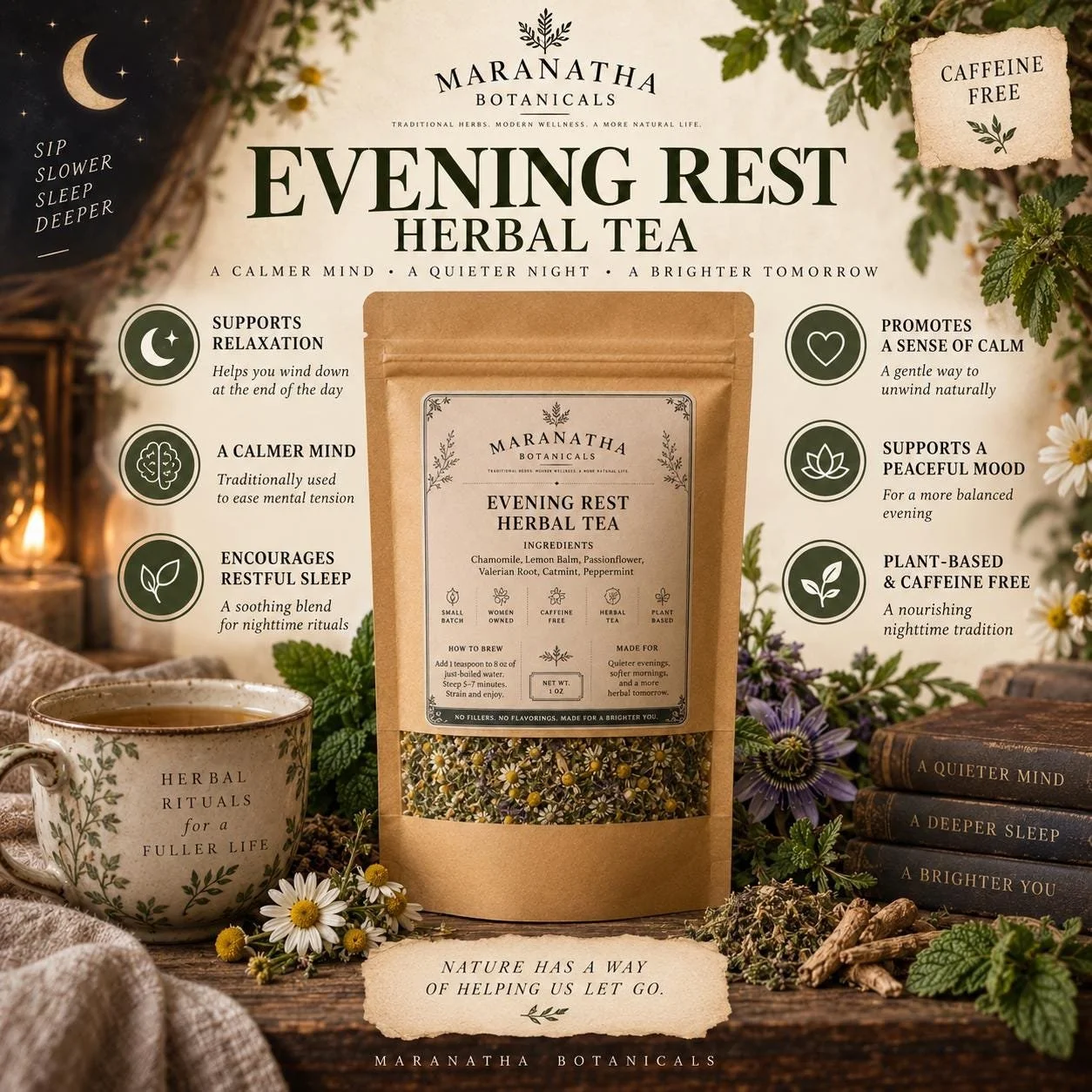
Our Evening Rest Tea brings those traditional evening herbs together in a deeply botanical loose-leaf blend built around chamomile and lemon balm, with passionflower, valerian root, catmint, and just enough peppermint to brighten the cup.
CHAMOMILE
Soft floral character, subtle apple-like sweetness, and the familiar golden flowers that give the blend much of its traditional evening-tea identity.
Chamomile has been enjoyed for generations within European and Western herbal traditions and is perhaps one of the most recognizable herbs associated with evening tea.
Its gentle floral flavor also helps soften the more earthy character of valerian.
LEMON BALM
Fresh green character with a mild lemony-herbal quality that keeps the blend from becoming overly earthy.
Lemon balm (Melissa officinalis) has been cultivated in European monastery, physic, and household gardens for centuries.
It has a particularly rich history as a culinary and tea herb and remains a familiar ingredient in traditional evening herbal blends.
PASSIONFLOWER
A mild, grassy-earthy botanical character and another layer of traditional herbal complexity.
Passionflower (Passiflora incarnata) has a long history within North American and Western herbal traditions and has traditionally appeared in evening and nighttime herbal preparations.
This historical association is presented as traditional-use information rather than a promise that this tea produces a particular physiological result.
VALERIAN ROOT
A distinctly earthy, root-forward character that gives Evening Rest more depth than a simple chamomile tea.
Valerian (Valeriana officinalis) has a centuries-long history within European herbalism and has traditionally been incorporated into nighttime and evening herbal preparations.
Valerian has a naturally strong and distinctive aroma. That's normal for the herb and part of the character of this formula.
CATMINT
A soft green, mint-family character that sits between the floral herbs and brighter peppermint.
Catmint (Nepeta cataria) has traditionally been grown in cottage and household herb gardens and prepared as an herbal infusion.
PEPPERMINT
A small amount of clean, recognizable mint character that brightens the cup and balances the earthier herbs.
Peppermint (Mentha × piperita) has a long history as both a culinary and traditional herbal tea ingredient.
Here, it plays a supporting role rather than dominating the blend.
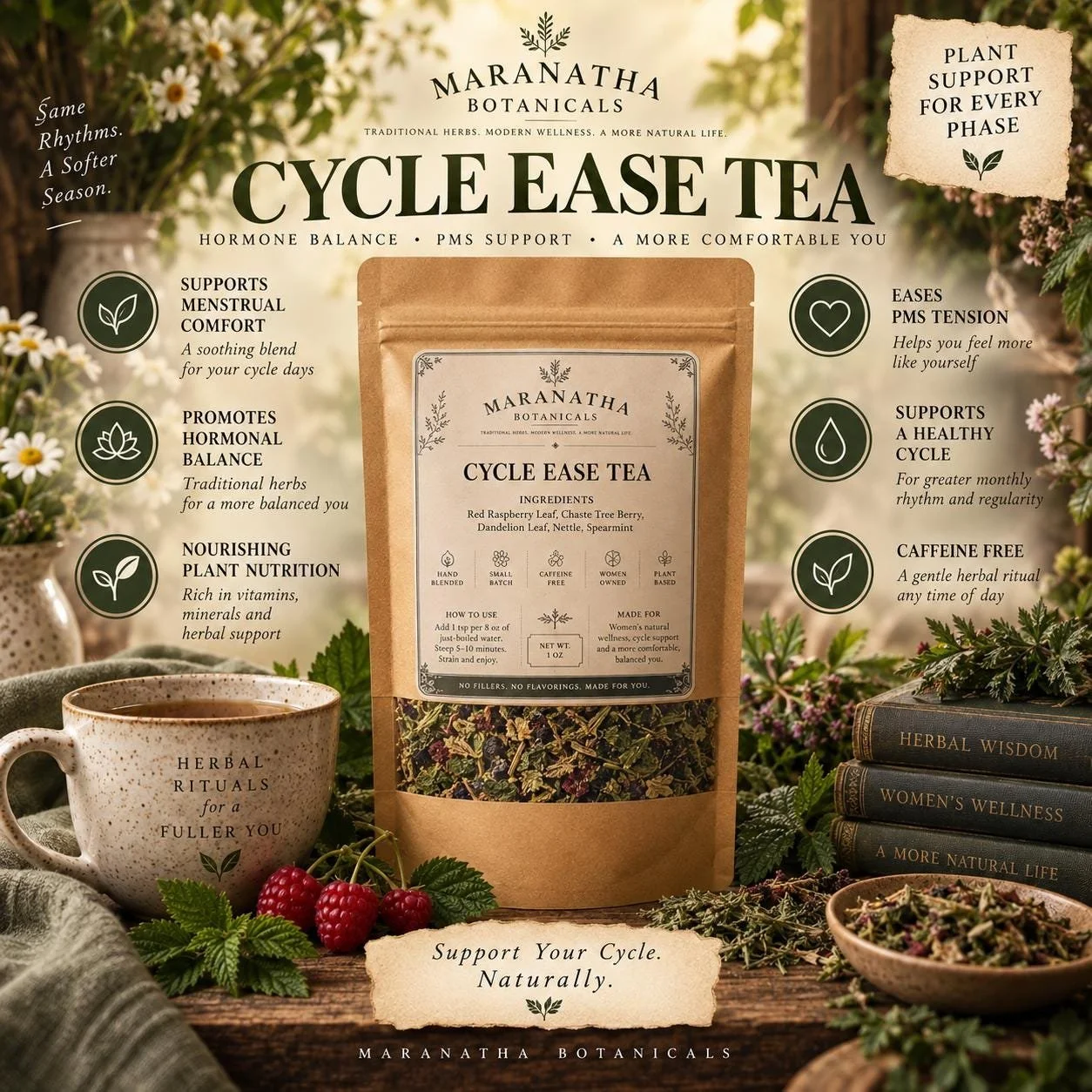
Red raspberry leaf. Nettle. Spearmint.
Plants gathered from gardens, hedgerows, and old herbal cupboards and prepared as simple infusions long before herbal tea came packaged in brightly colored boxes.
Our Cycle Ease Tea brings together red raspberry leaf with chaste tree berry, dandelion leaf, nettle, and a touch of spearmint in a deeply botanical loose-leaf blend inspired by traditional women's herbalism.
RED RASPBERRY LEAF
Red raspberry leaf (Rubus idaeus) provides the foundation of Cycle Ease and contributes a mild, leafy flavor somewhat reminiscent of traditional black tea, but without the caffeine.
Raspberry leaf has a particularly rich history within Western herbalism and has traditionally been associated with women's herbal preparations.
Its longstanding place in traditional women's herbalism is one of the primary reasons we chose it as the heart of this blend.
CHASTE TREE BERRY
Chaste tree berry (Vitex agnus-castus), often simply called vitex, contributes an earthy, somewhat peppery and slightly bitter botanical character.
Vitex has a long and fascinating history within European and Mediterranean herbal traditions and has become especially well known within traditional women's herbalism.
DANDELION LEAF
Dandelion leaf (Taraxacum officinale) contributes a distinctly green, pleasantly bitter herbal character.
Far more than a common garden plant, dandelion has been incorporated into European and North American foodways and herbal traditions for generations. The leaves, roots, and flowers have all found different uses within traditional household herbalism.
Here, the leaf contributes both botanical depth and the unmistakable character of a traditional herbal infusion.
NETTLE
Nettle (Urtica dioica) contributes a rich green, leafy flavor that pairs naturally with raspberry and dandelion leaves.
Nettle has a centuries-long history as both a food plant and an herbal ingredient. Young nettles have traditionally been incorporated into soups and other foods, while dried nettle leaf has become a familiar ingredient in herbal infusions.
Its deep green character helps give Cycle Ease the feeling of something that genuinely came from an herbalist's cupboard.
SPEARMINT
Spearmint (Mentha spicata) contributes the lightest and freshest note in the formula.
Its naturally sweet mint character lifts the otherwise green and earthy herbs without overwhelming them.
Spearmint has been cultivated as a culinary and tea herb for generations and has a long history in household herbal preparations.
Here, it plays a supporting role rather than making Cycle Ease taste predominantly of mint.
INGREDIENTS
Red Raspberry Leaf, Chaste Tree Berry (Vitex), Dandelion Leaf, Nettle Leaf, Spearmint
CAFFEINE
Naturally Caffeine-Free
None of the ingredients in this formulation are naturally caffeinated.
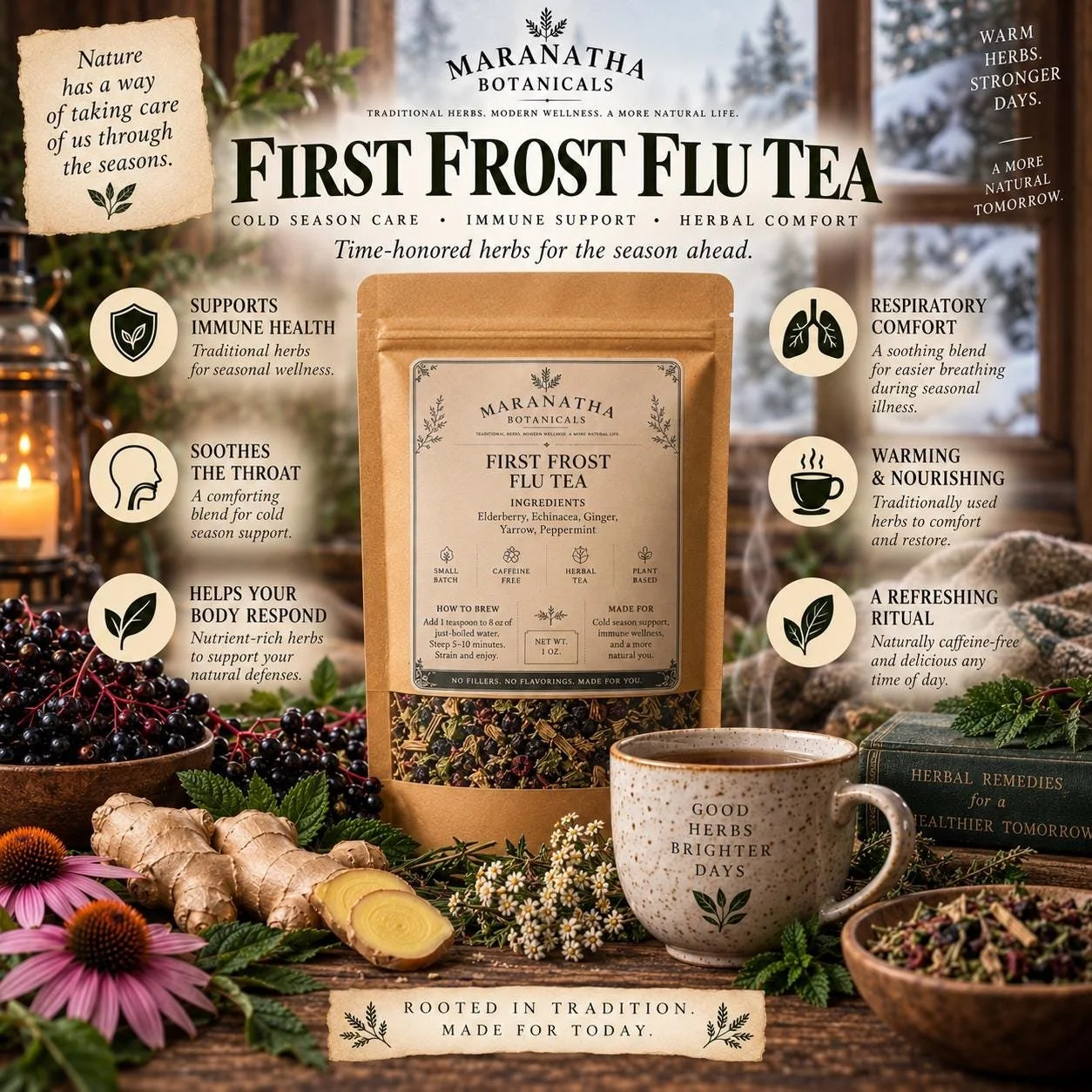
Our First Frost Tea brings together elderberry with echinacea, ginger, yarrow, and a touch of peppermint in a deeply botanical loose-leaf blend inspired by traditional seasonal herbalism.
ELDERBERRY
Elderberry (Sambucus nigra) forms the foundation of First Frost, contributing a deep berry character, rich botanical color, and mild tartness to the finished infusion.
European elder has a long history in European foodways and traditional herbalism. The cooked berries have appeared in syrups, preserves, cordials, and other seasonal preparations for generations.
Its unmistakable connection with the traditional winter herbal cupboard made elderberry a natural foundation for this blend.
ECHINACEA
Echinacea contributes an earthy, distinctly botanical character that balances the fruitier elderberry.
Species within the Echinacea genus are native to North America and have a significant history of traditional use, including among Indigenous peoples and later within Western herbalism.
Today, echinacea remains one of the most recognizable plants associated with traditional cold-season herbal preparations.
GINGER
Ginger (Zingiber officinale) provides the warming spice in First Frost.
Its peppery, aromatic character cuts through the earthier herbs and gives the infusion the cozy warmth expected from a cold-weather tea.
Ginger has an extraordinarily long history as both a culinary spice and traditional herbal ingredient across numerous cultures.
Here, we chose it primarily for its unmistakable warming flavor and its longstanding place in traditional household herbal preparations.
YARROW
Yarrow (Achillea millefolium) contributes a more distinctly herbaceous and somewhat bitter dimension to the blend.
Its history stretches back centuries, and the plant has appeared in European, North American, and other herbal traditions.
Yarrow's traditional association with seasonal household herbal preparations complements elderberry and echinacea while giving First Frost the unmistakable character of an old-fashioned herbalist's tea.
PEPPERMINT
Peppermint (Mentha × piperita) contributes the freshest note in the formula.
Its clean mint character lifts the heavier elderberry, echinacea, ginger, and yarrow and leaves the cup with a pleasantly fresh finish.
Peppermint has been cultivated for generations as both a culinary and herbal tea ingredient.
Here, it plays a supporting role rather than turning First Frost into a predominantly mint-flavored tea.
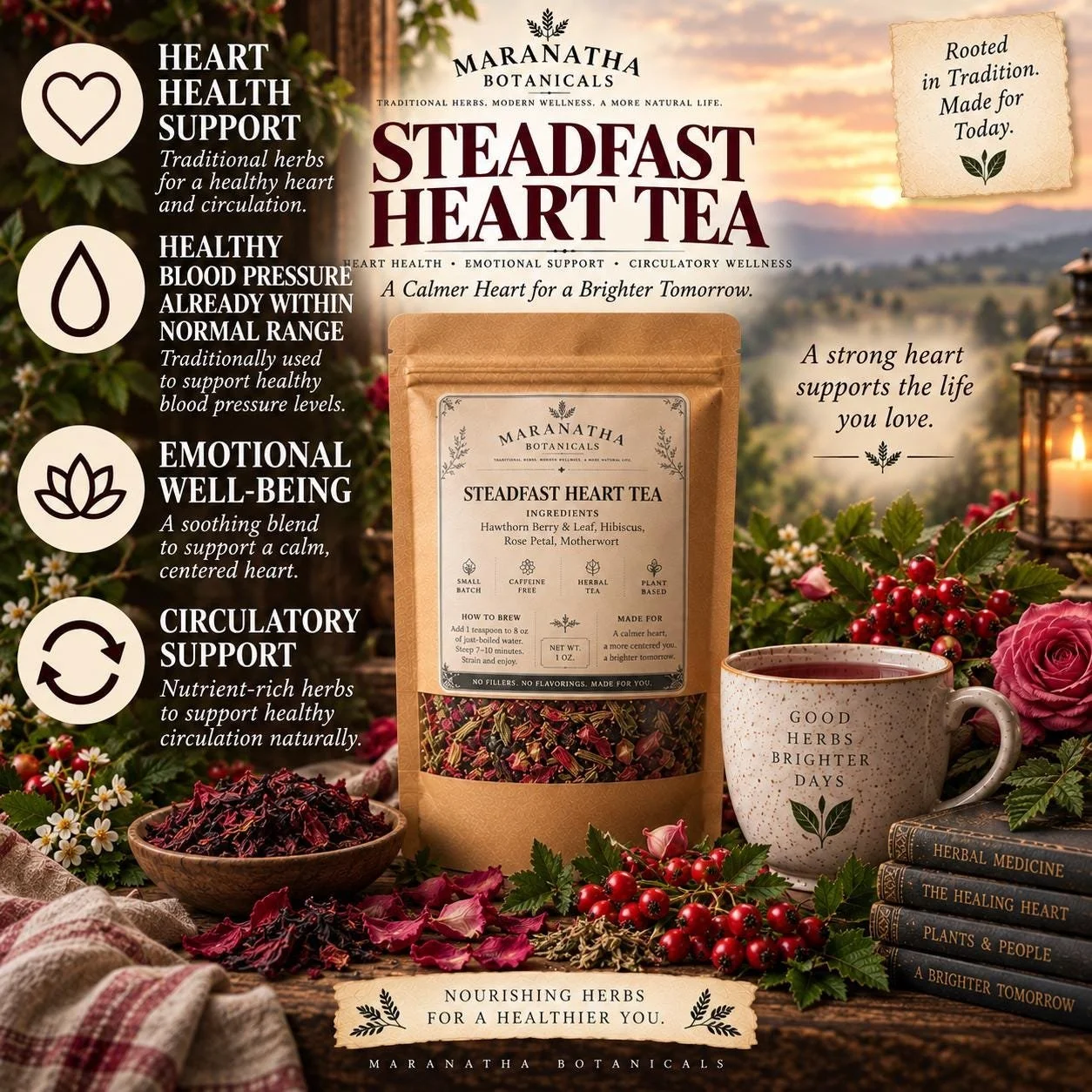
HAWTHORN BERRY & LEAF
Hawthorn (Crataegus spp.) forms the foundation of Steadfast Heart.
The berries contribute mild fruit character while the leaves bring a greener, more distinctly herbal dimension to the infusion.
Hawthorn has an especially rich history within European herbalism and folklore. For centuries, hawthorn trees grew along hedgerows and field boundaries, becoming intertwined with rural life, seasonal traditions, foodways, and household herbal practice.
The berries, leaves, and flowers have all appeared in traditional herbal preparations.
Its longstanding association with the heart within Western herbalism is one of the reasons hawthorn became the centerpiece of this blend.
HIBISCUS
Hibiscus (Hibiscus sabdariffa) gives Steadfast Heart much of its beautiful color and bright, tart character.
When steeped, hibiscus produces a naturally deep ruby-red infusion with a pleasantly sharp, fruit-like flavor.
Hibiscus has a long history as both a food and beverage plant across Africa, the Caribbean, Latin America, the Middle East, and other regions.
ROSE PETAL
Rose petals contribute the softest and most aromatic element of Steadfast Heart.
Their delicate floral fragrance rounds out the tart hibiscus and helps soften the more herbaceous character of hawthorn leaf and motherwort.
Rose has been cultivated for thousands of years and has an extraordinary history spanning food, perfumery, traditional herbal preparations, cosmetics, and household use.
It also carries centuries of cultural symbolism surrounding love, devotion, beauty, courage, and the heart.
MOTHERWORT
Motherwort (Leonurus cardiaca) contributes the most distinctly herbal element of the formula.
It is naturally bitter, so it is used more sparingly than the other botanicals.
Motherwort has a long history within European and Western herbalism and became particularly recognizable in traditional women's and heart-centered herbal preparations.
Its botanical name, Leonurus cardiaca, loosely evokes the imagery of a lion and the heart—an especially fitting historical detail for a blend built around the idea of a steadfast heart.
Here, motherwort gives the formula the unmistakable depth and bitterness of a traditional herbalist's infusion.
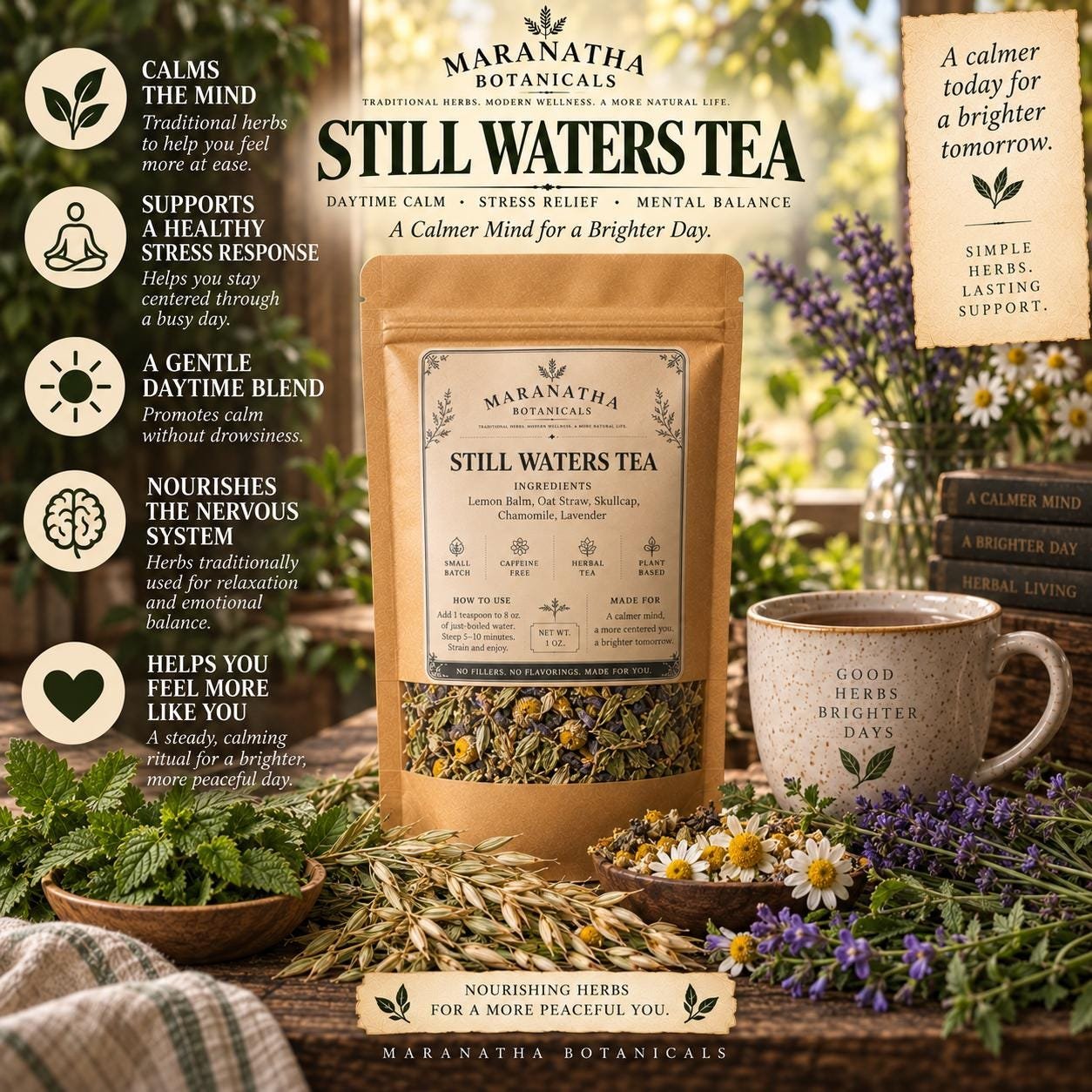
LEMON BALM
Lemon balm (Melissa officinalis) forms the green, aromatic foundation of Still Waters.
It contributes a mild herbaceous flavor with a naturally fresh, subtly lemon-like character.
Lemon balm has been cultivated for centuries in European monastery, physic, cottage, and household gardens and has a particularly rich history as both a culinary and tea herb.
It has traditionally appeared in evening herbal preparations, making it a natural foundation for a blend designed around the quieter part of the day.
OAT STRAW
Oat straw (Avena sativa) contributes a mild, grassy character with a subtle natural sweetness.
The green aerial portions of the oat plant have a long history within Western herbal traditions and have traditionally been prepared as infusions.
Oat straw gives Still Waters an especially old-fashioned character—less like a commercially flavored tea and more like something that might have been measured from jars in an herbalist's cupboard.
SKULLCAP
Skullcap (Scutellaria lateriflora) contributes a green, mildly earthy and somewhat bitter botanical character.
American skullcap is native to North America and developed an important place within North American and Western herbal traditions.
It became particularly recognizable in traditional evening and quiet-time herbal preparations.
Here, skullcap provides herbaceous depth beneath the brighter lemon balm and softer chamomile.
CHAMOMILE
Chamomile contributes the familiar golden flowers and softly sweet, floral character that rounds out Still Waters.
Its subtle apple-like notes soften the greener herbs and make the finished infusion more approachable.
Chamomile has been enjoyed for generations throughout European and Western herbal traditions and remains one of the most recognizable herbs associated with the evening tea cupboard.
Its long history in teas and household preparations makes it a natural companion to lemon balm, oat straw, and skullcap.
LAVENDER
Lavender contributes the most distinctly aromatic note in Still Waters.
Because lavender can quickly dominate an herbal tea, it is intentionally used in a smaller proportion.
The result is a gentle floral-herbaceous aroma rather than an overwhelmingly lavender-flavored cup.
Lavender has centuries of documented use throughout European household traditions, including culinary preparations, perfumery, bathing, aromatic preparations, and herbal teas.
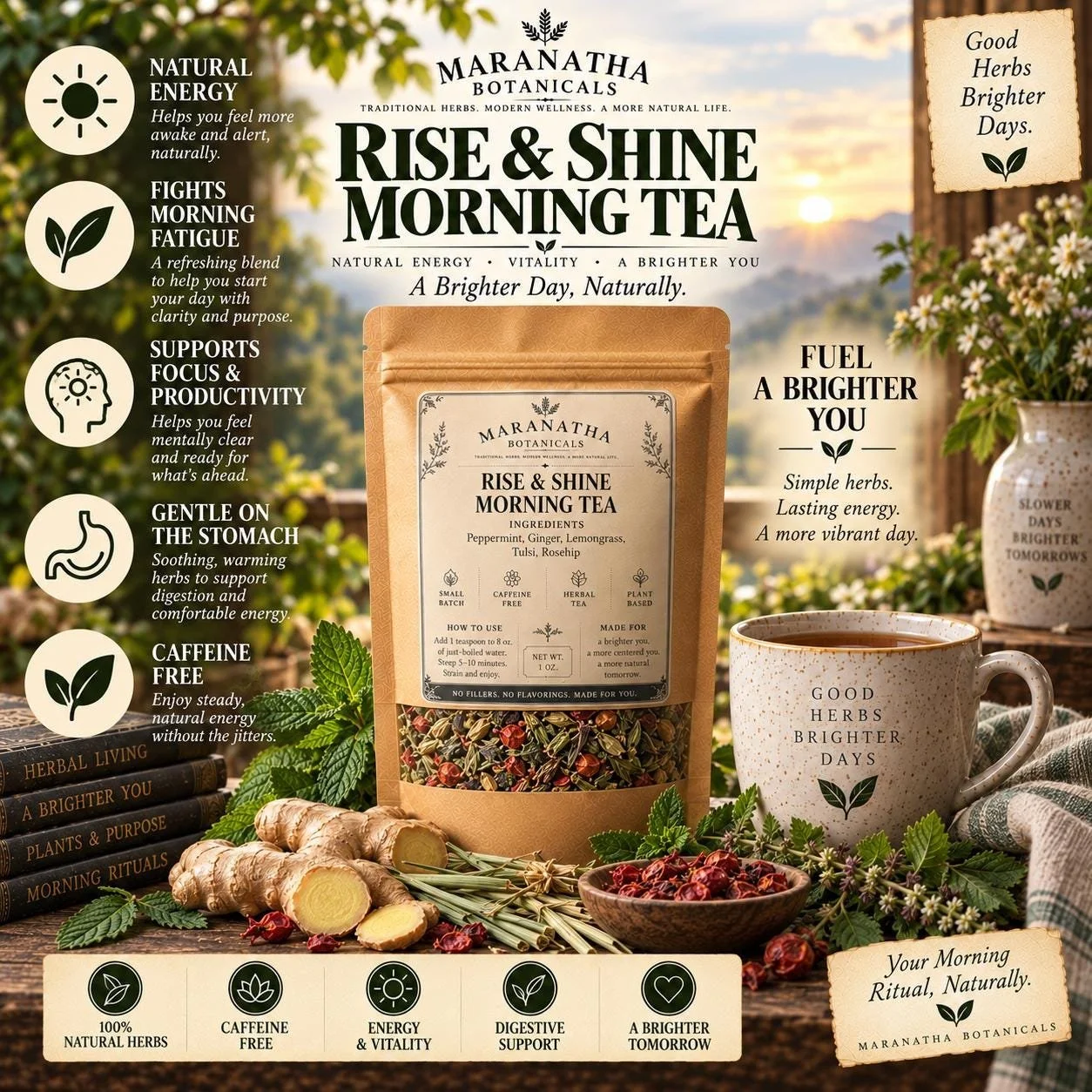
PEPPERMINT
Peppermint (Mentha × piperita) forms the fresh, aromatic foundation of Rise & Shine.
Its naturally high menthol content gives peppermint its distinctive cooling aroma and immediately recognizable mint flavor.
Peppermint has been cultivated for generations as both a culinary and herbal tea ingredient and remains one of the most familiar plants in the household herbal cupboard.
GINGER
Ginger (Zingiber officinale) provides the warming counterpoint to peppermint.
Its spicy, peppery character gives the infusion depth and keeps the blend from tasting like a straightforward mint tea.
Ginger has an extraordinarily long history as both a culinary spice and traditional herbal ingredient throughout Asian, Middle Eastern, European, and other traditions.
LEMONGRASS
Lemongrass (Cymbopogon spp.) contributes a bright, distinctly citrus-like aroma without the addition of citrus fruit or artificial lemon flavoring.
Its clean, lemony character bridges the fresh peppermint and warming ginger beautifully.
Lemongrass has a long history as a culinary and beverage plant, particularly throughout Southeast Asian traditions, and has become a familiar ingredient in botanical teas around the world.
TULSI
Tulsi (Ocimum tenuiflorum), also commonly called holy basil, adds another layer of aromatic complexity.
Depending on the variety, tulsi can contribute herbaceous, lightly peppery, clove-like, and subtly sweet aromatic notes.
Tulsi has a particularly rich cultural and botanical history in India, where the plant has been cultivated and revered for centuries.
ROSEHIP
Rosehips are the fruits that develop on rose plants after flowering.
They contribute mild tartness, subtle fruit character, and beautiful natural color to herbal tea blends.
Rosehips have a long history in European foodways and household preparations, appearing in teas, syrups, preserves, jellies, and other preparations.
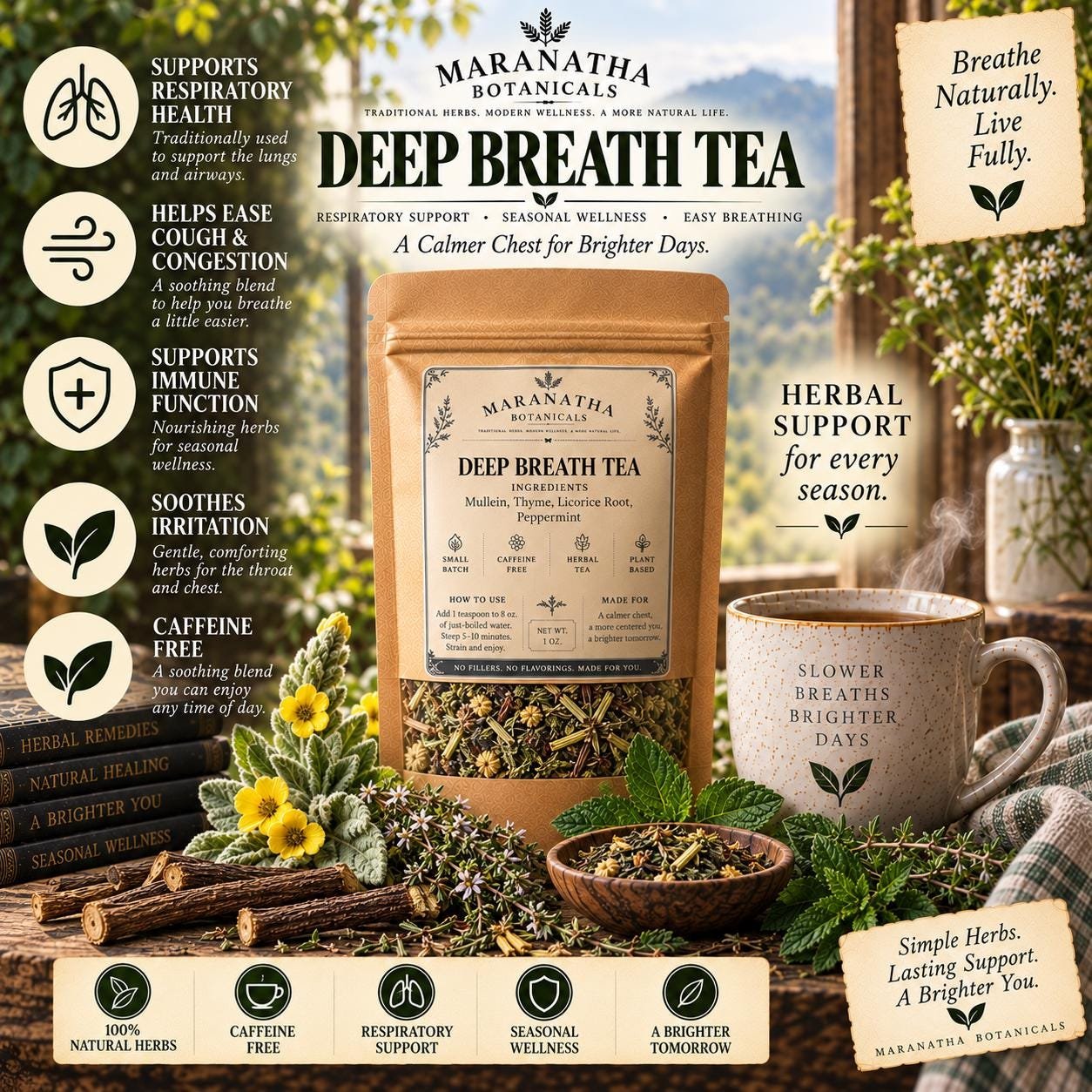
MULLEIN
Mullein (Verbascum thapsus) forms the soft herbal foundation of Deep Breath.
Its large, velvety leaves have made mullein one of the more visually distinctive plants found in traditional European and North American herbalism.
Dried mullein leaf has been prepared as an herbal infusion for generations and became especially familiar within traditional seasonal and household herbal preparations.
Its flavor is relatively mild and earthy, allowing the more aromatic thyme and peppermint to come forward without losing the distinctly botanical character of the blend.
THYME
Thyme (Thymus vulgaris) gives Deep Breath much of its aromatic personality.
Familiar today as a kitchen herb, thyme also has an extensive history extending far beyond the spice cupboard.
It has been cultivated throughout the Mediterranean and Europe for centuries and incorporated into culinary, household, and traditional herbal preparations.
Its warm, savory aroma adds depth to the mild mullein and makes this blend smell wonderfully herbaceous as soon as hot water reaches the leaves.
LICORICE ROOT
Licorice root (Glycyrrhiza glabra) brings a naturally sweet, earthy character to the formula.
Because licorice is intensely flavorful, only a smaller amount is needed to noticeably round out the finished cup.
Licorice has an exceptionally long history within European, Middle Eastern, Mediterranean, and Asian herbal traditions.
In Deep Breath, its natural sweetness helps balance the savory character of thyme and the earthiness of mullein while adding another classic root from the traditional herbal cupboard.
PEPPERMINT
Peppermint (Mentha × piperita) provides the freshest note in Deep Breath.
Its recognizable cooling mint character brightens the deeper herbs and leaves the finished infusion feeling clean and refreshing.
Peppermint has been cultivated for generations as both a culinary and herbal tea ingredient.
Due to the nature of this product, returns are not accepted.
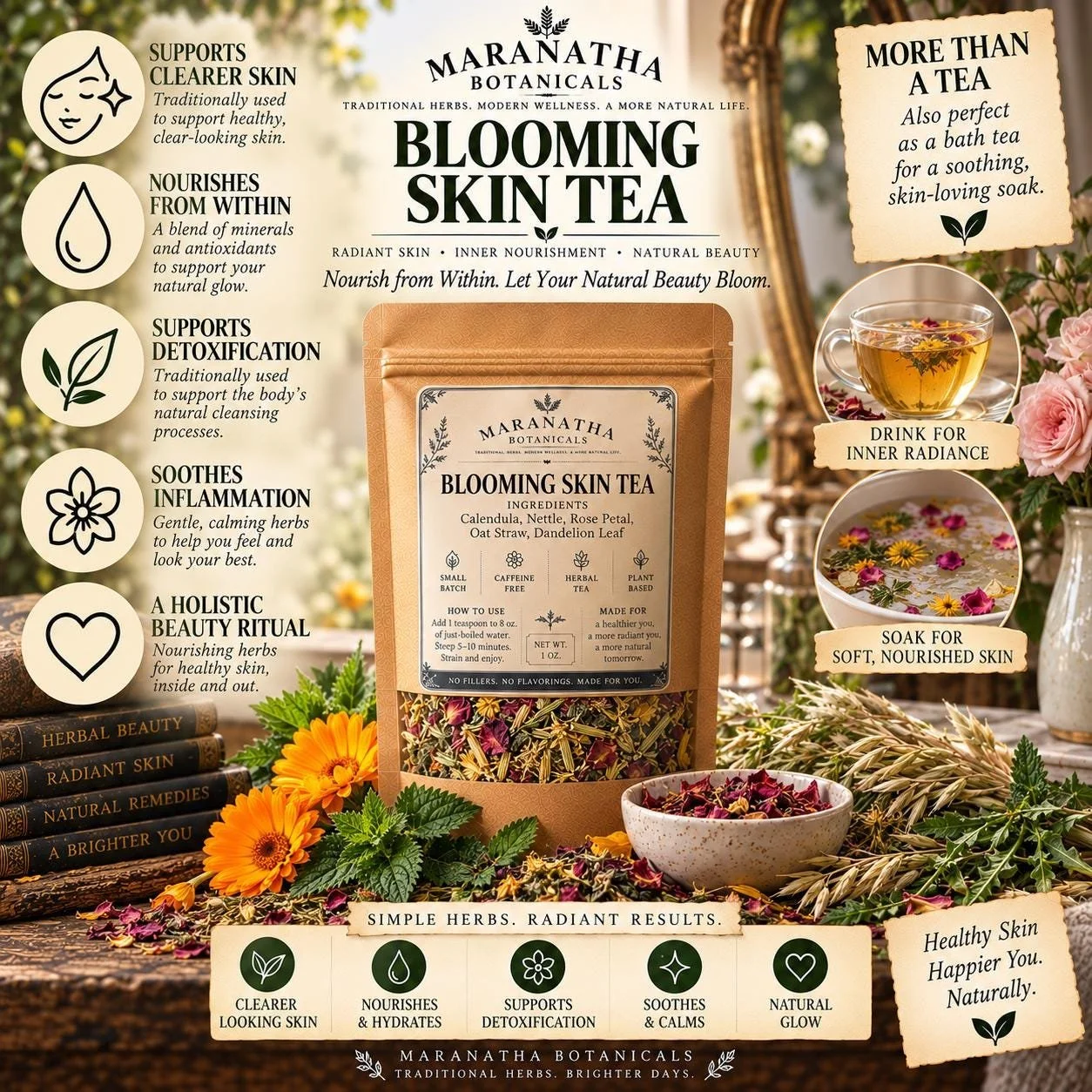
CALENDULA
Calendula (Calendula officinalis) is the golden centerpiece of Blooming Skin.
Its brilliant yellow-orange petals have been grown in cottage, monastery, physic, and household gardens for centuries.
Calendula has an especially rich history in traditional botanical preparations associated with skin and beauty rituals, appearing in everything from infused oils and salves to baths and household herbal preparations.
In the cup, calendula contributes a mild botanical character while giving the dry blend its unmistakable golden color.
NETTLE
Nettle (Urtica dioica) gives Blooming Skin much of its deep green herbal character.
For generations, nettle has served as both a food plant and an herbal ingredient. Young nettles have traditionally been eaten as cooked greens, while dried nettle leaf remains a classic ingredient in herbal infusions.
Its earthy-green flavor provides a grounding counterpoint to the more delicate calendula and rose.
ROSE PETAL
Rose petals provide the softest and most aromatic element of the blend.
Rose has been cultivated for thousands of years and carries an extraordinary history spanning culinary traditions, perfumery, cosmetics, bathing rituals, and traditional herbal preparations.
A smaller proportion allows its fragrance to complement the other botanicals without turning Blooming Skin into an overwhelmingly rose-flavored tea.
OAT STRAW
Oat straw (Avena sativa) contributes a mild, grassy character and subtle natural sweetness.
The green aerial portions of the oat plant have a long history within Western herbal traditions and have traditionally been prepared as nourishing-style herbal infusions.
Its gentle flavor works especially well alongside nettle and helps create the soft, green character of the finished cup.
DANDELION LEAF
Dandelion leaf (Taraxacum officinale) provides the earthiest note in Blooming Skin.
Far more than a familiar garden plant, dandelion has been incorporated into European and North American foodways and household herbal traditions for generations.
The leaves contribute a distinctly green, slightly bitter botanical character that balances the softer floral ingredients.
Due to the nature of this product, returns are not accepted.
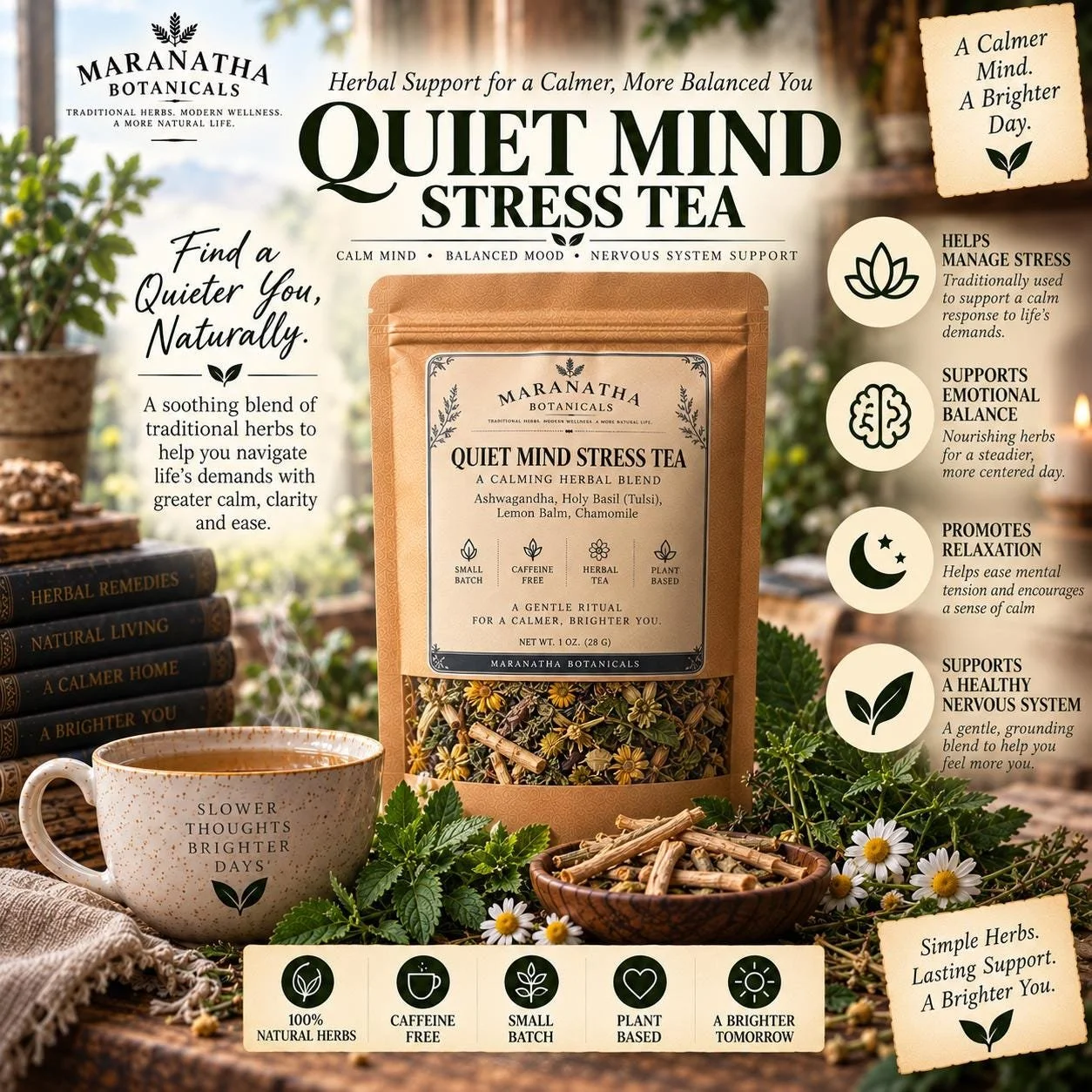
Ashwagandha. Tulsi. Lemon balm.
Roots and leaves that have traveled through generations of herbal traditions, from the ancient botanical systems of India to European monastery and cottage gardens.
Our Quiet Mind Stress Tea brings together earthy ashwagandha root with aromatic holy basil, fresh lemon balm, and soft chamomile in a deeply botanical loose-leaf blend inspired by traditional restorative herbalism.
This isn't a sugary "relaxation drink" or artificially flavored wellness tea.
It's an old-fashioned herbal infusion.
Earthy ashwagandha. Aromatic tulsi. Green lemon balm. Soft chamomile.
A kettle. A quiet corner. A few minutes when nothing else needs your attention.
THE TEA EXPERIENCE
Quiet Mind was formulated around four herbs with particularly rich histories in traditional herbalism.
Ashwagandha forms the earthy foundation of the blend, giving the cup its distinctly root-like botanical character.
Tulsi adds a warm, aromatic complexity with subtle spice and clove-like notes.
Lemon balm brightens the heavier herbs with its fresh, green, slightly lemony character.
Chamomile softens the entire formula with delicate floral notes and its familiar subtle apple-like sweetness.
The overall character is:
Earthy • Herbaceous • Softly Floral • Aromatic • Grounding
Quiet Mind is naturally caffeine-free, making it a beautiful choice for slow afternoons, evening rituals, journaling, reading, or simply creating a quieter moment in the day.
ASHWAGANDHA
Ashwagandha (Withania somnifera) forms the earthy root foundation of Quiet Mind.
Native to parts of India, the Middle East, and Africa, ashwagandha has an extensive history within Ayurveda, the traditional medical system of India.
It has traditionally been classified among herbs used in restorative preparations and has become one of the most recognizable botanicals associated with modern adaptogenic herbal traditions.
Ashwagandha root has a distinctly earthy, slightly bitter character, which is why we pair it with softer and more aromatic herbs rather than attempting to disguise it with artificial flavoring.
HOLY BASIL • TULSI
Holy basil (Ocimum tenuiflorum), commonly known as tulsi, contributes the most aromatic character in Quiet Mind.
Tulsi has been cultivated in India for thousands of years and holds an especially meaningful place within Indian culture and Ayurvedic tradition.
Its flavor is beautifully complex—green and herbaceous with subtly spicy, clove-like notes.
Alongside earthy ashwagandha, tulsi gives Quiet Mind the unmistakable character of a traditional botanical infusion.
LEMON BALM
Lemon balm (Melissa officinalis) adds a brighter green note to the formula.
Its naturally mild lemony-herbal character helps lift the heavier ashwagandha root and aromatic tulsi.
Lemon balm has been cultivated for centuries throughout European monastery, physic, cottage, and household gardens.
It developed an especially rich history as a culinary and tea herb and has traditionally appeared in quiet-time and evening herbal preparations.
CHAMOMILE
Chamomile provides the softest and most floral element of Quiet Mind.
Its familiar golden flowers contribute a delicate floral aroma and subtle apple-like sweetness that helps round out the stronger botanicals.
Chamomile has been prepared as an herbal tea for generations and remains one of the most recognizable plants of the traditional household tea cupboard.
Here, it plays a supporting role—softening the earthy ashwagandha and aromatic tulsi without turning Quiet Mind into an ordinary chamomile tea.
FLAVOR & AROMA
Earthy • Herbaceous • Softly Floral • Aromatic • Grounding
Ashwagandha provides the deep, earthy root foundation.
Tulsi contributes aromatic, subtly spicy herbal character.
Lemon balm brings fresh green notes.
Chamomile finishes the blend with soft floral character and subtle natural sweetness.
This is a genuinely botanical tea rather than a sweet, fruit-flavored blend. Because we use real dried herbs and roots rather than artificial flavoring, natural variation in color, aroma, flavor, cut, and appearance should be expected between harvests and batches.
HOW TO BREW
Use approximately 1 teaspoon loose tea per 8 oz water.
Add freshly boiled water.
Steep covered for approximately 5–15 minutes, depending on your preferred strength.
Strain and enjoy.
For a fuller, more root-forward cup, steep toward the longer end of the range.
MADE FOR
Quiet afternoon tea rituals
Slow evening routines
Ashwagandha tea drinkers
Tulsi and holy basil tea lovers
Traditional herbal tea cupboards
Journaling and reading rituals
Caffeine-free tea routines
Earthy botanical tea lovers
Thoughtful herbal tea gifts
INGREDIENTS
Ashwagandha Root, Holy Basil (Tulsi), Lemon Balm, Chamomile
CAFFEINE
Naturally Caffeine-Free
None of the ingredients in this formulation are naturally caffeinated.
STORAGE
Keep tightly sealed in a cool, dry location away from heat, moisture, and direct sunlight.
Use a clean, dry spoon when measuring tea.
Botanical ingredients naturally vary somewhat in color, size, aroma, and appearance from batch to batch.
ABOUT MARANATHA BOTANICALS
Maranatha Botanicals creates small-batch botanical goods inspired by the practical traditions of the old home apothecary.
We bring familiar flowers, leaves, roots, berries, seeds, and herbs into modern homes through botanical products designed to be beautiful, useful, and rooted in tradition.
Our loose-leaf teas are blended by hand in small batches from recognizable botanicals, with each formula designed around flavor, traditional herbal context, and the simple pleasure of preparing herbs by the cup.
Rooted in tradition. Made for today.
PRODUCT INFORMATION
Product: Quiet Mind Stress Tea
Common/Usual Product Name: Herbal Tea Blend
Produced By: Maranatha Botanicals
Ingredients: Ashwagandha Root, Holy Basil (Tulsi), Lemon Balm, Chamomile
Net Weight: Depends on order selection
Business Address:
Maranatha Botanicals
6123 FM 226
Nacogdoches, TX 75961
IMPORTANT INFORMATION & CAUTION
Quiet Mind is inspired by the historical use of ashwagandha, tulsi, lemon balm, and chamomile within traditional herbal preparations. References to stress, quiet, restoration, adaptogenic traditions, or historical herbal uses are provided for historical and educational context and are not intended to describe a medical effect of the finished tea.
This product is not intended to diagnose, treat, cure, or prevent anxiety disorders, chronic stress, insomnia, depression, nervous-system disorders, or any other disease or medical condition.
For adult use.
Ashwagandha may interact with certain medications and may not be appropriate for individuals with certain thyroid, autoimmune, liver, or other medical conditions.
If pregnant or breastfeeding, taking prescription medications, or managing a medical condition, consult an appropriate healthcare professional before use.
Chamomile belongs to the Asteraceae family. Individuals with known allergies or sensitivities to ragweed or related plants should use appropriate caution.
Discontinue use if an adverse reaction occurs. Keep out of reach of children.
THIS PRODUCT WAS PRODUCED IN A PRIVATE RESIDENCE THAT IS NOT SUBJECT TO GOVERNMENTAL LICENSING OR INSPECTION.
Due to the nature of this product, returns are not accepted.

ECHINACEA
Echinacea contributes the distinctly earthy botanical character at the center.
Native to North America, plants within the Echinacea genus have a particularly interesting history of traditional use among Indigenous peoples and later became widely incorporated into Western herbalism.
Over time, echinacea became one of the most recognizable herbs associated with the traditional cold-weather herbal cupboard.
Its earthy flavor pairs especially well with darker berries and warming spices, which is why we've balanced it with elderberry and ginger in this formula.
ELDERBERRY
Elderberry (Sambucus nigra) provides the darker fruit character of the blend.
European elder has been woven into traditional foodways and household herbal preparations for generations, with the berries appearing in cooked syrups, preserves, cordials, wines, and other seasonal preparations.
In the cup, elderberry brings subtle fruitiness and tartness that helps balance the earthier echinacea.
GINGER
Ginger (Zingiber officinale) provides the unmistakable warmth.
Its aromatic, peppery character cuts through the heavier berries and roots and gives the finished infusion a pleasantly warming quality.
Ginger has an exceptionally long history as both a culinary spice and traditional herbal ingredient across cultures throughout Asia and beyond.
Here, its role is simple: warmth, spice, and balance.
LICORICE ROOT
Licorice root (Glycyrrhiza glabra) contributes natural sweetness without turning this into a sugary tea.
Because licorice root has an intensely sweet character, only a smaller amount is needed to soften the earthier notes of echinacea and the tartness of elderberry and rosehip.
Licorice has been used for centuries across European, Middle Eastern, and Asian culinary and herbal traditions.
ROSEHIP
Rosehips are the fruit that develops on rose plants after flowering.
They contribute a pleasantly tart, fruity character that brightens the darker elderberry and earthy echinacea.
Rosehips have a long history in European foodways and household preparations, appearing in teas, preserves, syrups, jellies, and other traditional recipes.
Their naturally bright flavor gives this tea a cleaner finish while complementing the berry character of elderberry.
Due to the nature of this product, returns are not accepted.
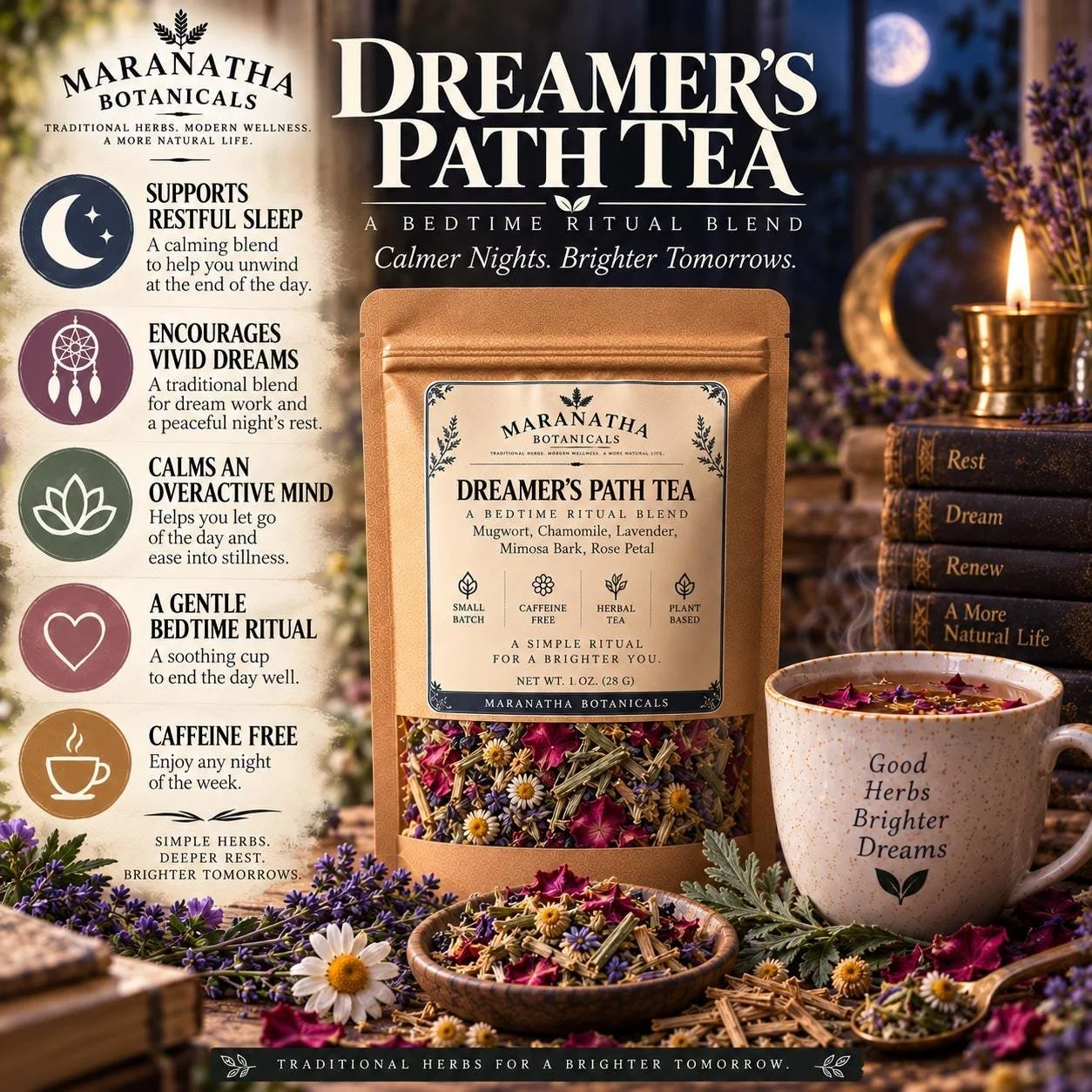
MUGWORT
Mugwort (Artemisia vulgaris) forms the botanical heart of Dreamer’s Path.
Few plants have accumulated quite as much folklore.
Mugwort has a long history throughout European, Asian, and Western herbal traditions and became intertwined with folk practices surrounding nighttime, dreams, and peaceful spaces.
Its reputation as a "dream herb" continues within contemporary folk-herbal traditions.
In the cup, mugwort is distinctly botanical—green, earthy, aromatic, and naturally bitter.
Rather than attempting to hide that character, Dreamer’s Path balances it with softer flowers and aromatic herbs.
CHAMOMILE
Chamomile brings softness to the formula.
Its familiar golden flowers contribute delicate floral character with subtle apple and honey-like notes that help round out mugwort's natural bitterness.
Chamomile has been enjoyed as an herbal infusion for generations and remains one of the most recognizable flowers associated with the traditional evening tea cupboard.
It provides the gentle floral bridge between earthy mugwort and aromatic lavender.
LAVENDER
Lavender contributes a distinctly aromatic floral-herbal character.
Its unmistakable fragrance has made lavender a familiar part of European household traditions for centuries, appearing in gardens, culinary preparations, baths, linens, perfumery, and traditional herbal preparations.
Lavender also carries a longstanding cultural association with nighttime rituals and the bedroom.
Here, it gives Dreamer’s Path its unmistakably fragrant character without becoming the entire flavor of the cup.
MIMOSA BARK
Mimosa bark contributes a woody, earthy dimension beneath the lighter flowers and leaves.
Mimosa (Albizia julibrissin) has a long history within traditional Chinese herbalism, where different portions of the plant have appeared in traditional preparations.
ROSE PETAL
Rose petals provide the final delicate floral note.
Rose has been cultivated for thousands of years and carries a remarkable history spanning food, perfumery, household preparations, traditional herbalism, beauty rituals, folklore, and symbolism.
Its soft fragrance complements lavender without overwhelming the earthy character of mugwort.
In Dreamer’s Path, rose is the finishing note—a little softness woven into a distinctly botanical nighttime blend.
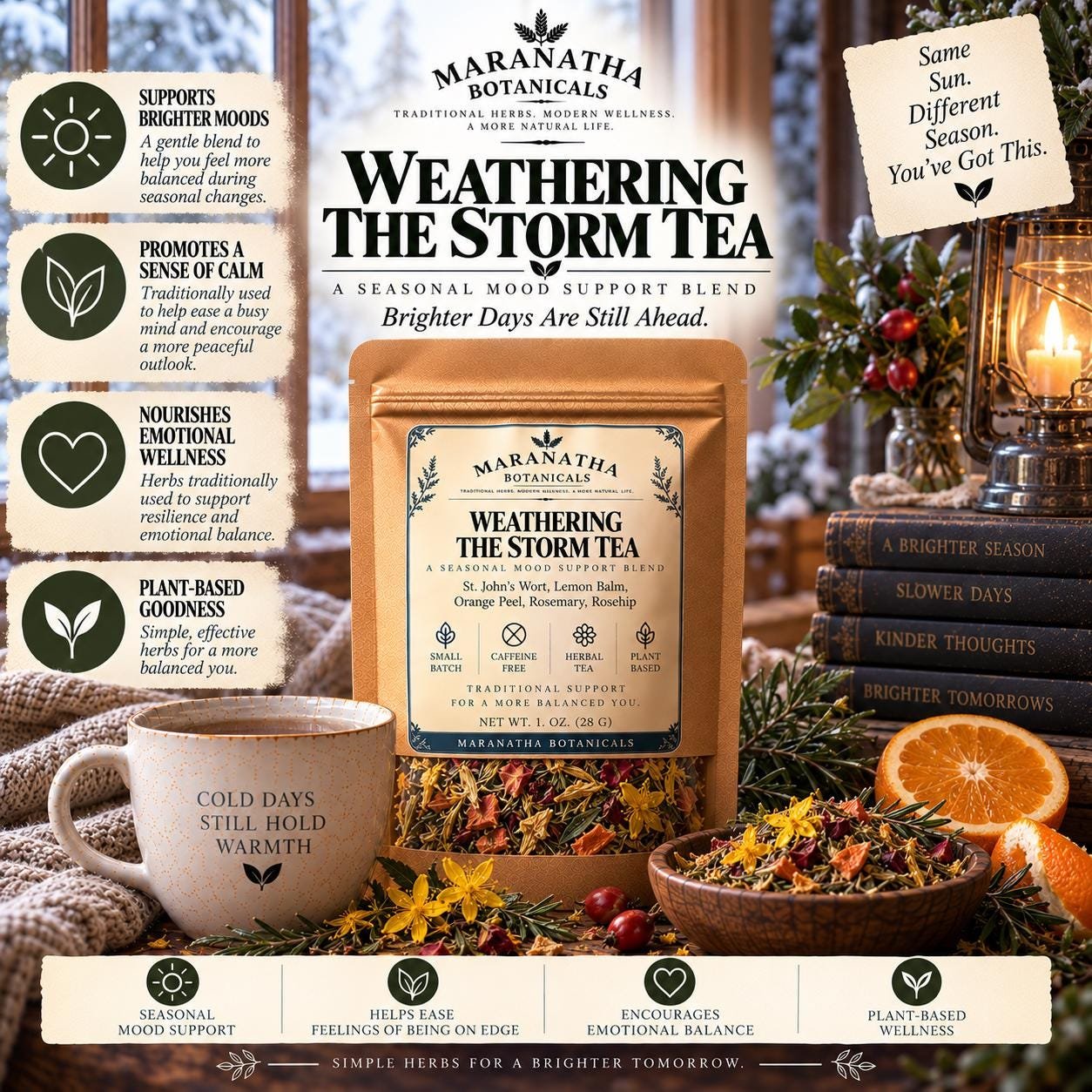
St. John’s wort (Hypericum perforatum) forms the foundation of Weathering the Storm.
Recognizable by its bright yellow flowers, St. John’s wort has an extraordinary history within European herbalism, folklore, and seasonal traditions.
Its very name reflects its historical association with St. John’s Day around the summer solstice, when the plant traditionally flowers in many parts of Europe.
In the cup, St. John’s wort contributes a green, earthy and distinctly herbaceous character.
LEMON BALM
Lemon balm (Melissa officinalis) provides a brighter green note.
Its leaves have a fresh herbal character with naturally subtle lemon-like aromatics.
Lemon balm has grown in monastery gardens, physic gardens, cottage gardens, and household herb plots for centuries.
It has an especially rich history within European household herbalism and became a familiar ingredient in traditional teas and preparations associated with quieter moments.
Here, it bridges the deeper St. John’s wort with the bright citrus character of orange peel.
ORANGE PEEL
Orange peel gives Weathering the Storm much of its sunny personality.
Dried citrus peel has been incorporated into foods, beverages, spice mixtures, teas, and household preparations across cultures for generations.
Its naturally fragrant oils create the recognizable citrus aroma that rises from the cup as the tea steeps.
That brightness is intentional.
Weathering the Storm may be inspired by gray days, but the cup itself doesn't have to taste gray.
ROSEMARY
Rosemary (Salvia rosmarinus) contributes a bold, aromatic herbal note.
Native to the Mediterranean region, rosemary has an exceptionally long history spanning culinary traditions, household preparations, gardens, folklore, and traditional herbalism.
Only a smaller amount is needed here because rosemary can quickly dominate a tea.
Used lightly, it gives the formula an invigorating garden-like aroma that pairs beautifully with citrus.
ROSEHIP
Rosehips bring a tart, subtly fruity finish.
These colorful fruits develop after certain roses finish flowering and have long appeared in traditional foods and household preparations.
Rosehips have been made into teas, syrups, preserves, and other preparations across generations.
Their bright character rounds out the citrus and herbal notes while giving Weathering the Storm another distinctly seasonal ingredient.
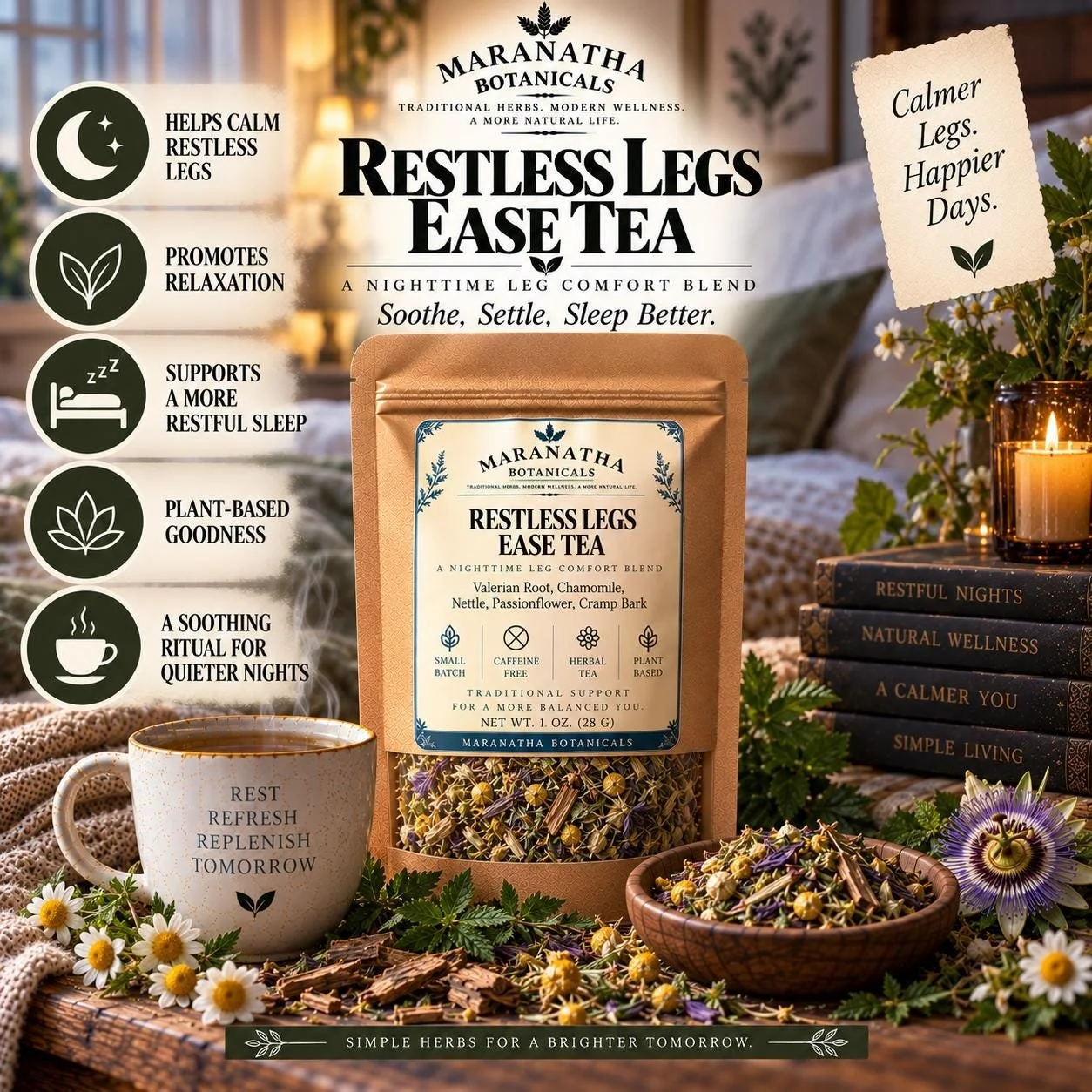
You settle into bed. Get comfortable. And then comes that restless, uncomfortable feeling that makes staying still seem impossible.
Our tea is a deeply herbal evening blend built around traditional botanicals associated with rest, and physical unwinding: valerian root, chamomile, nettle, passionflower, and cramp bark.
Unlike a general bedtime tea designed simply around sleepiness, this blend was created specifically around the ritual of settling a physically restless body at the end of the day.
VALERIAN ROOT
Valerian (Valeriana officinalis) is the foundation of this formula.
For centuries, valerian root has appeared in European herbal traditions, particularly in preparations associated with evening routines and rest.
It is also one of those herbs you will probably recognize with your nose before your tongue.
Valerian has a strong, distinctive earthy aroma that some people love and others need time to appreciate. We don't disguise that character with artificial flavors.
Instead, chamomile and the other botanicals help round out the finished cup.
CHAMOMILE
Chamomile provides the gentlest note in the formula.
Its small golden flowers have been brewed in household tea cupboards for generations, making chamomile one of the most recognizable traditional evening herbs.
Its soft floral and subtly apple-like character provides a welcome contrast to valerian and cramp bark.
NETTLE
Nettle (Urtica dioica) contributes the green component.
Nettle has a long history as both a food and household botanical and produces a distinctly green, grassy infusion when dried.
Its presence also makes this formula notably different from a conventional valerian-and-chamomile bedtime blend.
PASSIONFLOWER
Passionflower (Passiflora incarnata) is a beautiful climbing vine native to the Americas.
The aerial portions of the plant developed an important place within traditional North American herbalism and later became especially recognizable within Western preparations.
Its mild herbal character integrates easily with chamomile, nettle, and the deeper roots and bark.
CRAMP BARK
Cramp bark (Viburnum opulus) provides the final woody note.
The bark has a long history within traditional Western herbal preparations and gives this formula additional depth without overwhelming the other botanicals.
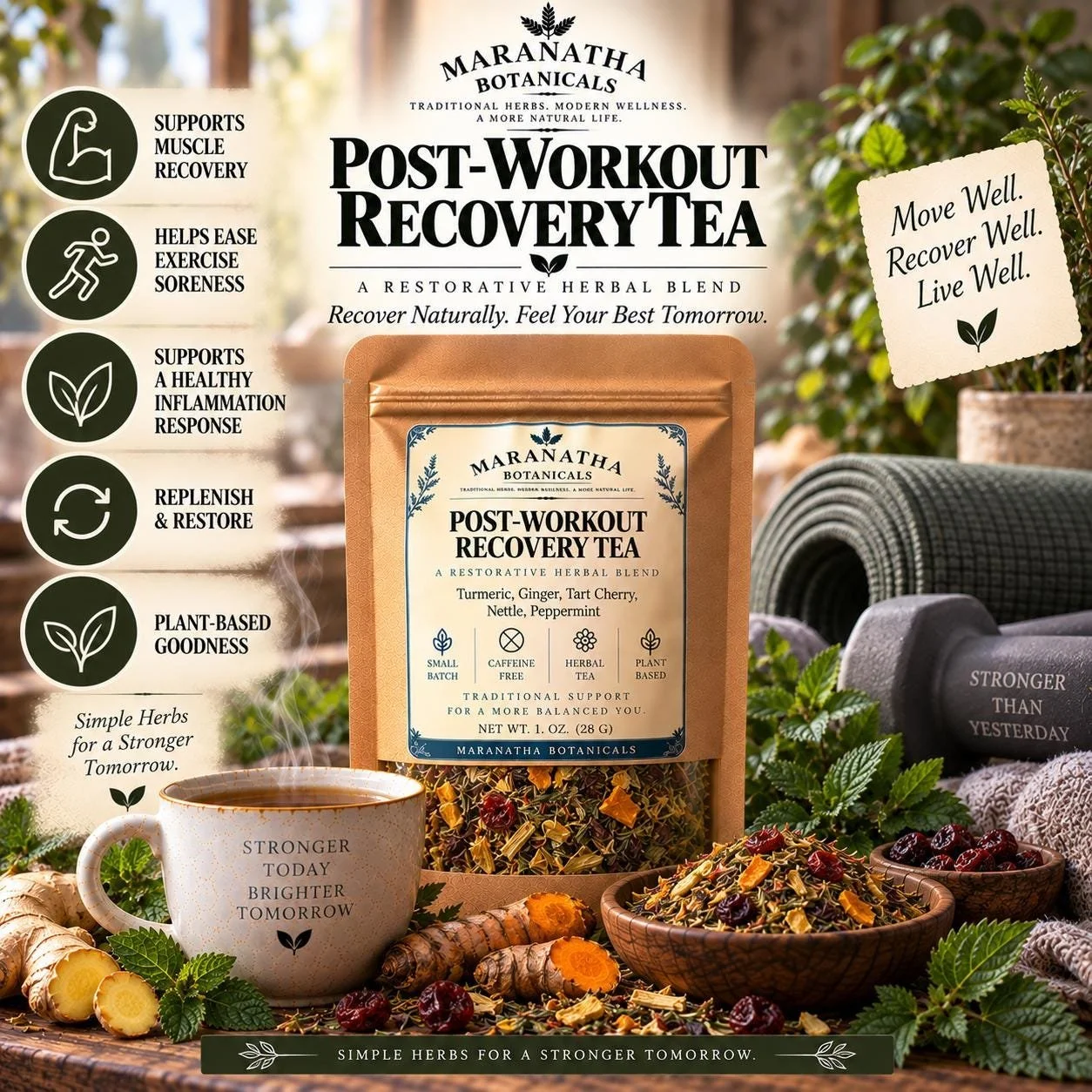
Turmeric (Curcuma longa) gives this blend its golden foundation.
This brilliantly colored rhizome has been valued for generations throughout South and Southeast Asia, where it has extensive culinary, cultural, and traditional herbal uses.
Turmeric naturally contains plant compounds called curcuminoids, including curcumin, which have become the subject of considerable modern scientific interest.
In the cup, turmeric provides an earthy, slightly bitter flavor that pairs beautifully with ginger and tart cherry.
GINGER ROOT
Ginger (Zingiber officinale) brings warmth.
One of the world's most recognizable botanical ingredients, ginger has been incorporated into food, beverages, and traditional herbal preparations across cultures for centuries.
Its naturally pungent flavor cuts through turmeric's earthiness while complementing the fruitier character of tart cherry.
The result is a cup that feels particularly at home after an active day.
TART CHERRY
Dried tart cherry gives this formula its fruit-forward character.
Making the tea taste good.
Their naturally tart, fruity character provides a welcome contrast to turmeric, ginger, and nettle.
NETTLE
Nettle (Urtica dioica) brings the garden into the formula.
This familiar green plant has a remarkably long history as both a food and traditional household botanical.
Once dried and properly prepared, nettle produces a deep green, grassy infusion.
Its earthy character helps bridge the warming roots and brighter cherry and peppermint.
PEPPERMINT
Peppermint (Mentha × piperita) finishes the blend with a cool, aromatic note.
Its naturally fragrant leaves provide immediate freshness and keep the formula from becoming too heavy or root-forward.
That cooling mint character creates a particularly nice contrast with warming ginger.
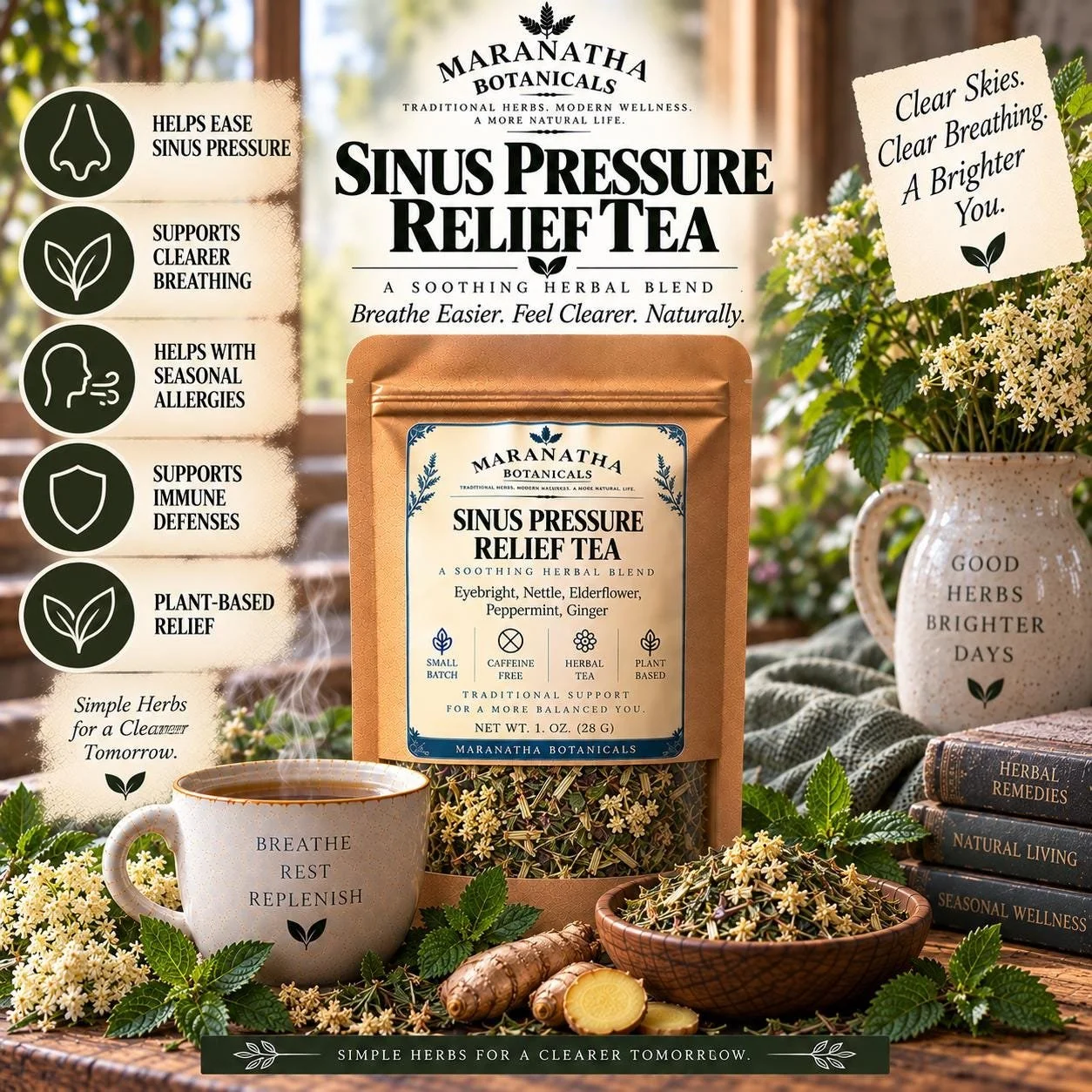
Our Sinus Pressure Relief Tea is a refreshing botanical blend inspired by herbs traditionally kept in the household apothecary during changing seasons.
Eyebright. Nettle. Elderflower. Peppermint. Ginger.
Unlike our Deep Breath Tea, which is built around mullein and traditional chest-focused herbs, this blend centers the upper-airway seasonal ritual—with bright peppermint, warming ginger, floral elderflower, green nettle, and traditional eyebright.
Breathe in the steam.
Sip slowly.
Let the kettle become part of the ritual.
THE TEA EXPERIENCE
Sinus Pressure Relief Tea has a lighter, brighter character than many of our root-heavy herbal formulas.
Eyebright provides an earthy, slightly bitter botanical foundation.
Nettle adds a fresh green note.
Elderflower contributes delicate floral sweetness.
Peppermint brings the unmistakable cooling aroma that rises from the cup as it steeps.
Ginger finishes everything with gentle warmth.
The result is:
Minty • Fresh • Herbaceous • Lightly Floral • Warming
Naturally caffeine-free.
EYEBRIGHT
Eyebright (Euphrasia spp.) is a small flowering herb with centuries of history in European folk herbalism.
Its name reflects the traditional associations that made the plant particularly recognizable in old household herbal practices.
Eyebright has a mildly earthy, herbaceous and somewhat bitter character.
Here, it forms the traditional botanical foundation of the blend while peppermint, elderflower, and ginger make the finished cup more aromatic and approachable.
NETTLE
Nettle (Urtica dioica) contributes the green side of the formula.
This familiar plant has been used for generations as both a food and household botanical.
Once dried and properly prepared, nettle loses the characteristic sting of the fresh plant and produces a pleasantly green, grassy infusion.
Its mild flavor makes it an easy companion for brighter herbs such as peppermint and elderflower.
ELDERFLOWER
Before elderberries appear, the elder tree produces clusters of delicate cream-colored blossoms.
These fragrant elderflowers have their own extensive history in European food, beverage, and seasonal household traditions.
They contribute a soft floral note that keeps this blend from tasting overwhelmingly green or medicinal.
PEPPERMINT
Peppermint (Mentha × piperita) provides the unmistakable aromatic character of this tea.
When hot water reaches the leaves, peppermint's volatile aromatic compounds create the familiar cool, fresh fragrance associated with a freshly brewed mint tea.
For this particular blend, we recommend keeping the cup covered while steeping to help retain those aromatic compounds until you're ready to drink it.
GINGER ROOT
Ginger (Zingiber officinale) provides the warmth.
Used across culinary and herbal traditions around the world, ginger's pungent character creates a beautiful contrast with cooling peppermint.
Only a modest amount is used here.
It doesn't turn the formula into a ginger tea—it simply provides a warm finish beneath the brighter herbs.
FLAVOR & AROMA
Minty • Fresh • Herbaceous • Lightly Floral • Warming
Eyebright provides earthy herbal depth.
Nettle contributes a fresh green character.
Elderflower adds delicate floral notes.
Peppermint creates cooling aromatic brightness.
Ginger provides gentle warmth.
Because this blend contains real dried botanicals rather than artificial flavors, natural variations in flavor, color, cut, aroma, and appearance should be expected.
HOW TO BREW
Use approximately 1 teaspoon loose tea per 8 oz water.
Pour freshly boiled water over the herbs.
Cover the cup while steeping for approximately 10–15 minutes.
Strain thoroughly.
Uncover and enjoy warm.
For this blend especially, don't underestimate the simple pleasure of breathing in the warm peppermint-and-ginger aroma as you drink.
Honey may be added if desired.
THE STEAMY-CUP RITUAL
Some teas are about flavor.
Some are about the ritual surrounding them.
This one is both.
Put the kettle on.
Pour the water.
Cover the cup and give the herbs time.
Then find somewhere comfortable, uncover your tea, and let that first cloud of fragrant peppermint steam rise.
No elaborate wellness routine required.
Just ten quiet minutes and something warm.
MADE FOR
Seasonal herbal tea cupboards
Steamy-cup rituals
Eyebright tea drinkers
Nettle herbal tea lovers
Elderflower tea enthusiasts
Peppermint tea lovers
Changing-season routines
Cold-weather tea rituals
Caffeine-free herbal tea
Traditional household herbalism
Botanical tea gifts
INGREDIENTS
Eyebright, Nettle Leaf, Elderflower, Peppermint, Ginger Root
CAFFEINE
Naturally Caffeine-Free
None of the ingredients in this formulation are naturally caffeinated.
STORAGE
Keep tightly sealed in a cool, dry location away from heat, moisture, and direct sunlight.
Use a clean, dry spoon when measuring tea.
Natural botanicals may vary somewhat in color, size, aroma, and appearance between harvests and batches.
ABOUT MARANATHA BOTANICALS
Maranatha Botanicals creates small-batch botanical goods inspired by the practical traditions of the old home apothecary.
We bring familiar flowers, leaves, roots, fruits, berries, bark, seeds, and herbs into modern homes through botanical products designed to be beautiful, useful, and rooted in tradition.
Our loose-leaf teas are blended by hand in small batches from recognizable botanicals, with each formula designed around flavor, traditional herbal context, and the simple pleasure of preparing herbs by the cup.
Rooted in tradition. Made for today.
Due to the nature of this product, returns are not accepted.
5. Bonus: Why November Is Perfect for Planting Trees
Fall is the best time of year to plant trees and shrubs in East Texas. The soil is still warm enough for roots to grow, the air is cool, and winter rains do much of the watering for you. By summer, your new trees will be established and better able to handle the heat.
It's a great time to plant fruit trees, blueberry bushes, figs and native shade trees.
6. How to Protect November Plantings From a Freeze
Most cool-season crops handle light frosts just fine, but a hard freeze in the teens can damage young plants. Here's how to protect them:
Watch the forecast. Cover plants when temperatures are expected to drop below 28°F.
Use frost cloth. Drape it over plants all the way to the ground, and hold the edges down with bricks or rocks.
Water the day before a freeze. Moist soil holds heat better than dry soil.
Mulch well. A thick layer of pine straw or leaves protects roots.
Uncover in the morning once temperatures rise above freezing, so plants get sunlight.
7. Frequently Asked Questions
What zone is East Texas?
Most of East Texas is in USDA hardiness zone 8a. Some southern areas, including parts of Angelina and Nacogdoches counties, are zone 8b.
Can I plant tomatoes in November in Texas?
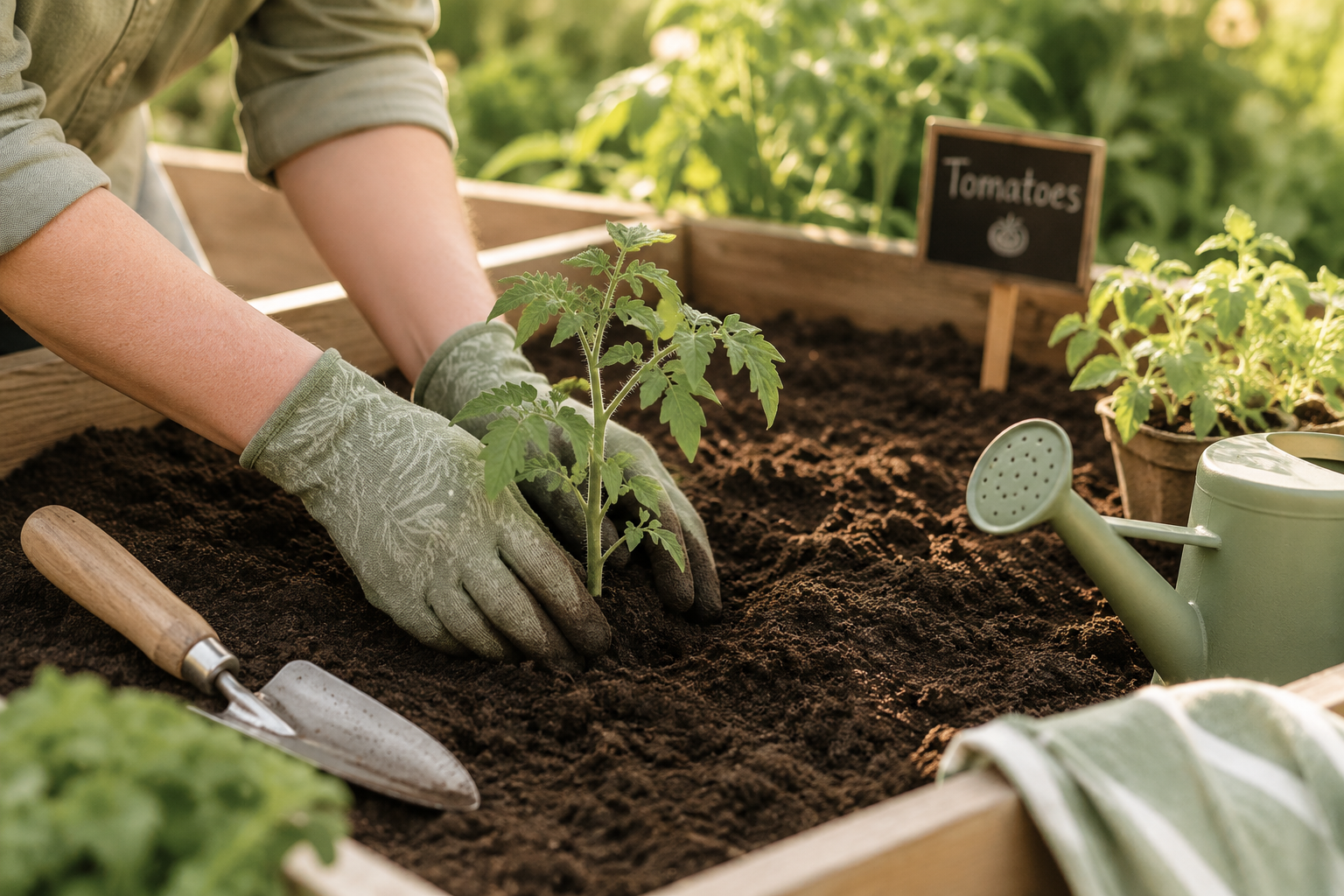
Not in East Texas. Tomatoes need warm weather and are killed by frost. Start tomato seeds indoors in late January or February, and plant them outside after your last frost in spring.
Is it too late to plant garlic in November?
No. November is a great time to plant garlic in East Texas, and you can still plant it into early December. It needs the long, cool winter to grow big bulbs.
Your November Garden Is Waiting
There's something special about walking out to the garden on a frosty morning and picking fresh greens for supper. November isn't the end of the gardening year here in East Texas. In many ways, it's a fresh start.
Pick two or three things from this list, get them in the ground this week, and enjoy a winter garden full of good things.
What are you planting in your garden this month? Tell us in the comments below!
Hi, I’m Miss B!
Welcome to Little House in the Pines, where our family is learning to live simply and faithfully on our little homestead in the Piney Woods of East Texas. Here you’ll find what we’re growing in the garden, what’s happening in the chicken coop, what’s simmering on the stove, and what the Lord is teaching us through it all.
We love exploring the Hebrew roots of our faith in Yeshua, and we’re always learning, always making mistakes, and always grateful for His grace. Pull up a chair and stay a while!



How to use oxygen absorbers for long-term food storage — what size you need, which foods they work with, and the simple beginner guide to a pantry that lasts.