How to Be a Tradwife in a Fallen World
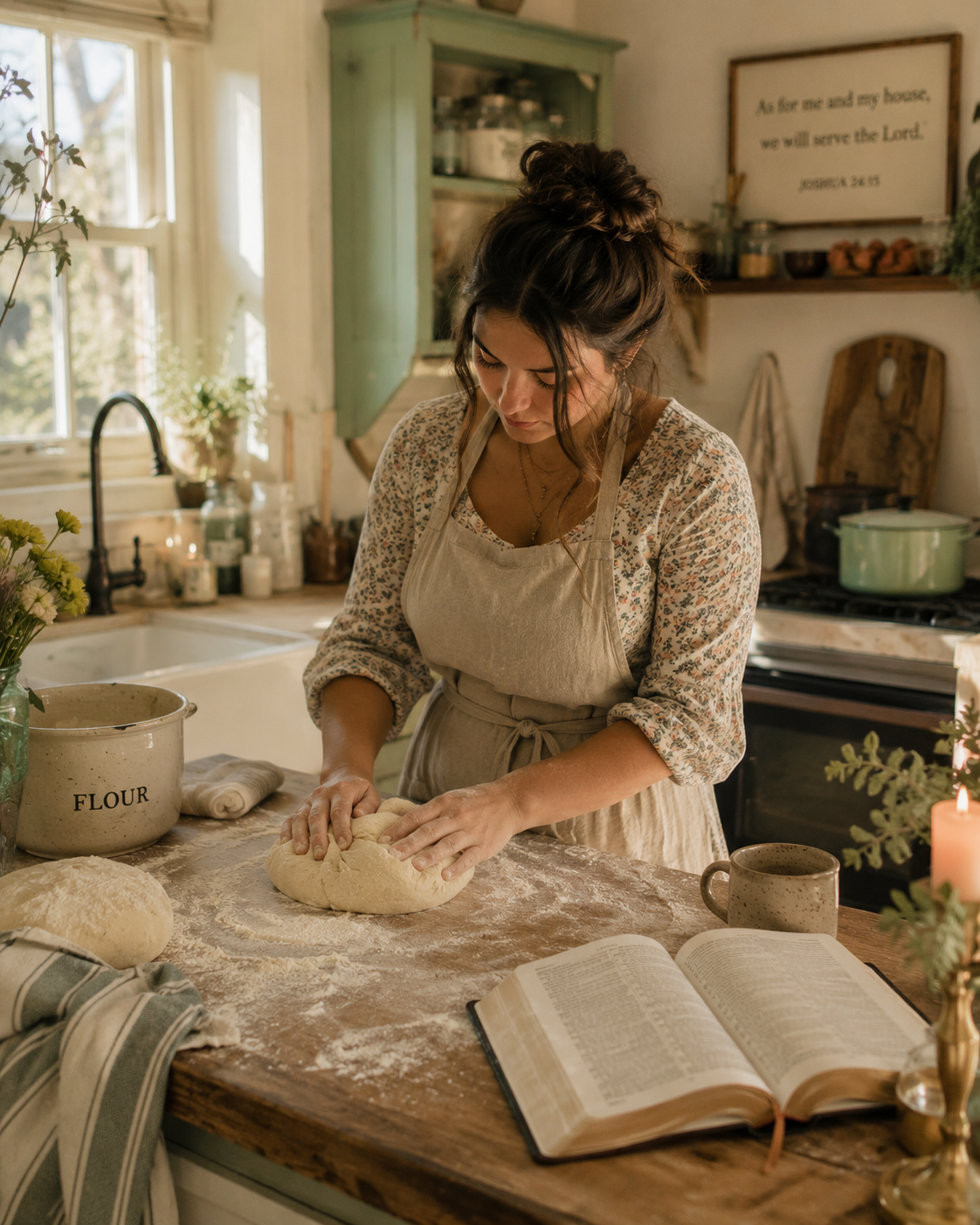
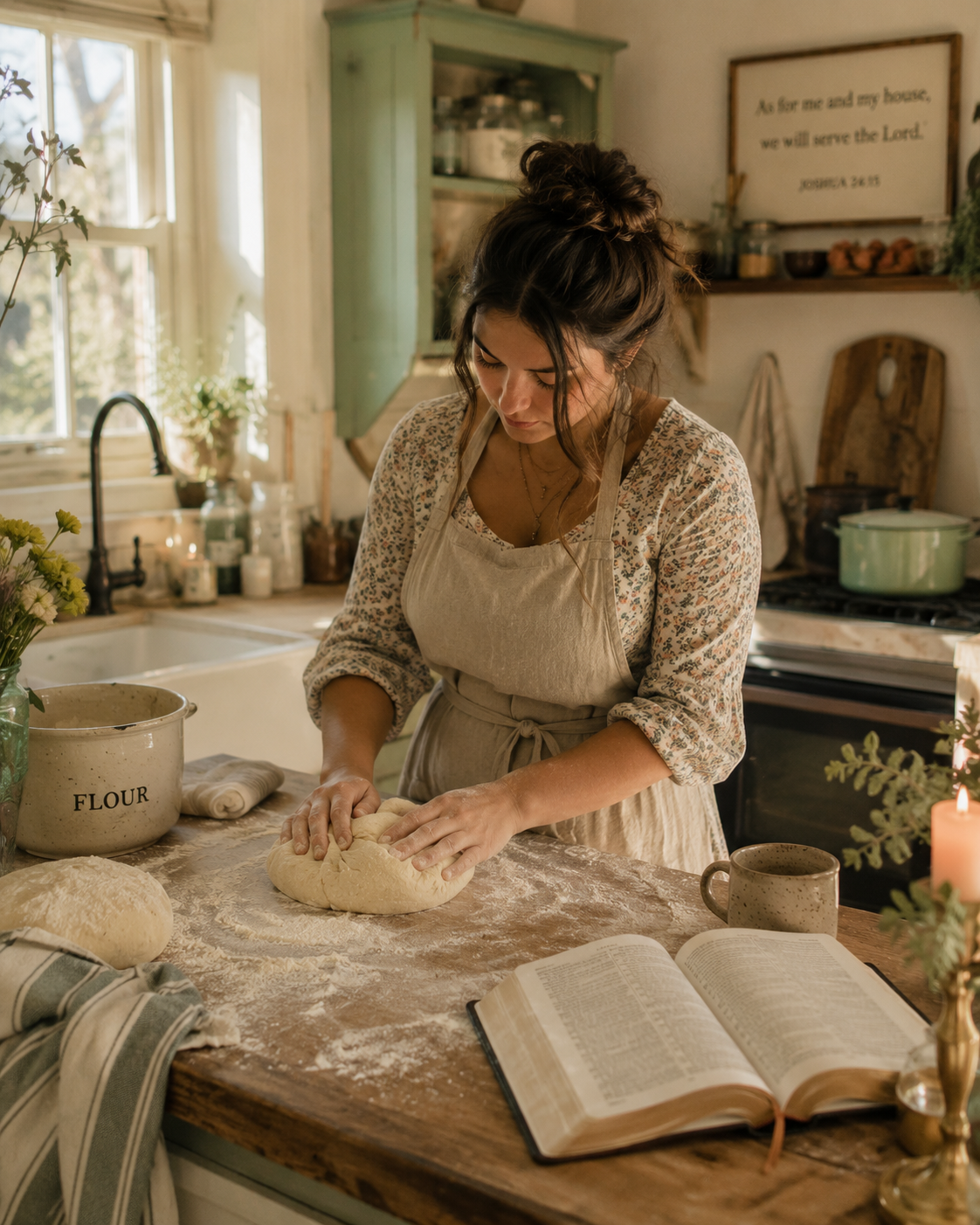
If you've spent any time online lately, you've probably seen the word "tradwife" pop up in your feed. Sourdough rising on a sunny counter. A woman in a prairie dress hanging laundry while her husband heads off to work. It's a beautiful picture, and honestly, a lot of us feel something stir when we see it. Maybe it's a longing for simplicity. Maybe it's relief that someone else values home and family the way you do.
But here's what I want to talk about today. Being a homemaker who loves her husband, her kids, and her Lord isn't actually a trend. It's a calling that's a lot older than the internet, and it comes with a lot more depth than a pretty aesthetic. It's also a lot harder than a fifteen second video makes it look, because we don't live in a perfect world. We live in a fallen one, with sin, exhaustion, hard marriages, messy kids, and days that don't go the way we planned.
So let's talk honestly about what it looks like to build a Christ-centered home when nothing around you is perfect, including you.
What "Tradwife" Really Means (And What It Doesn't)
The term "tradwife" is short for traditional wife, and it describes women who embrace a more old-fashioned home life, with the husband typically working outside the home and the wife focused on homemaking and raising children. It's become a massive online movement, with certain influencers built almost entirely around this aesthetic.
Here's the thing though. Tradwife culture and biblical womanhood aren't automatically the same thing, even though they can overlap. Some tradwife content is genuinely lovely and family-centered. Some of it leans into a kind of performance, where the goal is an aesthetic rather than a heart posture. Christian writers and researchers have pointed out that the movement is often more about nostalgia and image than it is about actual biblical teaching, and that nostalgia alone makes a shaky foundation for a life.
That doesn't mean the desire behind it is wrong. Wanting to nurture your home, serve your family, and step back from a culture that constantly tells women to hustle for their worth is a good and godly desire. It just means we need to be careful about where we're building our identity. A label or an aesthetic can't hold the weight that only Christ was meant to hold.
A Quick Look at Where This Trend Came From
The tradwife movement grew online over the past several years, largely on social media platforms where short videos of homemaking, baking, and old-fashioned domestic life started getting massive attention. Part of the appeal is obvious. A lot of women feel exhausted by the pressure to do it all, work full time, run a household, raise kids, and still look like they're thriving on social media. The tradwife aesthetic offers a picture of slowing down and focusing on home.
At the same time, the trend has drawn real criticism, even from within the church. Some critics point out that it can flatten womanhood into a look rather than a life, or that it borrows the language of faith and family without the substance behind it. Others worry it ties a woman's worth to how well she performs domesticity for an audience. You don't have to fully agree with every critique to take the concern seriously. It's worth asking yourself honestly whether you're drawn to home and family because you love the people in it, or because you love how the picture looks from the outside.
What the Bible Actually Says About the Homemaker
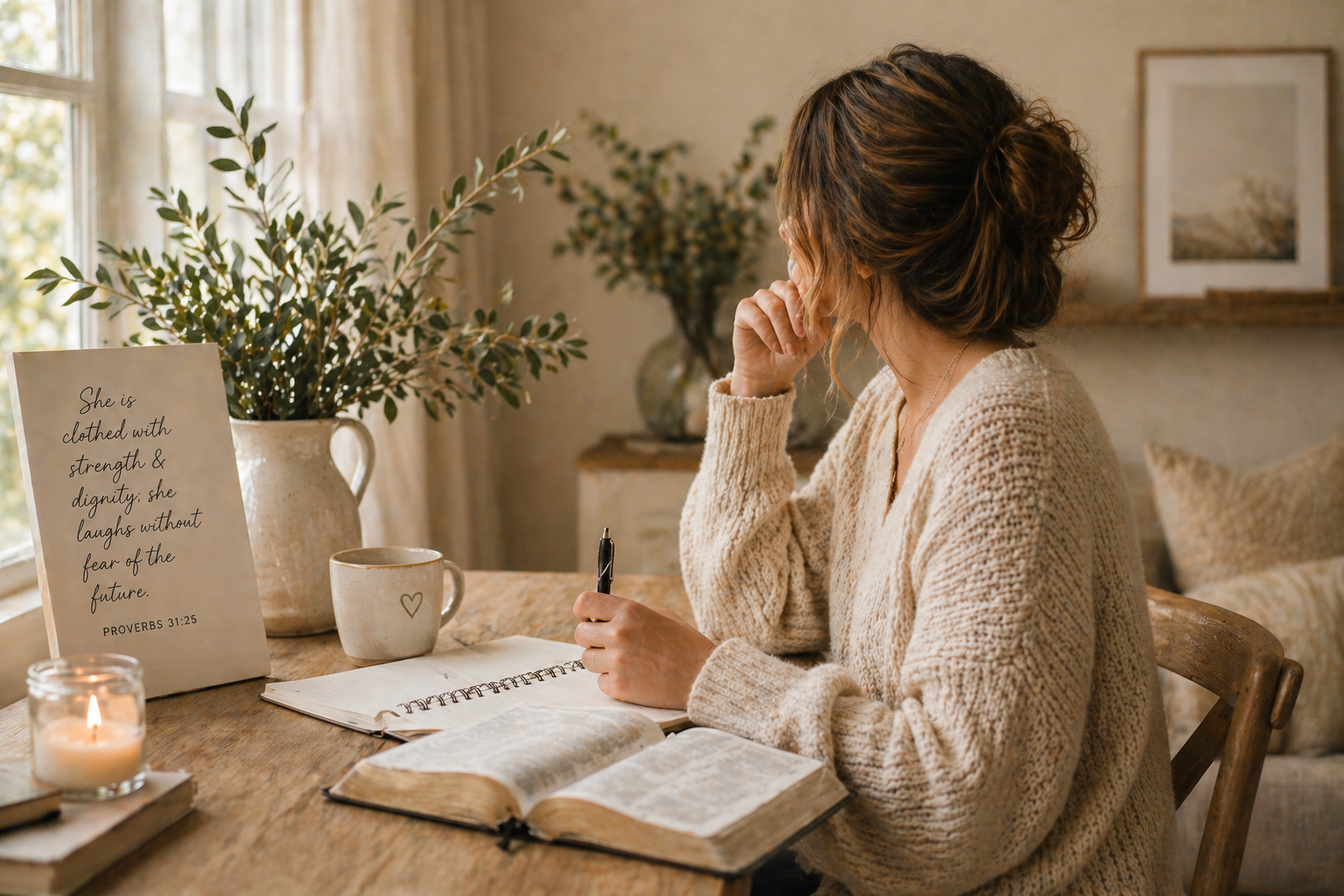
Scripture doesn't describe a soft, passive woman who does nothing but look pretty in an apron. The woman described in Proverbs 31 is strong, wise, and hardworking. She manages a household, cares for the poor, runs what sounds a lot like a small business, and speaks with wisdom and kindness. She's described as clothed in strength and dignity, and she isn't afraid of what's ahead because she's prepared and trusts God with the outcome.
Titus also encourages older women to teach younger women to love their husbands and children, to be sensible, pure, and kind, and to manage their homes well. The heart behind these passages isn't "stay small and decorative." It's "build something meaningful with what God has given you, and do it with love."
Different Christian traditions land in slightly different places on exactly how husbands and wives should divide roles and responsibilities, and that's a conversation worth having with your own pastor or church community. What nearly every thoughtful Christian voice agrees on, though, is this: your value doesn't come from how well you perform a role. It comes from being loved by God and made in his image, full stop.
Other Women in Scripture Worth Remembering
It helps to remember that the Bible doesn't give us just one example of a godly woman. Ruth showed loyalty and hard work, gleaning in the fields to provide for her family while trusting God with her future. Deborah led and judged a nation with wisdom during a genuinely difficult season for her people. Lydia ran a successful business selling purple cloth and opened her home to host the early church. Priscilla taught alongside her husband and helped train up other believers.
None of these women fit into one narrow box. Some were homemakers, some ran businesses, some led, some served quietly behind the scenes. What they all shared was a heart devoted to God and a willingness to serve faithfully wherever he placed them. That's a much bigger picture than any single aesthetic can capture, and it's freeing to remember there's more than one way to walk this out.
Navigating the Marriage Roles Question Without Losing Your Peace
Part of what makes this topic tricky is that Christians genuinely disagree on how far "traditional" roles should go in a marriage, and how leadership and partnership should work day to day. That's a bigger conversation than one blog post can settle, and honestly, it shouldn't be settled by a blog post. It's worth working through with your husband, your pastor, and your own study of scripture over time.
What matters more than winning that debate is this: are you and your husband growing in love, respect, and service toward each other? A marriage marked by kindness, patience, and mutual honor is going to look healthy whether the two of you divide chores fifty-fifty or follow a more traditional structure. Don't let an online debate about roles become a wedge in your own home. Talk to your husband directly about what works for your family, and hold the rest with an open hand.
Living in a Fallen World Changes the Picture
Here's a phrase that matters a lot in this conversation: fallen world. Back in the garden of Eden, everything was as it should be. Adam and Eve walked with God, work felt good, marriage was easy, and nothing was broken. Then sin entered the picture, and everything changed. Work became hard. Childbirth became painful. Marriages became a place where selfishness and misunderstanding show up right alongside love.
That means when your kitchen is a disaster by 9am, when your husband forgets something important, when your toddler melts down in the grocery store, or when you snap at your family because you're exhausted, none of that means you're failing at being a godly homemaker. It means you live in a broken world, just like everyone else who has ever lived in one.
This is actually really good news. It takes the pressure off. You are not competing against a filtered highlight reel. You're a real woman, doing real work, in a world that groans under the weight of sin, just like the rest of creation does. Your job isn't to create a flawless home. It's to be faithful in the one you actually have.
Practical Ways to Build a Christ-Centered Home Today
You don't need a specific aesthetic to live this out well. Here are some practical, doable ways to build a home that honors God, even on your hardest days.
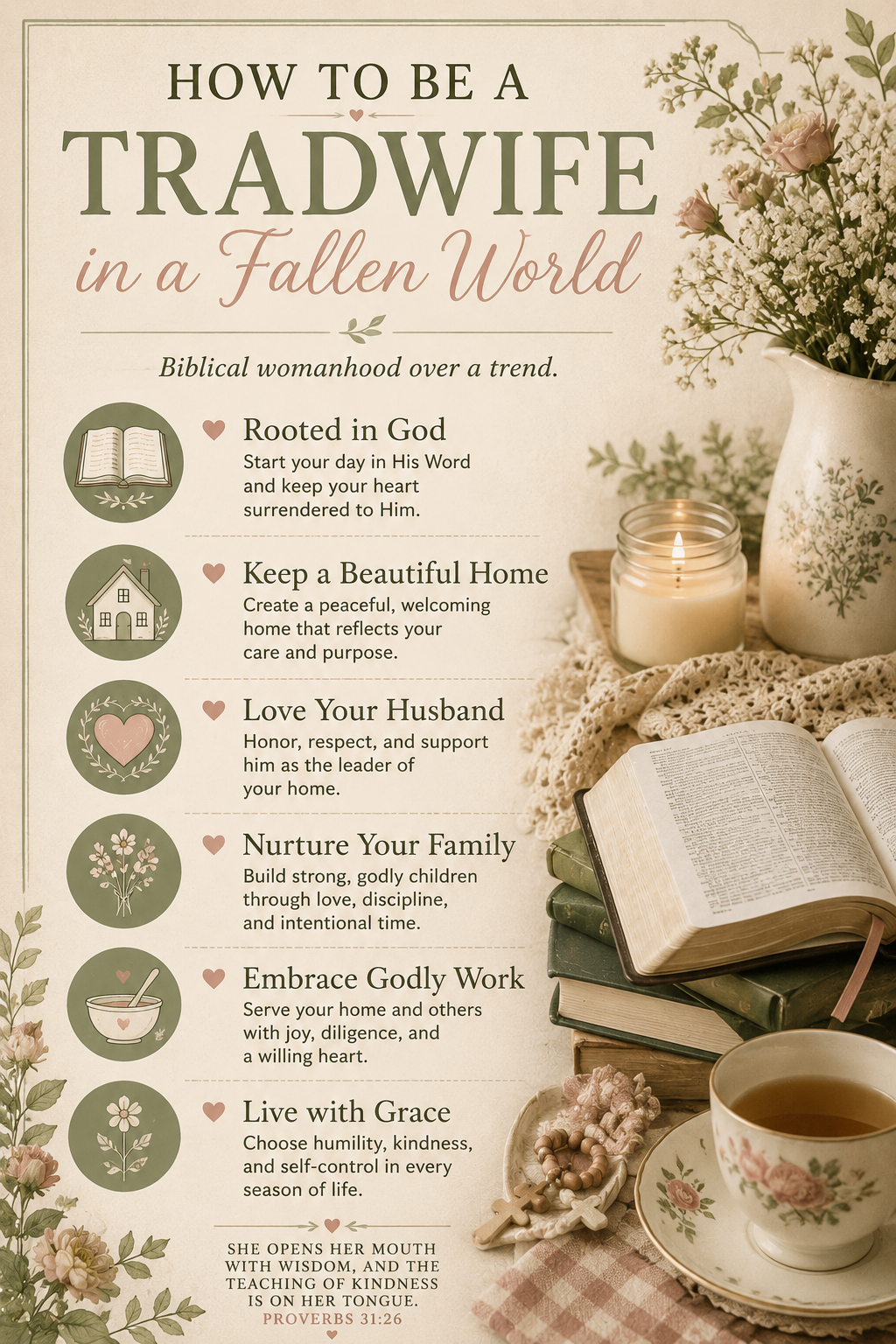
Start with your own heart before you start with your house. A quiet few minutes with your Bible or in prayer, even while coffee brews, sets the tone for how you'll respond when the day gets hard. A woman who is spiritually fed has more patience to give than one running on empty.
Speak life over your husband, even when he's not perfect and even when you're tired. Small words of appreciation go further than most of us realize. The same goes for your kids. Encouragement builds a home faster than perfection ever will.
Keep your home simple rather than showy. A clean, orderly space matters less for how it photographs and more for how it feels to the people who live there. Focus on function first: clean laundry, food on the table, a tidy enough space to breathe in. Beauty can come later, and it doesn't need to cost much.
Build a loose rhythm for your week instead of a rigid schedule. A simple meal plan, a basic laundry routine, and a rough idea of when you'll clean each room can save you a surprising amount of mental energy. You don't need a color-coded system. You just need something that helps you stop reinventing your week every single Monday.
Practice hospitality, even in a small way. Inviting a neighbor over for coffee or having another family for a simple dinner builds real community, which is something our screen-heavy culture is often missing.
Keep your finances simple and honest. A big part of old-fashioned home life was living within your means, cooking from scratch instead of eating out, and avoiding debt where possible. You don't need a complicated budgeting system, just an honest look at what's coming in and going out each month, and a plan that lets you breathe instead of scrambling.
Guard your time and your peace. It's okay to say no to things that pull you away from what matters most. Rest is not laziness. Even God rested on the seventh day, and he wasn't tired.
Guarding Against Legalism and Perfectionism
One real danger in this whole conversation is turning homemaking into a new kind of rulebook, where your worth rises and falls with how well you keep the house or how closely you match an ideal. That's not freedom. That's just a different cage.
If you find yourself feeling anxious, ashamed, or resentful because your home doesn't match a picture in your head, that's worth paying attention to. God isn't up in heaven grading your countertops. He cares about your heart, your faithfulness, and your love for the people he's placed in your home. Let that truth loosen your grip on perfectionism.
Where Your Identity Actually Comes From
It's worth naming the deeper issue underneath all of this. Whether you lean toward the tradwife aesthetic, resist it entirely, or land somewhere in between, the real question is where your identity is rooted. If your sense of worth rises and falls with how well you keep house, how put-together you look, or how closely your life matches an online ideal, you're standing on shaky ground, because all of that can be taken away or fall short in a single hard week.
Scripture describes believers as adopted, chosen, and dearly loved by God, not because of what they produce but because of what Christ has already done. That's true whether your kitchen is spotless or your laundry has been sitting in the dryer for three days. Homemaking can be a beautiful expression of your faith, but it was never meant to be the foundation of your worth. Let your identity rest in being loved by God first, and let your home be the overflow of that, not the source of it.
Teaching This to the Next Generation
If you have daughters, nieces, or young women in your life, they're seeing the same trend you are, often even more of it. It's worth talking with them honestly about what you're learning here. Help them see that a beautiful home and a loving family are wonderful things to want, but that their worth was never meant to hinge on an aesthetic or a follower count.
You can model this more than you can lecture it. Let them watch you extend yourself grace on hard days. Let them see you serve your family out of love rather than performance. Let them hear you talk about your identity in Christ in ordinary conversation, not just in a Sunday school lesson. Kids and teens absorb far more from what they watch you live out than from what they hear you say.
When Comparison Creeps In
If you spend much time scrolling through tradwife content, comparison will find you. You'll see a spotless farmhouse kitchen, a woman who seems to have unlimited patience, and a life that looks nothing like your Tuesday afternoon with a screaming toddler and a sink full of dishes.
Remember that you're seeing a highlight reel, not a full life. Everyone struggles behind closed doors. Everyone has hard mornings, hard marriages some days, and moments they wouldn't want filmed. Comparing your real life to someone else's edited one is a losing game every single time.
Instead, ask God to help you be faithful in your own home, with your own family, in this season. That's the only home you're actually called to build.
What If Your Life Doesn't Look "Traditional"?
Maybe you work outside the home out of necessity or calling. Maybe you're parenting alone. Maybe your marriage looks different than the picture-perfect version online. None of that disqualifies you from living a faith-rooted, home-loving life.
The heart behind biblical womanhood was never about a single narrow lifestyle. It's about loving God, loving your family well, and stewarding whatever home and season you've been given with faithfulness. A single mom working two jobs to keep her kids fed and loved is living out that same heart, even if her daily life looks nothing like a tradwife video.
Don't let a trend define whether your life "counts." Let Christ define your worth, and let faithfulness in your actual circumstances be your goal.
When You Feel Like You're Failing
There will be seasons, maybe even this one, where none of this feels true. The house is a wreck, you snapped at your kids again, your marriage feels more like teamwork under pressure than romance, and you scroll past one more perfectly staged kitchen and feel like you're failing at something everyone else has figured out.
Take a breath. You are not failing. You are living in a fallen world, raising real kids, loving a real husband, in a body that gets tired and a heart that sometimes runs short on patience. That's not failure. That's being human in a broken world, which is exactly the condition every homemaker throughout history, including the Proverbs 31 woman herself on her hardest days, has shared.
Grace covers the gap between who you want to be and who you actually are on a Tuesday afternoon. Let it. Confess where you fall short, ask for help when you need it, and get back up the next morning. That posture, humble and willing, matters far more to God than a spotless kitchen ever could.
A Simple Checklist for Homemaking in a Fallen World
Start your day with God before you start it with your phone. Speak kindly to your husband and children, even when you're tired. Keep your home simple and functional rather than chasing perfection. Build a loose weekly rhythm instead of an all-or-nothing routine. Rest without guilt, because you are not a machine. Extend grace to yourself the same way you'd extend it to a friend having a hard week. Remember that faithfulness, not flawlessness, is the actual goal.
Frequently Asked Questions
Is being a tradwife the same as being a biblical homemaker?
Not exactly. Tradwife is a modern internet term describing a lifestyle and aesthetic, while biblical womanhood is rooted in scripture and has been around for thousands of years. They can overlap, but they aren't identical.
Do I have to stay home to be a godly wife and mother?
No. Scripture doesn't require every woman to be a stay-at-home homemaker. It calls women to love their families and steward their homes well, which can look different depending on your circumstances and convictions.
What if my house is never as put together as the homes I see online?
That's true for almost everyone, even the people posting those photos. A well-loved home matters far more than a picture-perfect one.
How do I stop comparing myself to tradwife influencers online?
Limit how much time you spend scrolling that kind of content, and remind yourself that you're seeing edited highlights, not someone's whole life. Fill that time with prayer, real friendships, or time with your own family instead.
Is it wrong to enjoy the tradwife aesthetic?
Not at all. Enjoying a cozy, home-centered lifestyle isn't wrong. Just hold it loosely, and keep your identity anchored in Christ rather than in an aesthetic or a label.
What does "fallen world" mean in this context?
It's a way of describing the brokenness that entered the world after sin, which affects everything, including homes, marriages, and parenting. It's a reminder that hard days don't mean you're failing.
My husband and I don't fully agree on how traditional our marriage should be. What do I do?
Talk to each other honestly, and consider bringing the conversation to a pastor or trusted mentor if you feel stuck. What matters most is that you're both growing in love and respect for one another, not that you match a specific mold.
Is it okay to want a simpler, more traditional home life without being political about it?
Yes. Wanting to slow down, prioritize your family, and build a peaceful home is a personal and spiritual desire, not a political statement, even though the trend itself has become politicized online. You get to define what this looks like for your own family.
How Traditional Are Tradwives: Evaluating the Social Media Movement - Christian Research Institute
'Yesteryear' Misses the Real Problem with the Tradwife Trend - Institute for Family Studies
The Tradwife Trend Is Asking the Right Question... And Getting the Wrong Answer - Christ and Culture
The Proverbs 31 Warfare: How Home Unleashes a Woman - Desiring God
The Portrait of a Godly Homemaker (Proverbs 31:10-31) - Expository Parenting Ministries
A Christian Response to the 'Tradwife' Movement
Opinion: The Tradwife Novel 'Yesteryear' Misunderstands Christian Women - The Washington Post
