This post may contain affiliate links. We only share things we use on our homestead.
Every November, someone asks me the same question at church or the feed store: "Is it too late to plant anything this year?"
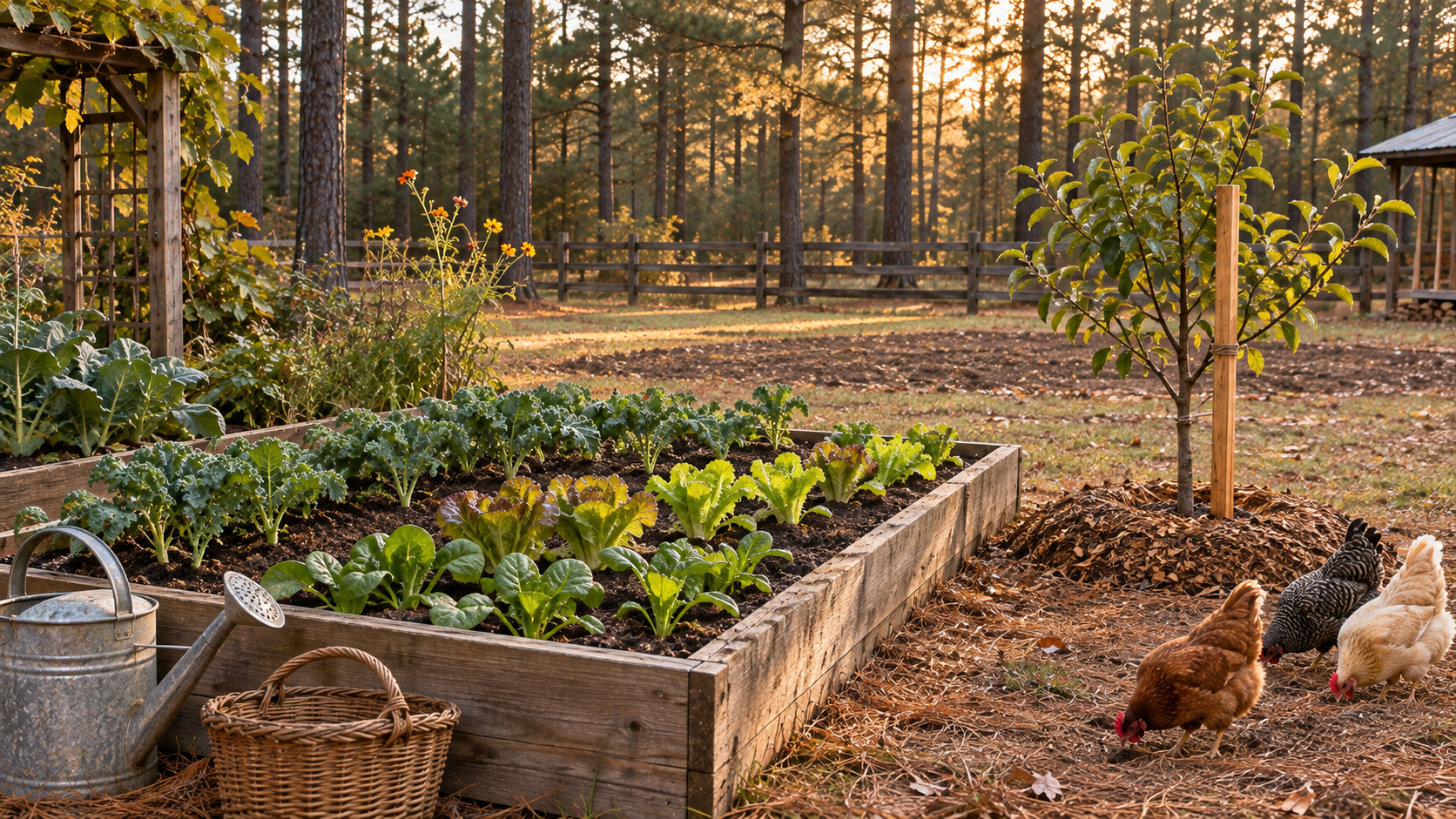
If you live up north, the answer might be yes. But here in the South, mid-November is a sweet spot. The soil is still warm from summer, the air is cool, and our winters are mild enough that many crops keep growing right through to spring.
So if you missed the September planting rush, don't worry. You still have plenty of options.
Quick answer: No, mid-November isn't too late to plant in the South. In zones 8 and 9, you can still plant garlic, onion sets, spinach, lettuce, kale, collards, radishes, turnips, spring bulbs, wildflower seeds, and container-grown trees and shrubs. Cool soil and fall rain help roots settle in before spring.
In this post:
Why the South gets a second planting season
10 things you can still plant in mid-November
Seeds or transplants: which to choose this late
FAQ
1. Why the South Gets a Second Planting Season
In northern states, the ground freezes solid by December. But across most of the South, including East Texas, winter brings only short cold snaps followed by mild, sunny days.
That means cool-season crops can keep growing slowly all winter. Many of them, like kale, collards and spinach, actually taste sweeter after a light frost, because the plants convert starches into sugars to protect themselves from the cold.
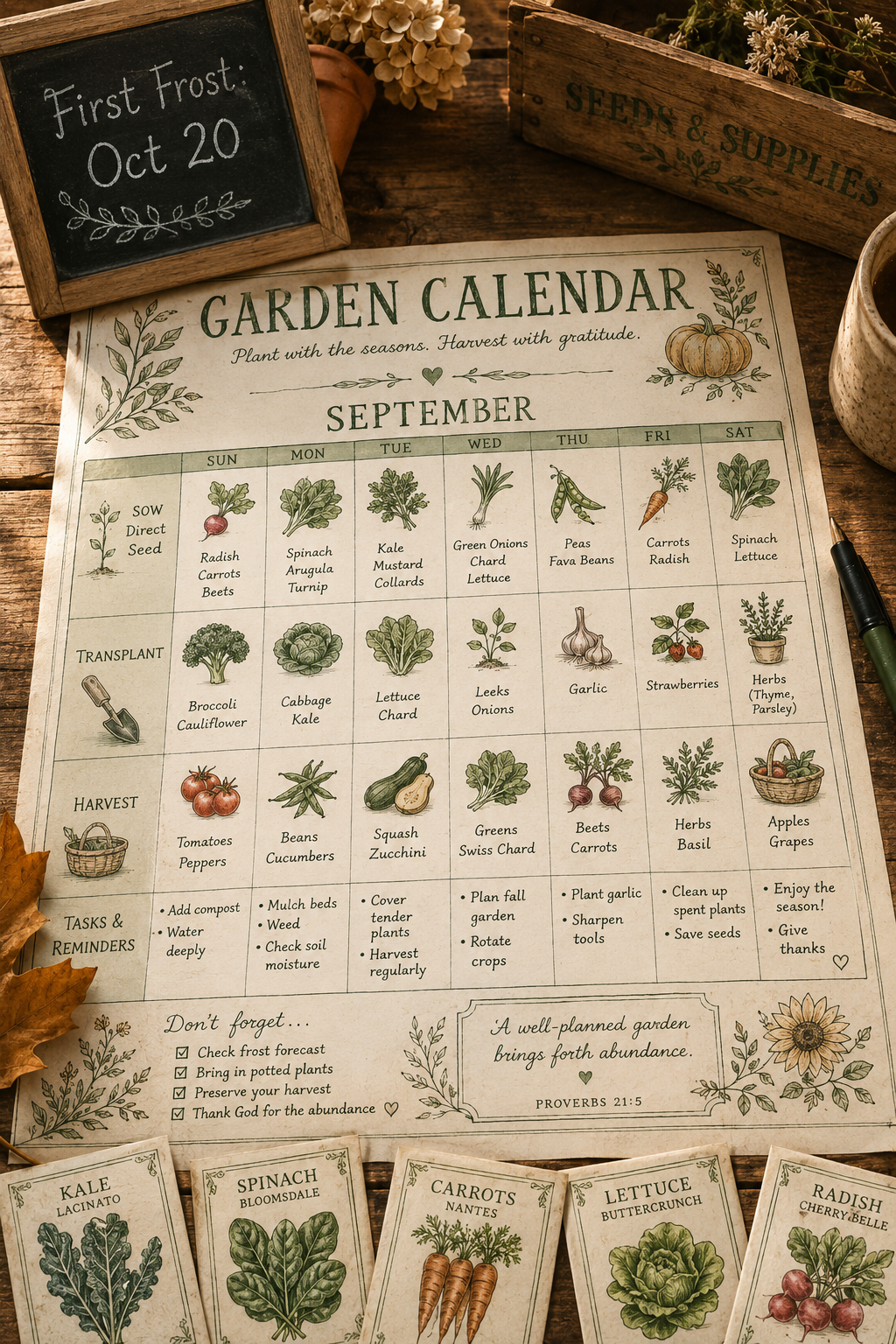
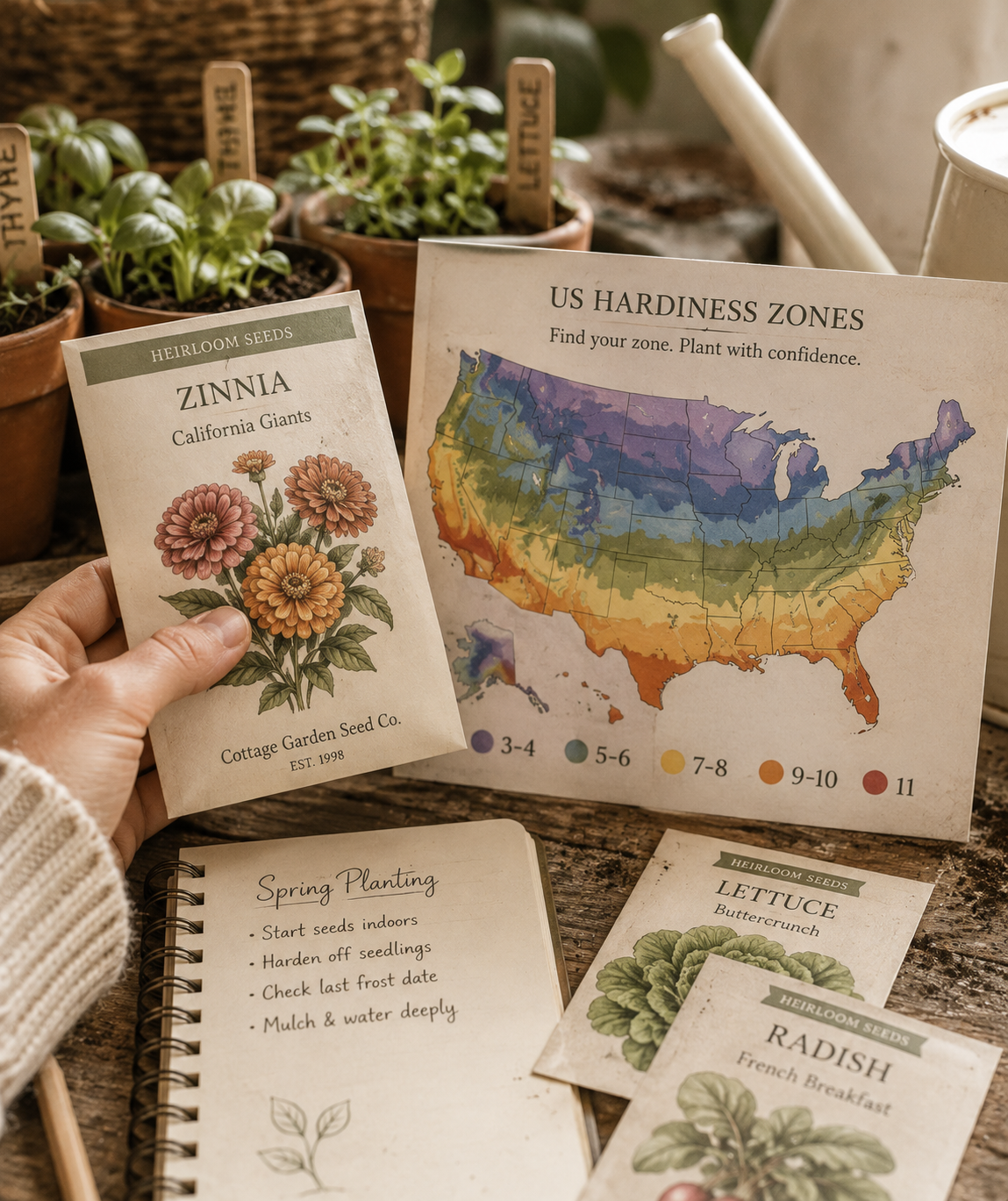
The "count back" rule: Look at the "days to maturity" on the seed packet. If a crop can mature before spring heat arrives in May, you have time to plant it. Most cool-season vegetables mature in 30 to 90 days, which is why mid-November still works.
2. 10 Things You Can Still Plant in Mid-November
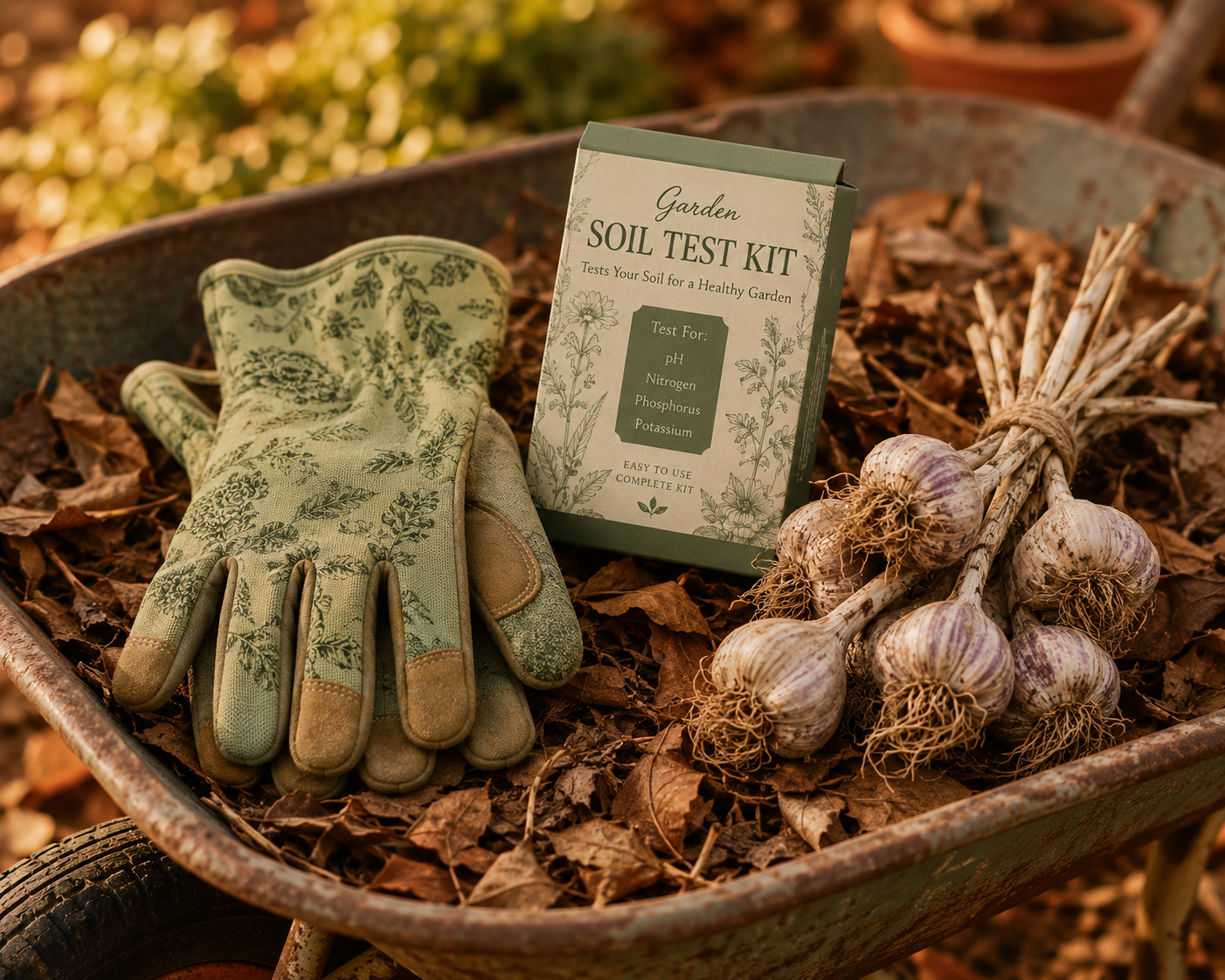
1. Garlic
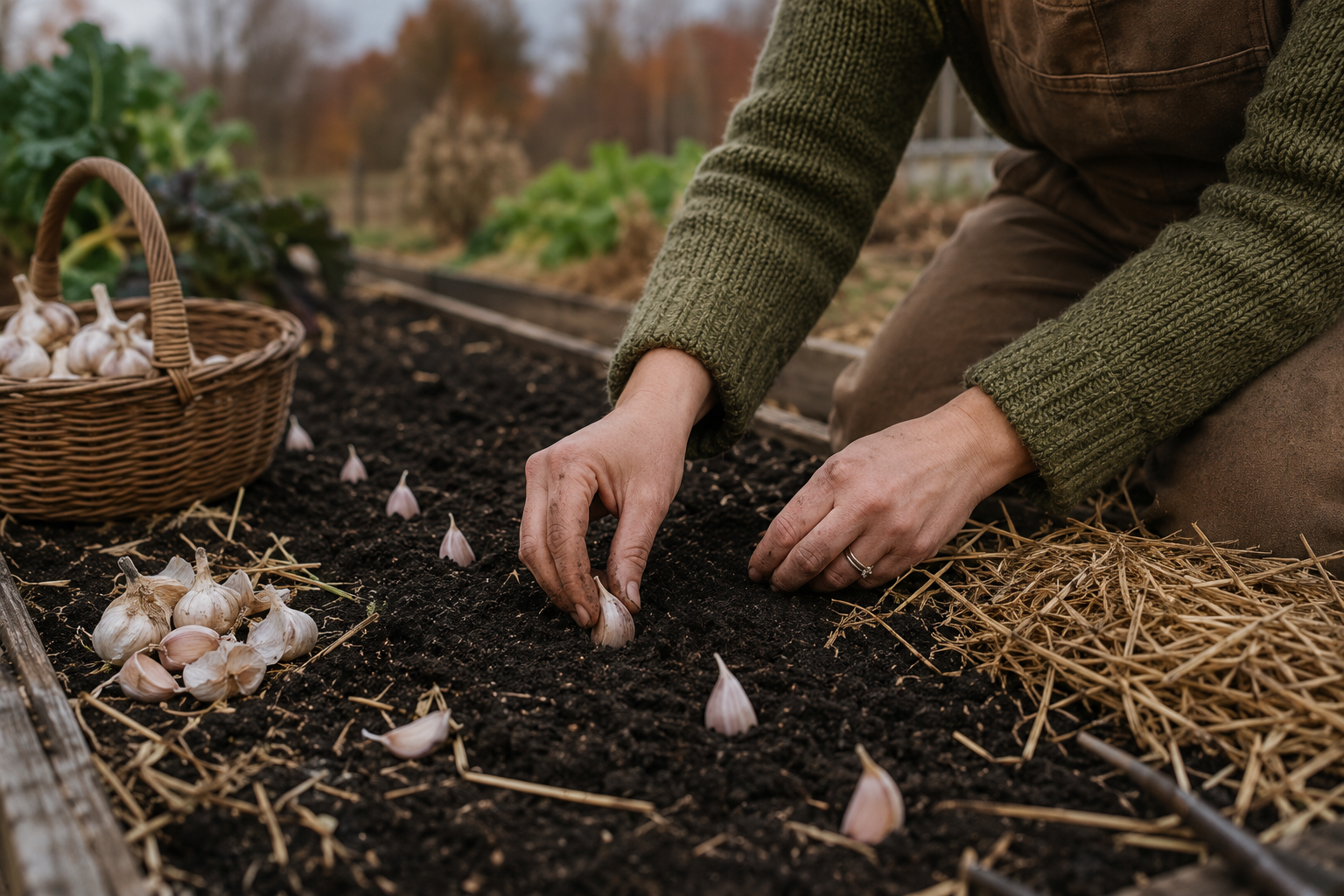
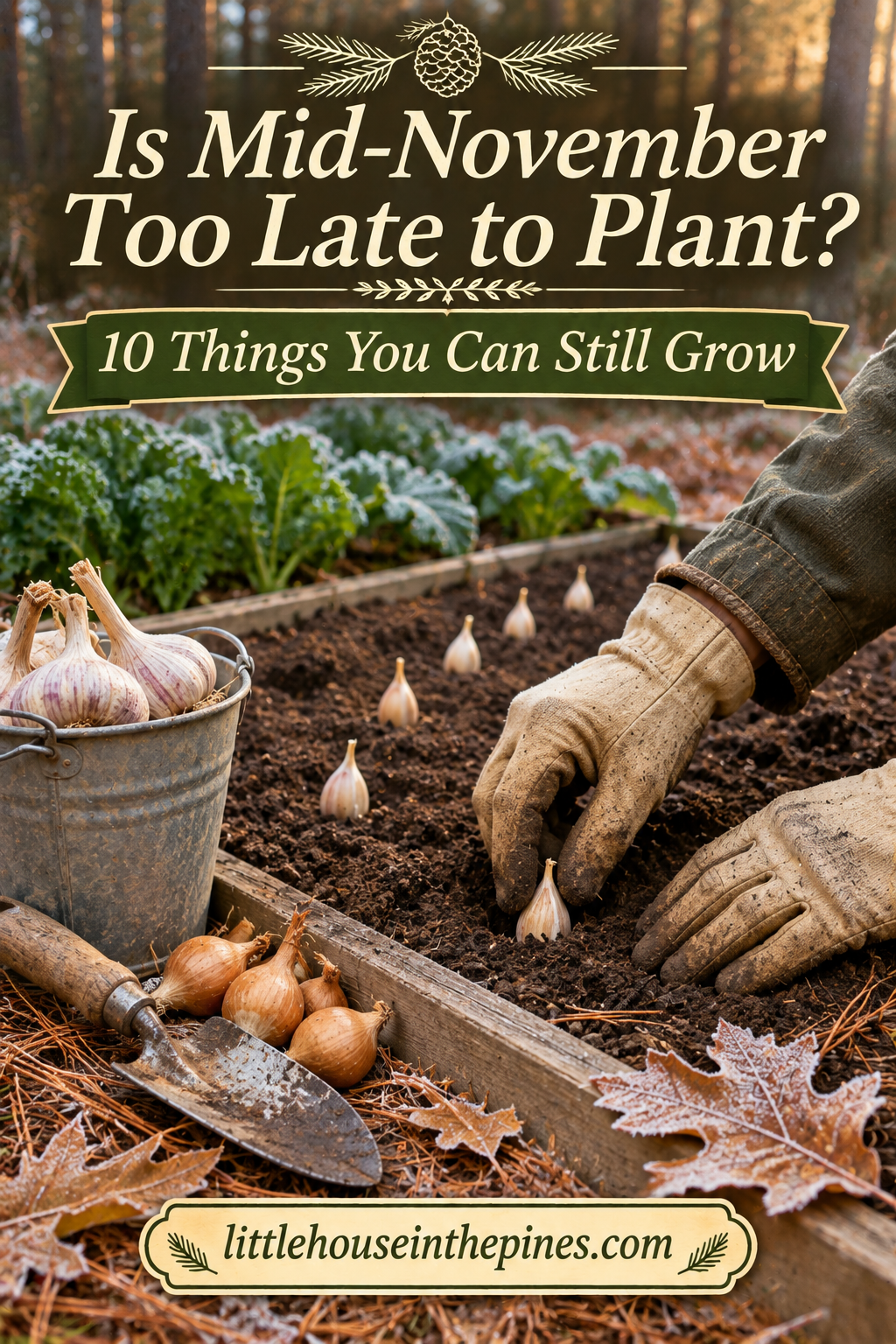
Garlic is the classic late-fall crop. It needs a long, cool season to form big bulbs, so it goes in now and comes out in late spring. In Texas, you can plant garlic until early December. Choose softneck or Creole varieties, which do better in our mild winters than hardneck types.
Get it here →
2. Onion Sets and Shallots
Onion sets planted now grow into green onions you can harvest all winter. Shallots planted now will divide into clusters by late spring. (For big bulb onions, wait until January and plant short-day onion transplants.)
3. Spinach
Spinach germinates well in cool soil and grows happily through Southern winters. Sow seeds directly, half an inch deep, and keep the soil moist. Savoy types like Bloomsdale hold up well to cold.
4. Lettuce Transplants
This late in the season, lettuce transplants give you a head start. Leaf lettuces are the most cold-tolerant and can be harvested a few leaves at a time. Keep frost cloth handy for nights in the low 20s.
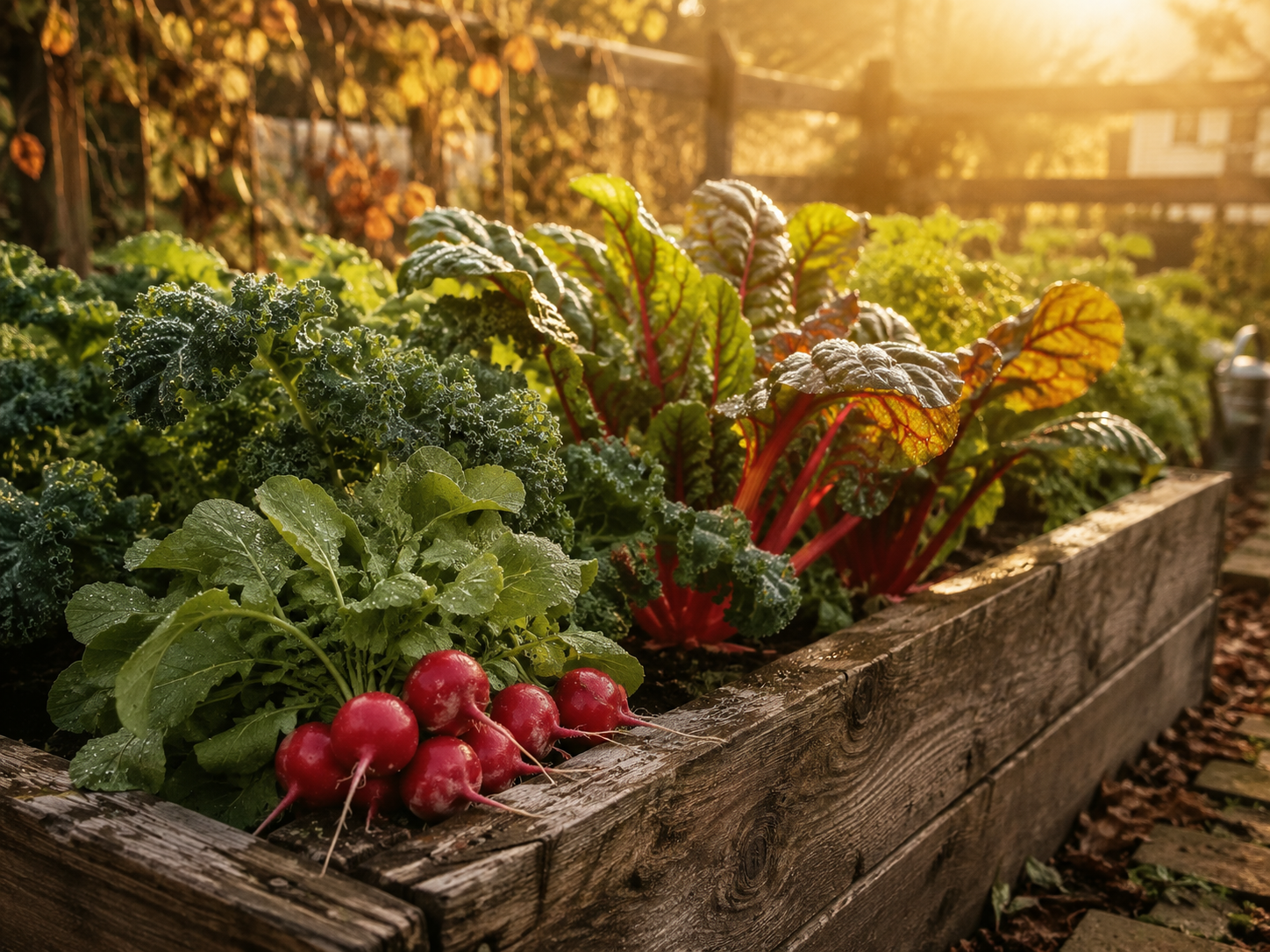
5. Kale and Collards
These two are the toughest greens in the garden. Plant transplants 12 to 18 inches apart, and you'll be picking leaves all winter long. Collards can handle temperatures into the teens.
6. Radishes
Radishes are the speediest crop in the garden. Many varieties are ready in about a month, so even a late planting gives you a harvest before Christmas. Try Cherry Belle for a classic round radish.
7. Turnips
Turnips are two crops in one. You can harvest the tender greens in a few weeks and the roots later in winter. Purple Top White Globe is a reliable Southern favorite.
8. Daffodils and Other Spring Bulbs
November is a great month to plant daffodils, jonquils and other bulbs that come back year after year in the South. Plant them about twice as deep as the bulb is tall, pointy end up. They're also deer- and rodent-resistant.
Get daffodils here →
9. Container-Grown Trees and Shrubs
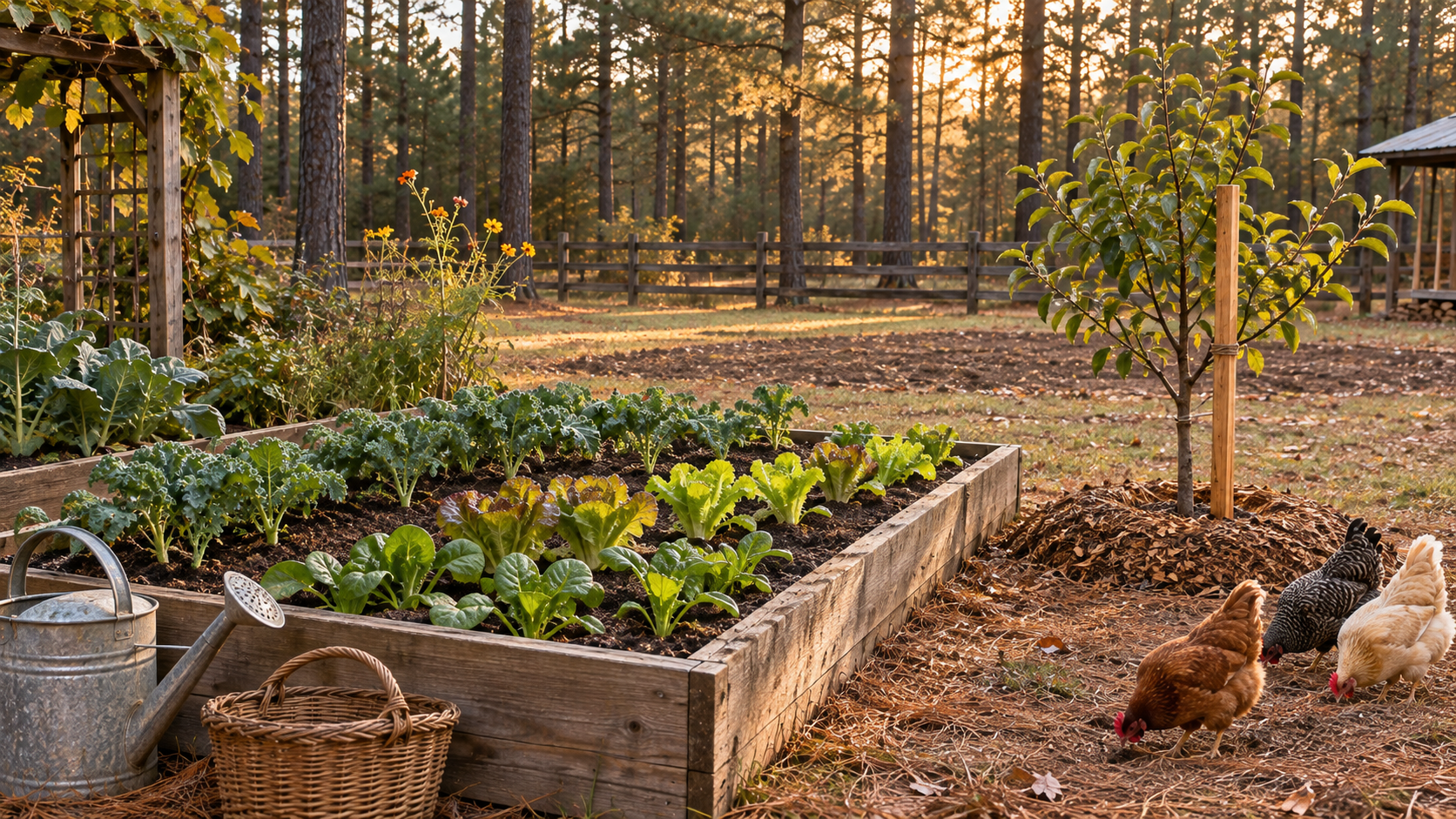
Fall is the best time of year to plant trees and shrubs in the South. Roots keep growing in the cool, moist soil all winter, so plants are established before summer heat. Container-grown fruit trees, blueberries, figs and native shrubs can all go in now. If you're buying bare-root trees, Texas A&M AgriLife suggests waiting until January.




10. Wildflower Seeds (Including Bluebonnets!)
If you want a spring full of bluebonnets, now is the time. Texas wildflower seeds need cool, moist winter conditions to germinate and grow strong roots. The Lady Bird Johnson Wildflower Center recommends planting bluebonnet seeds no later than the end of November.
Tip: Rake the soil lightly, scatter the seed, and press it in so it makes good contact with the soil. Don't bury it deep.
3. Seeds or Transplants: Which to Choose This Late
In mid-November, the choice between seeds and transplants matters more than it did in September.
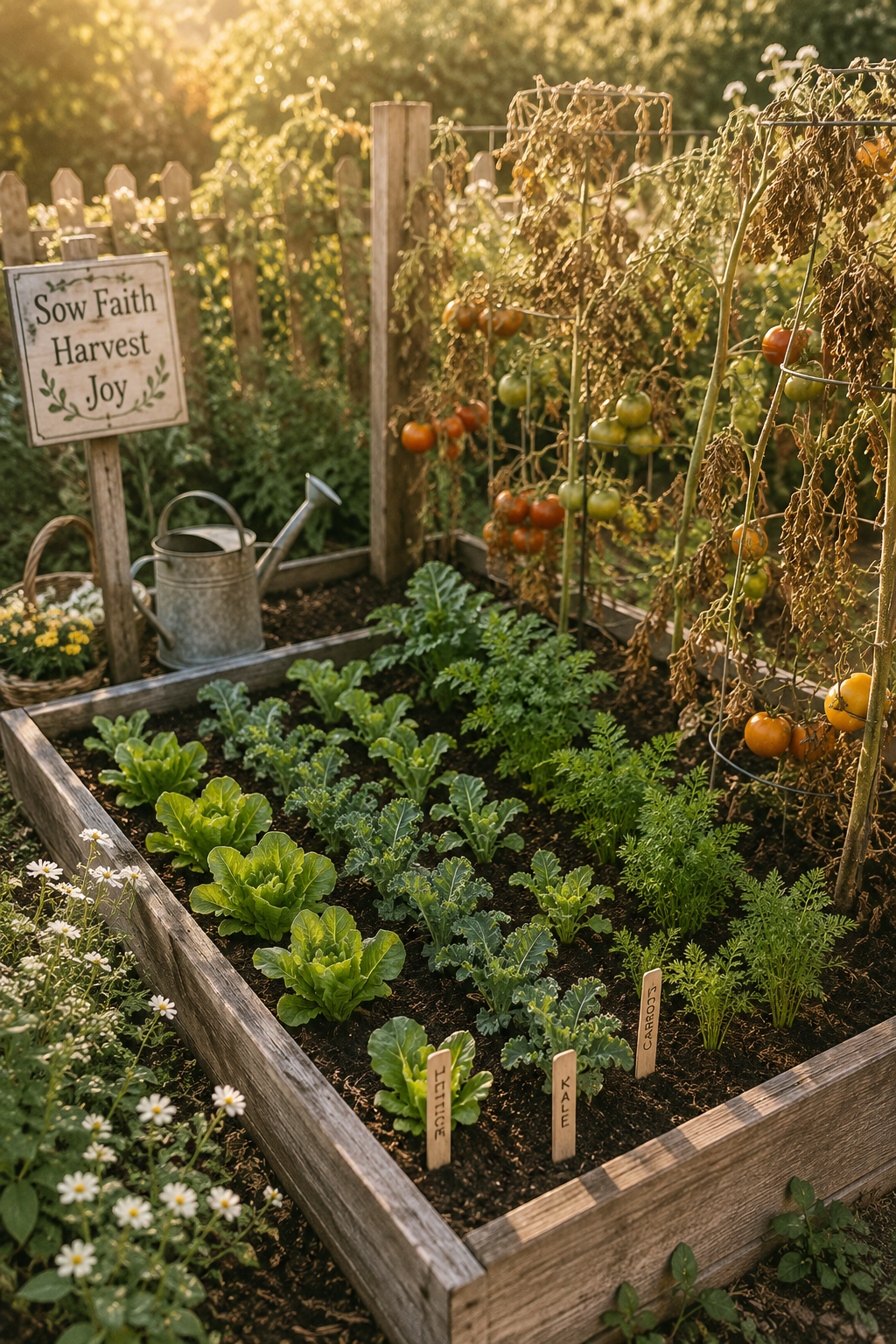
Use seeds for fast or root crops: radishes, turnips, spinach, mustard greens and carrots. Root crops don't transplant well, and quick crops like radishes have plenty of time.
Use transplants for slower leafy crops: kale, collards, lettuce, cabbage and broccoli. A transplant gives you a 4–6 week head start, which is a big advantage this late in the year.
Use cloves, sets and bulbs for: garlic, onions, shallots and daffodils. These are the easiest of all for beginners.
What not to plant now: Skip warm-season crops like tomatoes, peppers, squash, cucumbers, beans and okra. The first frost will kill them.
4. Frequently Asked Questions
What is the latest you can plant garlic?
In most of Texas and the South, you can plant garlic until early December. Planting earlier, in October or November, usually gives bigger bulbs, because the plants have more time to grow roots before spring.
Can you plant seeds in November?
Yes. In the South, you can direct-sow cool-season seeds like radishes, turnips, spinach, mustard greens and carrots in November. Fast-growing crops are the safest choices this late in the season.
What happens if I plant too late?
Planting too late usually means a smaller harvest. Seedlings may not grow big enough before a hard freeze, and some crops may bolt (go to seed) when spring heat arrives before they're ready to harvest. Using transplants and covering plants during freezes helps.
It's Not Too Late. Get Planting!
The best time to plant was September, but the second-best time is today. A few garlic cloves, a row of spinach and a handful of bluebonnet seeds planted this week will reward you all winter and into spring.
What are you still planting this month? Tell us in the comments below!
Hi, I’m Miss B!
Welcome to Little House in the Pines, where our family is learning to live simply and faithfully on our little homestead in the Piney Woods of East Texas. Here you’ll find what we’re growing in the garden, what’s happening in the chicken coop, what’s simmering on the stove, and what the Lord is teaching us through it all.
We love exploring the Hebrew roots of our faith in Yeshua, and we’re always learning, always making mistakes, and always grateful for His grace. Pull up a chair and stay a while!





Roasted Chicory Root
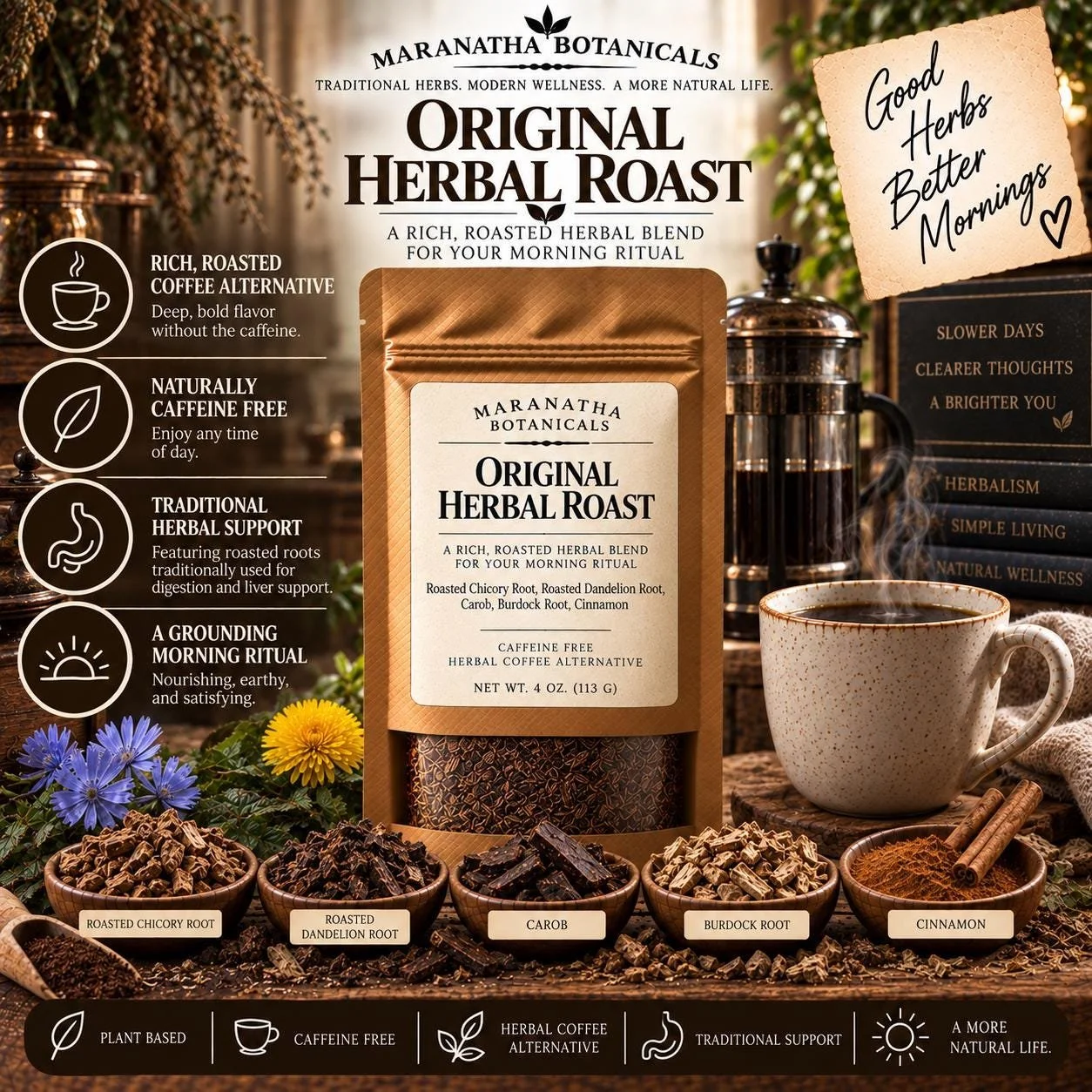
One of the most recognizable traditional coffee substitutes, chicory develops a dark, roasted and pleasantly bitter flavor when roasted. It has been blended with or brewed in place of coffee for generations, particularly in European and New Orleans traditions.
Roasted Dandelion Root
Roasting transforms earthy dandelion root into a rich, slightly bitter botanical with an almost coffee-like depth. Dandelion root also has a longstanding place among traditional digestive bitters and after-meal herbal preparations.
Carob
Naturally caffeine-free with a subtly sweet, toasted flavor, carob helps round out the stronger bitter roots and gives the finished cup greater body without adding coffee or cocoa.
Burdock Root
An earthy root used as both a traditional food and botanical throughout Europe and Asia. Its grounding, slightly sweet character adds another layer of roasted-root complexity.
Cinnamon
Just enough cinnamon is included to soften the bitterness without turning this into a cinnamon-flavored drink. It adds subtle warmth and natural sweetness to the finish.
How to Use
Add 1–2 tablespoons per 8 oz water. Gently simmer for 5–10 minutes, then strain thoroughly.
Enjoy black for the closest experience to a dark herbal roast, or add milk, cream and sweetener to taste. It also makes a beautiful base for caffeine-free herbal lattes.
Caffeine
100% caffeine-free. This blend contains no coffee beans and no added caffeine.
ABOUT MARANATHA BOTANICALS
Maranatha Botanicals creates small-batch botanical goods inspired by the practical traditions of the old home apothecary.
We bring familiar flowers, leaves, roots, berries, seeds, and herbs into modern homes through botanical products designed to be beautiful, useful, and rooted in tradition.
Our loose-leaf teas are blended by hand in small batches from recognizable botanicals, with each formula designed around flavor, traditional herbal context, and the simple pleasure of preparing herbs by the cup.
Rooted in tradition. Made for today.
Due to the nature of this product, returns are not accepted.
Roasted Chicory Root
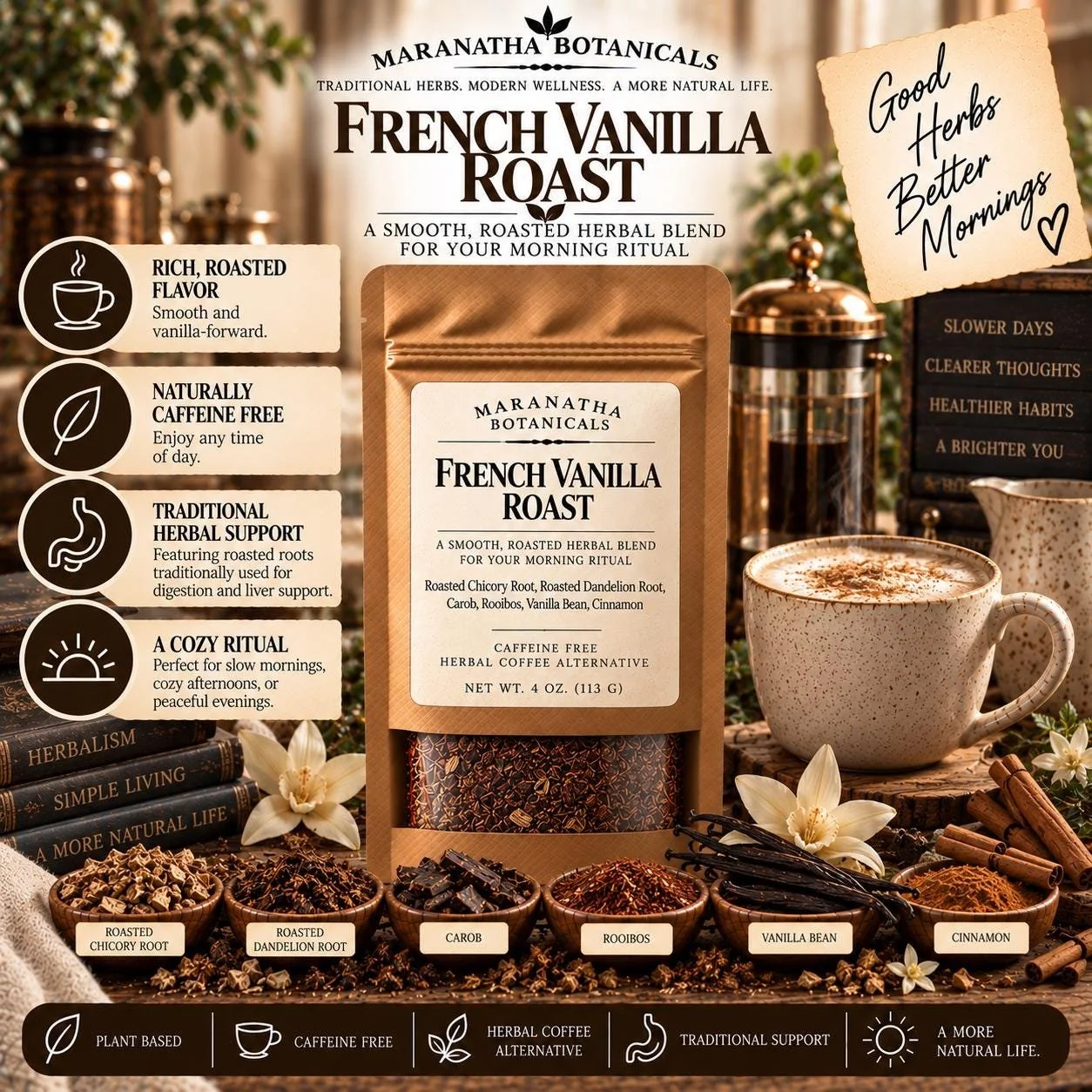
One of the most recognizable traditional coffee alternatives, roasted chicory develops a dark, robust flavor with the pleasant bitterness people expect from coffee. It has been brewed alone or alongside coffee for generations.
Roasted Dandelion Root
Earthy and deeply flavored when roasted, dandelion root adds another layer of coffee-like depth. It also has a longstanding place among traditional digestive bitters and after-meal herbal preparations.
Carob
Naturally caffeine-free with a mellow, subtly sweet roasted flavor. Carob adds body and helps soften the stronger bitterness of the roasted roots.
Rooibos
A naturally caffeine-free South African tea with a smooth, slightly sweet and gently earthy flavor. Rooibos helps give French Vanilla Roast its softer, more rounded character.
Vanilla Bean
Real vanilla bean provides the signature French vanilla-inspired aroma and flavor without turning the blend into an artificially flavored dessert tea. Its rich sweetness pairs beautifully with roasted chicory and carob.
Cinnamon
A small amount of cinnamon adds warmth and enhances the natural sweetness of the vanilla without overpowering the roasted-coffee character.
How to Use
Add 1–2 tablespoons per 8 oz water. Gently simmer for 5–10 minutes, then strain thoroughly.
For a caffeine-free vanilla latte, brew it strong and add warm or frothed milk or cream and your favorite sweetener.
Caffeine
100% caffeine-free. This blend contains no coffee beans and no added caffeine.
ABOUT MARANATHA BOTANICALS
Maranatha Botanicals creates small-batch botanical goods inspired by the practical traditions of the old home apothecary.
We bring familiar flowers, leaves, roots, berries, seeds, and herbs into modern homes through botanical products designed to be beautiful, useful, and rooted in tradition.
Our loose-leaf teas are blended by hand in small batches from recognizable botanicals, with each formula designed around flavor, traditional herbal context, and the simple pleasure of preparing herbs by the cup.
Rooted in tradition. Made for today.
Due to the nature of this product, returns are not accepted.
Roasted Chicory Root
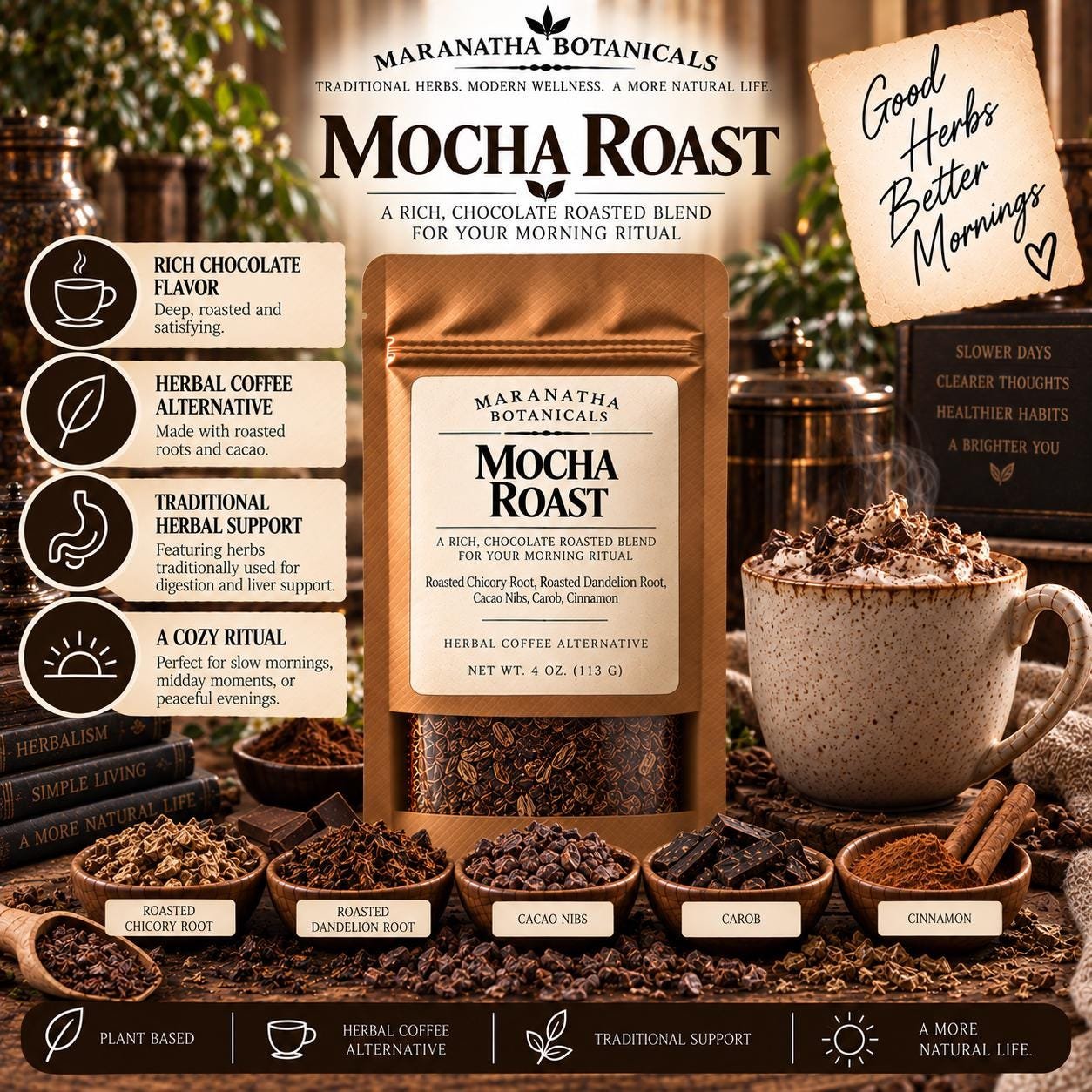
One of the most recognizable traditional coffee alternatives, roasted chicory develops a dark, robust and pleasantly bitter flavor. It has been brewed alone or alongside coffee for generations, particularly throughout Europe and in New Orleans-style coffee traditions.
Roasted Dandelion Root
Roasting transforms earthy dandelion root into a deep, slightly bitter botanical with an almost coffee-like character. Dandelion root also has a longstanding place among traditional digestive bitters and after-meal herbal preparations.
Cacao Nibs
Small pieces of crushed cacao bean with a deep, bittersweet chocolate flavor. Cacao gives this blend its unmistakable dark chocolate and mocha-inspired character without the sweetness of conventional hot chocolate.
Carob
Naturally sweet and roasted in flavor, carob rounds out the bitterness of chicory, dandelion and cacao while adding greater body to the finished cup.
Cinnamon
A touch of cinnamon adds warmth and natural sweetness, bringing the roasted roots and dark cacao together without turning the blend into a strongly spiced drink.
How to Use
Add 1–2 tablespoons per 8 oz water. Gently simmer for 5–10 minutes, then strain thoroughly.
For an herbal mocha, brew it strong and add warm or frothed milk or cream and your favorite sweetener.
Caffeine
Contains a small amount of naturally occurring caffeine from cacao nibs. This blend contains no coffee beans or added caffeine, but it should not be considered completely caffeine-free.
ABOUT MARANATHA BOTANICALS
Maranatha Botanicals creates small-batch botanical goods inspired by the practical traditions of the old home apothecary.
We bring familiar flowers, leaves, roots, berries, seeds, and herbs into modern homes through botanical products designed to be beautiful, useful, and rooted in tradition.
Our loose-leaf teas are blended by hand in small batches from recognizable botanicals, with each formula designed around flavor, traditional herbal context, and the simple pleasure of preparing herbs by the cup.
Rooted in tradition. Made for today.
Due to the nature of this product, returns are not accepted.
Further Reading:
Wildflower Forecast and Bluebonnet Planting Tips · Lady Bird Johnson Wildflower Center
When Do I Plant Wildflower Seeds for Spring Blooms? · Texas A&M Stories
General Wildflower Planting Guidelines · Texas Department of Transportation
Fall Vegetable Gardening Guide for Texas · Texas A&M AgriLife Extension
Time to Create a Cold Protection Plan for Your Garden · AgriLife Today
Vegetable Gardening in October · Travis County AgriLife Extension
Growing Garlic · Central Texas Gardener
How to Grow Texas Bluebonnets from Seed · Wildseed Farms
